
Inside the US-Iran Memorandum of Understanding: How the Fragile Deal Works and Why It Faces Backlash
The Trump administration is finalizing a preliminary de-escalation agreement with Iran in Switzerland, but the diplomatic gamble faces fierce internal opposition from US security hawks and Iranian hardliners.
By Factlen Editorial Team
- Regional Security Hawks
- View the agreement as a surrender of leverage that rewards Iranian aggression and fails to address proxy terrorism.
- US De-escalation Advocates
- Argue the MoU is a pragmatic necessity to prevent a nuclear Iran without dragging the US into another Middle Eastern war.
- Iranian Hardliners
- Believe the negotiating team is conceding too much to an untrustworthy US, violating the Supreme Leader's red lines.
What's not represented
- · European Union diplomats who helped broker earlier iterations of the deal
- · Lebanese civilians caught in the crossfire of the proxy conflict
Why this matters
A successful US-Iran agreement could significantly lower the risk of a regional war in the Middle East and stabilize global energy markets. However, its failure could accelerate Iran's nuclear program and trigger a direct military confrontation involving the US and Israel.
Key points
- US and Iranian delegations are meeting in Switzerland to finalize a preliminary de-escalation agreement.
- The deal relies on a 'freeze-for-freeze' mechanism, capping nuclear enrichment in exchange for sanctions relief.
- The Trump administration is using a Memorandum of Understanding to bypass a divided US Senate.
- The agreement faces intense backlash from GOP national security hawks who argue it surrenders leverage.
- Iranian hardliners are threatening domestic negotiators, claiming they violated the Supreme Leader's instructions.
- Israel is limiting military actions in Lebanon to avoid derailing the fragile diplomatic process.
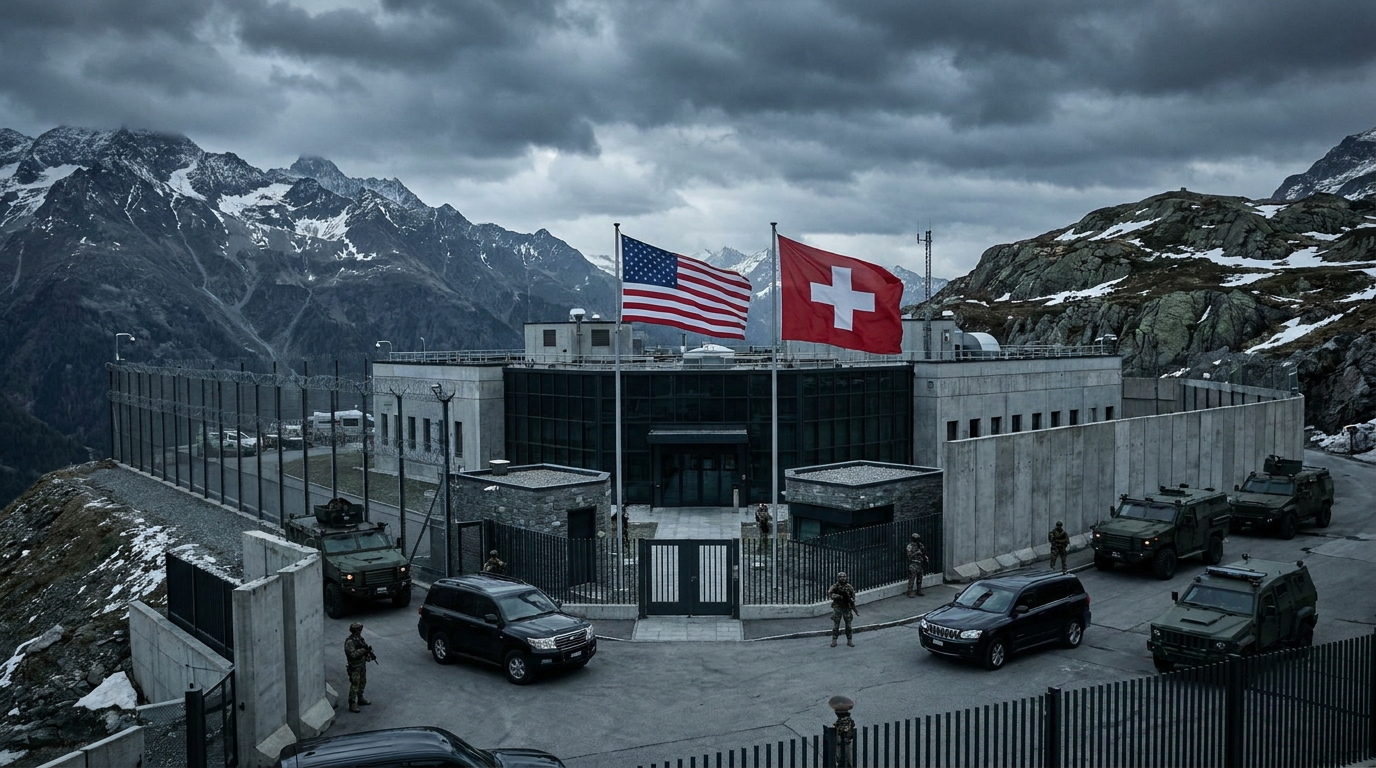
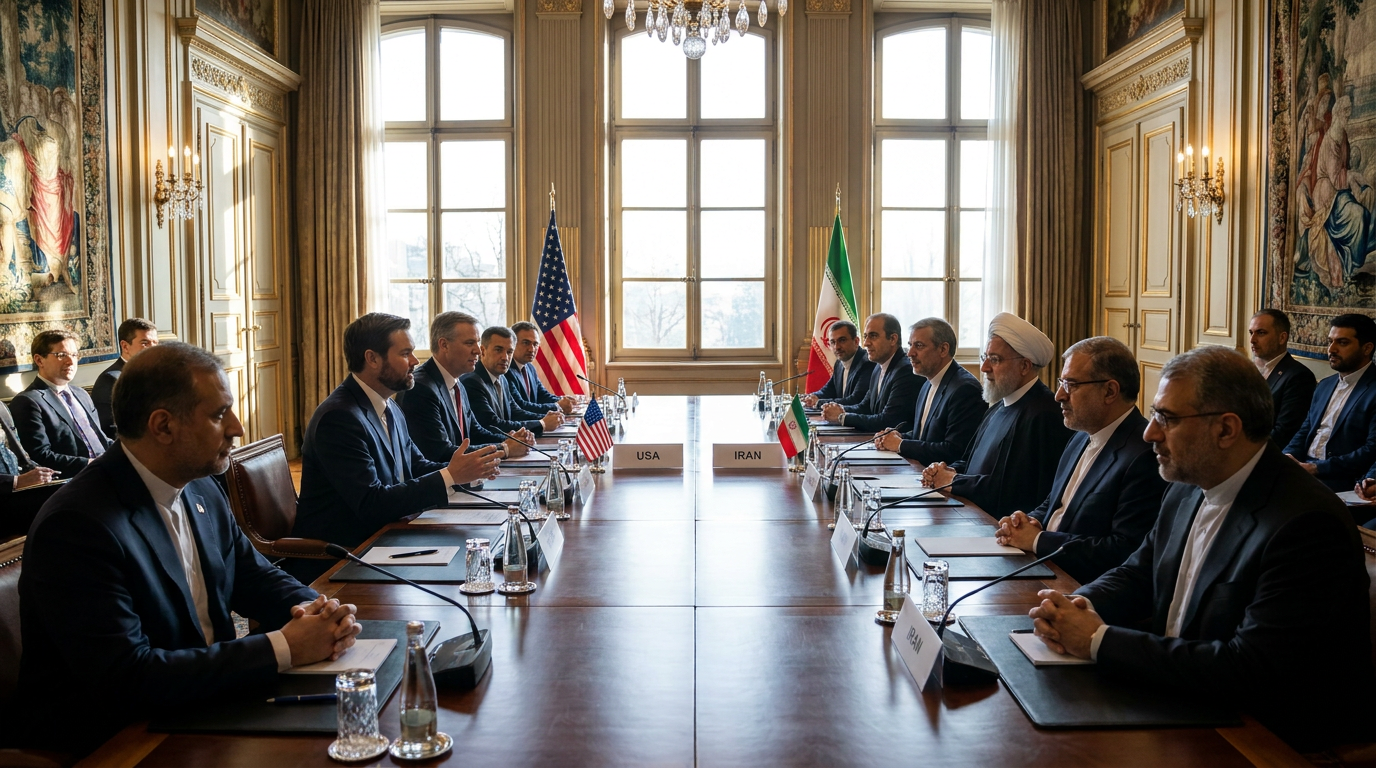
A high-stakes diplomatic gamble is unfolding in Switzerland, where a United States delegation led by Vice President JD Vance is attempting to finalize a preliminary peace agreement with Iranian officials. The talks aim to cement a Memorandum of Understanding (MoU) designed to halt Iran's nuclear escalation and curb regional proxy attacks in exchange for targeted economic relief. The negotiations represent a significant pivot in US foreign policy, prioritizing immediate de-escalation over comprehensive, long-term treaty commitments.[1][4]
The core mechanism of the proposed agreement is a "freeze-for-freeze" arrangement. Under the drafted terms, Iran would agree to cap its uranium enrichment at 60 percent—well below the 90 percent threshold required for weapons-grade material—and halt the installation of advanced centrifuges. In return, the United States would issue specific sanctions waivers, unfreezing billions of dollars in Iranian assets held in third-party countries, strictly earmarked for humanitarian use.[6]
By structuring the deal as a Memorandum of Understanding rather than a formal treaty, the administration is deliberately bypassing the United States Senate. A formal treaty would require a two-thirds majority for ratification, an impossible hurdle given the current political climate in Washington. Instead, the MoU functions as an executive political commitment, relying on mutual, verifiable steps rather than binding international law.[6][8]

However, this executive maneuver has ignited a fierce civil war within the Republican party. Traditional national security hawks, including Senators Ted Cruz and Bill Cassidy, have publicly clashed with the administration, arguing that the MoU surrenders critical leverage and effectively rewards Iranian aggression. They contend that releasing any funds, even with humanitarian guardrails, fungibly supports Iran's military apparatus.[1][8]
On the other side of the domestic divide, "America First" conservatives are aggressively defending the diplomatic push. This faction argues that the MoU is a necessary, pragmatic step to keep the United States out of endless Middle Eastern conflicts. For this camp, the definition of victory is not regime change in Tehran, but rather the prevention of a nuclear-armed Iran without committing American troops to another regional war.[1][8]
The political turbulence is not confined to Washington. In Tehran, the Iranian government is experiencing profound internal fractures over the negotiations. Secret correspondence recently leaked to state broadcasters revealed deep tensions between the negotiating team and hardline factions aligned with the Islamic Revolutionary Guard Corps (IRGC).[2]
A former member of Iran's negotiating team from earlier talks in Islamabad gave a shock interview claiming that the current delegation had ignored explicit instructions from the Supreme Leader. The former official is now facing the threat of prosecution and dismissal from parliament, highlighting the immense pressure Iranian diplomats face from domestic hardliners who view any compromise with the US as a capitulation.[2]
These hardliners argue that the US cannot be trusted to uphold an executive agreement, pointing to the previous withdrawal from the 2015 JCPOA. They are demanding more permanent sanctions relief and fewer restrictions on Iran's domestic nuclear infrastructure, creating a narrow and shrinking mandate for the Iranian diplomats currently sitting at the table in Switzerland.[2][5]
These hardliners argue that the US cannot be trusted to uphold an executive agreement, pointing to the previous withdrawal from the 2015 JCPOA.
Complicating the diplomatic tightrope is the active kinetic conflict in the Levant. The Israel-Lebanon border remains a volatile flashpoint that threatens to derail the entire MoU process. Recognizing the fragility of the talks, Israel has reportedly directed its military to limit operations in southern Lebanon to avoid sparking a broader escalation that could force Iran to walk away from the table.[3]

Despite Israel's tactical restraint, tensions persist. Israeli President Isaac Herzog recently warned that Iran-backed proxy groups, specifically Hezbollah, are actively attempting to sabotage the regional peace efforts. The fear in Jerusalem and Washington is that a single mass-casualty event on the border could force both Israel and Iran into a retaliatory spiral, rendering the Switzerland talks moot.[3][7]
The administration's strategy relies on compartmentalization—trying to isolate the nuclear file from the ongoing proxy conflicts. Yet, critics argue this is a fundamental flaw in the MoU. By not explicitly tying sanctions relief to the total disarmament of groups like Hezbollah and Hamas, hawks argue the US is treating the symptoms while ignoring the disease.[1][6]
Conversely, defenders of the deal maintain that demanding a grand bargain encompassing all of Iran's regional behavior is a recipe for diplomatic failure. They argue that securing the nuclear cap is the paramount security interest, and that a de-escalated nuclear environment will naturally cool the proxy conflicts over time.[4][8]

The coming days in Switzerland will test whether this narrow diplomatic needle can be threaded. The US delegation must secure enough verifiable concessions to placate domestic critics, while the Iranian team must extract enough economic relief to survive the inevitable backlash from the IRGC.[4][6]
If the Memorandum of Understanding is signed, it will not represent a comprehensive peace, but rather a tactical pause. It will require constant, high-wire management to ensure both sides adhere to their unwritten commitments, with the threat of immediate snapback sanctions or military action hanging over every minor dispute.[6][8]
Should the talks collapse, the alternatives are grim. Without the MoU's enrichment caps, Iran is expected to accelerate its nuclear program, drastically shortening its breakout time to a weapon. This scenario would likely trigger preemptive military strikes by Israel, dragging the United States into the exact regional war the current negotiations are desperately trying to avoid.[3][4]
How we got here
Early 2026
Initial back-channel talks between US and Iranian officials take place in Islamabad.
May 2026
Draft framework for a 'freeze-for-freeze' Memorandum of Understanding is established.
June 2026
Border clashes between Israel and Hezbollah threaten to collapse the preliminary agreements.
June 21, 2026
US delegation arrives in Switzerland to finalize the MoU amidst fierce domestic opposition in both countries.
Viewpoints in depth
US Dealmakers & Pragmatists
This camp views the MoU as the only viable path to prevent a nuclear-armed Iran without sparking a regional war.
Proponents of the deal, largely aligned with the 'America First' wing of the GOP and pragmatic diplomats, argue that the perfect cannot be the enemy of the good. They acknowledge that the MoU does not solve Iran's support for regional proxies, but insist that capping the nuclear program is the paramount security objective. By avoiding a formal treaty, they argue the administration is remaining agile, securing immediate de-escalation while keeping the US out of a costly, protracted conflict in the Middle East.
Security Hawks & Regional Allies
This faction argues the agreement rewards Iranian aggression and surrenders critical economic leverage.
Traditional national security hawks in Washington, alongside Israeli leadership, view the 'freeze-for-freeze' framework as a dangerous capitulation. They argue that unfreezing any assets fungibly supports Iran's military and proxy networks, regardless of humanitarian guardrails. This camp believes that the US is abandoning its maximum pressure campaign just as it was working, effectively paying Tehran to temporarily pause a crisis it manufactured. They demand that any agreement must comprehensively address Iran's ballistic missile program and its funding of groups like Hezbollah and Hamas.
Iranian Hardliners
Domestic critics in Tehran believe their negotiators are conceding too much to an untrustworthy adversary.
Within Iran's complex political structure, hardliners aligned with the IRGC view the Switzerland talks with deep suspicion. Citing the US withdrawal from the 2015 JCPOA, they argue that American executive agreements are inherently worthless. This faction is demanding permanent, verifiable sanctions relief before any nuclear concessions are made. The recent leaks of secret correspondence indicating that negotiators may have bypassed the Supreme Leader's strict red lines suggest that the Iranian diplomatic team is operating on incredibly thin ice, facing the threat of domestic prosecution if the deal is perceived as weak.
What we don't know
- Whether the Iranian negotiating team has the ultimate authority from the Supreme Leader to sign the final MoU.
- If a sudden escalation between Israel and Hezbollah will force the US to abandon the talks.
- How the US administration plans to enforce the enrichment caps without the binding inspection protocols of a formal treaty.
Key terms
- Memorandum of Understanding (MoU)
- A non-binding agreement outlining the terms and details of an understanding, used here to bypass the formal legislative treaty process.
- Freeze-for-freeze
- A diplomatic framework where both sides agree to halt escalatory actions—such as nuclear enrichment and economic sanctions—simultaneously.
- Proxy forces
- Armed groups funded, trained, or directed by a larger state power to fight on its behalf, such as Hezbollah acting with Iranian support.
Frequently asked
Why is this an MoU and not a treaty?
A formal treaty requires a two-thirds ratification vote in the US Senate, which would likely fail due to Republican opposition. An MoU is an executive political commitment that bypasses Congress.
What does the 'freeze-for-freeze' mean?
It means Iran agrees to freeze its nuclear enrichment at current levels (60 percent) in exchange for the US freezing certain economic sanctions, allowing Iran access to specific humanitarian funds.
How does the Israel-Lebanon conflict affect the deal?
The US-Iran talks are highly sensitive to regional violence. A major escalation between Israel and Hezbollah (an Iran-backed proxy) could force either Washington or Tehran to abandon the negotiations.
Sources
Source coverage
8 outlets
3 viewpoints surfaced








[1]Fox NewsUS De-escalation Advocates
Trump's Iran gamble divides GOP hawks and 'America First' conservatives over what victory looks like
Read on Fox News →[2]The GuardianIranian Hardliners
Secret correspondence claims suggest tensions at top of Iranian government
Read on The Guardian →[3]NYTRegional Security Hawks
Israel Directs Its Military to Limit Its Actions in Lebanon, but Tensions Persist
Read on NYT →[4]ReutersUS De-escalation Advocates
U.S. delegation arrives in Switzerland for critical phase of Iran talks
Read on Reuters →[5]Al JazeeraIranian Hardliners
Lebanon border tense as US-Iran talks enter critical phase
Read on Al Jazeera →[6]Wall Street JournalUS De-escalation Advocates
The Mechanics of Trump's Iran Memorandum of Understanding
Read on Wall Street Journal →[7]Times of IsraelRegional Security Hawks
Herzog warns Hezbollah attempting to derail regional peace efforts as US-Iran talks resume
Read on Times of Israel →[8]PoliticoRegional Security Hawks
America First vs. Hawks: The GOP civil war over Iran
Read on Politico →
Every angle. Every day.
Get news politics stories with full source coverage and perspective breakdowns delivered to your inbox.