
The Search for Silence: How National Parks Are Saving the Endangered Soundscapes of the Natural World
As human-made noise pollution reaches the farthest corners of the globe, a growing movement of acoustic ecologists and park managers is deploying advanced technology to protect and restore "natural quiet."
By Factlen Editorial Team
- Acoustic Ecologists
- Advocates focused on preserving pure natural quiet as an endangered and fragile resource.
- Public Land Managers
- Agency officials tasked with balancing acoustic conservation with public access and recreation.
- Park Visitors & Advocates
- Everyday citizens who value the restorative health benefits of natural acoustic environments.
What's not represented
- · Commercial aviation and air-tour operators
- · Motorized recreation enthusiasts (e.g., snowmobile and ATV users)
Why this matters
Noise pollution is increasingly recognized as a public health hazard and an ecological disruptor. The successful efforts to preserve acoustic environments in public lands offer a blueprint for reducing chronic stress and restoring tranquility to both wildlife habitats and human communities.
Key points
- The National Park Service operates a dedicated division to protect the acoustic environments of public lands.
- Scientists have mapped the soundscapes of the entire United States using 1.5 million hours of audio data.
- Human-made noise pollution shrinks the 'listening area' for wildlife, disrupting hunting and mating behaviors.
- Parks are mitigating noise by using electric vehicles, hand tools, and rerouting commercial flight paths.
- Quiet Parks International certifies locations that can maintain 15 consecutive minutes of pure natural sound.
- Unlike chemical pollution, noise pollution can be instantly eliminated the moment the source is turned off.
In a world defined by the relentless hum of highway traffic, the drone of commercial aviation, and the constant buzz of digital devices, true silence has become one of the planet's rarest commodities. For most people living in urban environments, the experience of an uninterrupted natural soundscape is entirely foreign. Yet, deep within the boundaries of protected public lands, a quiet revolution is taking place.[6]
Acoustic conservationists and public land managers are increasingly recognizing that "natural quiet" is not merely the absence of noise, but a vital, tangible resource that requires aggressive protection. Just as the National Park Service guards ancient sequoias and pristine watersheds, a growing movement is fighting to preserve the acoustic environments of the natural world.[1]
The stakes are surprisingly high. Experts estimate that up to 90 percent of children today may never experience a truly natural soundscape in their lifetimes. In response, scientists, audio engineers, and policymakers are deploying advanced technology and strict management strategies to ensure that the sounds of wind, water, and wildlife are not drowned out by the roar of the modern age.[3]
The scientific foundation of this movement lies in the study of soundscapes, which ecologists divide into three distinct categories. "Biophony" encompasses the vocalizations of living organisms, from the bugle of a bull elk to the chorus of spring peepers. "Geophony" includes the non-biological sounds of the earth, such as thunder, rushing rivers, and wind rustling through pine needles.[6]
The third category, "anthrophony," consists of all human-made noise. When anthrophony encroaches on wild spaces, it doesn't just annoy hikers; it fundamentally disrupts the ecological balance. Recognizing this threat, the National Park Service established the Natural Sounds and Night Skies Division in 2000, becoming the only federal land management agency with a specific mandate to protect the acoustic environment.[1][2]
To understand the scope of the problem, the NPS embarked on an unprecedented acoustic mapping project. Scientists collected over 1.5 million hours of sound level measurements from parks, urban centers, and rural areas across the United States. This massive dataset allowed researchers to build a geospatial sound model that predicts current noise levels and estimates how places would sound without human influence.[5]

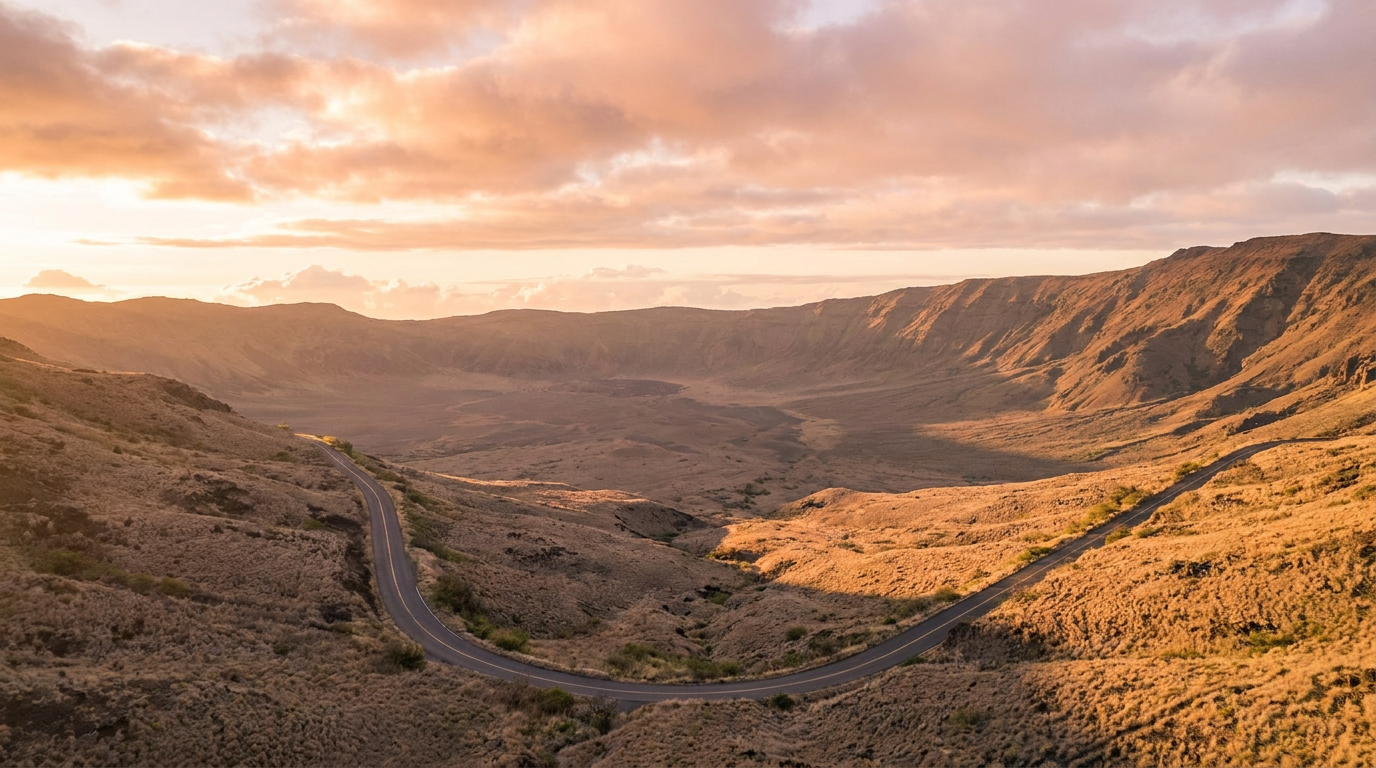
The resulting maps revealed that noise pollution is pervasive, but they also highlighted sanctuaries of profound quiet. In places like the crater of Haleakalā National Park in Hawaii, ambient sound levels can drop to a staggering 10 decibels—quiet enough to hear a person breathing from ten feet away.[4]
Preserving these acoustic sanctuaries is critical for wildlife survival. Animals rely on sound for nearly every aspect of their existence, including navigating, finding food, avoiding predators, and attracting mates. When chronic human noise elevates the background din by just a few decibels, it significantly shrinks an animal's "listening area."[2]
For a predator like an owl, the inability to hear the faint rustle of a mouse under the snow can mean the difference between starvation and survival. Conversely, prey animals suffer from chronic stress when the drone of a distant highway masks the approach of a predator. By protecting the soundscape, conservationists are directly protecting the intricate web of life that depends on it.[2][6]
For a predator like an owl, the inability to hear the faint rustle of a mouse under the snow can mean the difference between starvation and survival.
The benefits of acoustic conservation extend equally to human visitors. Surveys conducted by the National Park Service indicate that soundscapes are deeply important to park-goers. Remarkably, research has shown that visitors actually perceive visual scenery as more beautiful and meaningful when it is accompanied by natural sounds rather than artificial noise.[2]

Furthermore, the restorative health benefits of quiet are well-documented. Time spent in natural acoustic environments lowers blood pressure, reduces stress hormones, and improves overall mental well-being. As urban noise pollution continues to rise, national parks are increasingly viewed as vital acoustic refuges for human health.[3]
To safeguard these refuges, park managers are implementing a variety of innovative mitigation strategies. The goal is not to ban humans from the parks, but to minimize the acoustic footprint of their visits. This often begins with "quiet technologies." In designated wilderness areas, maintenance crews are swapping chainsaws for traditional handsaws, and noisy gas-powered vehicles are being replaced by electric shuttles.[1]
The NPS is also tackling the complex issue of aviation noise. Through the National Parks Air Tour Management Act, the agency works directly with the Federal Aviation Administration to develop agreements that balance visitor enjoyment with resource protection. This includes setting altitude minimums and rerouting commercial flight paths.[1]
In a landmark cooperative effort, Rocky Mountain National Park and Denver International Airport successfully modified airplane flight paths so that high-altitude traffic would not disrupt the pristine soundscapes of the park below. Similar negotiations are ongoing with military installations to ensure that training flights avoid sensitive ecological zones during critical mating or migration seasons.[1]

While government agencies work from the top down, a parallel grassroots movement is pushing for even stricter standards. In 2019, acoustic ecologist Gordon Hempton founded Quiet Parks International (QPI), a nonprofit organization dedicated to identifying and certifying the world's last remaining quiet places.[4]
QPI's certification process is notoriously rigorous. To earn the designation of a Wilderness Quiet Park, an area must demonstrate that it frequently experiences at least 15 consecutive minutes of pure natural sound, completely free from any human-made intrusion. In the modern era, finding a quarter-hour of absolute silence is exceedingly difficult.[3][4]
The organization awarded its first certification to the Zabalo River in Ecuador's Amazon rainforest. In the United States, the list of certified locations remains highly exclusive. Glacier National Park in Montana earned the designation in 2022, followed by the Boundary Waters Canoe Area Wilderness in Minnesota in 2023.[4][6]
These certifications carry no legal regulatory authority, but they serve a powerful purpose. Much like the International Dark-Sky Association's efforts to protect stargazing environments, QPI's awards raise public awareness, boost eco-tourism, and provide local advocates with leverage to fight against encroaching industrial or aviation projects.[4]

The movement is now expanding beyond remote wilderness. Conservationists are actively seeking to establish "Urban Quiet Parks" in major metropolitan areas. Recent efforts have focused on locations like Breezy Point Beach in Queens, New York, where the rhythmic sound of crashing waves provides a vital, grounding contrast to the nearby Manhattan skyline.[3]
Ultimately, the push for acoustic conservation is a story of profound optimism. Unlike chemical pollution, which can take centuries to break down, noise pollution disappears the exact moment the source is turned off. Through thoughtful policy, innovative technology, and a renewed cultural appreciation for silence, the natural soundscapes of the world can be restored, ensuring that future generations can still hear the earth speak.[6]
How we got here
2000
The National Park Service establishes the Natural Sounds Program Office to protect acoustic resources.
2015
The NPS releases a comprehensive geospatial sound map based on 1.5 million hours of measurements.
2019
Quiet Parks International (QPI) is founded by acoustic ecologist Gordon Hempton.
2019
The Zabalo River in Ecuador becomes the world's first certified Wilderness Quiet Park.
2022
Glacier National Park becomes the first US location to receive QPI certification.
2023
The Boundary Waters Canoe Area Wilderness is awarded Wilderness Quiet Park status.
Viewpoints in depth
Acoustic Ecologists
Advocates focused on preserving pure natural quiet as an endangered and fragile resource.
For acoustic ecologists and organizations like Quiet Parks International, natural silence is a tangible environmental asset that is rapidly going extinct. They argue that the modern world's baseline noise level has risen so high that humans have forgotten what true quiet sounds like. Their primary goal is to establish strict, scientifically measurable benchmarks—such as the 15-minute uninterrupted quiet rule—to identify and protect the planet's last pristine soundscapes before they are permanently lost to aviation, industry, and motorized recreation.
Public Land Managers
Agency officials tasked with balancing acoustic conservation with public access and recreation.
The National Park Service and other land management agencies view soundscapes as a critical component of ecosystem health, but they must navigate the complex mandate of preserving resources while keeping parks open to the public. Their approach is highly pragmatic, focusing on mitigation rather than absolute prohibition. By utilizing geospatial sound modeling, implementing 'quiet technologies' like electric shuttles, and negotiating flight paths with the FAA, they aim to reduce the acoustic footprint of human activity without entirely restricting visitor access.
Park Visitors & Advocates
Everyday citizens who value the restorative health benefits of natural acoustic environments.
For the millions of people who visit national parks annually, the soundscape is a deeply personal part of the wilderness experience. Survey data consistently shows that visitors seek out public lands specifically to escape the chronic stress and noise pollution of urban life. This camp strongly supports acoustic conservation efforts, noting that the visual majesty of a landscape is profoundly enhanced when accompanied by the natural sounds of wind, water, and wildlife, rather than the drone of a distant highway or commercial jet.
What we don't know
- How rapidly the expansion of commercial drone delivery networks will impact the acoustic environments of currently quiet rural areas.
- Whether the 'Urban Quiet Park' model can be successfully scaled to heavily industrialized cities without massive infrastructure changes.
Key terms
- Soundscape
- The complete acoustic environment of a place, comprising natural sounds like animal vocalizations and wind, as well as human-made noise.
- Biophony
- The collective sounds produced by all living organisms in a given habitat, such as birdsong or insect calls.
- Geophony
- The naturally occurring, non-biological sounds of an environment, such as thunder, rain, and flowing water.
- Anthrophony
- All sounds produced by human activity, including transportation, machinery, and conversation.
- Acoustic Ecology
- The scientific study of the relationship between living beings and their environment, mediated through sound.
Frequently asked
What makes a park officially 'quiet'?
Organizations like Quiet Parks International require an area to experience at least 15 consecutive minutes of pure natural sound, completely free from any human-made noise, to earn certification.
Why does the National Park Service care about noise?
The NPS is legally mandated to protect park resources, which includes the acoustic environment. Noise pollution disrupts wildlife communication, alters predator-prey dynamics, and degrades the restorative experience for human visitors.
How do parks reduce noise pollution?
Parks implement 'quiet technologies' like electric shuttles, use hand tools instead of power tools in wilderness areas, and work cooperatively with the FAA to reroute commercial and tour flight paths away from sensitive ecological zones.
Sources
Source coverage
6 outlets
3 viewpoints surfaced






[1]National Park ServicePublic Land Managers
Natural Sounds and Night Skies Division
Read on National Park Service →[2]National Academy of EngineeringPublic Land Managers
Noise in the National Parks
Read on National Academy of Engineering →[3]CBS NewsAcoustic Ecologists
In a noisy world, a growing movement seeks to preserve the planet's quiet places
Read on CBS News →[4]Yale Environment 360Acoustic Ecologists
How Noise Pollution Is Altering the Soundscapes of the Natural World
Read on Yale Environment 360 →[5]Montana State UniversityPark Visitors & Advocates
NPS maps the nation's quietest places
Read on Montana State University →[6]Factlen Editorial TeamAcoustic Ecologists
Synthesis by Factlen editorial team
Read on Factlen Editorial Team →

Every angle. Every day.
Get travel stories with full source coverage and perspective breakdowns delivered to your inbox.