
The Science of 'Brain Washing': How Deep Sleep Cleanses Toxins and Protects Cognitive Health
Recent discoveries in neuroscience reveal that during deep sleep, the brain activates a unique plumbing network called the glymphatic system to flush out toxic proteins. Understanding and optimizing this nightly 'brain wash' is emerging as a crucial strategy for preventing cognitive decline.
By Factlen Editorial Team
- Clinical Neuroscientists
- Focus on the mechanical discovery of the glymphatic system and the link between fluid dynamics and neurodegenerative disease prevention.
- Preventative Health Advocates
- Focus on actionable lifestyle habits—like sleep hygiene, lateral sleeping, and exercise—that empower patients to optimize their own brain clearance.
- Therapeutic Developers
- Focus on the potential for pharmacological interventions or non-invasive stimulation devices to artificially boost glymphatic flow in aging populations.
What's not represented
- · Shift Workers
- · Patients with Severe Insomnia
Why this matters
Understanding that sleep is an active biological washing process transforms how we view rest. Prioritizing deep sleep is not just about feeling alert the next day—it is a critical, actionable defense against cognitive decline and neurodegenerative diseases like Alzheimer's.
Key points
- The glymphatic system is a recently discovered network that flushes toxic waste from the brain.
- This system is highly active during slow-wave (deep) sleep and largely inactive during waking hours.
- During deep sleep, brain cells shrink by up to 60%, allowing cerebrospinal fluid to wash through the tissue.
- Optimizing sleep, exercising, and sleeping on your side can enhance this natural detoxification process.
The universal experience of waking up with a "clear head" after a good night's rest has long been treated as a metaphor. But recent breakthroughs in neuroscience have revealed that this clarity is the result of a literal, physical cleansing process.[1]
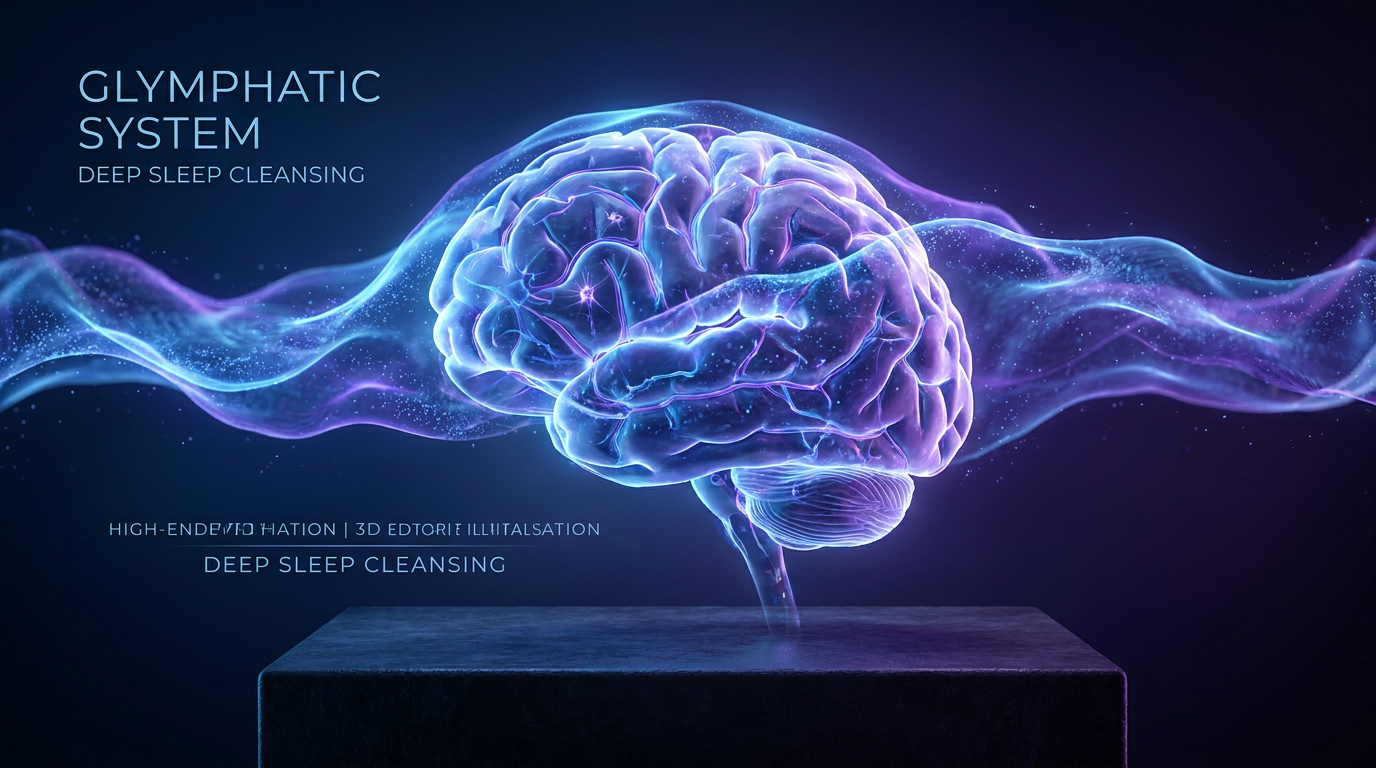
Every night, as human consciousness fades and the body enters deep sleep, the brain initiates a spectacular feat of self-maintenance. It activates a specialized plumbing network that pumps fluid through brain tissue, washing away the toxic metabolic byproducts that accumulate during waking hours.[1]
This waste-clearance pathway, known as the glymphatic system, is now considered one of the most significant neurological discoveries of the 21st century. First identified in 2012 by Dr. Maiken Nedergaard and her team at the University of Rochester, it fundamentally changed how scientists understand the biological purpose of sleep.[2]
For decades, researchers knew the body used the lymphatic system to clear cellular waste from organs and tissues, but the brain appeared to lack this infrastructure. The discovery of the glymphatic system—named for its reliance on the brain's "glial" cells—solved the mystery of how the central nervous system takes out its own trash.[4]
The mechanics of this nightly brain wash are remarkably elegant. During the day, the brain is highly active, consuming massive amounts of energy and producing metabolic waste, including proteins like amyloid-beta and tau. While awake, the brain's cells are tightly packed, leaving little room for fluid to circulate.[1]
But as the brain enters slow-wave sleep—the deepest phase of non-rapid eye movement (NREM) sleep—a dramatic physical transformation occurs. The brain's glial cells actually shrink, causing the interstitial space between cells to expand by up to 60 percent.[3][6]

This expansion opens the floodgates. Cerebrospinal fluid (CSF), the clear liquid surrounding the brain and spinal cord, surges into these newly widened channels. Driven by the rhythmic pulsations of the cardiovascular system, the CSF flows through the brain tissue at nearly ten times its daytime rate.[2][3]
Recent neuroimaging studies have captured this process in stunning detail. Researchers have observed that during slow-wave sleep, synchronized electrical firing by neurons is followed by a drop in blood volume in the brain. This creates a vacuum effect, drawing in massive, slow waves of CSF approximately every 20 seconds.[5][7]
Recent neuroimaging studies have captured this process in stunning detail.
These fluid waves act like a biological dishwasher, sweeping through the expanded cellular spaces and flushing away accumulated toxins. The waste is pushed out of the brain and into the body's peripheral lymphatic system, where it is ultimately processed and eliminated by the liver and kidneys.[1]
The clinical implications of this nightly cleansing are profound, particularly for aging populations. The proteins cleared by the glymphatic system—specifically amyloid-beta and tau—are the exact same proteins that misfold, aggregate, and form the toxic plaques associated with Alzheimer's disease and other forms of dementia.[6]
Studies have shown that even a single night of sleep deprivation can lead to a measurable increase in amyloid-beta accumulation in the brain. Conversely, robust glymphatic clearance is increasingly viewed as a primary defense mechanism against neurodegenerative decline.[8]
Unfortunately, the efficiency of the glymphatic system naturally declines with age. Older adults often experience a reduction in the duration and quality of slow-wave sleep, meaning the brain's "washing machine" runs for a shorter time and with less pressure.[1]

However, the emerging science of glymphatic health offers a highly empowering message: lifestyle choices can actively support and enhance this neurological detox. Because the system relies on cardiovascular pulsations to drive fluid flow, maintaining healthy blood pressure and vascular elasticity through regular exercise is crucial.[3]
Sleep position also appears to play a surprising role. Animal studies and preliminary human research suggest that sleeping in the lateral position—on your side—is the most efficient posture for glymphatic transport, allowing for better fluid dynamics than sleeping on the back or stomach.[3]
Dietary choices further modulate the system's efficiency. Omega-3 fatty acids, found in fish and flaxseeds, help maintain the cellular membranes necessary for fluid exchange. Additionally, practicing intermittent fasting or avoiding heavy meals right before bed allows the body to prioritize cellular repair and detoxification over digestion.[3]
For those struggling with sleep architecture, treating underlying conditions like sleep apnea is vital. Sleep apnea fragments the sleep cycle, repeatedly pulling individuals out of the deep, slow-wave stages required for the glymphatic system to operate at full capacity.[4]

Looking to the future, pharmaceutical companies and medical researchers are exploring ways to artificially stimulate glymphatic flow. Experimental approaches include using 40-hertz light and sound therapy to induce the synchronized brain waves that trigger CSF flushing, as well as developing medications that dilate perivascular spaces.[7]
Until those therapies mature, the current science provides a compelling reframe of why we sleep. Sleep is not merely a passive state of rest or a luxury to be sacrificed for productivity; it is an active, essential state of neurological maintenance.[1]
By prioritizing consistent, high-quality deep sleep, individuals are not just ensuring they feel alert the next day. They are actively washing their brains, protecting their cognitive longevity, and investing in their long-term neurological health.[1]
How we got here
2012
Dr. Maiken Nedergaard's team at the University of Rochester first identifies the glymphatic system in rodents.
2018
Researchers utilize MRI technology to visualize glymphatic flux in human subjects for the first time.
2019
Studies confirm that large, 20-second waves of cerebrospinal fluid wash through the brain specifically during slow-wave sleep.
2024
Scientists identify that synchronized neuronal electrical activity during deep sleep acts as the primary driver pumping fluid through the brain.
Viewpoints in depth
Clinical Neuroscientists
Researchers focused on mapping the mechanical pathways of the brain.
For neuroscientists, the discovery of the glymphatic system solved a decades-old mystery regarding how the brain, an organ with immense metabolic demands, clears its waste without a traditional lymphatic system. This camp emphasizes the structural mechanics—how glial cells shrink and perivascular spaces expand—and views this process as the missing link in understanding the pathogenesis of protein-misfolding diseases like Alzheimer's and Parkinson's.
Preventative Health Advocates
Clinicians focused on actionable lifestyle interventions to protect cognitive health.
Longevity and lifestyle medicine practitioners view the glymphatic system as a highly modifiable health lever. Rather than waiting for pharmaceutical interventions, this camp argues that patients can immediately improve their brain clearance by adopting strict sleep hygiene, treating sleep apnea, exercising to improve vascular elasticity, and adopting lateral sleeping positions. They frame sleep not as a passive necessity, but as an active, daily detoxification protocol.
Therapeutic Developers
Scientists working to artificially stimulate brain clearance in aging populations.
Recognizing that slow-wave sleep naturally declines with age, therapeutic developers are exploring ways to bypass the need for perfect sleep architecture. This camp is investigating pharmacological agents that can dilate perivascular spaces, as well as non-invasive devices that use 40-hertz light and sound stimulation to artificially induce the synchronized neuronal firing that drives cerebrospinal fluid flow.
What we don't know
- Whether artificially stimulating glymphatic flow with drugs or devices can fully replicate the benefits of natural slow-wave sleep.
- The exact degree to which lifelong sleep deprivation guarantees the onset of neurodegenerative diseases versus merely increasing the risk.
- How individual genetic differences affect the baseline efficiency of a person's glymphatic system.
Key terms
- Glymphatic System
- The brain's specialized waste clearance network that uses cerebrospinal fluid to flush out toxins, primarily active during deep sleep.
- Cerebrospinal Fluid (CSF)
- A clear, colorless body fluid found in the brain and spinal cord that cushions the brain and acts as the medium for waste removal.
- Slow-Wave Sleep
- The deepest phase of non-rapid eye movement (NREM) sleep, characterized by synchronized, slow electrical brain waves and profound physical restoration.
- Amyloid-beta
- A metabolic waste protein produced by normal brain activity that, if not properly cleared, can clump together to form plaques associated with Alzheimer's disease.
Frequently asked
What is the glymphatic system?
It is a plumbing network in the brain that uses cerebrospinal fluid to wash away toxic metabolic waste. It is highly active during deep sleep and largely inactive while we are awake.
Does sleeping on your side really help?
Yes. Both animal studies and preliminary human research suggest that the lateral (side) sleeping position is the most efficient posture for fluid transport and brain clearance.
Can you make up for lost deep sleep?
While you can recover some sleep debt, chronic sleep deprivation consistently impairs the brain's ability to clear toxins, which can lead to long-term accumulation of harmful proteins.
What stage of sleep is most important for brain washing?
Slow-wave sleep, also known as deep sleep or stage 3 NREM sleep, is when the glymphatic system is most active and cerebrospinal fluid flow is at its highest.
Sources
Source coverage
8 outlets
3 viewpoints surfaced








[1]Factlen Editorial TeamPreventative Health Advocates
Synthesis by Factlen editorial team
Read on Factlen Editorial Team →[2]University of Rochester Medical CenterClinical Neuroscientists
Not All Sleep is Equal When It Comes to Cleaning the Brain
Read on University of Rochester Medical Center →[3]National Institutes of HealthPreventative Health Advocates
The Glymphatic System in Health and Disease
Read on National Institutes of Health →[4]Cleveland ClinicPreventative Health Advocates
Glymphatic System: What It Is & How It Works
Read on Cleveland Clinic →[5]Science AdvancesTherapeutic Developers
Increased glymphatic influx is correlated with high EEG delta power and low heart rate in mice under anesthesia
Read on Science Advances →[6]European Academy of NeurologyClinical Neuroscientists
The glymphatic system: an update
Read on European Academy of Neurology →[7]Washington University in St. LouisClinical Neuroscientists
Neurons help flush waste out of brain during sleep
Read on Washington University in St. Louis →[8]Northwestern UniversityClinical Neuroscientists
Sleep Clears Brain Toxins
Read on Northwestern University →


Every angle. Every day.
Get health stories with full source coverage and perspective breakdowns delivered to your inbox.