
Apple's iOS 27 Focuses on Speed, a Rebuilt Siri, and Quality-of-Life Upgrades
Apple's upcoming iOS 27 update prioritizes system-wide performance boosts and a completely overhauled Siri, alongside highly requested features like separate alarm volumes and enhanced parental controls.
By Factlen Editorial Team
- Everyday Users
- Focused on practical, daily quality-of-life improvements.
- Parents & Privacy Advocates
- Focused on on-device processing and robust child safety controls.
- App Developers
- Focused on the mandatory architectural shifts and new APIs.
What's not represented
- · Android users comparing feature parity
- · Enterprise IT administrators managing the new AI features
Why this matters
Instead of just adding cosmetic changes, iOS 27 fundamentally speeds up how older and newer iPhones operate while finally delivering the deeply integrated, context-aware AI assistant Apple has promised for years. The inclusion of long-requested features like separate alarm volumes also resolves daily frustrations for millions of users.
Key points
- iOS 27 introduces a completely rebuilt Siri powered by Google Gemini, featuring cross-app contextual awareness.
- System performance sees major boosts, including 30% faster app launches and 80% faster AirDrop transfers.
- Highly requested quality-of-life features include separate alarm volumes and swipeable lock screen widgets.
- New parental controls allow for strict app restrictions during setup and an 'Ask to Browse' web feature.
- The update maintains compatibility with older devices, supporting models as far back as the 2019 iPhone 11.
Apple's Worldwide Developers Conference (WWDC) 2026 has concluded, and while the keynote focused heavily on the long-awaited overhaul of Siri, the first developer betas of iOS 27 reveal a massive suite of quality-of-life improvements. Following last year's divisive "Liquid Glass" visual redesign, Apple is using iOS 27 to focus on system plumbing, speed, and highly requested user features.[1][4]
The most immediate change users will notice is raw performance. Apple has introduced a new CPU scheduler and rebuilt the on-device search index, resulting in app launch speeds that are up to 30 percent faster. AirDrop transfers have also seen a massive 80 percent speed boost, and the operating system generally feels snappier across the board. Crucially, Apple is not leaving older devices behind; iOS 27 maintains compatibility all the way back to the 2019 iPhone 11.[3][4][5]

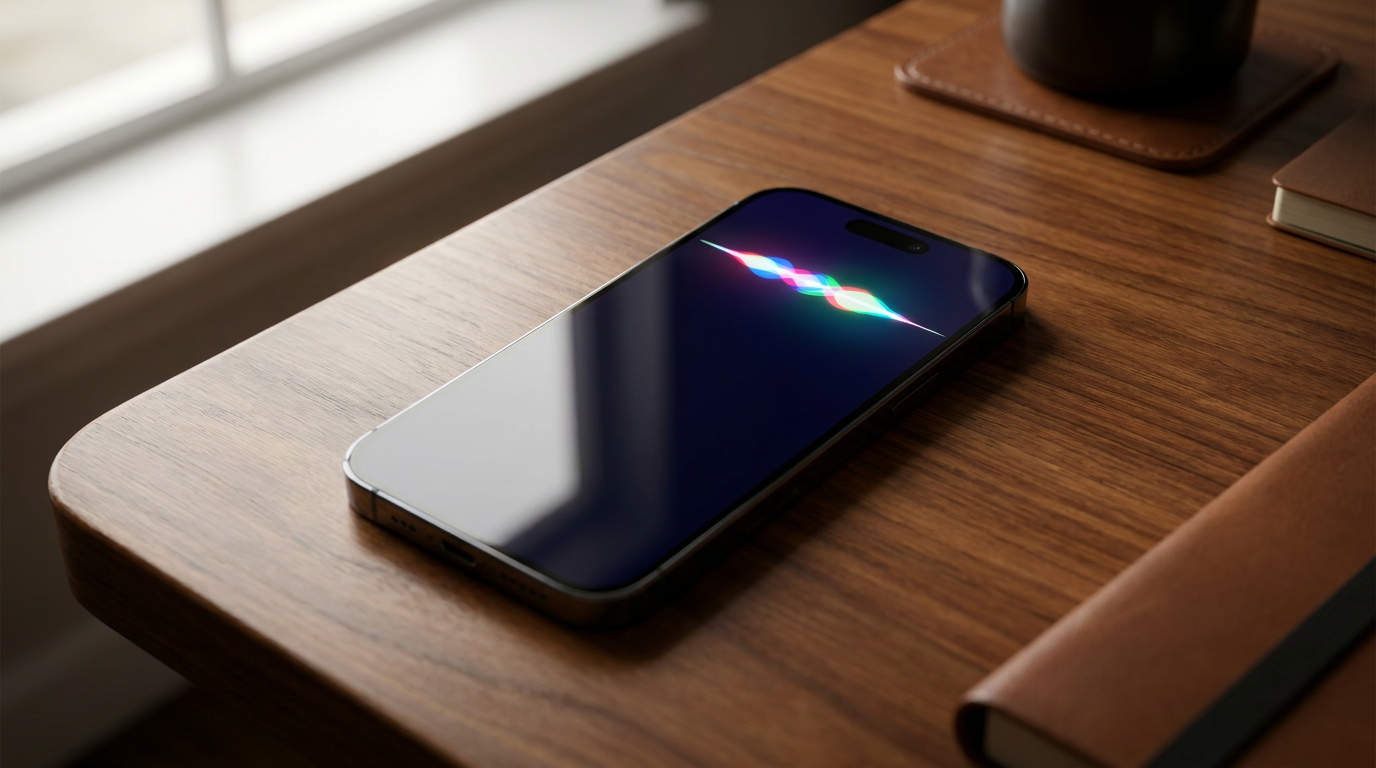
The centerpiece of the update, however, is the completely rebuilt Siri. After years of promising a truly intelligent assistant, Apple has integrated a custom Google Gemini model to power Siri AI. The assistant now lives as a standalone app and features a new colorful, glowing animation inside the Dynamic Island when summoned.[1][4]
This new iteration of Siri finally delivers on contextual awareness. The assistant can maintain persistent conversation history across your iPhone, iPad, and Mac, and it can answer questions based on the content currently visible on your screen. Users can also ask Siri to find specific information buried in their messages or emails, such as recalling the name of a hotel a friend mentioned weeks ago.[1][4][5]
To make this work, Apple is forcing a major shift for developers. The new "App Intents" framework is now the mandatory method for apps to communicate with Siri, putting older SiriKit integrations on a deprecation clock. Apple is also reportedly in discussions with OpenAI, Anthropic, and Google to allow third-party chatbots to integrate directly into iOS 27 via a new Extensions API, moving away from bespoke partnership deals.[2][4][6]
To make this work, Apple is forcing a major shift for developers.
Beyond AI, the Photos app is receiving a significant suite of editing tools. A new "Tools" tab introduces high-quality, on-device features like Cleanup, Extend, and Reframe. The Cleanup tool has been vastly improved to remove unwanted background objects seamlessly, while the app now allows users to generate custom slideshows from any combination of photos and videos—a long-overdue addition.[1][3]

iOS 27 also quietly addresses several long-standing user grievances. Most notably, the update introduces separate volume controls for alarms and ringtones, a feature iPhone users have requested for over a decade. Users can now also swipe away the "Now Playing" widget from the lock screen just like a standard notification, and the Notes app finally supports Markdown formatting.[3]
Health and audio features are also getting targeted upgrades. The Health app's Cycle Tracking now includes dedicated support and notifications for perimenopause and menopause deviations. Meanwhile, AirPods users will gain the ability to set custom EQ profiles to personalize their listening experience.[3][5]

For families, iOS 27 introduces robust new parental controls. A new "Ask to Browse" feature requires children to request permission before accessing new websites in Safari. The Setup Assistant now allows parents to explicitly choose which apps a child can access from the moment the device is turned on, and the Communication Safety feature has been expanded to blur gore and violent content in shared media.[5]
As developers continue to dig through the beta, more features are likely to surface before the software's final release. iOS 27 is currently available as a developer beta, with a public beta expected in July. The final version will roll out to the public this September, launching alongside the highly anticipated iPhone 18 lineup.[2][3]
How we got here
June 2024
Apple announces its initial Apple Intelligence partnership with OpenAI.
June 8, 2026
Apple unveils iOS 27 and the rebuilt Siri at WWDC 2026.
July 2026
Expected release of the first public beta for iOS 27.
September 2026
Anticipated public launch of iOS 27 alongside the iPhone 18.
Viewpoints in depth
Everyday Users
Focused on practical, daily quality-of-life improvements.
For the average iPhone owner, the architectural changes to Siri are secondary to the immediate, tangible benefits of iOS 27. The ability to finally separate alarm volumes from ringtones resolves a decade-long grievance that has plagued users who want quiet notifications but loud wake-up calls. Combined with 30% faster app launches and a lock screen widget that can simply be swiped away, the update is being praised for removing daily friction rather than just adding new gimmicks.
App Developers
Focused on the mandatory architectural shifts and new APIs.
The developer community is facing a significant transition period. Apple's decision to make the new 'App Intents' framework mandatory for Siri integration means that older SiriKit implementations are now on a deprecation clock. While this requires immediate engineering work to update existing apps, developers acknowledge that the new Extensions API will ultimately allow for much deeper, more reliable voice control within their software, bypassing the brittle integrations of the past.
Parents & Privacy Advocates
Focused on on-device processing and robust child safety controls.
Privacy advocates are highlighting Apple's continued commitment to on-device AI processing, which ensures that personal context—like reading through messages to find a hotel name—never leaves the phone. Meanwhile, family safety groups are lauding the new 'Ask to Browse' feature and the Setup Assistant's app-restriction capabilities. By allowing parents to lock down web access and blur violent content at the operating system level, iOS 27 provides a much stronger safety net against algorithmic feeds and unmoderated spaces.
What we don't know
- It remains unclear exactly which third-party AI chatbots will be available via the new Siri Extensions API at launch.
- Apple has not specified if the most advanced on-device AI features will be restricted to the upcoming iPhone 18 lineup or available on older supported models.
Key terms
- App Intents
- A framework that allows developers to expose their app's features directly to Siri and the iOS system.
- Dynamic Island
- The pill-shaped cutout at the top of modern iPhone screens that expands to show alerts and background activities.
- On-device AI
- Artificial intelligence tasks that are processed entirely on the phone's hardware rather than being sent to a cloud server, ensuring better privacy.
Frequently asked
Will my older iPhone get the iOS 27 update?
Yes, Apple is maintaining compatibility for all devices going back to the iPhone 11, which was released in 2019.
Can I finally change my alarm volume separately from my ringtone?
Yes, iOS 27 introduces separate volume sliders for alarms and general ringtones.
Is the new Siri available on all devices?
The rebuilt Siri is deeply integrated into iOS 27, but some of the most advanced on-device AI features may require newer iPhone models with dedicated neural processing hardware.
What new parental controls are included?
iOS 27 adds an 'Ask to Browse' feature for Safari, allows parents to restrict specific apps during initial setup, and blurs violent or gory content in messages.
Sources
Source coverage
6 outlets
3 viewpoints surfaced





[1]TechCrunchEveryday Users
Every new iOS 27 feature that’s worth knowing about
Read on TechCrunch →[2]9to5MacApp Developers
Apple still has more iOS 27 and watchOS 27 features in the pipeline: report
Read on 9to5Mac →[3]TechRadarEveryday Users
Here are 21 new features in iOS 27 that Apple didn't have time to mention during its WWDC 2026 keynote
Read on TechRadar →[4]LushBinaryApp Developers
WWDC 2026: iOS 27, New Siri & Dev Tools
Read on LushBinary →[5]Apple NewsroomParents & Privacy Advocates
Apple unveils next generation of Apple Intelligence, Siri AI, and more
Read on Apple Newsroom →[6]BloombergApp Developers
Apple Plans Additional Siri Extensions for iOS 27
Read on Bloomberg →

More in technology
See all 5 stories →


Every angle. Every day.
Get technology stories with full source coverage and perspective breakdowns delivered to your inbox.