
How to Choose an E-Bike in 2026: A Complete Buying Guide
Navigating the booming e-bike market requires understanding safety certifications, motor types, and battery capacity. Here is everything you need to know to make an informed purchase.
By Factlen Editorial Team
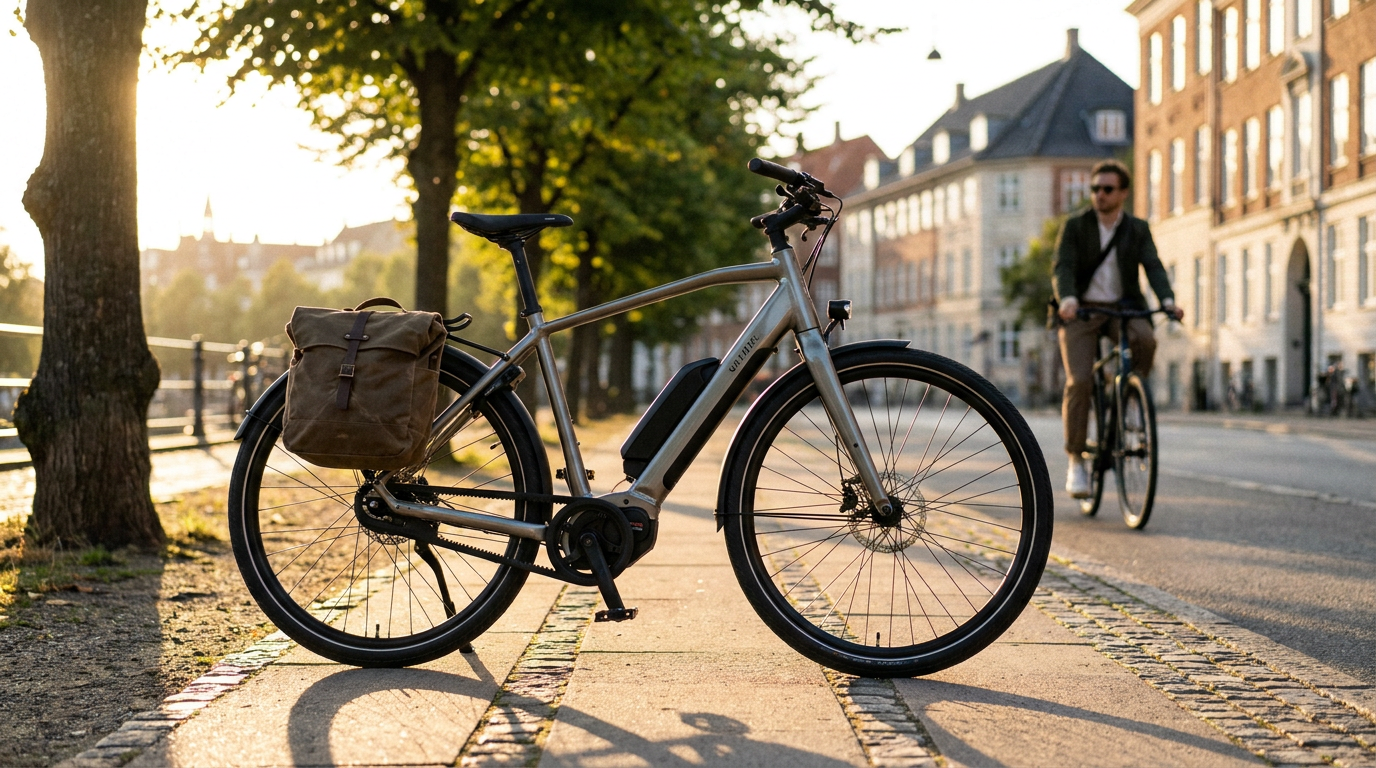
- Urban Commuters
- Focus on replacing car trips with reliable, cargo-capable e-bikes.
- Recreational Cyclists
- Value natural ride feel, fitness, and off-road capability.
- Safety & Regulatory Advocates
- Prioritize UL certification, battery safety, and trail access rules.
- Value-Focused Buyers
- Seek the best balance of range, power, and affordability.
What's not represented
- · Pedestrians and traditional cyclists sharing multi-use paths
- · Local bike mechanics tasked with repairing direct-to-consumer models
Why this matters
An e-bike is a major financial investment that can fundamentally change how you commute, exercise, and run errands. Understanding the technical specifications—from safety certifications to motor types—ensures you buy a reliable vehicle rather than a dangerous or frustrating liability.
Key points
- E-bikes are categorized into three classes that determine their top speed and where they can be legally ridden.
- UL 2849 certification is a non-negotiable safety standard that prevents battery fires and thermal runaway.
- Mid-drive motors offer a more natural ride and better hill-climbing ability compared to hub-drive motors.
- Battery capacity, measured in watt-hours (Wh), is the most accurate predictor of an e-bike's real-world range.
- Hydraulic disc brakes are essential for safely stopping heavier, faster electric bicycles.
The electric bicycle has transitioned from a niche novelty to a mainstream transportation powerhouse. In 2026, e-bikes are replacing car commutes, shrinking hills, and making cycling accessible to millions who previously found it too physically demanding. But as the market explodes with new brands and models, buying an e-bike has become a complex technological decision.[7]
Shoppers are no longer just picking a frame size and a color; they are evaluating battery chemistries, motor placements, and software controllers. Navigating this landscape requires understanding a few core concepts that separate a reliable, life-changing vehicle from a frustrating—or even dangerous—money pit.[2][7]
The most critical factor in 2026 is safety certification. Following a wave of regulatory crackdowns on cheap, uncertified lithium-ion batteries, the industry has standardized around a non-negotiable benchmark: UL 2849.[2][4]
UL 2849 is a comprehensive safety standard that tests the entire electrical drivetrain—including the battery, motor, and charger—to prevent thermal runaway and fire hazards. If a brand cannot provide documentation that their complete system is UL 2849 certified, or at the very least that the battery meets UL 2271 standards, consumer advocates universally advise walking away.[2][4]

Once safety is assured, the next decision is legal classification. In the United States, e-bikes are divided into three tiers that dictate where they can be ridden. Class 1 e-bikes provide motor assistance only when the rider is pedaling, capping out at 20 mph. These are widely accepted on multi-use paths and mountain bike trails.[1][2]
Class 2 e-bikes also cap at 20 mph but include a throttle, allowing the bike to move without any pedaling effort. While popular for commuting, they are increasingly restricted on non-motorized trails.[1][2]
Class 3 e-bikes are the fastest legal category, offering pedal-assist up to 28 mph. They are ideal for replacing cars on longer road commutes, but they rarely feature throttles and are strictly banned from most pedestrian paths.[2][5]

Class 3 e-bikes are the fastest legal category, offering pedal-assist up to 28 mph.
The riding experience itself is largely dictated by the motor's placement. The two dominant designs are hub-drive and mid-drive motors. Hub motors, located in the center of the front or rear wheel, are simpler, more affordable, and provide a distinct pushing sensation. They are excellent for flat urban commutes.[1][3]
Mid-drive motors, positioned between the pedals at the bottom bracket, offer a fundamentally different feel. Because they power the bike's drivetrain directly, they leverage the existing gears. This results in a more natural, balanced ride and vastly superior performance when climbing steep hills.[1][3]

When evaluating a motor's capability, buyers often focus on watts, which dictate top speed. However, torque—measured in Newton-meters (Nm)—is arguably more important. Torque is the muscle that gets a heavy bike moving from a dead stop and pushes it up a steep incline.[4][5]
A motor with 40 Nm of torque is sufficient for flat boardwalks, but riders tackling hills or hauling cargo should look for mid-drive systems offering 60 to 85 Nm.[1][4]
Powering that motor is the battery, whose capacity is measured in watt-hours (Wh). The Wh rating is the single best predictor of an e-bike's range. Most modern e-bikes feature batteries between 400 and 750 Wh.[3][5]
While manufacturers often advertise maximum ranges of 60 to 80 miles, real-world performance depends heavily on the rider's weight, the terrain, and the level of motor assistance used. A 500 Wh battery typically delivers a reliable 25 miles of range under heavy use, or up to 50 miles on low-assist settings.[2][5]

Battery longevity is another crucial consideration. Most high-quality lithium-ion packs are rated for 500 to 1,000 full charge cycles before their capacity drops below 80 percent. Riders can significantly extend this lifespan by avoiding extreme temperatures and charging the battery to 80 percent for daily use, reserving 100 percent charges only for exceptionally long rides.[2][6]
Because e-bikes are significantly heavier than traditional bicycles—often weighing between 50 and 70 pounds—and travel at higher speeds, standard braking systems are insufficient. Hydraulic disc brakes are widely considered mandatory for their superior, all-weather stopping power and low maintenance requirements.[4][7]
Beyond the spec sheet, the physical fit of the bicycle remains paramount. A step-through frame design, which eliminates the high top tube, has become increasingly popular across all demographics because it allows riders to easily mount and dismount a heavy bike, especially when loaded with groceries or cargo.[7]

Ultimately, an e-bike is a significant investment, with quality models starting around $1,500 and premium mid-drive options easily exceeding $4,000. While direct-to-consumer online brands offer aggressive pricing, purchasing from a local bike shop provides the invaluable benefits of a test ride, professional assembly, and long-term warranty support.[7]
How we got here
2019–2023
E-bikes account for 63% of all bicycle sales growth, transitioning from a niche product to mainstream transit.
2024
Major US cities and retailers begin mandating UL 2849 certification in response to fires caused by cheap, uncertified batteries.
2026
The e-bike market stabilizes around clear class definitions and standardized safety benchmarks, making purchasing safer for consumers.
Viewpoints in depth
Urban Commuters
Prioritize reliability, cargo capacity, and weather-proof components to replace daily car trips.
For the daily commuter, an e-bike is a utility vehicle first and a bicycle second. This camp prioritizes integrated lighting, sturdy cargo racks, and full-coverage fenders over raw speed or off-road suspension. They often favor Class 3 e-bikes for keeping up with city traffic, and they heavily weigh the availability of local service shops to minimize downtime if a component fails.
Recreational Trail Riders
Focus on mid-drive torque, suspension, and natural ride feel for fitness and off-road exploration.
Riders taking their e-bikes onto dirt trails or steep mountain paths look for entirely different specifications. This group strongly prefers mid-drive motors for their high torque and balanced center of gravity. They typically opt for Class 1 e-bikes, as throttles are frequently banned on singletrack trails, and they value sophisticated pedal-assist sensors that seamlessly match their physical effort.
Safety Advocates
Emphasize strict adherence to UL 2849 certification and proper battery storage to prevent thermal runaway incidents.
Following highly publicized incidents of lithium-ion battery fires, safety advocates and fire departments have drawn a hard line on e-bike standards. They argue that consumers should never compromise on UL 2849 certification, regardless of the discount offered by uncertified brands. This perspective also stresses the importance of using only original chargers and never leaving a charging battery unattended overnight.
What we don't know
- How future trail access regulations will evolve as e-bikes become even more prevalent on multi-use paths.
- Whether solid-state battery technology will reach the consumer e-bike market soon enough to significantly reduce weight.
- How long smaller, direct-to-consumer e-bike brands will continue to support replacement parts for older models.
Key terms
- UL 2849
- A rigorous safety standard that certifies an e-bike's entire electrical system, including the battery, motor, and charger, to prevent fire hazards.
- Watt-hours (Wh)
- A measurement of a battery's energy capacity, used to estimate how far an e-bike can travel on a single charge.
- Torque (Nm)
- The rotational force produced by the motor, measured in Newton-meters, which determines how well the bike accelerates and climbs hills.
- Pedal-Assist
- A mode where the electric motor only provides power while the rider is actively pedaling the bicycle.
- Thermal Runaway
- A dangerous chain reaction within a lithium-ion battery that can lead to uncontrollable overheating and fire, typically prevented by certified battery management systems.
Frequently asked
How long do e-bike batteries last?
Most high-quality lithium-ion e-bike batteries last for 500 to 1,000 full charge cycles. This translates to roughly 3 to 5 years of regular use before the battery's capacity drops below 80 percent.
Can I ride an e-bike in the rain?
Yes, most modern e-bikes from reputable brands are highly water-resistant and designed to be ridden in the rain. However, they should never be fully submerged in water or cleaned with a high-pressure power washer.
Do I need a license to ride an e-bike?
In the United States, Class 1, 2, and 3 e-bikes generally do not require a license, registration, or insurance. However, local age restrictions and helmet laws frequently apply depending on the state.
What is the difference between a hub motor and a mid-drive motor?
Hub motors are located in the wheel and provide a pushing sensation, making them great for flat commutes. Mid-drive motors are positioned at the pedals and leverage the bike's gears, offering better hill-climbing ability and a more natural ride feel.
Sources
Source coverage
7 outlets
4 viewpoints surfaced







[1]BackcountryRecreational Cyclists
E-Bike Guide: How To Choose An E-Bike
Read on Backcountry →[2]Ebike OracleSafety & Regulatory Advocates
How to Choose an E-Bike in 2026: A Beginner's Buying Guide
Read on Ebike Oracle →[3]BIKE24Recreational Cyclists
How to Choose an Electric Bike | E-Bike Guide
Read on BIKE24 →[4]HOVSCOValue-Focused Buyers
What Are the Best E Bikes to Buy in 2026?
Read on HOVSCO →[5]EskuteValue-Focused Buyers
Top 5 Things you need to know when choosing the E-bike
Read on Eskute →[6]Movin' EbikesUrban Commuters
How to Choose an E-Bike — Ultimate Guide
Read on Movin' Ebikes →[7]Factlen Editorial TeamUrban Commuters
Synthesis by Factlen editorial team
Read on Factlen Editorial Team →
More in shopping
See all 6 stories →Pet Tech
The Trade-Offs Between Bluetooth Trackers and Cellular GPS for Pet Safety
7 sources

Display Tech
OLED vs. Mini-LED in 2026: Which TV Technology Actually Wins?
7 sources

Smart Home Protocols
Matter over Thread vs. Wi-Fi: Which Smart Home Protocol Should You Choose?
6 sources

Wearable Tech
Smart Rings vs. Smartwatches: The 2026 Clinical Evidence on Wearable Accuracy
9 sources

Every angle. Every day.
Get shopping stories with full source coverage and perspective breakdowns delivered to your inbox.