
Vance Arrives in Switzerland for Iran Nuclear Talks Amid Dispute Over Strait of Hormuz
U.S. and Iranian delegations have converged in Switzerland to negotiate a permanent peace deal, even as the two nations trade threats over maritime tolls and military strikes in Lebanon.
By Factlen Editorial Team
- U.S. Administration
- Focuses on enforcing the 60-day ceasefire, ensuring the Strait of Hormuz remains open, and using the threat of U.S.-imposed tolls or economic pressure to secure a final nuclear deal.
- Iranian Leadership
- Views Israeli strikes in Lebanon as a violation of the U.S.-Iran MOU, using the threat of closing the Strait of Hormuz as leverage to demand compliance and secure sanctions relief.
- Global Shipping Industry
- Concerned primarily with the physical security of the Strait of Hormuz, the clearing of naval mines, and the avoidance of any tolls or blockades that disrupt global energy supplies.
- Regional Security Observers
- Highlights the fragility of the U.S.-Iran memorandum, noting that the linkage between the Lebanon conflict and the broader U.S.-Iran deal makes the ceasefire highly vulnerable to collapse.
What's not represented
- · European energy importers reliant on Middle Eastern oil
- · Lebanese civilians caught in the crossfire between Israel and Hezbollah
Why this matters
The 60-day negotiation window is the world's best chance to permanently end a conflict that recently paralyzed global shipping. If the talks collapse over regional skirmishes or maritime disputes, the resulting blockade of the Strait of Hormuz could instantly trigger a global energy crisis and severe economic inflation.
Key points
- Vice President JD Vance has arrived in Switzerland for direct nuclear and peace talks with Iranian officials.
- Iran's military claimed it closed the Strait of Hormuz on Saturday in retaliation for Israeli strikes in Lebanon.
- U.S. Central Command denied the closure, reporting that 55 ships and 17 million barrels of oil safely transited the strait.
- President Trump warned that the U.S. may impose its own tolls on the waterway if a final peace deal is not reached within 60 days.
- The Iranian delegation, including top banking and oil officials, is prioritizing the unfreezing of assets and sanctions relief.
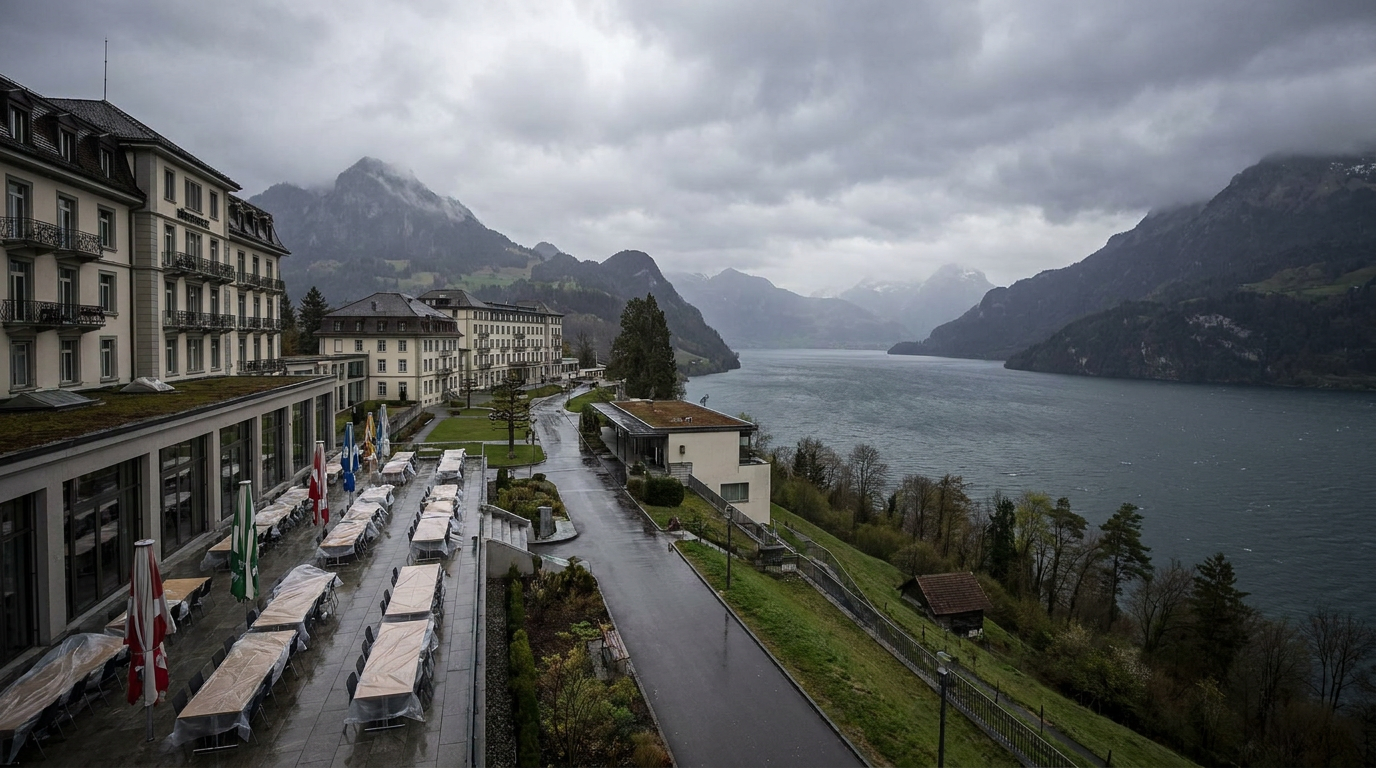
Vice President JD Vance traveled to Switzerland on Saturday to launch direct nuclear and peace negotiations with Iran, initiating a high-stakes 60-day window to solidify a fragile ceasefire. The diplomatic push at the Bürgenstock resort marks the first face-to-face talks between the two nations since the Islamabad summit in April. Vance joins U.S. envoys Steve Witkoff and Jared Kushner, alongside Qatari and Pakistani mediators, to navigate the technical complexities of unfreezing Iranian assets and curbing Tehran's nuclear ambitions. The summit aims to convert a preliminary 14-point memorandum of understanding—signed earlier this week by President Donald Trump and Iranian President Masoud Pezeshkian—into a permanent political settlement following a devastating 110-day conflict.[1][4][8]
However, the negotiations are beginning under a cloud of immediate military tension. Just hours before the delegations converged in Zurich, Iran’s Khatam-al Anbiya Central Headquarters announced it was closing the Strait of Hormuz to vessel traffic. State media broadcast the military command's claim that the closure was a "first step of response" to Israeli airstrikes against Hezbollah in southern Lebanon. Tehran argues that Israel's continued military operations violate the U.S.-Iran agreement, which explicitly calls for an immediate and permanent termination of military operations on all fronts, including Lebanon. The Iranian foreign ministry warned that if the U.S. and its allies fail to implement their commitments, the entire memorandum of understanding will be jeopardized.[2][5][10]
The United States swiftly denied that the vital maritime corridor had been shuttered. U.S. Central Command (CENTCOM) issued a statement asserting that American forces remain "present and vigilant" in the region and that safe passage remains intact. According to the military, 55 merchant ships carrying more than 17 million barrels of oil successfully transited the strait on Saturday. Speaking to Fox News shortly before his departure from Joint Base Andrews, Vice President Vance corroborated the military's assessment, stating that the administration was "not seeing any evidence" of a shutdown. Vance suggested that any localized diversions were likely due to ongoing operations to clear naval mines placed during the recent conflict, rather than a renewed Iranian blockade.[3][5][9]

Adding a new layer of complexity to the diplomatic maneuvering, President Trump took to his Truth Social platform to issue an ultimatum regarding the waterway's future. Trump confirmed that no maritime fees will be permitted in the Strait of Hormuz during the current 60-day ceasefire. However, he warned that if a final comprehensive deal is not reached, the United States might impose its own tolls. Trump argued that such fees would serve as reimbursement for "services rendered as the Guardian Angel to the countries of the Middle East." The assertion pushes back against previous statements from Iranian officials, who had suggested Tehran would begin charging ships for transit services once the fee-free period expires.[6][7][9]
Adding a new layer of complexity to the diplomatic maneuvering, President Trump took to his Truth Social platform to issue an ultimatum regarding the waterway's future.
Despite the aggressive public posturing over the strait, Iran's commitment to the diplomatic track appears intact. A high-level Iranian delegation landed in Switzerland late Saturday, underscoring Tehran's urgent need for economic relief. The team is led by parliamentary Speaker Mohammad Bagher Ghalibaf and Foreign Minister Abbas Araghchi, and notably includes senior central bank and oil officials. Their presence highlights that sanctions relief, the unfreezing of assets, and the restoration of oil exports remain central to Iran's calculations. Swiss and Qatari intermediaries worked frantically behind the scenes to ensure the Iranian delegation's arrival after the Lebanon strikes briefly threatened to derail the schedule.[4][8]

The core friction threatening to unravel the talks is the explicit linkage between the U.S.-Iran deal and the ongoing conflict in the Levant. The memorandum of understanding requires the Trump administration to press Israel to halt its attacks on Iran's proxy, Hezbollah. However, U.S. intelligence agencies have reportedly warned that Israeli Prime Minister Benjamin Netanyahu remains intent on continuing military operations in Lebanon to secure Israel's northern border. On Saturday, the Israel Defense Forces confirmed it had struck Hezbollah targets after the militant group launched dozens of projectiles overnight. This persistent exchange of fire places immense strain on the broader U.S.-Iran ceasefire, as Tehran views the defense of its regional allies as non-negotiable.[2][5][9]
The physical security of the Strait of Hormuz remains the ultimate leverage point in the negotiations. Historically, the waterway has accommodated roughly 25 percent of the world's seaborne oil trade and 20 percent of global liquefied natural gas shipments. During the height of the recent 110-day war, the corridor was effectively paralyzed by Iranian naval mines and U.S. blockades, causing severe disruptions to global energy markets. Shipping companies and commodity trackers are monitoring the current situation with extreme caution. While firms like Kpler confirmed that dozens of ships crossed the strait on Saturday, the maritime industry remains acutely aware that either side can walk away from the preliminary agreement at any time.[2][8][10]

With the 60-day clock now ticking, the technical teams in Switzerland face a monumental task. The agenda requires them to translate a fragile military truce into a binding framework that addresses Iran's nuclear enrichment, regional proxy forces, and global energy security. Vice President Vance indicated that while he expects to be in Switzerland for only a few days, the technical experts will remain embedded to hammer out the details. If the talks collapse, U.S. officials have signaled a readiness to significantly tighten economic pressure and resume military posturing. Conversely, a successful negotiation would require a binding United Nations Security Council resolution to endorse the final deal, fundamentally reshaping the geopolitical landscape of the Middle East.[1][4][8]
How we got here
April 2026
U.S. and Iranian officials hold preliminary talks at the Islamabad summit.
June 17, 2026
President Trump and Iranian President Pezeshkian sign a 14-point memorandum of understanding to end military operations.
June 19, 2026
Israel and Hezbollah engage in renewed cross-border strikes, testing the parameters of the ceasefire.
June 20, 2026
Iran threatens to close the Strait of Hormuz, while U.S. and Iranian delegations arrive in Switzerland for 60 days of negotiations.
Viewpoints in depth
U.S. Administration's view
The U.S. is focused on maintaining freedom of navigation while using economic leverage to secure a final deal.
The Trump administration views the 60-day window as an opportunity to permanently curb Iran's nuclear ambitions and regional influence. By publicly floating the idea of U.S.-imposed tolls in the Strait of Hormuz, the administration is signaling that it will not allow Tehran to dictate the terms of global maritime trade. Officials emphasize that the U.S. military remains fully capable of keeping the strait open, dismissing Iranian closure announcements as posturing.
Iranian Leadership's view
Tehran sees the U.S.-Iran agreement as a holistic package that must include the cessation of Israeli strikes in Lebanon.
For Iran, the memorandum of understanding is not just about direct U.S.-Iran relations, but about protecting its broader "Axis of Resistance." Iranian officials argue that the U.S. is responsible for reigning in Israel, and that continued Israeli strikes against Hezbollah constitute a material breach of the ceasefire. By threatening to close the Strait of Hormuz, Tehran is utilizing its most potent economic weapon to force Washington into ensuring compliance across all fronts.
Global Shipping Industry's view
The maritime sector is highly anxious about the physical risks and potential costs of navigating the Strait of Hormuz.
Commercial shipping operators are caught in the middle of the geopolitical standoff. While U.S. Central Command assures that the waterway is safe, the industry remains deeply concerned about the presence of uncleared naval mines and the unpredictable nature of Iranian military announcements. The prospect of either Iran or the U.S. imposing transit tolls adds a layer of financial uncertainty that could drastically increase the cost of global energy transport.
Regional Security Observers' view
Analysts warn that the linkage between the Levant conflict and the U.S.-Iran talks makes the entire peace process highly unstable.
Security experts point out that the U.S.-Iran memorandum of understanding is built on a fragile foundation. Because the deal requires an end to hostilities on all fronts, any localized flare-up—such as an exchange of fire between Israel and Hezbollah—has the potential to derail the high-level negotiations in Switzerland. Observers note that neither Washington nor Tehran has full control over their respective regional allies, making the 60-day negotiation period incredibly precarious.
What we don't know
- Whether Israeli military operations against Hezbollah in Lebanon will ultimately cause Iran to walk away from the negotiating table.
- How the United States would practically enforce its own maritime tolls in the Strait of Hormuz if the 60-day talks fail.
- The exact timeline for clearing all remaining naval mines placed in the waterway during the recent 110-day conflict.
Key terms
- Strait of Hormuz
- A narrow, strategically vital waterway between the Persian Gulf and the Gulf of Oman, through which a massive portion of the world's oil passes.
- Memorandum of Understanding (MOU)
- A preliminary, non-binding agreement outlining the framework for a future comprehensive peace treaty.
- U.S. Central Command (CENTCOM)
- The unified combatant command of the U.S. Department of Defense responsible for military operations in the Middle East.
Frequently asked
Why is the Strait of Hormuz so important?
The strait is a crucial global choke point, historically facilitating the transit of roughly 25 percent of the world's seaborne oil and 20 percent of its liquefied natural gas.
Why did Iran threaten to close the strait again?
Iran's military cited recent Israeli airstrikes against Hezbollah in Lebanon, arguing that the attacks violate the U.S.-Iran agreement to end military operations on all fronts.
Is the Strait of Hormuz currently closed?
No. Despite Iranian claims, U.S. Central Command and commercial tracking firms confirmed that dozens of merchant ships safely passed through the waterway on Saturday.
What are the U.S. and Iran negotiating in Switzerland?
The delegations are working to convert a preliminary ceasefire into a final deal that addresses Iran's nuclear program, regional proxy conflicts, and the lifting of U.S. economic sanctions.
Sources
Source coverage
10 outlets
4 viewpoints surfaced










[1]AxiosRegional Security Observers
Vance travels to Switzerland for nuclear talks with Iran
Read on Axios →[2]The Washington PostRegional Security Observers
Iran says it is closing Strait of Hormuz, testing fragile agreement with U.S.
Read on The Washington Post →[3]Fox NewsU.S. Administration
Vance touts oil flow through Strait of Hormuz despite Iran's claims, plans to join Switzerland talks
Read on Fox News →[4]CBS NewsRegional Security Observers
Vance heads to Switzerland Saturday to begin negotiations with Iran
Read on CBS News →[5]The Times of IsraelRegional Security Observers
US denies strait shuttered, says traffic flowing; US, Iran negotiators gathering in Swiss resort
Read on The Times of Israel →[6]ForbesU.S. Administration
Trump Threatens U.S. Tolls In Strait Of Hormuz If Iran Peace Deal Fails
Read on Forbes →[7]Al JazeeraIranian Leadership
Trump vows Iran will not charge Strait of Hormuz tolls, but says US might
Read on Al Jazeera →[8]RFE/RLRegional Security Observers
US-Iran implementation talks back on track in Switzerland
Read on RFE/RL →[9]AP NewsU.S. Administration
Trump threatens to charge U.S. tolls in Strait of Hormuz if final Iran deal not reached in 60 days
Read on AP News →[10]Seatrade MaritimeGlobal Shipping Industry
Iran has moved to close the Strait of Hormuz again
Read on Seatrade Maritime →

Every angle. Every day.
Get news politics stories with full source coverage and perspective breakdowns delivered to your inbox.