
The Road to Africa: What to Expect from the 2027 ICC Cricket World Cup
With an expanded 14-team format and the return of the Super Six stage, the 2027 Cricket World Cup in South Africa, Zimbabwe, and Namibia promises a wider global showcase.
By Factlen Editorial Team
- Tactics & Format Analysts
- Experts evaluating the competitive balance of the tournament structure.
- National Team Supporters
- Fans of nations hovering around the automatic qualification cut-off.
- Host Nation Organizers
- Local officials and cricket boards in Southern Africa managing the event logistics.
What's not represented
- · Associate Nation Players
- · Local Tourism Operators
Why this matters
The 2027 tournament marks a major shift in international cricket, abandoning the exclusive 10-team round-robin in favor of a 14-team format that opens the door for emerging nations while bringing the sport's biggest spectacle back to the African continent for the first time in 24 years.
Key points
- The 2027 ICC Men's Cricket World Cup will be co-hosted by South Africa, Zimbabwe, and Namibia in October and November 2027.
- The tournament expands from 10 to 14 teams, reverting to the 2003 format featuring two groups of seven and a Super Six stage.
- South Africa and Zimbabwe qualify automatically as Full Members, while co-host Namibia must earn its spot through the qualification pathway.
- The top eight teams in the ICC ODI rankings by March 2027 will secure direct entry, intensifying the pressure on bubble teams.
The international cricket calendar is already turning its focus toward the southern hemisphere. In October and November 2027, South Africa, Zimbabwe, and Namibia will jointly host the 14th edition of the ICC Men's Cricket World Cup. The tournament will mark the first time the sport's premier One Day International (ODI) event returns to the African continent since 2003, promising a vibrant backdrop of iconic venues and fast, bouncy pitches.[1][5]
For cricket fans and administrators, the 2027 edition represents a significant structural shift. After utilizing a highly exclusive 10-team round-robin format for the 2019 and 2023 tournaments, the International Cricket Council (ICC) has expanded the field to 14 teams. This expansion is widely viewed as a necessary step to grow the global game, offering emerging cricket nations a larger platform on the world stage while maintaining the high-stakes drama of the ODI format.[1][6]
With 14 teams in the mix, the tournament will revert to a structure heavily inspired by the 2003 World Cup. The competing nations will be divided into two groups of seven, ensuring a diverse mix of matchups during the initial phase. Every team will play six group-stage matches, meaning early slip-ups can be recovered, but consistent performance remains paramount to advancing.[1][5]

The true crucible of the 2027 tournament will be the return of the "Super Six" stage. The top three teams from each of the two groups will advance to this secondary phase. Crucially, teams will carry forward the points they earned against the other advancing teams from their original group, making every group-stage encounter against a top-tier rival doubly important. The top four teams from the Super Six will then proceed to the semi-finals.[1][5]
While the tournament is still over a year away, the race to secure one of those 14 spots is already intensifying. The qualification process is heavily tied to the ICC Men's ODI Team Rankings. The top eight ranked teams as of the March 31, 2027 cut-off date will earn direct entry into the World Cup, bypassing the perilous global qualifying tournaments.[2][6]
While the tournament is still over a year away, the race to secure one of those 14 spots is already intensifying.
The host nations present a unique quirk in the qualification rulebook. Because South Africa and Zimbabwe are Full Members of the ICC, they are granted automatic entry into the tournament regardless of their ranking. However, Namibia, despite serving as a co-host, is an Associate Member. Under current ICC regulations, Namibia does not receive an automatic berth and must earn its place through the standard qualification pathway.[1][2][5]
This dynamic has turned bilateral ODI series into high-stakes affairs for teams hovering around the qualification cut-off. Nations like Bangladesh, the West Indies, and Afghanistan are acutely aware of the March 2027 deadline. If Zimbabwe fails to climb into the top eight, their automatic host spot effectively consumes one of the available berths, meaning the eighth-ranked team could be forced into the qualifiers. Every match over the next year carries heavy ranking implications for these bubble teams.[2]

For the teams that miss the direct qualification cut, the road to Africa runs through the 2027 Cricket World Cup Qualifier. This 10-team tournament will determine the final four spots in the main event. The qualifier will feature the bottom-ranked Full Members battling against top-performing Associate nations emerging from the ICC Cricket World Cup League 2 and Challenge League cycles, setting the stage for potential upsets.[1][6]
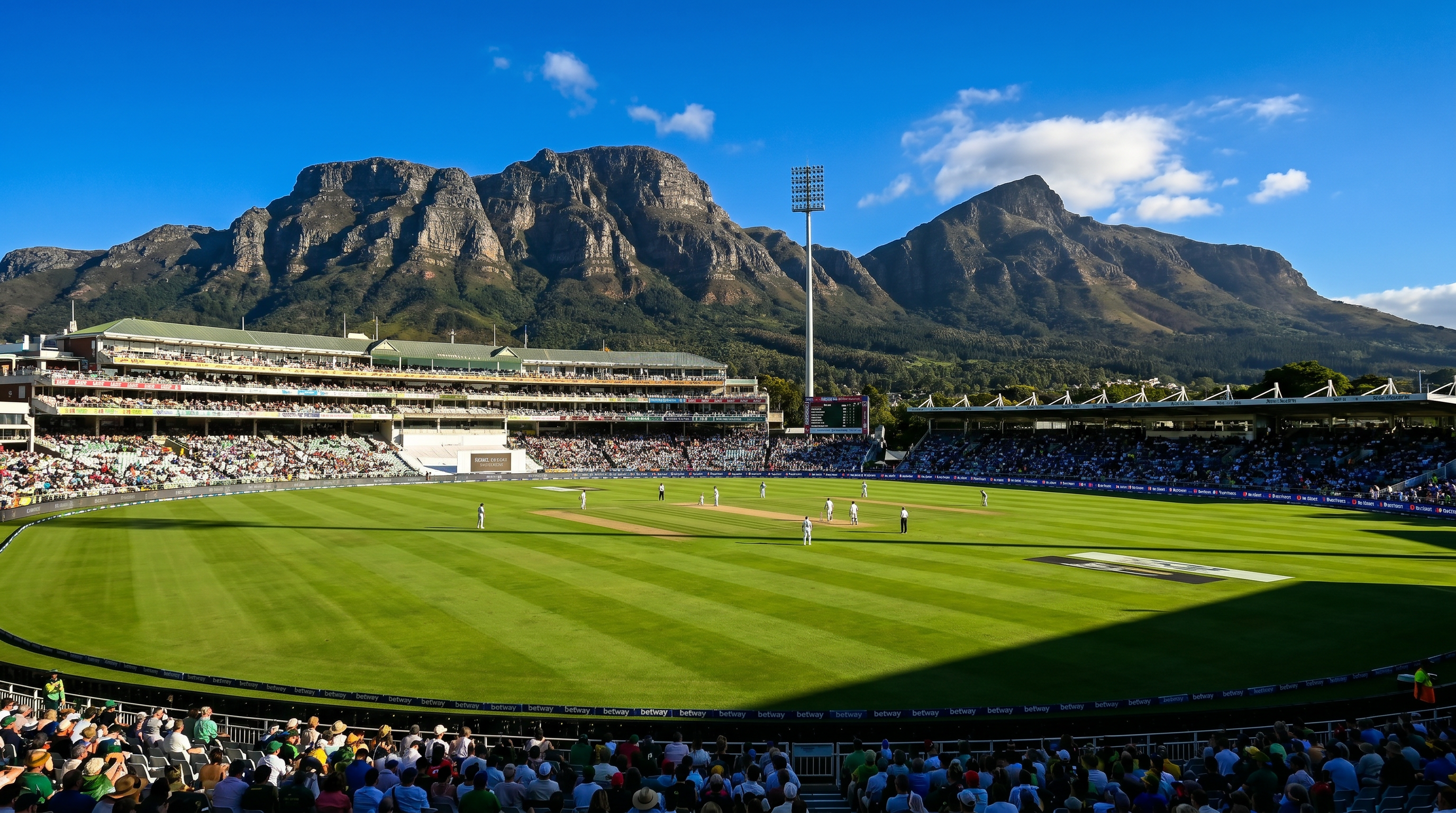
Off the pitch, preparations are accelerating across the host nations. Cricket South Africa has already confirmed eight venues that will stage the bulk of the 54 matches. The selection includes historic grounds like the Wanderers in Johannesburg, Newlands in Cape Town, and SuperSport Park in Centurion. Organizers noted that the venues were chosen based on logistical metrics, including proximity to international airports and hotel capacity.[3]
Zimbabwe is also using the tournament as a catalyst for infrastructure development. The national government has allocated land in the Masuwe Special Economic Zone to construct a new 10,000-seat multi-purpose stadium in Victoria Falls. Expected to be completed in late 2025, the Mosi oa Tunya International Cricket Stadium will not only host World Cup fixtures but also serve as a long-term hub for rugby, tennis, and regional tourism.[4]

As the qualification clock ticks down, the narrative arcs for the 2027 World Cup are beginning to take shape. Australia will arrive as the defending champions, having broken Indian hearts in the 2023 final, while a transitioning Indian squad will be desperate for redemption. Meanwhile, South Africa will carry the heavy expectations of a home crowd, hoping to finally shed their historical knockout-stage struggles on familiar soil.[5]
Ultimately, the 2027 ICC Men's Cricket World Cup is designed to be a celebration of the sport's expanding footprint. By blending historic African venues with a more inclusive 14-team format, the tournament promises a grueling, month-long test of ODI cricket that will crown a champion while giving the next generation of cricketing nations their moment in the sun.
How we got here
Nov 2021
The ICC officially awards the hosting rights for the 2027 World Cup to South Africa, Zimbabwe, and Namibia.
Nov 2023
Australia defeats India in Ahmedabad to win the 13th edition of the World Cup.
Apr 2024
Cricket South Africa confirms the eight domestic venues that will host matches during the tournament.
May 2024
Zimbabwe announces plans to construct a new 10,000-seat stadium in Victoria Falls.
Mar 2027
The official cut-off date for the ICC ODI Team Rankings to determine the eight automatic qualifiers.
Oct 2027
The 14th ICC Men's Cricket World Cup is scheduled to begin across Southern Africa.
Viewpoints in depth
Tactics & Format Analysts
Experts evaluating the competitive balance of the tournament structure.
Analysts largely praise the return to the 14-team, Super Six format, noting that it strikes a better balance than the 10-team round-robin. While the 2019 and 2023 formats guaranteed that every top team played each other, it created a closed shop that locked out emerging nations. The 2027 structure allows Associate teams to gain crucial World Cup experience while using the Points Carry Forward system to ensure that early matches between tournament favorites remain highly consequential.
National Team Supporters
Fans of nations hovering around the automatic qualification cut-off.
For supporters of teams like Bangladesh, Sri Lanka, and the West Indies, the next year of bilateral ODI cricket is viewed with intense anxiety. Because Zimbabwe takes an automatic spot as a host, the mathematical cut-off for direct entry is effectively tighter. Fans are heavily scrutinizing the ICC ranking points system, knowing that a single series loss could force their team into the unpredictable and high-pressure environment of the global Qualifier tournament.
Host Nation Organizers
Local officials and cricket boards in Southern Africa managing the event logistics.
Organizers view the 2027 World Cup as a vital economic and infrastructural catalyst for the region. South African officials emphasize their reliance on established, world-class venues with proven logistical networks to handle the influx of traveling fans. Meanwhile, Zimbabwean stakeholders are championing the new Victoria Falls stadium as a legacy project that will boost sports tourism and provide a multi-sport facility long after the World Cup concludes.
What we don't know
- Which four teams will successfully navigate the global Qualifier tournament to claim the final spots.
- The exact date-wise match schedule and which specific fixtures will be allocated to the new Victoria Falls stadium.
- Whether the expanded format will lead to major upsets by Associate nations against established Full Members.
Key terms
- One Day International (ODI)
- A form of limited-overs cricket played between two international teams, with each team facing a fixed number of overs, currently set at 50.
- Super Six
- A secondary tournament phase where the top three teams from two initial groups combine into a single group to compete for semi-final spots.
- Points Carry Forward (PCF)
- A system where teams advancing to the Super Six stage retain the points they earned in the group stage against the other teams that also advanced.
- Associate Member
- A nation where cricket is firmly established and organized, but which does not qualify for Full Member status or automatic entry into certain top-tier events.
- Full Member
- The elite tier of international cricket nations, governed by the ICC, who have full voting rights and automatic entry into major tournaments.
Frequently asked
When and where is the 2027 Cricket World Cup?
The tournament will take place in October and November 2027, co-hosted by South Africa, Zimbabwe, and Namibia.
How many teams will play in the 2027 World Cup?
The tournament will feature 14 teams, an expansion from the 10-team format used in 2019 and 2023.
Why does Namibia have to qualify if they are a host?
Unlike South Africa and Zimbabwe, Namibia is an Associate Member of the ICC, meaning they are not granted an automatic host berth and must qualify through the standard pathway.
How does a team qualify automatically?
The top eight teams in the ICC Men's ODI Team Rankings as of March 31, 2027, along with Full Member hosts South Africa and Zimbabwe, will qualify automatically.
Sources
Source coverage
6 outlets
3 viewpoints surfaced






[1]Jagran JoshTactics & Format Analysts
Where is the Next World Cup? Host Countries, Teams and Qualification
Read on Jagran Josh →[2]YardbarkerNational Team Supporters
Understanding the road to the 2027 Cricket World Cup
Read on Yardbarker →[3]InsideTheGamesHost Nation Organizers
South Africa 2027 Cricket World Cup venues confirmed
Read on InsideTheGames →[4]ATTAHost Nation Organizers
Zimbabwe to build a new stadium for 2027 Cricket World Cup
Read on ATTA →[5]WikipediaTactics & Format Analysts
2027 ICC Men's Cricket World Cup
Read on Wikipedia →[6]International Cricket CouncilNational Team Supporters
ICC Men's Cricket World Cup 2027 Qualification Pathway
Read on International Cricket Council →

More in sports
See all 332 stories →Pro Volleyball Boom
The $100M Turf War Building America's First Sustainable Pro Volleyball Ecosystem
6 sources

Adaptive Gaming
How Adaptive Tech and Modular Design Are Leveling the Esports Playing Field
7 sources

Sports Tech
How Artificial Intelligence is Revolutionizing Soccer Scouting and Player Recruitment
8 sources

Fighter Safety
How Impact-Sensing Smart Gloves Are Changing the Science of Boxing Safety
7 sources
Every angle. Every day.
Get sports stories with full source coverage and perspective breakdowns delivered to your inbox.