
The Neuroscience of 'Dad Brain': How Fatherhood Physically Rewires Men
New MRI studies reveal that becoming a father triggers profound neuroplasticity, shrinking some brain regions to streamline social cognition while expanding reward centers.
By Factlen Editorial Team
- Neurobiological Researchers
- Focus on mapping the structural and hormonal changes in the brain, arguing that volume loss is an optimization process.
- Public Health & Policy Advocates
- Focus on translating these findings into support systems, arguing that paid leave is biologically essential for bonding.
- Evolutionary Psychologists
- Focus on the evolutionary origins of the paternal brain and its role in human cooperative breeding.
What's not represented
- · Adoptive Fathers
- · Single Fathers
- · Same-Sex Paternal Couples
Why this matters
For decades, society viewed maternal bonding as biological and paternal bonding as purely social. Discovering that men undergo measurable neurological and hormonal remodeling validates the biological reality of fatherhood, fundamentally shifting how we approach paternal mental health, paid family leave, and early childhood development.
Key points
- MRI scans reveal that becoming a father triggers significant gray matter volume reductions in the brain's mentalizing network.
- This 'shrinking' is actually a sophisticated pruning process that makes the brain more efficient at reading infant cues.
- The brain's reward centers simultaneously expand, making caregiving a more dopamine-driven, rewarding experience.
- Unlike maternal brain changes, paternal neuroplasticity is highly experience-dependent, correlating with hours spent caregiving.
- The rapid neurological remodeling exposes new fathers to genuine biological vulnerabilities, including postpartum depression.
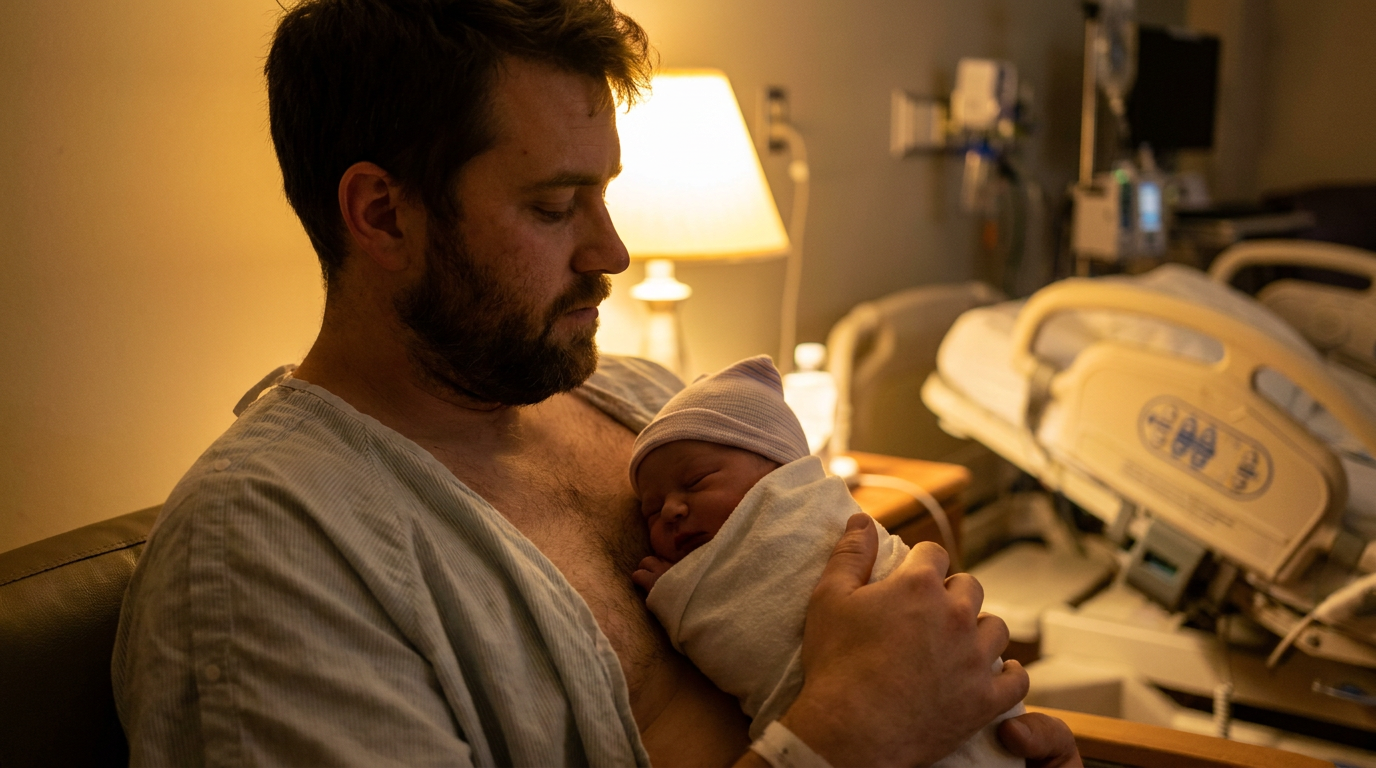
The birth of a child is widely understood as a biological earthquake for mothers, initiating a cascade of physical and neurological adaptations. For decades, however, society viewed a father’s transition to parenthood as a purely social and psychological adjustment. New high-resolution neuroimaging is dismantling that assumption, revealing that men undergo a profound biological transformation of their own. This period of rapid adjustment, increasingly referred to as "patrescence," physically rewires the male brain to prepare it for the intense demands of caregiving.[7]
Historically, science largely ignored the paternal brain. Because men do not experience the immense endocrinological shifts of pregnancy, childbirth, and lactation, researchers assumed their neural architecture remained relatively static. But as neuroscience tools have advanced, a different picture has emerged. Recent studies suggest that, much like mothers, fathers undergo a shift in their biology that is akin to a secondary developmental phase, etching the realities of parenthood directly into their neural pathways.[2]
The most striking evidence comes from longitudinal MRI studies tracking first-time fathers. In a landmark study published in the journal Cerebral Cortex, researchers scanned the brains of expectant fathers during their partner's pregnancy and again several months postpartum. The scans revealed significant reductions in gray matter volume across the cerebral cortex following the birth of their child.[3]
While the concept of a "shrinking" brain sounds alarming, neuroscientists emphasize that this volume loss is actually a sophisticated feature of neuroplasticity, not a deficit. Similar to the neural pruning that occurs during adolescence, the brain eliminates inefficient or redundant synaptic connections to make specific networks operate more efficiently. The brain is essentially streamlining itself to handle the novel, high-stakes cognitive load of keeping an infant alive.[4]

This pruning process is highly targeted. The most pronounced gray matter reductions occur within the "mentalizing network," a web of cortical regions responsible for social cognition, empathy, and the ability to infer the thoughts and intentions of others. By refining this network, the paternal brain becomes highly attuned to decoding the non-verbal cues, cries, and subtle emotional shifts of a helpless infant.[2][3]
While the cortex streamlines, other areas of the paternal brain actively expand. Research tracking fathers through the first 24 weeks postpartum has identified a dynamic pattern of structural change. Following the initial cortical pruning, there is a subsequent increase in connectivity and volume in the brain's subcortical regions, specifically those associated with emotional processing and motivation.[5]
A key area of expansion is the ventral tegmental area, a central hub in the brain's dopamine-driven reward circuitry. When researchers monitor the brain activity of new fathers looking at photographs of their own toddlers, this reward center lights up significantly more than when they view unknown children. The male brain physically adapts to make interacting with and caring for their offspring an inherently rewarding, dopamine-releasing experience.[6]
A key area of expansion is the ventral tegmental area, a central hub in the brain's dopamine-driven reward circuitry.
These structural brain changes do not happen in a vacuum; they are accompanied by a dramatic endocrine shift. Across the transition to fatherhood, men experience measurable drops in both testosterone and vasopressin. These hormonal fluctuations serve as chemical messengers that facilitate the brain's structural remodeling and directly influence paternal behavior.[4][6]
From an evolutionary perspective, this hormonal cascade is highly adaptive. Lower testosterone levels correlate with reduced aggression and a higher likelihood that a father will remain close to the family unit rather than seeking out new mates. Similarly, lower levels of vasopressin—a hormone linked to territoriality—are associated with more direct, gentle engagement and affectionate play with the newborn.[6]
Perhaps the most fascinating aspect of paternal neuroplasticity is its "dose-response" relationship. Unlike the maternal brain, which is flooded with mandatory biological triggers during pregnancy, the paternal brain's rewiring is highly experience-dependent. Studies consistently show that the degree of gray matter reduction and reward-center expansion directly correlates with the amount of time a father spends actively caregiving. The more a man acts like a father, the more his brain looks like a father's.[2][3]

Anthropologists point out that humans are "cooperative breeders," meaning we rely on an alloparenting web to raise our exceptionally dependent, energy-intensive infants. In the roughly 5 to 10 percent of mammalian species where males participate in childcare, the male brain has evolved the capacity to rewire itself on demand. This flexibility ensured that fathers could step in as highly attuned, biologically primed secondary caregivers in resource-scarce ancestral environments.[4]
However, this rapid neurological remodeling carries inherent vulnerabilities. The neuroplasticity that enables deep bonding also exposes fathers to significant mental health risks. In clinical assessments, the fathers who exhibited the largest gray matter volume reductions also reported the highest rates of sleep disturbance, psychological distress, and anxiety in the postpartum period.[3]
Roughly one in ten new fathers experiences paternal postpartum depression. For years, this was dismissed as a secondary reaction to stress or sleep deprivation. The new neurological data proves that paternal depression is rooted in a genuine biological vulnerability, challenging the pervasive stigma that struggling fathers should simply "tough it out" while the mother recovers.[1][2]

This emerging science has profound implications for public policy, particularly regarding paid family leave. If the male brain requires time and direct infant exposure to fully trigger its neuroplastic transition, denying fathers adequate time off work disrupts a critical biological window. Advocates argue that paternity leave is not merely a modern convenience, but a neurodevelopmental necessity for establishing lifelong paternal bonds.[4][7]
Ultimately, the evidence dismantles the enduring cultural myth that mothers are uniquely "wired" for caregiving while fathers are merely helpful assistants. Fatherhood is a profound biological transformation. By physically etching the responsibilities of care into the architecture of the mind, nature ensures that men are just as capable of profound, biologically rooted parental devotion.[7]
How we got here
2006
Early animal studies identify neurogenesis and hormonal shifts in biparental rodent species.
2014
Initial human fMRI studies reveal increased activity in the reward centers of new fathers' brains.
2023
Researchers link drops in paternal testosterone and vasopressin to increased caregiving engagement.
2024
Landmark voxel-based morphometry studies confirm widespread cortical gray matter pruning in human fathers.
2026
Longitudinal tracking reveals a dynamic 24-week postpartum window of brain restructuring.
Viewpoints in depth
Neuroscience & Clinical Researchers
Focus on the mechanics of neuroplasticity and brain optimization.
Clinical researchers argue that the brain's 'shrinking' is a highly evolved optimization process. By pruning away inefficient synaptic connections in the mentalizing network, the brain reduces cognitive noise, allowing fathers to better decode the subtle, non-verbal cues of an infant. They view this neuroplasticity as evidence that the male brain is biologically primed to adapt to the demands of parenthood.
Public Health & Policy Advocates
Focus on the societal implications of experience-dependent brain changes.
Policy advocates emphasize the 'dose-response' nature of paternal neuroplasticity. Because these brain changes require direct, sustained interaction with the infant, advocates argue that paid paternity leave is not a luxury, but a biological necessity. Denying fathers time off work, they argue, actively disrupts the neurological transition to fatherhood and exacerbates the risk of paternal postpartum depression.
Evolutionary Anthropologists
Focus on the deep history of human survival and cooperative breeding.
Anthropologists contextualize these brain changes within the framework of human evolution. Because human infants are born exceptionally helpless and require immense caloric and emotional investment, humans evolved as 'cooperative breeders.' The male brain's capacity to rewire itself on demand allowed fathers to step in as highly attuned secondary caregivers, a critical adaptation that ensured infant survival in resource-scarce ancestral environments.
What we don't know
- How long these structural brain changes persist throughout a father's lifespan.
- The exact neurological differences between biological fathers and adoptive or non-biological primary caregivers.
- Whether specific interventions can mitigate the mental health vulnerabilities associated with rapid paternal neuroplasticity.
Key terms
- Neuroplasticity
- The brain's ability to reorganize itself by forming new neural connections in response to learning, experience, or environmental changes.
- Patrescence
- The physical, psychological, and emotional transition a man undergoes when becoming a father.
- Mentalizing Network
- A series of interconnected brain regions responsible for social cognition, empathy, and inferring the thoughts and feelings of others.
- Voxel-Based Morphometry (VBM)
- A neuroimaging analysis technique that allows researchers to investigate focal differences in brain anatomy, such as changes in gray matter volume.
- Cooperative Breeding
- An evolutionary strategy where individuals other than the biological mother help care for and provision the offspring.
Frequently asked
Does the father's brain actually shrink?
Yes, but neuroscientists emphasize this is a positive adaptation. Similar to the pruning that happens during adolescence, the brain eliminates inefficient neural pathways to make social cognition and empathy more streamlined.
Do adoptive fathers experience these brain changes?
Yes. Research indicates that these neurological changes are largely experience-dependent. Any primary caregiver who spends significant time nurturing an infant will undergo similar neuroplastic remodeling, regardless of biological relation.
Does sleep deprivation cause these brain changes?
No. While new fathers certainly experience sleep loss, studies show that the structural brain changes precede the worst of the sleep deprivation. In fact, the neural remodeling itself may contribute to lighter, more vigilant sleep patterns.
Sources
Source coverage
7 outlets
3 viewpoints surfaced







[1]NPRPublic Health & Policy Advocates
Recent studies show fathers' brains change after bringing home a new baby
Read on NPR →[2]The Washington PostPublic Health & Policy Advocates
The surprising science of how fatherhood changes the brain
Read on The Washington Post →[3]Cerebral CortexNeurobiological Researchers
Perinatal reductions in gray matter volume in human fathers
Read on Cerebral Cortex →[4]American Psychological AssociationEvolutionary Psychologists
“Dad brain”: How becoming a parent changes the brain
Read on American Psychological Association →[5]RWTH Aachen UniversityNeurobiological Researchers
Dynamic pattern of change in the paternal brain during the first 24 weeks postpartum
Read on RWTH Aachen University →[6]Emory UniversityNeurobiological Researchers
Father Nature: The Science of Paternal Potential
Read on Emory University →[7]Factlen Editorial TeamPublic Health & Policy Advocates
Synthesis by Factlen editorial team
Read on Factlen Editorial Team →

More in health
See all 7 stories →Longevity Science
The Science of Healthspan: What Actually Extends Healthy Human Life
8 sources

Regenerative Medicine
The World's First Tooth-Regrowth Drug Is Entering Phase II Human Trials
6 sources
Paternal Neuroscience
The Neuroscience of Fatherhood: How Parenting Rewires the Male Brain
8 sources

Paternal Neuroscience
The Neuroscience of Fatherhood: How Raising a Child Rewires the Male Brain
7 sources

Every angle. Every day.
Get health stories with full source coverage and perspective breakdowns delivered to your inbox.