
The Invisible Wall: How Aerodynamic Science is Transforming Amateur Cycling
Aerodynamic drag accounts for up to 80% of the resistance a cyclist faces, even at amateur speeds. By adopting the professional 'hierarchy of gains,' everyday riders are unlocking massive speed improvements without pedaling any harder.
By Factlen Editorial Team
- Biomechanical Pragmatists
- Argue that extreme aerodynamic positions are counterproductive if they restrict breathing, cause pain, or lower a rider's sustainable power output.
- Everyday Amateurs
- Seek the best return on investment, balancing the desire for 'free speed' with the realities of budget constraints and long-distance comfort.
- Aerodynamic Purists
- Advocate for minimizing CdA at all costs, utilizing wind tunnels and field testing to find the absolute fastest physical configuration.
- Industry Marketers
- Focus heavily on the marginal gains provided by high-end equipment upgrades like carbon frames and deep-section wheels.
What's not represented
- · Bicycle Manufacturers
- · Professional Bike Fitters
Why this matters
For decades, amateur cyclists have spent thousands of dollars on lighter bike frames to gain mere seconds. Understanding the physics of aerodynamic drag allows riders to save minutes of time and massive amounts of energy for a fraction of the cost, fundamentally changing how everyday athletes approach the sport.
Key points
- Air resistance is the primary force slowing cyclists down, accounting for over 50% of resistance at just 15 km/h.
- The power required to overcome aerodynamic drag increases exponentially as speed increases.
- Body position is the single largest factor in cycling aerodynamics, offering more watt savings than any equipment upgrade.
- Tight-fitting clothing and aero helmets provide massive speed benefits for a fraction of the cost of new wheels.
- Aerodynamic optimizations must be balanced with biomechanical comfort to ensure the rider can sustain their power output.
The amateur cyclist’s dilemma is a tale as old as the sport itself: spending thousands of dollars on carbon fiber frames to shave off a few hundred grams, all while ignoring the invisible wall standing directly in front of them. That wall is air.[6]
For a long time, the science of aerodynamics was viewed as a dark art reserved for elite time-trialists and Tour de France contenders. Wind tunnels were prohibitively expensive, and the data was closely guarded. But today, the physics of drag reduction is trickling down to the weekend warrior, revealing a surprising truth: the biggest gains in cycling speed aren't bought at the bike shop—they are adopted through posture and physics.[3][6]
To understand why, one must look at the math of resistance. Aerodynamic drag is the primary force a cyclist must overcome to move forward. Crucially, this resistance does not scale linearly. The power required to push through the air increases by the cube of a rider's speed. To double your speed on a bicycle, you must increase your power output fourfold.[1][2]
A pervasive myth in the amateur peloton is that aerodynamics only matter if you are riding at blistering professional speeds of 40 km/h (25 mph) or higher. The physics dictate otherwise. At just 15 km/h, air resistance already accounts for over 50% of the forces slowing a cyclist down on flat terrain.[4]

By the time a rider hits a moderate cruising speed of 25 km/h, that figure jumps to over 70%. At 40 km/h, aerodynamic drag is responsible for roughly 80% of total resistance. Because slower riders spend more total time out on the course, aerodynamic optimizations actually save them more absolute minutes over a given distance than they save the professionals.[3][4]
The metric that rules this invisible landscape is CdA, which stands for Coefficient of Aerodynamic Drag multiplied by Frontal Area. It is the mathematical representation of how "slippery" a rider is. The lower the number, the less effort is required to maintain a given speed.[2][4]
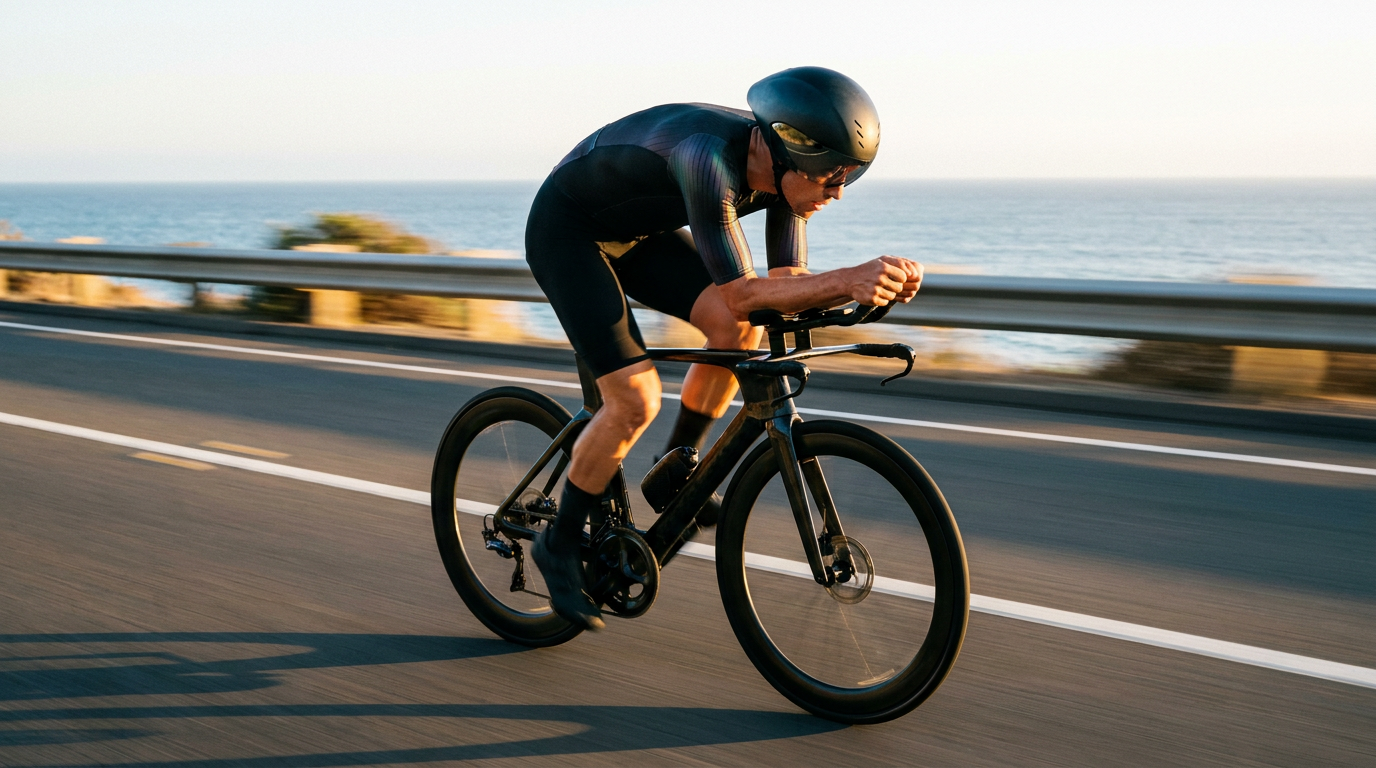
Elite time-trialists contort their bodies to achieve a CdA between 0.18 and 0.25. A typical amateur sitting upright on a standard road bike presents a much larger profile to the wind, resulting in a CdA closer to 0.30 or even 0.40.[1][2]
Reducing that number is the closest thing to free speed in endurance sports. A 10% reduction in CdA yields roughly a 3% increase in speed at a constant power output. Over a 180-kilometer Ironman bike leg, that translates to an amateur saving more than 10 minutes without pedaling a single watt harder.[4]
Reducing that number is the closest thing to free speed in endurance sports.
So how do everyday riders lower their CdA? The answer lies in the "hierarchy of gains," a framework championed by aerodynamicists like Dan Bigham, the Head of Engineering at the Red Bull-Bora-Hansgrohe professional team. Bigham's hierarchy systematically inverts how most amateurs spend their money.[3]
The professional hierarchy places body position first, clothing second, helmets third, wheels fourth, and the bike frame dead last. Yet, amateurs routinely spend heavily on frames and wheels while neglecting the elements that actually touch the wind first.[3]

Position is paramount because the human body accounts for roughly 80% of the total aerodynamic drag system. Dropping the torso, tucking the elbows, and shrugging the shoulders to narrow the frontal area can save an amateur 10 to 20 watts of effort at typical sportive speeds. This adjustment costs absolutely nothing.[3][6]
Clothing is the second biggest factor, yet it is often the most ignored. A flapping club jersey acts like a parachute, catching air and pulling the rider backward. Switching to a well-fitted, aerodynamic skinsuit can save an astonishing 5 to 10 watts—sometimes up to 20 watts depending on the fabric and fit.[3][5]
Next comes the head. The helmet is the leading edge of the rider's body, hitting the "cleanest" and fastest air. Swapping a heavily vented, bulky climbing helmet for a smooth, aero-optimized lid saves another 3 to 7 watts of effort.[3][5]

Only after the body, clothing, and helmet are addressed do equipment upgrades make mathematical sense. Deep-section carbon wheels, arguably the most coveted upgrade in the amateur peloton, typically save 3 to 6 watts at 40 km/h.[3]
While aero wheels are not a waste of money, spending $2,000 on carbon rims while wearing a baggy jersey and sitting bolt-upright effectively cancels out the technological advantage. The equipment can only optimize the air that the rider hasn't already disturbed.[3][6]
However, there is an ultimate limit to aerodynamic optimization: human biomechanics. A hyper-aggressive position that saves 20 watts in the wind tunnel is useless if it restricts the rider's hip angle so severely that their physiological power output drops by 25 watts.[3]
Furthermore, extreme aero positions can impair diaphragmatic breathing and cause severe lower back pain over long distances. For the amateur tackling a five-hour gran fondo, the goal is not the lowest possible CdA, but the lowest sustainable CdA.[3][6]

This is where modern bike fitting intersects with aerodynamic testing. Amateurs are increasingly using field-testing tools, software, and velodrome sessions to find their personal sweet spot—the delicate balance between slicing efficiently through the wind and maintaining the physiological comfort required to produce power.[4][6]
Ultimately, the democratization of aerodynamic science is empowering everyday riders. It proves that cycling speed isn't just about suffering more in training or buying the most expensive bicycle on the showroom floor—it's about understanding the physics of the ride and working with the air, rather than fighting it.[6]
Viewpoints in depth
The Biomechanical Pragmatists
Experts who prioritize sustainable power output and comfort over achieving the absolute lowest aerodynamic drag.
For biomechanical experts and professional bike fitters, the wind tunnel only tells half the story. They argue that a hyper-aggressive aerodynamic position is counterproductive if it closes off the rider's hip angle to the point where they lose physiological power. If a rider saves 20 watts of drag but loses 25 watts of pedaling power due to discomfort or restricted breathing, the net result is a slower ride. This camp advocates for field testing over long durations to find the 'lowest sustainable CdA'—a position the rider can hold comfortably for the entire duration of their event without suffering lower back pain or power drops.
The Aerodynamic Purists
Engineers and time-trial specialists who focus on minimizing CdA through rigorous testing and equipment optimization.
Aerodynamic purists view the cyclist and the bicycle as a single mathematical equation to be solved. Driven by data from wind tunnels and velodrome testing, this camp emphasizes the 'hierarchy of gains,' proving that body position, fabric textures, and helmet shapes yield far greater speed returns than traditional upgrades like lighter frames. They argue that amateurs leave massive amounts of 'free speed' on the table by ignoring aerodynamics, pointing to the physics that show even slow riders save significant absolute time over long distances by reducing their drag coefficient.
The Everyday Amateurs
Recreational riders balancing the desire to ride faster with budget constraints and the realities of non-professional fitness.
For the weekend warrior, the aerodynamic revolution is a balancing act between cost, comfort, and performance. While professional data shows that skinsuits and aggressive postures are the fastest way forward, everyday amateurs must weigh these optimizations against the social and practical realities of club rides and gran fondos. This group is increasingly adopting the cheaper, high-yield aero gains—like tighter jerseys and aero helmets—while remaining skeptical of the extreme physical contortions required to mimic World Tour time-trialists.
What we don't know
- How emerging 3D-printed fabrics and custom-tailored apparel will further reduce drag for non-professional riders.
- The exact point at which aerodynamic gains are entirely negated by the physiological fatigue of holding an aggressive posture over ultra-endurance distances.
Key terms
- CdA
- A mathematical measurement combining an object's drag coefficient (how slippery it is) and its frontal area (how big it is), used to calculate air resistance.
- Frontal Area
- The total surface area of a cyclist and their bicycle that directly faces the wind, acting as a wall that must push through the air.
- Watt
- A unit of measurement for power. In cycling, it quantifies the amount of physical energy a rider is putting into the pedals.
- Skinsuit
- A tight-fitting, one-piece cycling garment designed specifically to smooth airflow over the rider's body and reduce fabric drag.
- Biomechanics
- The study of the mechanical laws relating to the movement or structure of living organisms, crucial in cycling for maximizing power output without injury.
Frequently asked
Does aerodynamics matter if I ride slowly?
Yes. At just 15 km/h, air resistance accounts for over 50% of the forces slowing you down. Because slower riders spend more time on the road, aerodynamic improvements can actually save them more total minutes than they save faster riders.
What is the cheapest way to get more aerodynamic?
Improving your body position is entirely free and offers the biggest gains. Lowering your torso, tucking your elbows, and narrowing your shoulders can save 10 to 20 watts of effort.
Should I buy deep-section wheels or an aero helmet first?
According to aerodynamicists, an aero helmet and tight-fitting clothing should come first. They offer equal or greater watt savings than carbon wheels at a fraction of the cost.
What does CdA mean?
CdA stands for Coefficient of Aerodynamic Drag multiplied by Frontal Area. It is a mathematical measurement of how much air resistance a rider creates; a lower number means the rider is more aerodynamic.
Sources
Source coverage
6 outlets
4 viewpoints surfaced






[1]TrainerRoadBiomechanical Pragmatists
Aerodynamics for Cyclists: How to Get Faster
Read on TrainerRoad →[2]Cycling WeeklyEveryday Amateurs
How much does aerodynamics really matter for amateur cyclists?
Read on Cycling Weekly →[3]Roadman CyclingBiomechanical Pragmatists
Dan Bigham on Aerodynamics: What Amateurs Actually Need to Know
Read on Roadman Cycling →[4]AeroXAerodynamic Purists
Why aerodynamics matter for amateur cyclists
Read on AeroX →[5]MyProCoachIndustry Marketers
The Importance of Aerodynamics in Cycling
Read on MyProCoach →[6]Factlen Editorial TeamEveryday Amateurs
Synthesis by Factlen editorial team
Read on Factlen Editorial Team →
More in sports
See all 13 stories →Standings
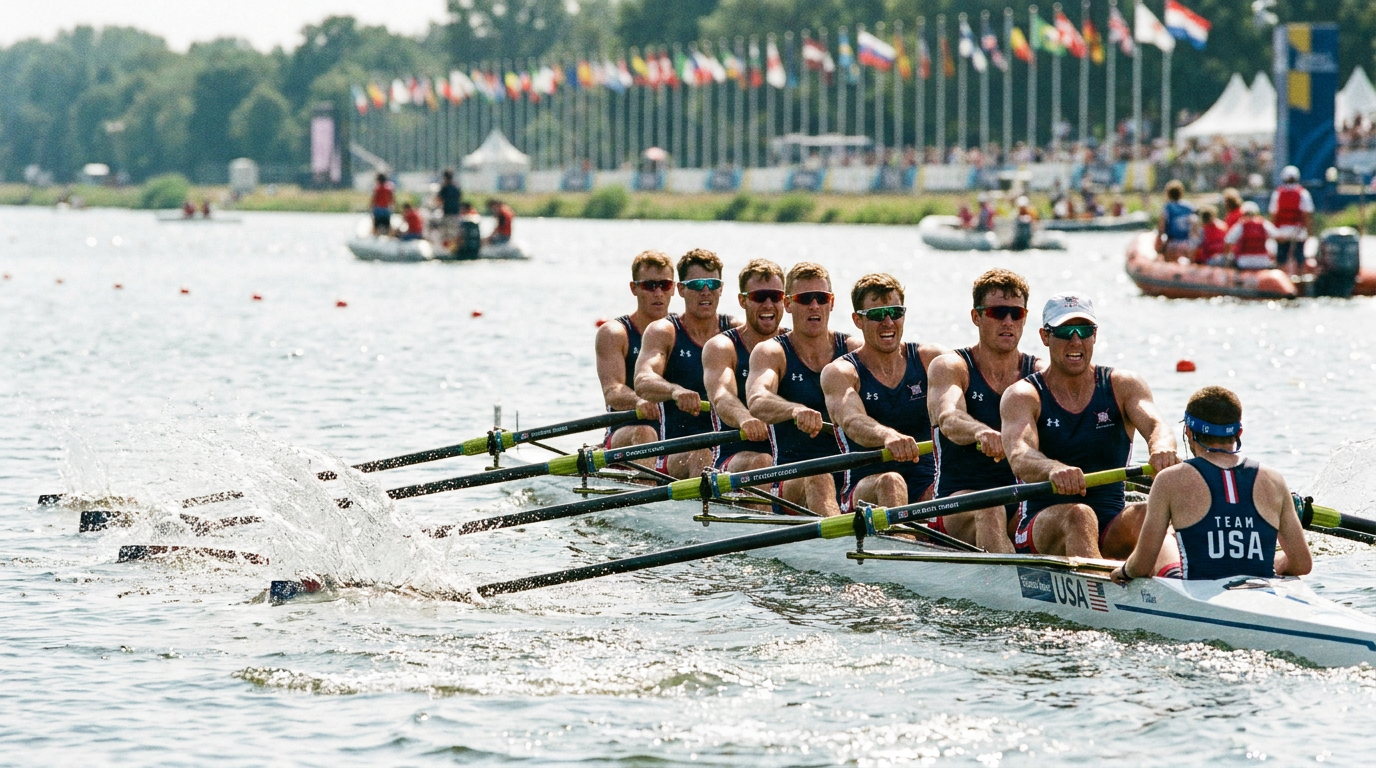
USA Surges in World Rowing Cup Standings Ahead of Lucerne Finale
6 sources
Women's Wrestling
Inside the Inaugural NCAA Women's Wrestling Championship
8 sources

Injury
Gymnastics Injury Report: Andrade's Triumphant Return and Rivera's Strategic Rest at Pan Ams
7 sources
Standings
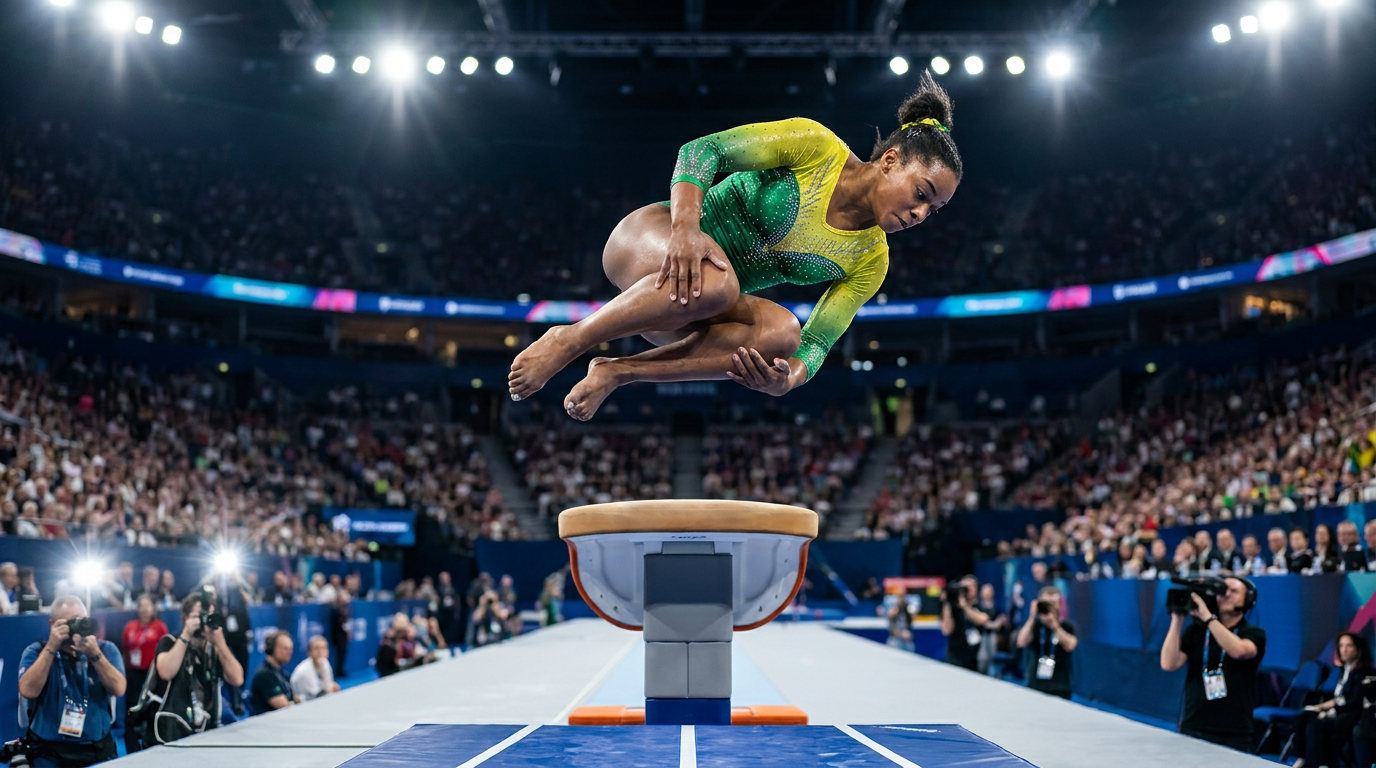
U.S. Women and Canadian Men Top Gymnastics Standings at Pan American Championships
5 sources

Every angle. Every day.
Get sports stories with full source coverage and perspective breakdowns delivered to your inbox.