
The Hidden Chorus: How 'Friend of the Court' Briefs Actually Shape Supreme Court Rulings
Outside organizations and experts are flooding the Supreme Court with amicus curiae briefs at record rates, fundamentally altering how the justices gather facts and craft national policy.
By Factlen Editorial Team
- Empirical Legal Scholars
- Focus on how amicus briefs provide crucial 'legislative facts' and specialized knowledge that justices rely on to craft broad rulings.
- Transparency Advocates
- Warn about 'amicus overload' and the influence of undisclosed 'dark money' funding coordinated campaigns to sway the Court.
- Judicial Process Traditionalists
- Emphasize the historical role of the briefs and the strict procedural rules designed to prevent repetitive arguments.
What's not represented
- · Underfunded Grassroots Organizations
- · Pro Se Litigants
Why this matters
While the Supreme Court appears to make decisions based solely on the arguments of two opposing lawyers, a massive, hidden ecosystem of 'friend of the court' briefs actually supplies the science, data, and historical context that shape the laws governing your daily life.
Key points
- Amicus curiae ('friend of the court') briefs allow outside experts, groups, and citizens to provide information to the Supreme Court.
- The volume of amicus briefs has surged by 800% over the last 50 years, with 97% of argued cases now featuring them.
- Justices cite amicus briefs in roughly 65% of cases, heavily relying on them for 'legislative facts' like medical data or industry context.
- The Solicitor General is the most influential amicus, cited in up to 80% of the cases where the federal government weighs in.
- Concerns over 'amicus overload' and undisclosed 'dark money' funding have sparked debates about transparency in Supreme Court lobbying.
When the United States Supreme Court hands down a landmark decision, the popular imagination pictures a closed loop: nine justices, two opposing lawyers, and a constitutional text. The reality of modern Supreme Court litigation is far more crowded and deeply connected to the outside world.[6]
Behind almost every major case is a hidden chorus of outside voices known as amici curiae, or "friends of the court." These are individuals, organizations, and governments who are not direct parties to the lawsuit but who submit formal legal briefs to offer expertise, context, or policy arguments to the justices.[5]
The practice is as old as the republic—famed statesman Henry Clay filed the first recorded amicus brief in 1823—but it has recently transformed from a rare intervention into an industrial-scale educational effort. Over the last 50 years, the volume of amicus briefs filed at the Supreme Court has exploded by roughly 800 percent.[3][7]
Today, it is the rare exception to find a Supreme Court case without outside participation. In recent terms, friends of the court have filed briefs in 97 percent of all argued cases. During the 2019–2020 term, the Court saw an all-time high average of 16 amicus briefs per case at the merits stage, with blockbuster cases routinely attracting upwards of 80 separate filings.[7]

This surge reflects a fundamental shift in how American law operates. As the Court increasingly tackles "public law litigation"—cases involving civil rights, environmental regulations, and technology—its rulings ripple far beyond the two named plaintiffs. Advocacy groups, scientists, and industry leaders realized that if a single ruling could reshape national policy, they needed a mechanism to ensure the Court understood the real-world stakes.[6]
Political scientists who study the Court point to two main theories for why these briefs actually work. The first is the "affected groups hypothesis." By flooding the docket with briefs from diverse coalitions—say, a joint brief from 50 major tech CEOs or a coalition of 20 states—amici signal to the justices the sheer scale of a case's real-world impact.[2]
The second, and arguably more powerful, driver is the "information hypothesis." Supreme Court justices are brilliant legal scholars, but they are not doctors, climate scientists, or supply-chain experts. Amicus briefs bridge this knowledge gap by supplying specialized data that the direct parties, who are focused entirely on winning their specific dispute, may have omitted.[2][4]
This data often takes the form of "legislative facts"—generalized facts about the world that help judges craft broad legal rules. A brief might explain the psychological impact of solitary confinement, the engineering realities of broadband infrastructure, or the historical understanding of a specific 18th-century phrase.[4]
This data often takes the form of "legislative facts"—generalized facts about the world that help judges craft broad legal rules.
Empirical studies show the justices are highly receptive to this outside knowledge. In a recent term, the justices cited amicus briefs in 65 percent of argued cases. Strikingly, when justices cite these briefs for factual claims, they frequently cite the brief itself as the ultimate authority, treating the submitting organizations as trusted experts.[4][7]

The Court actively encourages this specific type of contribution while strictly discouraging mere repetition. Supreme Court Rule 37, which governs these filings, explicitly warns that an amicus brief that simply restates the arguments of the main parties "burdens the Court, and its filing is not favored." The goal is additive value, not an echo chamber.[5]
Not all friends of the court are treated equally. The undisputed heavyweight champion of amicus filers is the Solicitor General of the United States. When the federal government weighs in on a case as an amicus, the justices pay profound attention; the Solicitor General's office is typically cited in 60 to 80 percent of the cases in which it participates.[6][7]
The influence of amicus briefs extends far beyond the final oral argument. They are incredibly potent at the "certiorari stage," when the Court is deciding which of the roughly 7,000 annual petitions it will actually hear. A flurry of amicus briefs at this early stage acts as a flare gun, alerting the clerks that a seemingly obscure lower-court dispute has national significance.[3]

However, the modern "amicus machine" has generated some friction. The sheer volume of filings has led to warnings of "amicus overload." Supreme Court clerks are now tasked with reading tens of thousands of pages of outside briefs per term, raising concerns that only the most well-funded and recognizable organizations can consistently cut through the noise.[1][7]
This has sparked a healthy debate over transparency. Because drafting and printing a Supreme Court brief can cost tens of thousands of dollars, transparency advocates and prominent lawmakers have warned about the rise of "dark money" amici. They argue that wealthy donors can fund a chorus of seemingly independent think tanks to file briefs that create a false illusion of broad consensus.[7]
In response to these concerns, the Court has modestly tightened word limits and disclosure rules, requiring non-governmental amici to declare who funded the preparation of their briefs. Yet, the justices have shown no appetite for closing the door on outside voices, recognizing that the modern Court requires a vast intake of information to function effectively.[5][6]

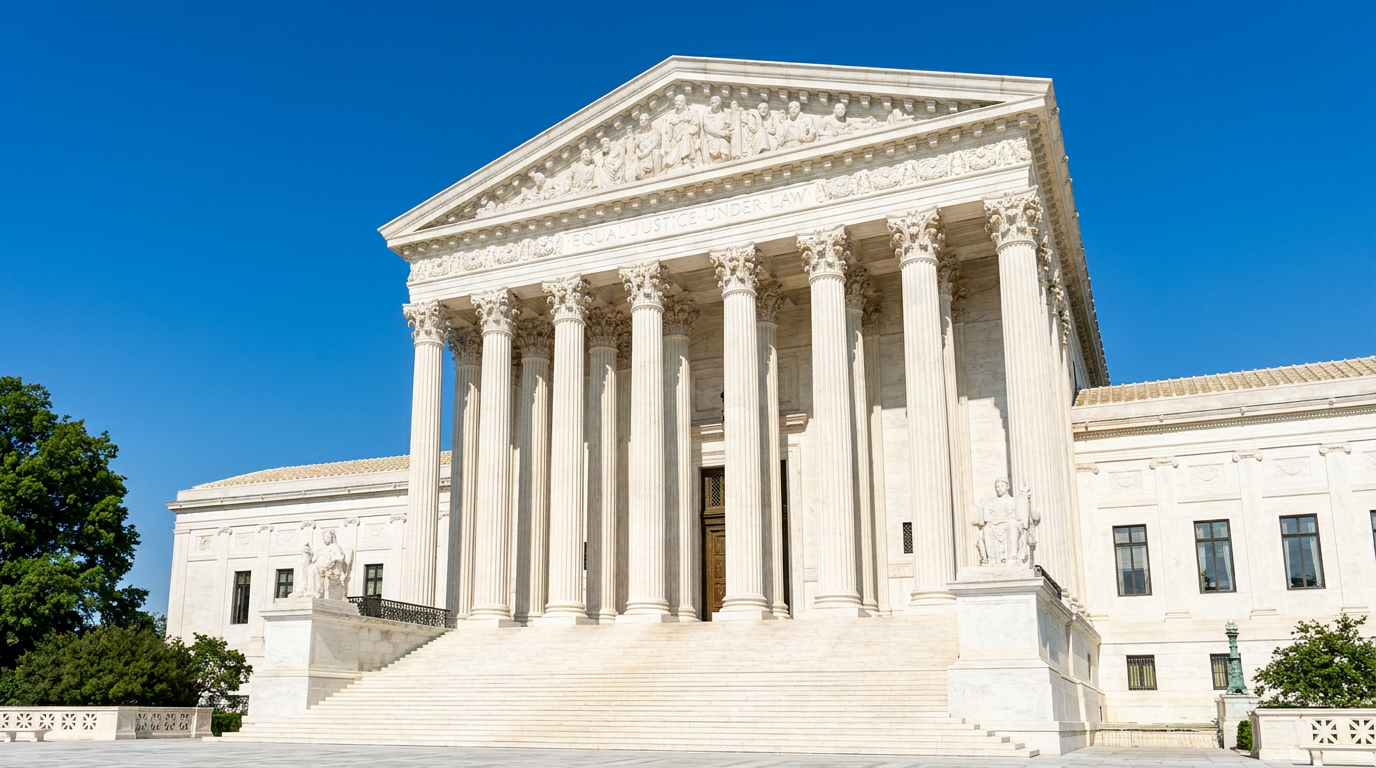
Ultimately, the amicus curiae system serves as a vital, democratizing bridge between the marble halls of the Supreme Court and the society it governs. It ensures that when the justices sit down to interpret the Constitution, they are not doing so in a vacuum, but are informed by the scientists, historians, and citizens who will live under their rulings.[4][6]
How we got here
1823
Statesman Henry Clay files the first recorded amicus brief in the Supreme Court in Green v. Biddle.
1950s–1970s
The rise of 'public law litigation' sees civil rights and environmental groups begin using amicus briefs systematically to influence national policy.
1997
The Supreme Court updates Rule 37 to explicitly discourage amicus briefs that merely repeat the parties' arguments, demanding additive value.
2020
Amicus filings hit an all-time high, averaging 16 briefs per argued case at the merits stage.
Viewpoints in depth
The Information Pipeline
How amicus briefs inject necessary real-world data into the judicial process.
Legal scholars argue that the modern Supreme Court cannot function effectively without amicus briefs. Because the Court's rulings set national policy, justices need to understand the downstream effects of their decisions on industries, healthcare, and civil rights. Amicus briefs serve as an 'information pipeline,' delivering peer-reviewed science, historical context, and economic data that the direct parties—who are focused solely on winning their specific dispute—often omit. This allows the Court to make informed decisions on complex, highly technical issues.
The Transparency Critique
Concerns over 'dark money' and the coordinated lobbying of the Court.
Critics warn that the amicus system has been weaponized by wealthy interest groups. Because drafting a Supreme Court brief is expensive, well-funded donors can quietly finance multiple briefs from seemingly independent think tanks and advocacy groups. This creates a 'chorus effect,' giving the justices the false impression of a broad, organic consensus. Transparency advocates are pushing for stricter disclosure rules to reveal the true financial backers behind these 'friends of the court,' arguing that the current system allows for unregulated lobbying of the judicial branch.
What we don't know
- It remains unclear exactly how much undisclosed 'dark money' is used to fund coordinated amicus campaigns by seemingly independent organizations.
- Researchers are still studying whether the sheer volume of briefs is causing clerks to ignore filings from smaller, less-funded grassroots groups.
Key terms
- Amicus Curiae
- Latin for 'friend of the court'; a person or group not party to a lawsuit who submits a brief offering information, expertise, or insight.
- Legislative Facts
- Generalized facts about the world, society, or science that help judges shape broad legal rules, distinct from the specific facts of the immediate dispute.
- Rule 37
- The Supreme Court rule governing amicus briefs, stating they should bring 'relevant matter not already brought to its attention by the parties.'
- Certiorari Stage
- The initial phase where the Supreme Court decides whether to even hear a case; amicus briefs filed here can significantly boost a case's chances of being selected.
Frequently asked
Who can file an amicus brief?
Almost any individual, organization, or government entity with an interest in the case can file, provided they follow formatting rules, pay the filing fee, and obtain consent from the parties or the Court.
Do the Supreme Court justices actually read them?
While justices may not read every page of all 900+ briefs filed each term, their clerks heavily screen them. Justices ultimately cite amicus briefs in roughly 65% of argued cases.
How much does it cost to file an amicus brief?
Drafting and printing a Supreme Court amicus brief through specialized legal printers typically costs tens of thousands of dollars in legal and printing fees, which is why organizations often pool resources.
Sources
Source coverage
7 outlets
3 viewpoints surfaced







[1]Empirical SCOTUSEmpirical Legal Scholars
Investigating Amicus Influence
Read on Empirical SCOTUS →[2]Law & Society ReviewEmpirical Legal Scholars
Lobbyists before the U.S. Supreme Court: Investigating the influence of amicus curiae briefs
Read on Law & Society Review →[3]University of Pennsylvania Law ReviewJudicial Process Traditionalists
The Influence of Amicus Curiae Briefs on the Supreme Court
Read on University of Pennsylvania Law Review →[4]Appellate AcademyEmpirical Legal Scholars
The Amicus Machine
Read on Appellate Academy →[5]Supreme Court of the United StatesJudicial Process Traditionalists
Guide for Prospective Amici Curiae
Read on Supreme Court of the United States →[6]Factlen Editorial TeamJudicial Process Traditionalists
Synthesis by Factlen editorial team
Read on Factlen Editorial Team →[7]Arnold & PorterTransparency Advocates
Amicus Briefs in the Supreme Court: A Numbers Game
Read on Arnold & Porter →
Every angle. Every day.
Get law justice stories with full source coverage and perspective breakdowns delivered to your inbox.