
The Evidence Pack: How Transboundary 'Peace Parks' Are De-escalating Border Conflicts
A growing body of geopolitical evidence shows that jointly managed transboundary conservation areas—or 'peace parks'—are successfully transforming militarized borders into zones of ecological diplomacy and conflict resolution.
By Factlen Editorial Team
- Ecological Diplomats
- Argue that shared environmental threats provide a neutral, science-based entry point for hostile nations to build trust and cooperate.
- Security & Peacebuilding Analysts
- Focus on the measurable reduction in border skirmishes and the strategic use of conservation to demilitarize contested zones.
- Local & Indigenous Advocates
- Caution that top-down peace parks must not displace local communities or lead to 'green militarization' under the guise of conservation.
What's not represented
- · Border patrol and military personnel transitioned out of contested zones
- · Eco-tourism operators reliant on peace park security
Why this matters
As global competition for resources intensifies, traditional military deterrence is proving costly and fragile. Understanding how ecological diplomacy physically demilitarizes borders offers a proven, scalable blueprint for resolving territorial disputes without firing a shot.
Key points
- Transboundary conservation areas have grown from 59 in the 1980s to over 600 today.
- The IUCN formally recognizes 'Parks for Peace' as a tool to demilitarize borders and resolve armed conflict.
- Ecuador and Peru ended a 170-year border dispute in 1998 by establishing the Cordillera del Condor biological reserve.
- Shared environmental threats force technical cooperation between nations, bypassing high-level political gridlock.
- The UN Peacebuilding Fund has allocated over $205 million to climate and environmental peacebuilding projects.
- Experts warn that peace parks must include local Indigenous communities to avoid displacement and 'green militarization.'
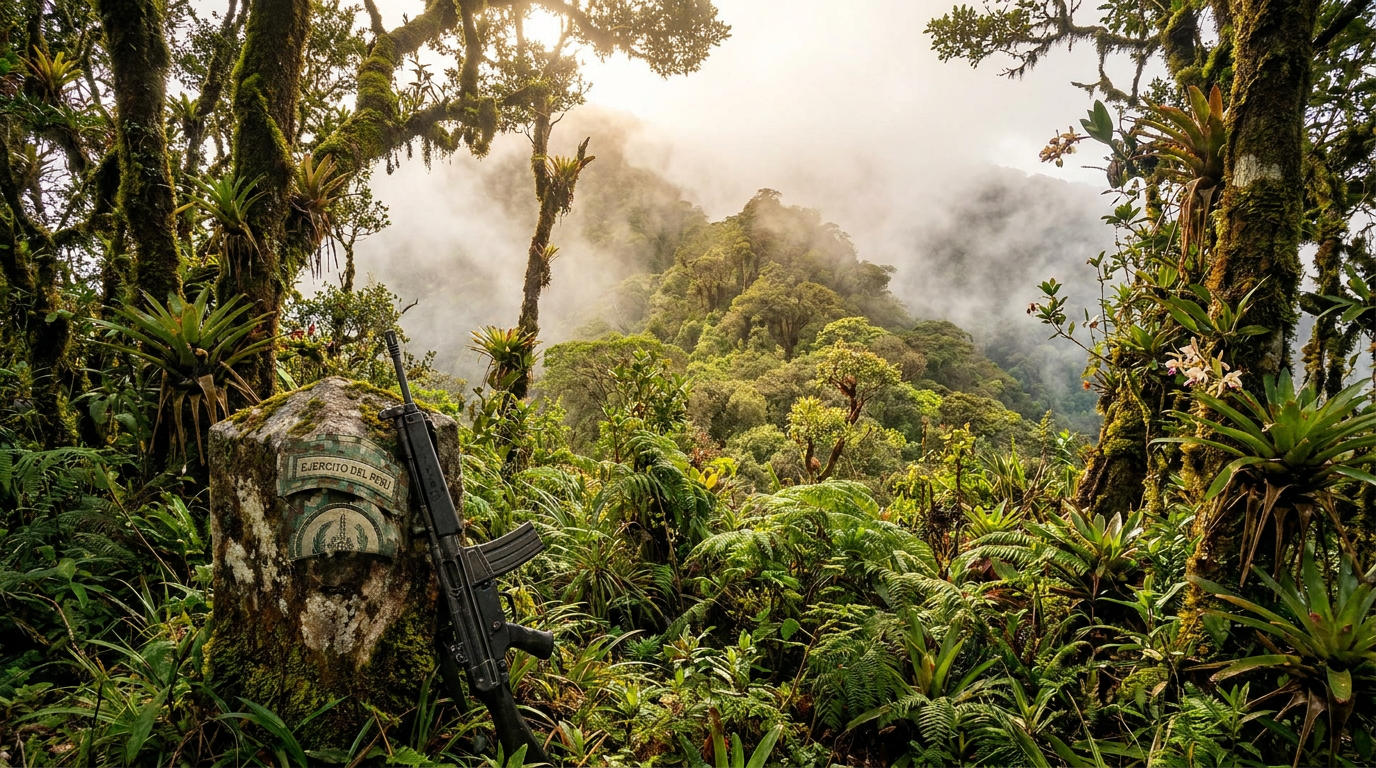
For 170 years, the mountainous Cordillera del Condor region was a volatile flashpoint between Ecuador and Peru. Skirmishes over the densely forested border frequently threatened to pull the two South American nations into full-scale war. But in 1998, the hostilities ended not just with a traditional ceasefire, but with a radical geopolitical experiment: the creation of a jointly managed biological reserve. By transforming the contested territory into a 'peace park,' the two governments effectively demilitarized the zone, replacing soldiers with park rangers and scientific researchers. Today, the 160-kilometer corridor stands as one of the most successful examples of ecological diplomacy in modern history.[2][7]
The Cordillera del Condor is not an isolated anomaly. Across the globe, defense analysts and diplomats are increasingly turning to 'environmental peacebuilding' to de-escalate border disputes and foster regional stability. The core premise is that shared environmental challenges—such as water scarcity, biodiversity loss, or the management of migratory species—ignore national boundaries. Because ecological issues are often viewed as 'low politics' driven by science rather than ideology, they provide a neutral entry point for hostile nations to begin communicating and cooperating.[3][4][7]
The International Union for Conservation of Nature (IUCN) formally recognizes this paradigm, designating specific transboundary conservation areas as 'Parks for Peace.' To qualify for this designation, the cooperating jurisdictions must explicitly recognize the area as both a protected ecological zone and a strict no-conflict zone. The IUCN notes that these parks are designed to build trust, prevent tension over natural resources, and promote the resolution of armed conflict through integrated, landscape-level management.[1]

The evidence supporting this approach is reflected in its rapid global adoption. In the late 1980s, there were only 59 recognized transboundary protected areas worldwide. Today, that number has surged to over 600, with at least 35 formally designated as official peace parks by the IUCN. These zones range from the Waterton-Glacier International Peace Park celebrating the peaceful border between the United States and Canada, to highly sensitive corridors in post-conflict regions across Africa, the Balkans, and the Middle East.[1][4][7]
The mechanism by which conservation translates into peace is highly structured. It typically begins with joint scientific assessments. In the case of the Ecuador-Peru border, independent scientists conducted an analysis of the region's biological importance, highlighting its critical role in maintaining the hydrological cycle that links the Andes to the Amazon. Once conflicting parties recognize that a deteriorating ecology threatens both sides equally, they are forced to establish technical cooperation.[1][2][7]
This technical cooperation often bypasses high-level political gridlock. When military and diplomatic channels are frozen, environmental ministries and local resource managers can maintain open lines of communication. Over time, joint patrols, shared data monitoring, and collaborative resource management build a foundation of institutional trust that gradually trickles up to the national security level.[3][4]
The international community is now backing this evidence with substantial capital. Between 2017 and 2024, the United Nations Peacebuilding Fund (PBF) allocated over $205 million to 76 projects specifically focused on climate, peace, and security, as well as environmental peacebuilding. The PBF recognizes that environmental degradation exacerbates resource scarcity, which in turn fuels border tensions and displacement. By funding cross-border conservation, the UN aims to address the root causes of conflict before they ignite.[3][6]

The international community is now backing this evidence with substantial capital.
Marine environments are also becoming vital testing grounds for ecological diplomacy. The legally ambiguous and highly interconnected nature of ocean territories makes them prone to jurisdictional disputes. However, well-managed transboundary marine protected areas (MPAs) have shown significant potential to defuse maritime tensions. The Red Sea Marine Peace Park, established as part of the 1994 peace treaty between Israel and Jordan, mandates the joint protection of shared coral reefs, forcing continuous bilateral coordination in a historically volatile region.[5][7]
Despite the overwhelming optimism surrounding peace parks, researchers emphasize the need for transparent uncertainty regarding their implementation. The Environmental Peacebuilding Association cautions that conservation efforts must be highly conflict-sensitive. If poorly managed, the establishment of a protected area can inadvertently redefine spatial relations and create new territorial formations that spark local resistance.[4]
A primary concern is the risk of 'green militarization.' In some regions, the creation of transboundary parks has allowed state governments to extend military control over remote, sparsely populated borderlands under the guise of anti-poaching and conservation enforcement. When park authorities frame neighboring countries or local populations as threats to secure high-end eco-tourism, it can intensify intrastate competition rather than resolve it.[7]
Furthermore, the success of a peace park is heavily dependent on the inclusion of local and Indigenous communities. In the Cordillera del Condor, the initial desire for a peace park actually originated from the local Indigenous populations who sought to protect their ancestral lands from the ravages of war and extractive industries. When transboundary conservation is imposed from the top down without local consent, it can lead to the displacement of communities and the loss of traditional livelihoods, ultimately undermining the peacebuilding objective.[2][3][4]

To mitigate these risks, modern environmental peacebuilding frameworks require rigorous social safeguards. The United Nations Development Programme (UNDP) stresses that integrating environmental and peacebuilding agendas must involve consensus-building on land use rights and community-led environmental monitoring. Sustainable resource management can only serve as a tool for conflict prevention if it actively bridges historical inequalities and provides equitable economic benefits to the people living within the conservation zones.[3]
The integration of climate finance into these frameworks is providing new incentives for cooperation. As the impacts of climate change intensify, the UN Peacebuilding Fund is increasingly prioritizing projects that combine low-carbon transitions with conflict resolution. By investing in nature-based solutions that restore ecosystems and enhance resource availability, international donors are helping fragile states build resilience against both environmental shocks and cross-border violence.[3][6]
Ultimately, the evidence suggests that transboundary conservation is not a utopian panacea for all geopolitical disputes, but rather a highly effective, pragmatic tool in the diplomatic arsenal. Peace parks do not erase the complex historical grievances between nations, but they do alter the physical and institutional landscape of the border. By replacing military fortifications with shared ecological responsibilities, they create a buffer of cooperation that makes a return to armed conflict significantly more difficult.[1][4][7]

As global competition for arable land, fresh water, and natural resources accelerates, the strategic value of ecological diplomacy will only grow. The transformation of the Cordillera del Condor from a militarized flashpoint into a thriving biological reserve offers a blueprint for the future. It proves that even the most entrenched border disputes can be resolved when nations recognize that their mutual survival depends on the shared protection of the natural world.[1][2][3][7]
How we got here
1932
Canada and the United States establish the Waterton-Glacier International Peace Park, the first of its kind.
1994
Israel and Jordan create the Red Sea Marine Peace Park as part of their historic peace treaty.
1998
Ecuador and Peru sign a peace agreement establishing the Cordillera del Condor transboundary reserve, ending 170 years of border disputes.
2001
The IUCN publishes its landmark guidelines formally defining the 'Parks for Peace' paradigm.
2015
The IUCN updates its transboundary conservation typology, cementing peace parks as a primary tool for ecological diplomacy.
2024
The UN Peacebuilding Fund surpasses $205 million in allocations for climate and environmental peacebuilding projects.
Viewpoints in depth
Ecological Diplomats
Advocates who view shared environmental threats as the ultimate catalyst for peace.
This camp, heavily represented by the IUCN and the UN Development Programme, argues that nature provides a neutral, depoliticized arena for hostile nations to interact. Because ecological collapse—such as a drying river or a dying forest—threatens both sides of a border equally, it forces technical cooperation. They point to the exponential growth of transboundary parks as proof that joint scientific monitoring inevitably builds the institutional trust required for broader geopolitical de-escalation.
Security & Peacebuilding Analysts
Pragmatists focused on the measurable reduction of border violence.
Security analysts view peace parks primarily as a mechanism for physical demilitarization. By replacing soldiers and landmines with park rangers and wildlife corridors, nations create a physical buffer zone that makes accidental skirmishes less likely. However, this camp remains cautious, noting that environmental peacebuilding is most effective in low-to-medium intensity conflicts and cannot easily resolve deep-seated ideological wars without a broader diplomatic framework.
Local & Indigenous Advocates
Voices warning against the displacement of communities in the name of conservation.
Indigenous rights groups and critical ecologists warn that the 'peace' in peace parks sometimes only applies to state governments. They highlight cases where the creation of transboundary reserves has been used as an excuse to evict local populations, restrict traditional land use, or increase state military presence in remote areas under the guise of anti-poaching efforts. This camp insists that true environmental peacebuilding must be built from the ground up, securing land rights and economic benefits for the people who actually live in the borderlands.
What we don't know
- How effectively peace parks can be maintained during periods of severe economic collapse or regime change in the host nations.
- The long-term impact of climate change on the specific borders defined by these ecological zones, particularly as species migrate.
- Whether the 'peace park' model can be successfully applied to highly active, high-intensity conflict zones before a formal ceasefire is reached.
Key terms
- Transboundary Conservation Area
- A geographical space spanning one or more international borders, jointly managed to conserve biodiversity and natural resources.
- Ecological Diplomacy
- The use of shared environmental challenges and scientific cooperation to build trust and resolve political conflicts between nations.
- Green Militarization
- The controversial practice of using armed forces or military-style tactics to enforce conservation and anti-poaching laws.
- Peace Park
- A specific type of transboundary protected area formally dedicated to the promotion, celebration, or commemoration of peace and cooperation.
- Environmental Peacebuilding
- The integration of natural resource management into conflict prevention, mitigation, and recovery strategies.
Frequently asked
What is the main purpose of a peace park?
While they protect biodiversity, their primary geopolitical purpose is to demilitarize contested borders and force hostile nations to cooperate on shared environmental management.
Do peace parks actually stop wars?
Yes, in specific contexts. The Cordillera del Condor peace park was explicitly written into the 1998 treaty between Ecuador and Peru to end a 170-year border conflict.
Are there risks to environmental peacebuilding?
Yes. If poorly managed, top-down conservation can displace local Indigenous communities or lead to 'green militarization,' where states use park security to project military power.
Who funds these transboundary initiatives?
Funding comes from a mix of international organizations, including the UN Peacebuilding Fund, the Global Environment Facility, and various international conservation NGOs.
Sources
Source coverage
7 outlets
3 viewpoints surfaced






[1]International Union for Conservation of Nature (IUCN)Ecological Diplomats
Parks for Peace: Transboundary Protected Areas as a Vehicle for Cooperation
Read on International Union for Conservation of Nature (IUCN) →[2]Global Transboundary Protected Areas NetworkLocal & Indigenous Advocates
Cordillera del Condor Transboundary Protected Area
Read on Global Transboundary Protected Areas Network →[3]United Nations Development Programme (UNDP)Ecological Diplomats
Climate Action and Peacebuilding: Integrating Environmental Sustainability
Read on United Nations Development Programme (UNDP) →[4]Environmental Peacebuilding AssociationSecurity & Peacebuilding Analysts
Monitoring and Evaluation of Environmental Peacebuilding
Read on Environmental Peacebuilding Association →[5]Frontiers in Marine ScienceLocal & Indigenous Advocates
Geopolitics and Marine Conservation: Transboundary Marine Protected Areas
Read on Frontiers in Marine Science →[6]UN Peacebuilding FundSecurity & Peacebuilding Analysts
Tip Sheet on Climate, Peace and Security and Environmental Peacebuilding
Read on UN Peacebuilding Fund →[7]Factlen Editorial TeamSecurity & Peacebuilding Analysts
Synthesis by Factlen editorial team
Read on Factlen Editorial Team →
Every angle. Every day.
Get defense security stories with full source coverage and perspective breakdowns delivered to your inbox.