
FDA Approves Bemotrizinol, the First New Sunscreen Active Ingredient in 27 Years
The FDA has officially cleared bemotrizinol for use in U.S. sunscreens, ending a decades-long regulatory drought and bringing advanced, photostable UV protection to American consumers.
By Factlen Editorial Team
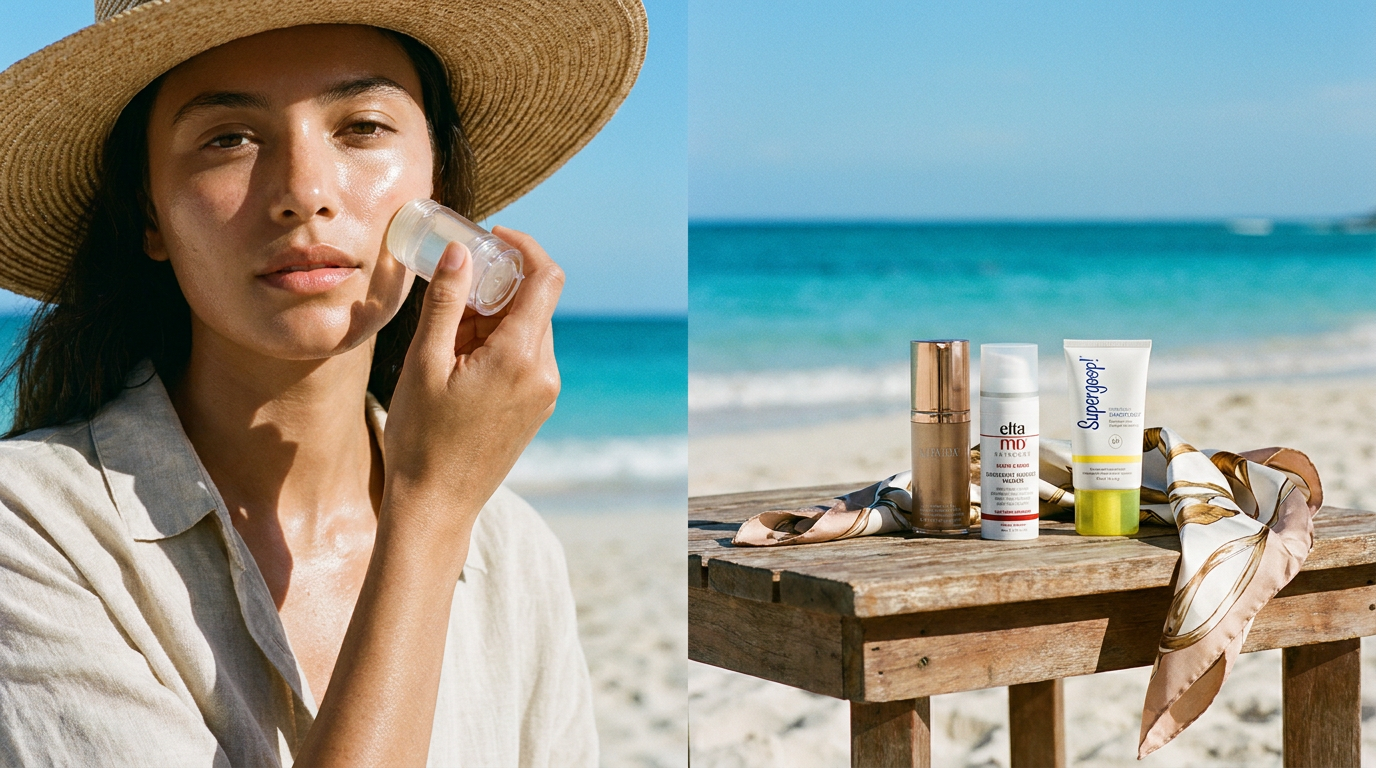
- Clinical Dermatologists
- Focus on the clinical benefits of true broad-spectrum protection and photostability in reducing melanoma and premature aging.
- Regulatory & Safety Advocates
- Prioritize the ingredient's lack of systemic absorption and endocrine disruption compared to legacy chemical filters.
- Cosmetic Industry & Formulators
- Celebrate the ability to finally create cosmetically elegant, non-chalky sunscreens that consumers will actually want to wear daily.
What's not represented
- · European Sunscreen Manufacturers
- · Marine Biologists (Coral Reef Impact)
Why this matters
For decades, Americans have been stuck with older sunscreen formulas that either leave a chalky white cast or absorb into the bloodstream. The approval of bemotrizinol finally allows U.S. brands to create the highly effective, cosmetically elegant, and safe sunscreens that the rest of the world has enjoyed for years.
Key points
- The FDA has approved bemotrizinol as a new over-the-counter sunscreen active ingredient, the first such approval since 1999.
- Bemotrizinol is a broad-spectrum filter that protects against both UVA and UVB rays without degrading in sunlight.
- Unlike older chemical filters, bemotrizinol has a large molecular weight that prevents it from absorbing into the bloodstream.
- The approval allows U.S. formulators to create lightweight, invisible sunscreens without the white cast of mineral blocks.
For nearly three decades, American consumers seeking sun protection have been trapped in a frustrating compromise. They could choose mineral sunscreens containing zinc oxide or titanium dioxide, which offer excellent broad-spectrum protection but often leave a chalky, white cast on the skin, particularly for individuals with deeper complexions. Alternatively, they could opt for chemical sunscreens, which blend invisibly but rely on older active ingredients that can degrade quickly in sunlight, sting sensitive eyes, or absorb into the bloodstream. While sunscreen technology advanced rapidly across Europe, Asia, and Australia, the United States market remained frozen in 1999, the last time a new ultraviolet (UV) filter was cleared for use.[2][3]
That era of stagnation officially ended on June 10, 2026. In a landmark decision for dermatological health, the U.S. Food and Drug Administration (FDA) issued a final administrative order adding bemotrizinol to the over-the-counter (OTC) sunscreen monograph. The approval permits the ingredient to be used in American sunscreens at concentrations up to 6 percent. For dermatologists, cosmetic chemists, and skin cancer advocates who have spent years lobbying for better options, the clearance of bemotrizinol—often referred to by its acronym BEMT or trade names like Tinosorb S and PARSOL Shield—represents the most significant modernization of U.S. sun care in a generation.[1][7]
To understand why bemotrizinol is generating such enthusiasm, it is necessary to examine how ultraviolet radiation damages the skin. The sun emits two primary types of UV rays that reach the earth's surface: UVA and UVB. UVB rays possess shorter wavelengths and are the primary culprits behind immediate sunburns and direct cellular DNA mutations, which lead to basal cell carcinoma, squamous cell carcinoma, and melanoma. UVA rays, which have longer wavelengths, penetrate much deeper into the dermis. They generate free radicals and oxidative stress, driving premature aging, wrinkling, and indirect DNA damage that also contributes heavily to skin cancer risk.[8]

Historically, most chemical filters available in the United States have been highly specialized, blocking either UVA or UVB rays, but rarely both effectively. Formulators have had to combine multiple active ingredients to achieve a "broad-spectrum" label. Bemotrizinol, however, is a highly efficient broad-spectrum organic filter. Its unique molecular structure allows it to absorb radiation across both the UVA and UVB spectrums simultaneously, providing a comprehensive shield within a single ingredient.[2][6]
Beyond its broad-spectrum capabilities, bemotrizinol solves one of the most persistent problems in chemical sunscreen formulation: photostability. The most common UVA filter used in the U.S., avobenzone, is notoriously unstable. When exposed to sunlight, avobenzone molecules absorb UV energy but rapidly degrade, losing their protective efficacy within hours and requiring the addition of stabilizing chemicals like octocrylene. Bemotrizinol operates differently. When it absorbs UV radiation, it undergoes a rapid, reversible structural change, dissipating the absorbed energy as harmless heat before snapping back to its original state. This exceptional photostability means the sunscreen remains effective for much longer periods of direct sun exposure.[2][8]
The FDA's approval also addresses growing consumer anxieties regarding the systemic absorption of older sunscreen chemicals. In 2019 and 2020, FDA-conducted clinical trials revealed that several legacy chemical filters—including oxybenzone, octinoxate, and avobenzone—absorb through the skin and enter the bloodstream at concentrations well above the agency's 0.5 nanograms per milliliter safety threshold. While the FDA maintained that these ingredients were still safer to use than risking skin cancer, the findings prompted intense scrutiny from consumer watchdogs over potential endocrine disruption and allergic reactions.[4]

Bemotrizinol offers a starkly different pharmacokinetic profile. It is a large, oil-soluble molecule with a high molecular weight, which physically prevents it from easily penetrating the stratum corneum, the outermost layer of the skin. Clinical data reviewed by the FDA demonstrated that bemotrizinol exhibits minimal to no systemic absorption, staying exactly where it is needed: on the surface of the skin. Consequently, the agency classified the ingredient as "Generally Recognized as Safe and Effective" (GRASE) for adults and children as young as six months old, noting a lack of reproductive toxicity, carcinogenicity, or irritation potential.[1][4][8]
Bemotrizinol offers a starkly different pharmacokinetic profile.
If bemotrizinol is so effective and safe, its 27-year absence from the U.S. market requires explanation. The delay stems from a fundamental difference in international regulatory frameworks. In Europe, Australia, and much of Asia, sunscreens are regulated as cosmetics, allowing new UV filters to reach the market relatively quickly once basic safety data is established. In the United States, however, sunscreens are classified as over-the-counter drugs. This designation requires manufacturers to conduct exhaustive, highly expensive clinical trials to prove both safety and efficacy before an ingredient can be added to the FDA's approved monograph.[8]
For decades, the financial burden and bureaucratic friction of the U.S. system deterred chemical manufacturers from seeking FDA approval for modern filters. The breakthrough finally arrived courtesy of the 2020 CARES Act, which included provisions to streamline and modernize the sluggish OTC monograph process. Utilizing this new framework, ingredient manufacturers submitted comprehensive safety dossiers, leveraging decades of real-world epidemiological data from Europe to satisfy the FDA's rigorous standards without getting trapped in endless regulatory loops.[1][2]
The approval has also been championed as a victory for recent public health initiatives. Health and Human Services (HHS) Secretary Robert F. Kennedy Jr. highlighted the FDA's action as a fulfillment of the administration's "Make America Healthy Again" (MAHA) strategy, which explicitly prioritized bringing new, safer sunscreen ingredients to the U.S. market to improve consumer confidence. By finalizing the order just seven months after the initial proposal, the FDA signaled a new willingness to align American sun care standards with global best practices.[1][5]

For cosmetic chemists, the introduction of bemotrizinol unlocks entirely new formulation possibilities. Because the ingredient is highly efficient at low concentrations and inherently water-resistant, formulators can create lightweight, cosmetically elegant gels, serums, and lotions. These new products will lack the heavy, greasy feel of traditional chemical sunscreens and the ashy residue of mineral blocks, removing major sensory barriers that often discourage daily sunscreen compliance.[5][6]
Furthermore, bemotrizinol has a synergistic effect when combined with other UV filters. It not only provides its own broad-spectrum protection but actually helps stabilize older, more fragile ingredients when they are formulated together. This means that even hybrid sunscreens utilizing a mix of legacy and modern filters will offer significantly improved durability and performance compared to products currently on American shelves.[8]
Despite the regulatory green light, American consumers will need to exercise a brief period of patience. Developing, testing, and scaling new sunscreen formulations takes time. While ingredient manufacturers are immediately making bemotrizinol available to U.S. brands, dermatologists anticipate that the first wave of next-generation sunscreens featuring the filter will likely hit retail shelves in late 2026 or early 2027.[2][3]

The broader implications of this approval extend beyond a single ingredient. The successful navigation of the updated OTC monograph process by bemotrizinol provides a viable roadmap for other advanced European UV filters—such as Tinosorb M, Mexoryl SX, and Uvinul A Plus—that remain locked out of the U.S. market. If manufacturers see a clear, predictable path to FDA clearance, the American sun care landscape could experience a rapid renaissance over the next decade.[3]
Ultimately, the arrival of bemotrizinol is a profound victory for preventative medicine. Skin cancer remains the most common cancer in the United States, with millions of cases diagnosed annually. By providing consumers with a highly effective, cosmetically elegant, and unequivocally safe tool to shield themselves from ultraviolet radiation, the FDA has closed a critical gap in public health, ensuring that Americans no longer have to look overseas for state-of-the-art sun protection.[2]
How we got here
1999
The FDA approves the last new UV filter for the U.S. market, beginning a 27-year regulatory drought.
2000s
Bemotrizinol is approved and widely adopted across Europe, Asia, and Australia under trade names like Tinosorb S.
2019-2020
FDA clinical trials reveal that legacy chemical filters like oxybenzone absorb into the bloodstream at concerning levels.
March 2020
The CARES Act is signed into law, streamlining the FDA's OTC monograph process for nonprescription drugs.
December 2025
The FDA issues a proposed administrative order to add bemotrizinol to the approved sunscreen list.
June 10, 2026
The FDA issues the final order, officially approving bemotrizinol for use in U.S. sunscreens.
Viewpoints in depth
Clinical Dermatologists
Medical professionals view the approval as a critical tool for reducing skin cancer rates.
For dermatologists, the primary frustration with the U.S. sunscreen market has been the lack of photostable UVA protection. Because UVA rays drive the deep DNA damage that leads to melanoma, relying on unstable filters like avobenzone has been a clinical liability. Dermatologists argue that bemotrizinol's ability to maintain its protective shield during prolonged sun exposure will directly translate to fewer sunburns and, over time, a reduction in skin cancer incidence. They also emphasize that improving the cosmetic elegance of sunscreens is a medical intervention in itself, as patients are far more likely to wear a product daily if it doesn't leave a greasy or chalky residue.
Cosmetic Chemists
Formulators celebrate the end of a decades-long creative bottleneck in U.S. sun care.
Cosmetic chemists have long been forced to use "workarounds" in the U.S. market, combining multiple legacy filters and heavy stabilizers just to achieve basic broad-spectrum protection. This often resulted in thick, sticky formulas that stung the eyes. Chemists view bemotrizinol as a "holy grail" ingredient because it is highly efficient at low concentrations, inherently water-resistant, and actually helps stabilize other ingredients in the formula. This allows them to finally formulate the lightweight, serum-like sunscreens that have dominated the Asian and European beauty markets for years.
Consumer Safety Advocates
Watchdog groups praise the ingredient's safety profile and lack of systemic absorption.
Organizations like the Environmental Working Group (EWG) have spent years sounding the alarm on legacy chemical filters like oxybenzone and octinoxate, citing FDA data showing they absorb into the bloodstream and may act as endocrine disruptors. These advocates strongly support the approval of bemotrizinol because its large molecular size physically prevents it from penetrating the skin barrier. For safety watchdogs, this represents a rare win-win: consumers no longer have to choose between effective UV protection and minimizing their exposure to potentially disruptive systemic chemicals.
What we don't know
- It remains unclear exactly how quickly major U.S. brands will reformulate their legacy product lines to include bemotrizinol, given the high costs of research and development.
- It is not yet known if this approval will open the floodgates for the FDA to quickly clear other advanced European UV filters, such as Tinosorb M or Mexoryl SX.
Key terms
- Bemotrizinol (BEMT)
- A broad-spectrum organic UV filter that absorbs both UVA and UVB rays without degrading in sunlight, recently approved by the FDA.
- Photostability
- The ability of a molecule to maintain its chemical structure and protective efficacy when exposed to UV radiation.
- UVA Rays
- Long-wave ultraviolet radiation that penetrates deep into the skin, causing premature aging and indirect DNA damage.
- UVB Rays
- Short-wave ultraviolet radiation that damages the outer layers of the skin, causing sunburns and direct genetic mutations.
- OTC Monograph
- A regulatory rulebook established by the FDA that dictates which active ingredients can be used in nonprescription drugs like sunscreens.
- Systemic Absorption
- The process by which a topically applied chemical penetrates the skin barrier and enters the bloodstream.
Frequently asked
When will sunscreens with bemotrizinol be available in the US?
While the ingredient is now approved, it takes time for brands to formulate, test, and manufacture new products. Experts expect the first bemotrizinol sunscreens to hit U.S. retail shelves in late 2026 or early 2027.
Is bemotrizinol safe for children?
Yes. The FDA has classified bemotrizinol as Generally Recognized as Safe and Effective (GRASE) for adults and children as young as six months old.
Will bemotrizinol replace mineral sunscreens?
Not entirely. While it offers a cosmetically elegant, invisible alternative to zinc oxide, mineral sunscreens will remain popular for those who prefer physical UV blockers or have specific skin sensitivities.
Why did it take so long for the FDA to approve it?
In the U.S., sunscreens are regulated as over-the-counter drugs, requiring expensive and lengthy clinical trials. In Europe, they are regulated as cosmetics, allowing for faster approval of new ingredients.
Sources
Source coverage
8 outlets
3 viewpoints surfaced








[1]FDARegulatory & Safety Advocates
FDA adds bemotrizinol to the list of permitted sunscreen active ingredients
Read on FDA →[2]DermSquaredClinical Dermatologists
FDA Approves First New Sunscreen Ingredient in Two Decades
Read on DermSquared →[3]Harper's BazaarCosmetic Industry & Formulators
The FDA Finally Approved a New Sunscreen Filter
Read on Harper's Bazaar →[4]Environmental Working GroupRegulatory & Safety Advocates
The trouble with sunscreen chemicals
Read on Environmental Working Group →[5]Nutraceutical Business ReviewCosmetic Industry & Formulators
FDA approves bemotrizinol as first new sunscreen active ingredient in more than 20 years
Read on Nutraceutical Business Review →[6]BASFCosmetic Industry & Formulators
BASF's Tinosorb S receives FDA approval as new sunscreen active ingredient
Read on BASF →[7]SpecialChemCosmetic Industry & Formulators
FDA Approves Bemotrizinol as New Sunscreen Active Ingredient
Read on SpecialChem →[8]Dr. AxeClinical Dermatologists
FDA Approves Bemotrizinol Sunscreen
Read on Dr. Axe →

More in health
See all 6 stories →Cardiovascular Health
FDA Approves Baxdrostat, a First-in-Class Aldosterone Inhibitor, for Hard-to-Treat Hypertension
6 sources
Pancreatic Cancer
The Evidence Pack: How a RAS-Targeted Drug Nearly Doubled Survival in Advanced Pancreatic Cancer
6 sources

Cellular Reprogramming
The Evidence Pack: How Partial Cellular Reprogramming is Entering Human Trials to Reverse Vision Loss
5 sources

RNA Therapeutics
The Evidence Pack: How a Novel RNA Drug Became the First to Reduce Pancreatitis Risk in Severe Hypertriglyceridemia
6 sources
Every angle. Every day.
Get health stories with full source coverage and perspective breakdowns delivered to your inbox.