
PFAS vs. PFAS-Free Waterproofing: The 2026 Trade-Off Analysis for Outdoor Apparel
As sweeping state bans eliminate 'forever chemicals' from outdoor gear, a new generation of waterproof membranes is taking over. Here is how the new PFAS-free jackets compare to traditional ePTFE in durability, maintenance, and environmental impact.
By Factlen Editorial Team
- Outdoor Gear Manufacturers
- Focus on the massive R&D effort required to match legacy performance with new, sustainable ePE materials.
- Environmental Policymakers
- Argue that the ecological and biological damage caused by PFAS far outweighs the convenience of zero-maintenance outdoor gear.
- Consumer Gear Reviewers
- Highlight the practical trade-offs for hikers, emphasizing the steep learning curve regarding washing and heat-treating new jackets.
What's not represented
- · Dry cleaners and professional garment care services
- · Chemical industry lobbyists opposing the bans
Why this matters
If you are buying a rain jacket, tent, or pair of hiking boots in 2026, the underlying chemistry keeping you dry has fundamentally changed. Understanding the trade-offs of these new 'forever-chemical-free' materials is essential, as they require entirely different maintenance routines to stay waterproof.
Key points
- State laws have effectively banned the use of 'forever chemicals' (PFAS) in new outdoor apparel.
- Major brands have transitioned to ePE membranes, which offer equal waterproofness and a 50% lower carbon footprint.
- New PFAS-free coatings are less resistant to body oils and dirt than legacy materials.
- Consumers must now wash their waterproof gear frequently and use a tumble dryer to reactivate the water repellency.
- Without proper maintenance, new jackets will 'wet out' and lose breathability faster than older models.
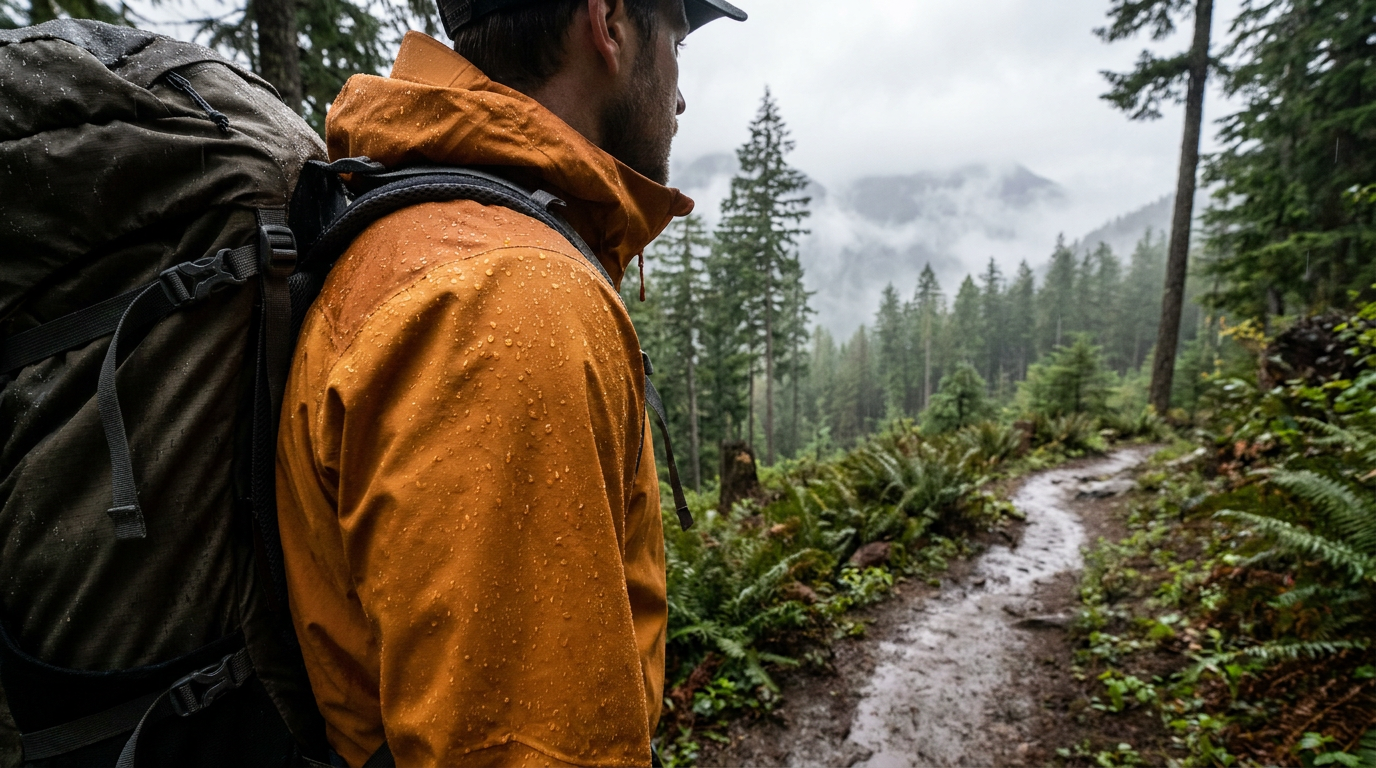
The era of the "forever chemical" rain jacket is officially over. Driven by sweeping legislation in states like California, New York, Colorado, and Maine, the outdoor industry has undergone its most significant material shift in decades. These laws, which strictly limit or ban the sale of textiles containing intentionally added per- and polyfluoroalkyl substances (PFAS), have forced a complete reinvention of how we stay dry in the backcountry.[1][5]
For over fifty years, premium waterproof-breathable gear relied heavily on PFAS—specifically expanded polytetrafluoroethylene (ePTFE). This chemistry was considered a miracle for outdoor recreation. It created a microscopic, durable web that blocked liquid water from entering while allowing sweat vapor to escape, keeping hikers and skiers dry from both the inside and the outside.[4][7]
The trade-off for that performance was severe environmental and biological persistence. PFAS molecules feature incredibly strong carbon-fluorine bonds that do not naturally break down, leading them to accumulate in waterways, wildlife, and human bloodstreams. Recognizing this ecological toll, lawmakers established hard deadlines, effectively banning the sale of legacy PFAS-treated textiles by 2025 and 2026.[2][5]
In response, material science giants and major outdoor brands have rolled out next-generation membranes, primarily utilizing expanded polyethylene (ePE) and advanced polyurethane (PU) blends. These new materials represent a massive leap forward in sustainable manufacturing, but they bring a new set of trade-offs that consumers must navigate.[3][4]
When comparing traditional ePTFE against the new ePE membranes, the most immediate difference is weight and environmental footprint. The new ePE materials are significantly lighter and thinner. More importantly, they boast a carbon footprint reduction of up to 50 percent during manufacturing, fundamentally lowering the ecological cost of producing technical apparel.[4][6]

However, the performance trade-offs require a fundamental shift in consumer habits. Traditional PFAS-based Durable Water Repellent (DWR) coatings were highly oleophobic—meaning they repelled body oils, campfire smoke, sunscreen, and dirt just as effectively as they repelled rain. This made legacy jackets incredibly forgiving of neglect.[1][7]
However, the performance trade-offs require a fundamental shift in consumer habits.
The new PFAS-free DWR treatments are highly hydrophobic (water-repelling) but lack that same robust resistance to oils. When a hiker's sweat and natural skin oils accumulate on the collar, cuffs, or shoulders of a new ePE jacket, those oils can mask the DWR coating. This causes the face fabric to "wet out," meaning the outer layer absorbs water instead of shedding it.[2][6]
This brings us to the most critical trade-off: maintenance. For decades, outdoor consumers treated rain jackets as zero-maintenance items, rarely washing them for fear of ruining the waterproofing. With the 2026 generation of PFAS-free gear, the exact opposite approach is required.[3][7]
Frequent washing is now mandatory. Brands explicitly instruct users to wash their ePE garments regularly with specialized technical detergents to remove oil and dirt buildup. Furthermore, the new DWR coatings must be heat-activated after washing—typically requiring 10 to 15 minutes in a warm tumble dryer to restore their water-beading properties.[2][3]

In terms of raw waterproofness, laboratory hydrostatic head tests show that ePE membranes block water just as effectively as their toxic predecessors. A brand-new PFAS-free jacket will keep a user perfectly dry in a torrential downpour, proving that forever chemicals are no longer strictly necessary for peak performance.[4][6]
The divergence happens over time and heavy use. Without regular washing and periodic re-application of wash-in or spray-on DWR treatments, the new jackets will wet out faster than the old ePTFE models. While the membrane underneath will still stop water from reaching the skin, the saturated outer fabric will drastically reduce breathability, leaving the wearer feeling cold and clammy from trapped sweat.[1][7]

Ultimately, the traditional ePTFE gear of the past fits well for scenarios demanding absolute zero-maintenance durability, though buying it new is no longer a legal option in many major markets. Its legacy is one of incredible performance paired with unacceptable environmental contamination.[5][6]
The new PFAS-free ePE gear fits well for the modern outdoor enthusiast who values environmental stewardship and is willing to adopt a routine of regular washing and heat-treating. It represents a highly successful, necessary compromise: slightly more maintenance in exchange for permanently eliminating forever chemicals from our wild spaces.[3][6]
How we got here
2022
California and Colorado pass landmark legislation banning PFAS in consumer textiles.
2024
Major outdoor brands begin phasing out legacy ePTFE membranes in their flagship products.
2025
State-level bans officially take effect, halting the manufacture and sale of most PFAS-treated apparel.
2026
The outdoor market fully transitions to ePE and alternative PU membranes, establishing a new baseline for gear maintenance.
Viewpoints in depth
Material Scientists
Highlight the immense technical challenge of replacing ePTFE's unique properties.
Chemists and material scientists note that PFAS chemicals were used for a reason: their carbon-fluorine bonds are among the strongest in organic chemistry. Finding an alternative that could block water, breathe, and survive the physical abrasion of mountaineering without degrading was a monumental task. They point out that while ePE is a triumph of sustainable engineering, the loss of oleophobic (oil-repelling) properties is a strict chemical limitation of non-fluorinated materials, making the new maintenance requirements an unavoidable reality of physics.
Environmental Advocates
Argue that the slight inconvenience of washing gear is a necessary trade-off for public health.
Environmental groups and public health officials view the transition away from PFAS as a non-negotiable victory. They emphasize that forever chemicals have contaminated drinking water supplies globally and are linked to severe health issues, including cancer and immune system disruption. From this perspective, the outdoor industry's historical reliance on toxic chemicals to save consumers from doing laundry was fundamentally at odds with the ethos of protecting nature.
Outdoor Consumers
Express a mix of support for sustainability and frustration over the new learning curve.
Everyday hikers and skiers are experiencing a significant adjustment period. For decades, the prevailing wisdom was that washing a rain jacket would destroy it. Now, consumers are finding that their expensive new PFAS-free jackets are wetting out after just a few weeks of heavy use because they followed outdated advice. While most support the environmental goals of the ban, there is widespread frustration over the lack of clear, standardized education on how to care for this new generation of apparel.
What we don't know
- How the long-term physical durability of ePE membranes will compare to ePTFE after a decade of heavy backcountry use.
- Whether future iterations of PFAS-free DWR coatings will eventually achieve the oil-repelling properties of legacy chemicals.
Key terms
- PFAS (Per- and Polyfluoroalkyl Substances)
- A large class of synthetic chemicals known as 'forever chemicals' because their strong carbon-fluorine bonds prevent them from breaking down in the environment.
- ePTFE (Expanded Polytetrafluoroethylene)
- The legacy material used in traditional waterproof-breathable membranes, which relies heavily on PFAS chemistry.
- ePE (Expanded Polyethylene)
- The new, PFAS-free alternative membrane material that is lighter, has a lower carbon footprint, and meets new environmental regulations.
- DWR (Durable Water Repellent)
- A chemical coating applied to the outside of a jacket that causes water to bead up and roll off rather than soaking into the fabric.
- Wetting Out
- When the outer fabric of a waterproof jacket absorbs water because the DWR coating has failed or been masked by dirt and oils, leading to a cold, clammy feeling.
Frequently asked
Will my old PFAS-treated jacket be banned?
No. The state bans apply only to the manufacturing and sale of new textiles. You can continue to use your existing gear, though brands encourage transitioning to PFAS-free options when it is time to replace them.
How often should I wash a PFAS-free rain jacket?
You should wash it whenever it looks dirty, smells like sweat, or when water stops beading up and rolling off the fabric. For heavy users, this could be every few weeks.
Can I still use my old waterproofing sprays?
Many older waterproofing sprays contained PFAS. You should check the label and switch to modern, PFAS-free silicone or wax-based DWR treatments to maintain your new gear.
Sources
Source coverage
7 outlets
3 viewpoints surfaced







[1]Outside MagazineConsumer Gear Reviewers
The End of PFAS in Outdoor Gear: What You Need to Know
Read on Outside Magazine →[2]The New York TimesConsumer Gear Reviewers
Why Your Next Rain Jacket Will Need More Care
Read on The New York Times →[3]PatagoniaOutdoor Gear Manufacturers
Our Journey to PFAS-Free Gear
Read on Patagonia →[4]Gore-TexOutdoor Gear Manufacturers
Introducing the new GORE-TEX ePE membrane
Read on Gore-Tex →[5]Colorado General AssemblyEnvironmental Policymakers
SB22-193: PFAS in Consumer Products
Read on Colorado General Assembly →[6]Factlen Editorial TeamEnvironmental Policymakers
Synthesis by Factlen editorial team
Read on Factlen Editorial Team →[7]GearJunkieConsumer Gear Reviewers
PFAS Bans Are Here: What It Means for Your Waterproof Gear
Read on GearJunkie →

Every angle. Every day.
Get shopping stories with full source coverage and perspective breakdowns delivered to your inbox.