
The Global Migration to Post-Quantum Cryptography Has Begun
With NIST finalizing its post-quantum encryption standards, the cybersecurity industry is racing to protect long-lived data from future quantum computers.
By Factlen Editorial Team
- Enterprise Security Practitioners
- Balancing the quantum threat against everyday operational realities and budget constraints.
- National Security Regulators
- Focused on protecting state secrets from long-term decryption threats.
- Quantum Threat Analysts
- Tracking the shrinking timeline between classical security and quantum capabilities.
- Factlen Editorial Synthesis
- Synthesizing the evidence to provide a clear roadmap for the post-quantum transition.
What's not represented
- · Legacy Hardware Manufacturers
- · Open-Source Cryptography Maintainers
Why this matters
Virtually all digital privacy—from online banking to secure messaging—relies on encryption that future quantum computers will be able to break. The transition to post-quantum cryptography ensures that sensitive data remains secure against the next generation of cyber threats.
Key points
- NIST finalized the first three post-quantum cryptography standards (FIPS 203, 204, 205) in August 2024.
- The primary threat today is 'Harvest Now, Decrypt Later,' where adversaries store encrypted data to decrypt in the future.
- Experts recommend a hybrid approach, running classical and post-quantum algorithms in parallel to mitigate risk.
- The NSA requires all new national security systems to support post-quantum cryptography by January 2027.
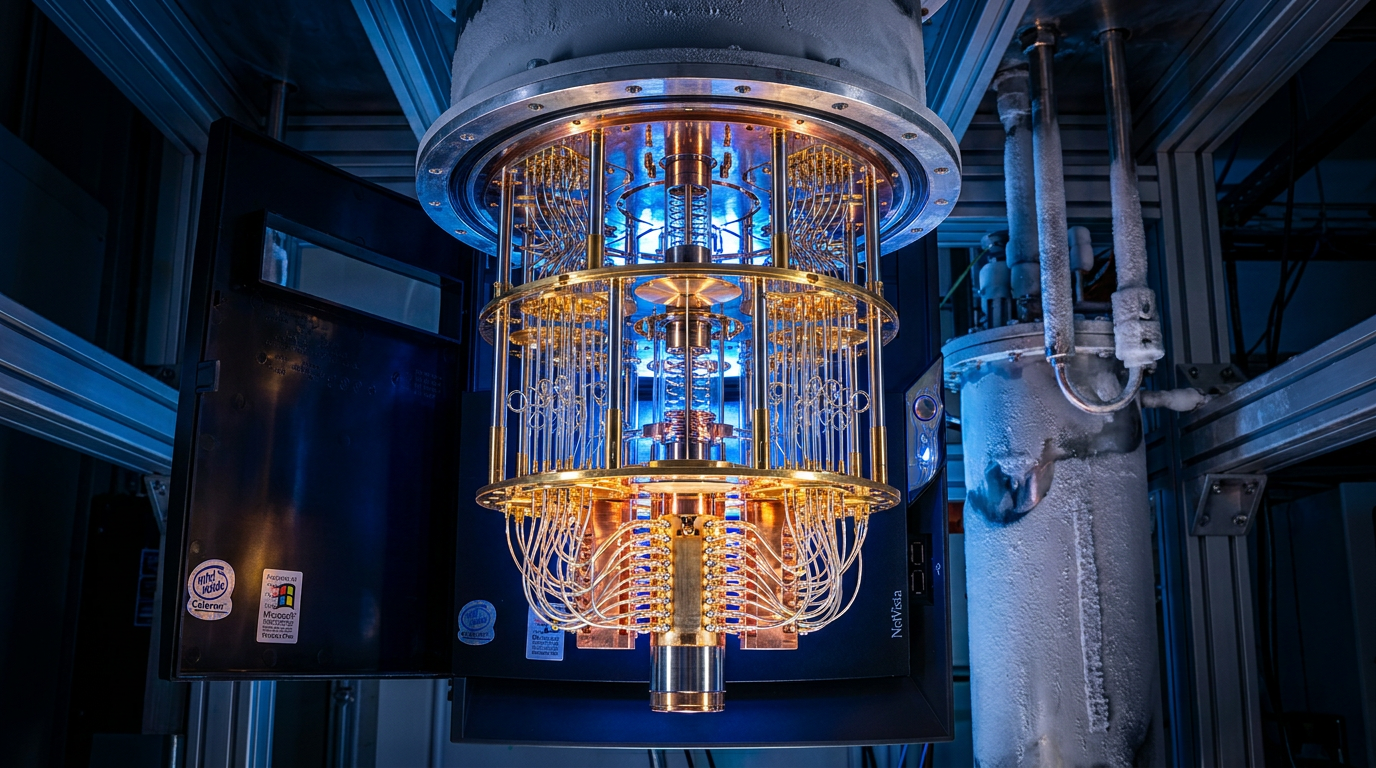
The cybersecurity industry is currently tracking a deadline that does not yet have a date. Known colloquially as "Q-Day," it marks the theoretical moment when a Cryptographically Relevant Quantum Computer (CRQC) becomes powerful enough to break the public-key encryption algorithms—primarily RSA and Elliptic Curve Cryptography (ECC)—that secure the modern internet.[2][7]
For decades, the mathematical difficulty of factoring large prime numbers has protected everything from global financial networks to secure messaging and military communications. But in 1994, Shor’s Algorithm proved that a quantum computer could solve these problems exponentially faster than classical machines. The only missing ingredient was the hardware.[2][4]
Today, the hardware gap is closing. While a CRQC does not yet exist, the threat it poses is already active. Intelligence agencies and cybersecurity firms warn of "Harvest Now, Decrypt Later" (HNDL) attacks, in which state-sponsored adversaries intercept and store encrypted data today, waiting for the day they possess the quantum capability to unlock it.[3][4]

Claim: The primary risk today is to long-lived data. Evidence: Strong. The U.S. Office of the Director of National Intelligence (ODNI) notes that sensitive information with a shelf life of 10 to 20 years—such as state secrets, intellectual property, and long-term financial records—is already compromised if it is intercepted in transit. If an adversary captures the encrypted traffic today, the encryption has effectively already failed.[4][6]
Claim: Q-Day is imminent. Evidence: Contested and highly uncertain. Predicting the exact arrival of a CRQC depends on three independent variables: hardware physics, error correction, and algorithm efficiency. Most experts place Q-Day in the mid-to-late 2030s, citing the immense challenge of stabilizing millions of physical qubits to create fault-tolerant logical qubits.[2][3]
However, the timeline is shrinking. Recent research from Google Quantum AI demonstrated that ECC could be broken with approximately 20 times fewer physical qubits than previously estimated. Because algorithmic efficiency is advancing faster than anticipated, some aggressive estimates suggest a CRQC could emerge by 2029.[3][4]
Recognizing that the migration to new cryptography takes years, regulators are not waiting for the hardware to mature. In August 2024, the National Institute of Standards and Technology (NIST) finalized its first three post-quantum cryptography (PQC) standards, marking a historic shift from theoretical research to an active global migration mandate.[1][5]

Recognizing that the migration to new cryptography takes years, regulators are not waiting for the hardware to mature.
The finalized standards—FIPS 203, FIPS 204, and FIPS 205—rely on entirely different mathematical foundations, such as lattice-based and hash-based cryptography, which are believed to be resistant to both classical and quantum attacks. FIPS 203 (ML-KEM) is designed to replace RSA and ECDH for secure key exchange, while FIPS 204 (ML-DSA) and FIPS 205 (SLH-DSA) will replace current digital signature algorithms.[1][5]
Claim: Organizations must rip and replace their current encryption immediately. Evidence: Weak. Cryptographers strongly advise against abandoning classical encryption overnight. Because the new PQC algorithms have not been battle-tested by decades of real-world attacks, there is a non-zero risk that a classical vulnerability could be discovered in the future.[5]
Instead, the industry consensus is to adopt a "hybrid approach." This involves wrapping data in both a classical algorithm (like ECC) and a post-quantum algorithm (like ML-KEM). An attacker would need to break both to access the data, ensuring that security remains intact even if one algorithm is eventually compromised.[5][6]

The technical prerequisite for this transition is "crypto-agility." Historically, cryptographic algorithms were hardcoded deep into software applications and hardware appliances. Crypto-agility requires re-architecting systems so that algorithms can be swapped out dynamically via configuration files, rather than requiring massive code rewrites.[2][6]
The compliance clock is already ticking for organizations tied to the public sector. The U.S. National Security Agency’s (NSA) CNSA 2.0 mandate requires all new national security systems to support post-quantum cryptography by January 2027, with a full transition mandated by 2035.[3][6]
For enterprise IT leaders, the challenge is less about advanced mathematics and more about asset discovery. Many organizations do not know where vulnerable cryptography is deployed across their legacy systems, embedded hardware, and third-party dependencies. The migration requires a comprehensive Cryptographic Bill of Materials (CBOM) before any algorithms can be updated.[5][6]
Claim: Quantum computing is the biggest immediate threat to enterprise security. Evidence: Weak. Cryptographic pragmatists argue that while PQC is necessary for long-term resilience, everyday operational failures remain the primary vector for data breaches. Keys stored in plaintext, unpatched servers, and misconfigured access controls are far more likely to result in a compromise today than a theoretical quantum computer.[5]

Nevertheless, the transition to PQC is serving as a forcing function for better cryptographic hygiene. Organizations that struggle with basic security practices will find the post-quantum migration exceptionally painful, while those that invest in crypto-agility will build infrastructure capable of adapting to future threats.[5][6]
Ultimately, Q-Day will not be a sudden, apocalyptic event where the internet collapses. It will be a quiet milestone that reveals which organizations prepared their infrastructure and which relied on borrowed time. With the NIST standards now finalized, the window for planning has closed, and the era of execution has begun.[2][7]
How we got here
1994
Peter Shor publishes an algorithm proving quantum computers can break RSA encryption.
2016
NIST launches a global competition to develop quantum-resistant cryptographic algorithms.
2022
NIST announces the four finalist algorithms selected for standardization.
Aug 2024
NIST officially publishes FIPS 203, 204, and 205, finalizing the first PQC standards.
Jan 2027
NSA CNSA 2.0 mandate requires all new national security systems to be quantum-safe.
2035
Deadline for full transition to post-quantum cryptography for U.S. national security systems.
Viewpoints in depth
National Security Regulators
Focused on protecting state secrets from long-term decryption threats.
Agencies like the NSA and ODNI view Q-Day not as a future event, but as a present vulnerability due to 'Harvest Now, Decrypt Later' campaigns. Their priority is forcing compliance across the defense industrial base, evidenced by the aggressive CNSA 2.0 timelines that mandate quantum-safe systems for new acquisitions by 2027.
Enterprise Security Practitioners
Balancing the quantum threat against everyday operational realities and budget constraints.
For CISOs and IT leaders, the PQC migration is a massive logistical challenge. They emphasize 'crypto-agility' and hybrid approaches, arguing that ripping out classical encryption too quickly introduces new risks. They also caution that while quantum threats are real, basic operational failures—like exposed keys and unpatched servers—remain the most likely cause of a breach today.
Quantum Threat Analysts
Tracking the shrinking timeline between classical security and quantum capabilities.
Researchers monitoring the pace of quantum hardware development note that algorithmic efficiency is accelerating. Studies showing that Elliptic Curve Cryptography can be broken with significantly fewer qubits than previously thought have forced analysts to revise their Q-Day predictions, shifting the window from the 2040s down to the early 2030s.
What we don't know
- The exact year a Cryptographically Relevant Quantum Computer (CRQC) will successfully break RSA or ECC at scale.
- Whether classical vulnerabilities exist within the newly standardized lattice-based cryptographic algorithms.
- How much encrypted data state-sponsored adversaries have already successfully harvested.
Key terms
- Q-Day
- The theoretical point in time when a quantum computer becomes powerful enough to break widely used public-key cryptography.
- Harvest Now, Decrypt Later (HNDL)
- A cyberattack strategy where adversaries steal and store encrypted data today, intending to decrypt it when quantum technology matures.
- Crypto-agility
- The ability of a software system to quickly swap out cryptographic algorithms without requiring major code rewrites.
- Hybrid Cryptography
- The practice of using both a traditional classical algorithm and a new post-quantum algorithm simultaneously to secure data.
- ML-KEM
- The new NIST standard (FIPS 203) for securely exchanging cryptographic keys over a public network.
Frequently asked
What is Q-Day?
Q-Day is the theoretical moment when a quantum computer becomes powerful enough to break modern encryption algorithms like RSA and ECC. While the exact date is unknown, experts estimate it could occur in the 2030s.
Why do we need to change our encryption now?
Adversaries are already conducting 'Harvest Now, Decrypt Later' attacks, stealing encrypted data today to decrypt in the future. Data with a long shelf life, such as state secrets or intellectual property, is already at risk.
What are the new NIST standards?
In August 2024, NIST finalized FIPS 203, 204, and 205. These standards use advanced mathematics, such as lattice-based cryptography, which quantum computers cannot easily solve.
Should organizations abandon current encryption entirely?
No. Security experts strongly recommend a hybrid approach, layering the new post-quantum algorithms on top of proven classical algorithms to ensure maximum protection.
Sources
Source coverage
7 outlets
4 viewpoints surfaced







[1]NISTNational Security Regulators
NIST Releases First 3 Finalized Post-Quantum Encryption Standards
Read on NIST →[2]Palo Alto NetworksQuantum Threat Analysts
What is Q-Day?
Read on Palo Alto Networks →[3]FortinetQuantum Threat Analysts
The quantum apocalypse timeline: when is Q-day?
Read on Fortinet →[4]Capitol Technology UniversityNational Security Regulators
Predicting Catastrophe: How Q-Day and Cryptography Could Threaten National Security
Read on Capitol Technology University →[5]VeeamEnterprise Security Practitioners
The Standards Are Real Now
Read on Veeam →[6]PKWAREEnterprise Security Practitioners
A Journey Guide to Postquantum Readiness
Read on PKWARE →[7]Factlen Editorial TeamFactlen Editorial Synthesis
Synthesis by Factlen editorial team
Read on Factlen Editorial Team →

Every angle. Every day.
Get technology stories with full source coverage and perspective breakdowns delivered to your inbox.