
The Evidence Pack: How the First Embryonic Stem Cell Therapy for Huntington's Disease Aims to Repair the Brain
The world's first human trial utilizing embryonic stem cells to treat Huntington's disease has dosed its first patient, marking a historic milestone in regenerative medicine.
By Factlen Editorial Team
- Regenerative Medicine Researchers
- Scientists focused on the biological potential of embryonic stem cells to fundamentally repair the brain.
- Clinical Neurologists & Surgeons
- Medical professionals prioritizing the safety, precision, and rigorous monitoring of the first-in-human intervention.
- Patient Advocacy Groups
- Organizations and families fighting for viable treatments for a universally fatal genetic condition.
What's not represented
- · Bioethicists monitoring the use of human embryonic stem cells
- · Health economists evaluating the long-term cost of complex cellular therapies
Why this matters
Huntington's disease is a universally fatal genetic disorder with no approved treatments that can alter its course. If this embryonic stem cell therapy proves safe and effective, it could shift the paradigm of neurodegenerative care from palliative symptom management to active brain repair, offering unprecedented hope to thousands of families.
Key points
- The world's first human trial using embryonic stem cells to treat Huntington's disease is underway at UCI Health.
- The therapy, hNSC-01, aims to replace lost brain cells, provide neurotrophic support, and clear toxic proteins.
- The cells are implanted directly into the brain's striatum during a highly precise, six-hour MRI-guided surgery.
- Backed by a $12 million grant, the Phase 1b/2a trial will enroll 21 patients with early-stage Huntington's.
- The first patient was dosed in May 2026 and has reported no serious adverse events to date.
In a historic milestone for regenerative medicine, the first human patient has received an experimental embryonic stem cell-derived therapy aimed at repairing the brain damage caused by Huntington's disease. The Phase 1b/2a clinical trial, known as REGEN4HD, is currently underway at UCI Health in California, evaluating a novel neural stem cell product designated as hNSC-01. This marks the first time pluripotent stem cells derived from human embryos have been deployed against the devastating neurodegenerative condition.[1][2][3][4]
Huntington's disease is a universally fatal genetic disorder that systematically destroys nerve cells, particularly in a deep brain structure called the striatum. Symptoms typically manifest between the ages of 35 and 50, stripping individuals of motor control, cognitive function, and emotional stability over a 10- to 20-year decline. Currently, no approved treatments can halt or reverse this underlying neurodegeneration; existing options only offer symptomatic relief.[1][4][6][7]
The REGEN4HD trial represents a fundamental shift in strategy: attempting to rebuild the brain's circuitry rather than just managing its decline. Backed by a $12 million grant from the California Institute for Regenerative Medicine (CIRM), the study will enroll 21 participants with early-stage Huntington's disease. Twelve patients are assigned to a Phase 1b dose-escalation group to establish safety, followed by a Phase 2a expansion cohort of nine patients to test the optimal dose.[1][3][4][5]

The core therapeutic claim behind hNSC-01 is its potential for direct cell replacement. Researchers hypothesize that the transplanted neural stem cells can physically replace the medium-spiny neurons lost to the disease. Because these are immature, pluripotent cells manufactured under strict quality controls at the UC Davis Good Manufacturing Practice facility, they retain the capacity to develop into specialized brain tissue. Preclinical models in mice and nonhuman primates demonstrated that these cells can survive long-term and form new connections within the damaged striatum.[1][2][3][4][6]
Beyond direct cellular replacement, the therapy is designed to provide vital neurotrophic support to the dying brain. Animal studies indicate that hNSC-01 secretes brain-derived neurotrophic factor, or BDNF, a crucial protein that promotes the survival and function of existing nerve cells. In Huntington's patients, natural BDNF levels are severely depleted as the disease progresses; the transplanted stem cells may effectively act as biological factories, providing a localized, continuous infusion of this protective factor to vulnerable neurons.[1][2][3][4][7]
Beyond direct cellular replacement, the therapy is designed to provide vital neurotrophic support to the dying brain.
The intervention also appears to target the root molecular pathology of the disorder. Huntington's disease is driven by a genetic mutation that produces a toxic, misfolded variant of the huntingtin protein, which clumps together and systematically kills neurons. Remarkably, preclinical data suggests that the introduction of hNSC-01 cells can actively reduce the accumulation of these harmful mutant proteins in the surrounding brain tissue, potentially slowing the biological engine of the disease.[1][3][6]

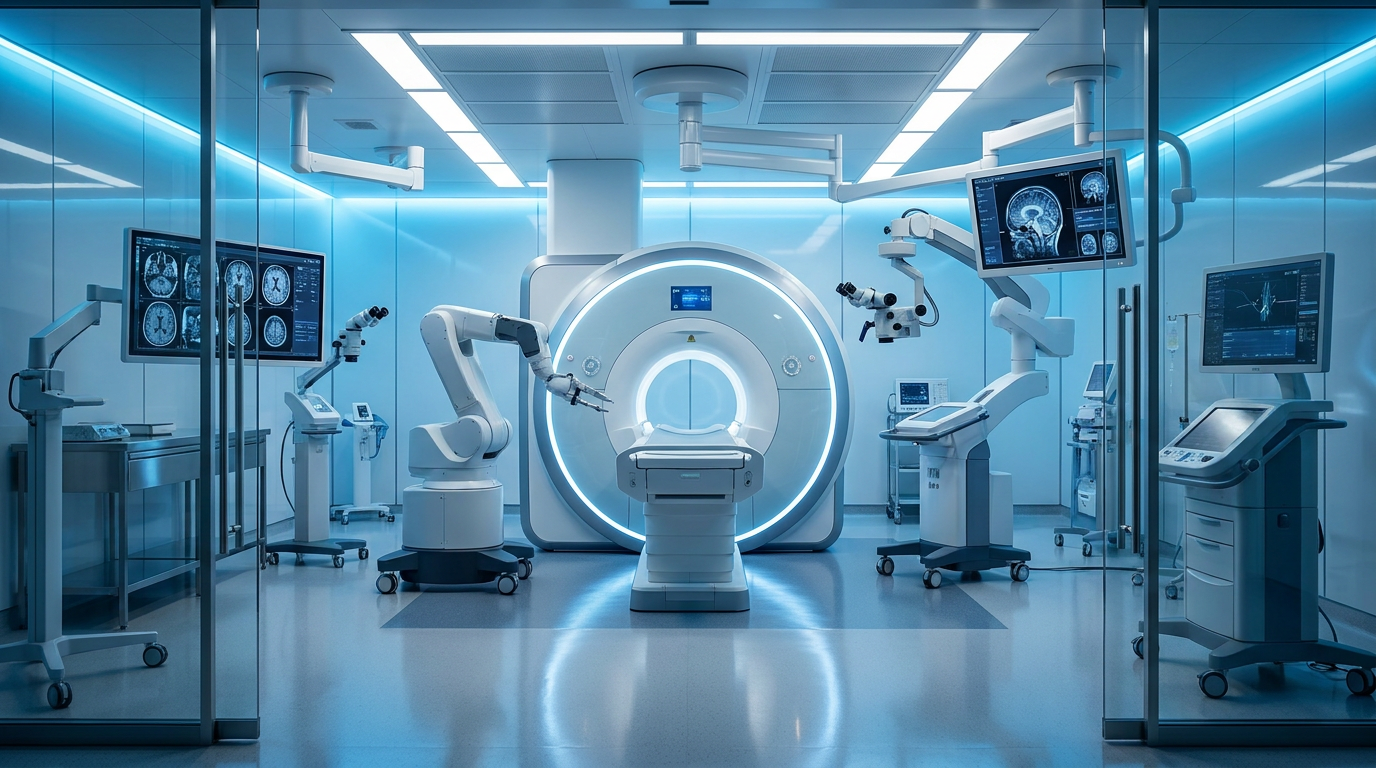
Delivering these cells requires unprecedented surgical precision. The intervention involves a highly sophisticated, six-hour procedure performed under general anesthesia entirely within an MRI suite. While the patient lies face down in the scanner, a proprietary stereotactic navigation platform guides the surgical team to implant the cells directly into the striatum, ensuring absolute targeting of the damaged deep-brain structures.[1][2][4]
Early clinical data is preliminary but encouraging. The first patient was dosed in May 2026 by UCI Health neurosurgeon Dr. Jefferson W. Chen and his team. According to the trial's principal investigator, Dr. Ravi Rajmohan, the initial intervention proceeded smoothly, and the patient has reported no serious adverse events to date. A second patient is scheduled to undergo the procedure in July 2026.[2][4]
Despite the optimism, researchers maintain transparent uncertainty regarding the leap from animal models to human efficacy. Translating stem cell survival and integration into the complex architecture of the human brain remains a profound biological challenge. Over the past two decades, early clinical trials attempted to treat Huntington's using fetal tissue transplants. While a subset of patients experienced long-lasting functional benefits, those early trials were ultimately hindered by tissue heterogeneity, highly variable clinical outcomes, and severe logistical hurdles regarding tissue procurement.[6][7]

The hNSC-01 therapy aims to solve these historical bottlenecks by utilizing a standardized, renewable source of embryonic stem cells. This approach guarantees a consistent, scalable cellular product that bypasses the biological variability of fetal tissue. However, because embryonic stem cells have the capacity for unlimited division, regulators and bioethicists require intense, long-term monitoring to ensure the cells differentiate correctly without forming tumors.[3][6][7]
The primary endpoint of the REGEN4HD trial is safety and tolerability. Researchers will closely monitor the participants using advanced neuroimaging and clinical assessments to track the survival of the graft and any preliminary signs of functional benefit. Because the disease progresses slowly, it will likely take years to definitively prove whether the therapy alters the clinical trajectory of the patients.[1][3][4][7]

If successful, this embryonic stem cell therapy could fundamentally alter the landscape of neurodegenerative disease treatment. By moving beyond palliative care to active neural repair, the intervention offers the first genuine hope for prolonging independent living and preserving the cognitive and motor functions of those facing a Huntington's diagnosis.[1][4][7]
How we got here
1990s-2010s
Early clinical trials attempt to treat Huntington's disease using fetal tissue transplants, yielding mixed results and facing logistical hurdles.
2020-2025
Preclinical studies demonstrate that hNSC-01 embryonic stem cells can safely repair brain circuits and clear toxic proteins in animal models.
December 2025
The California Institute for Regenerative Medicine awards a $12 million grant to UCI Health to fund the first-in-human trial.
May 2026
The world's first patient receives the experimental hNSC-01 stem cell therapy during a six-hour MRI-guided surgery.
July 2026
A second patient is scheduled to receive the intervention as the Phase 1b dose-escalation trial continues.
Viewpoints in depth
Regenerative Medicine Researchers
Scientists focused on the biological potential of embryonic stem cells to fundamentally repair the brain.
This camp views hNSC-01 as a paradigm shift in neurodegenerative care. Rather than simply managing symptoms, researchers emphasize the therapy's tripartite mechanism: replacing dead neurons, secreting protective BDNF, and clearing toxic protein clumps. They argue that utilizing a standardized, renewable source of embryonic stem cells finally overcomes the biological inconsistencies that plagued earlier fetal tissue trials, paving the way for scalable, disease-modifying treatments.
Clinical Neurologists & Surgeons
Medical professionals prioritizing the safety, precision, and rigorous monitoring of the first-in-human intervention.
For clinicians, the immediate focus is on the unprecedented precision required to deliver the therapy safely. They highlight the necessity of the six-hour, intra-operative MRI surgical procedure to ensure the cells are deposited exactly within the damaged striatum. Because embryonic stem cells have the capacity for unlimited division, this camp stresses the critical importance of long-term neuroimaging and clinical assessments to verify that the graft integrates safely without forming tumors or causing adverse immune reactions.
Patient Advocacy Groups
Organizations and families fighting for viable treatments for a universally fatal genetic condition.
Advocates emphasize the immense emotional and financial devastation caused by Huntington's disease, which typically strikes patients in their prime earning years and requires decades of intensive care. For this community, the REGEN4HD trial represents profound hope. They argue that even if the therapy only slows the disease's progression rather than curing it entirely, extending a patient's window of independent living would be a monumental victory for families who currently have no therapeutic options.
What we don't know
- Whether the embryonic stem cells will successfully survive and integrate into the human brain long-term.
- The optimal dosage required to achieve a therapeutic effect without causing adverse reactions.
- How many years it will take to definitively prove that the therapy slows or halts the progression of the disease.
Key terms
- Pluripotent stem cells
- Immature cells that have the capacity to self-renew and develop into almost any specialized cell type in the human body.
- Striatum
- A deep structure within the brain that plays a critical role in movement, decision-making, and motivation, and is heavily damaged by Huntington's disease.
- BDNF (Brain-derived neurotrophic factor)
- A crucial protein that promotes the survival, growth, and maintenance of nerve cells in the brain.
- Mutant huntingtin protein
- A toxic, misfolded protein caused by a genetic mutation that clumps together and destroys neurons in patients with Huntington's disease.
Frequently asked
What is Huntington's disease?
It is a fatal genetic disorder that destroys nerve cells in the brain, leading to a progressive loss of motor control and cognitive function over 10 to 20 years.
How is this trial different from past stem cell treatments?
Previous trials relied on fetal tissue, which had highly variable outcomes. This trial uses pluripotent neural stem cells derived from human embryos, offering a standardized and scalable treatment.
How are the stem cells delivered to the brain?
The cells are implanted directly into a deep brain structure called the striatum during a six-hour surgery performed inside an MRI scanner for absolute precision.
Is this a cure for Huntington's disease?
No. The current Phase 1b/2a trial is primarily testing safety, though researchers hope the therapy will eventually slow or halt the disease's progression.
Sources
Source coverage
7 outlets
3 viewpoints surfaced







[1]Neuroscience NewsRegenerative Medicine Researchers
World-First Embryonic Stem Cell Trial for Huntington's Opens
Read on Neuroscience News →[2]NR TimesClinical Neurologists & Surgeons
First patient receives stem cell therapy for Huntington's disease
Read on NR Times →[3]HDBuzzPatient Advocacy Groups
A new clinical trial testing neural stem cell transplantation for HD
Read on HDBuzz →[4]UCI HealthRegenerative Medicine Researchers
UCI Health initiates historic world-first embryonic stem cell clinical trial for Huntington's disease
Read on UCI Health →[5]Regenerative Medicine FoundationRegenerative Medicine Researchers
UC Irvine receives $12 million to test novel stem cell therapy for Huntington's disease
Read on Regenerative Medicine Foundation →[6]National Institutes of HealthClinical Neurologists & Surgeons
Stem Cell Therapies for Huntington's Disease: A Critical Review
Read on National Institutes of Health →[7]Factlen Editorial TeamClinical Neurologists & Surgeons
Synthesis by Factlen editorial team
Read on Factlen Editorial Team →
Every angle. Every day.
Get health stories with full source coverage and perspective breakdowns delivered to your inbox.