
US Launches Major Diplomatic Initiative to Unify Libya's Rival Governments
The United States has unveiled a comprehensive diplomatic and economic framework aimed at forcing Libya's divided eastern and western factions into a unified government. The initiative places unprecedented pressure on Tripoli-based leaders to agree to national elections, signaling a more aggressive American posture in North Africa.
By Factlen Editorial Team
- US & International Mediators
- Emphasize that aggressive economic pressure is the only way to break the decade-long political deadlock.
- Western Libyan Officials
- Argue the US framework disproportionately targets the Tripoli government and risks destabilizing the capital.
- Eastern Libyan Leadership
- Welcome the initiative as a necessary step to remove the Tripoli administration and unify state institutions.
What's not represented
- · Libyan civil society organizations advocating for immediate elections rather than another transitional government.
- · Migrants and refugees trapped in Libyan detention centers whose fate depends on the country's stability.
Why this matters
Libya holds Africa's largest proven oil reserves and serves as a primary transit point for Mediterranean migration. A successful US-brokered unification would stabilize global energy markets and curb Russian military influence in North Africa, while failure risks reigniting a full-scale civil war.
Key points
- The US launched a major diplomatic framework to unify Libya's rival eastern and western governments.
- The initiative includes a 90-day timeline to merge central banks and form a caretaker election government.
- Washington is threatening targeted sanctions against Tripoli-based officials and militia leaders who obstruct the process.
- The push aims to stabilize Libya's 1.2 million bpd oil output and counter Russian influence in North Africa.
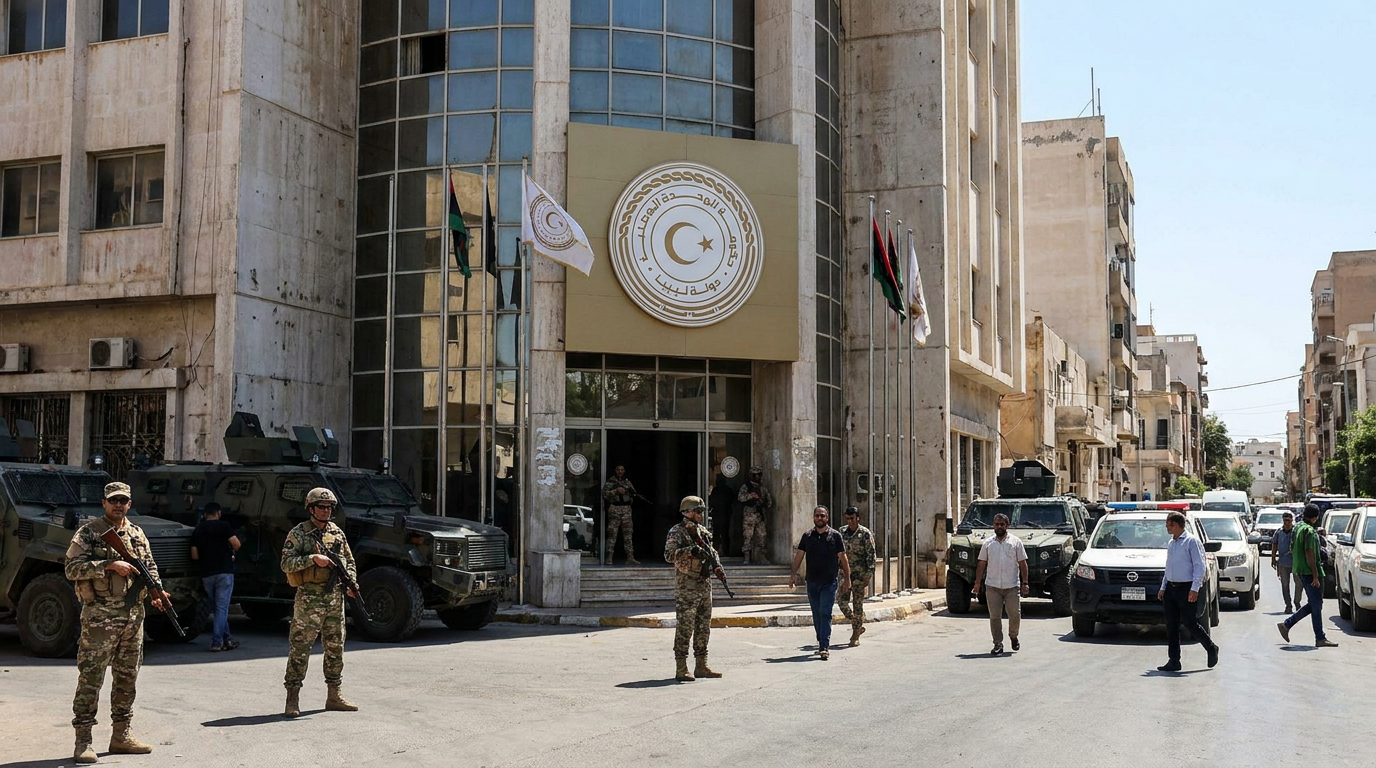
The United States has launched a sweeping and aggressive diplomatic initiative aimed at ending Libya's decade-long political fracture, placing intense, unprecedented pressure on the Tripoli-based Government of National Unity (GNU) to step aside. For years, the North African nation has been paralyzed by a bitter divide between the internationally recognized administration in the west and a rival government backed by powerful military forces in the east. Now, Washington is signaling an end to its strategic patience. By introducing a comprehensive framework that demands the immediate formation of a unified transitional administration, the US is directly challenging the entrenched political elites who have benefited from the prolonged stalemate. The move represents a significant escalation in American involvement in the Mediterranean, shifting from passive support of United Nations mediation to a muscular, direct intervention designed to force a resolution.[1][7]
The proposed framework, which was presented by senior US envoys in simultaneous meetings in both Tripoli and Benghazi this week, outlines a strict and non-negotiable 90-day timeline. During this window, Libya's rival factions are expected to merge their parallel central banks, consolidate state revenues, and establish a streamlined caretaker government. This interim body would be strictly prohibited from signing long-term international contracts and would be tasked solely with organizing national presidential and parliamentary elections. Diplomatic sources indicate that the blueprint was drafted with heavy input from regional allies, including Egypt and the United Arab Emirates, in an effort to ensure broad international backing. By setting a hard deadline, Washington hopes to bypass the endless procedural delays that have derailed every previous attempt to unify the fractured nation.[2][5]
Unlike previous UN-led efforts that relied heavily on voluntary consensus, the new American push carries explicit and severe threats of economic consequences for those who resist. US officials have privately and publicly signaled that they are prepared to utilize the full weight of the Treasury Department to target the overseas assets of Tripoli-based political figures, militia commanders, and business elites who obstruct the unification process. This includes the potential freezing of bank accounts in Europe and the Gulf, as well as travel bans. The strategy specifically targets the lucrative state-funded patronage networks that have allowed western militias to thrive in the capital. By threatening the financial lifelines of these armed groups, the US is attempting to make the cost of maintaining the status quo higher than the cost of conceding power.[3][7]

In the country's east, the House of Representatives and the Libyan National Army (LNA), commanded by Khalifa Haftar, have cautiously welcomed the American proposal. Regional analysts note that the US initiative closely aligns with long-standing eastern demands to replace the GNU, which eastern leaders accuse of corruption and illegally clinging to power past its mandate. However, the American framework is not a blank check for the eastern faction. Washington has explicitly warned eastern military commanders against using the transitional period to consolidate their own power or launch new offensives. The US has demanded that the LNA commit to integrating its forces into a unified national army under civilian oversight, a condition that has historically been a major stumbling block for Haftar and his inner circle.[6]
In the country's east, the House of Representatives and the Libyan National Army (LNA), commanded by Khalifa Haftar, have cautiously welcomed the American proposal.
The aggressive American posture is widely interpreted by geopolitical analysts as a necessary counterweight to the rapidly expanding Russian military influence across North Africa and the Sahel. Over the past several years, Moscow has maintained a robust and highly active mercenary presence in eastern and southern Libya, utilizing the divided nation's porous borders and deep-water ports as a critical logistical hub. Russian forces have used Libyan airbases to supply operations in Sudan, Mali, and Niger, effectively outflanking Western security architectures in the region. By forcing a unified government that can reassert sovereign control over its borders and airspace, the US administration—and the broader NATO alliance—aims to systematically dismantle the permissive environment that has allowed Russian paramilitary groups to operate with impunity on Europe's southern doorstep.[4][6]

Beyond the immediate security concerns, the stakes for global markets are heavily economic. Libya sits on Africa's largest proven oil reserves and is currently pumping approximately 1.2 million barrels per day into a tightly constrained global market. The country's petroleum exports have frequently been weaponized by both eastern and western factions, with armed groups routinely blockading oil fields and export terminals to extract political concessions. A core pillar of the US initiative aims to permanently ring-fence the National Oil Corporation (NOC) from these factional disputes. The framework includes a proposed international oversight mechanism for Libya's oil revenues, ensuring that funds are distributed equitably across municipalities rather than being hoarded by ministries in Tripoli. This economic stabilization is viewed as essential to preventing future supply shocks in the Mediterranean basin.[1][4]

Inside the capital city of Tripoli, the American proposal has triggered frantic political realignments and heightened tensions among the powerful western militias that effectively control the streets. While some armed groups, particularly those closely aligned with the Interior Ministry, have signaled a pragmatic willingness to integrate into a unified national security force, others view the US framework as an existential threat. Hardline militia commanders have warned that any attempt to impose a new government without their explicit consent will be met with armed resistance. The atmosphere in the capital remains highly volatile, with reports of localized mobilizations and checkpoints being erected in key neighborhoods. The GNU leadership is now caught in a precarious position, forced to choose between defying Washington's sanctions threats or capitulating and risking a violent backlash from their own armed backers.[2][5]
The immediate and most critical test for the US initiative will be a proposed high-level summit scheduled to take place in Geneva next month. Delegates from both the Tripoli-based High Council of State and the eastern-based House of Representatives are expected to attend and finalize the composition of the caretaker cabinet. If Tripoli factions choose to boycott the summit or sabotage the negotiations, Washington will be forced to decide whether to immediately follow through on its unprecedented sanctions threats. A failure to enforce these penalties would severely damage American credibility in the region, while executing them could plunge western Libya into a new cycle of economic and military chaos. The coming weeks will determine whether this aggressive diplomatic gamble can finally close the chapter on Libya's fragmentation or merely trigger its next civil war.[3][7]
How we got here
2011
A NATO-backed uprising overthrows Muammar Gaddafi, leading to a power vacuum.
2014
Disputed elections split the country into rival eastern and western administrations.
2020
A UN-brokered ceasefire ends a major assault on Tripoli by eastern forces.
2021
The Government of National Unity (GNU) is formed to lead the country to elections, which are subsequently delayed indefinitely.
June 2026
The US launches a new, aggressive unification initiative backed by economic threats.
Viewpoints in depth
Tripoli Factions
View the initiative as a forced capitulation that empowers their rivals.
Leaders in western Libya argue the US framework disproportionately targets the internationally recognized government while offering too many concessions to eastern military figures. Some GNU officials warn that rushing a transitional government without disarming militias will only trigger a new battle for control of the capital. They fear the sanctions threats are a blunt instrument that ignores the complex security realities on the ground in Tripoli.
Eastern Administration
Sees an opportunity to legitimize its authority and oust the GNU.
The eastern-based parliament and allied military forces view the US push as validation of their long-standing demand to replace the Tripoli government. They argue that unification is impossible as long as western militias control state funds, and they welcome American pressure on their rivals. However, eastern commanders remain deeply skeptical of any framework that requires them to submit to civilian oversight.
US & Western Diplomats
Prioritize regional stability and countering Russian influence above all else.
For Washington and its European allies, the primary goal is ending the political vacuum that has allowed Russian mercenaries to entrench themselves in the region. They argue that only a unified government with a single military command can secure Libya's borders and stabilize its oil output. Western diplomats believe that after years of failed UN mediation, only the credible threat of severe economic sanctions can force Libya's entrenched elites to compromise.
What we don't know
- Whether powerful western militias will violently resist attempts to dismantle their patronage networks.
- How Russia will respond to an American initiative that threatens its foothold in eastern Libya.
- If the eastern Libyan National Army will genuinely submit to a unified civilian command.
Key terms
- Government of National Unity (GNU)
- The UN-recognized interim government based in Tripoli, which currently controls western Libya.
- House of Representatives (HoR)
- The eastern-based parliament that rivals the GNU for national legitimacy.
- Libyan National Army (LNA)
- The dominant military force in eastern and southern Libya, commanded by Khalifa Haftar.
- National Oil Corporation (NOC)
- Libya's state-owned oil company, which manages the country's petroleum resources and revenues.
Frequently asked
Why is the US getting involved in Libya now?
Washington is increasingly concerned about expanding Russian military influence in North Africa and the need to stabilize global energy markets by securing Libyan oil exports.
What happens if the Tripoli government refuses?
US officials have threatened to impose targeted financial sanctions and freeze the overseas assets of political and militia leaders who act as spoilers.
Will this lead to immediate elections?
The US framework mandates the creation of a caretaker government tasked solely with organizing elections, though a specific date for the vote has not yet been set.
Sources
Source coverage
7 outlets
3 viewpoints surfaced







[1]ReutersUS & International Mediators
US unveils major push to unify Libya, pressuring Tripoli government
Read on Reuters →[2]Al JazeeraWestern Libyan Officials
US diplomatic initiative targets Libya's political deadlock, squeezing Tripoli
Read on Al Jazeera →[3]Fox NewsUS & International Mediators
US demands Libyan unification, threatens sanctions on holdouts
Read on Fox News →[4]The GuardianUS & International Mediators
US launches high-stakes bid to end Libya's decade-long political fracture
Read on The Guardian →[5]The Libya ObserverWestern Libyan Officials
US envoy presents new unification roadmap to GNU officials in Tripoli
Read on The Libya Observer →[6]Asharq Al-AwsatEastern Libyan Leadership
Washington pressures Libyan factions to form unified government ahead of elections
Read on Asharq Al-Awsat →[7]Associated PressUS & International Mediators
US threatens targeted sanctions against Libyan spoilers in new unification drive
Read on Associated Press →
Every angle. Every day.
Get news politics stories with full source coverage and perspective breakdowns delivered to your inbox.