
Why Economists Predict the Strait of Hormuz Closure Will Trigger a Global Recession
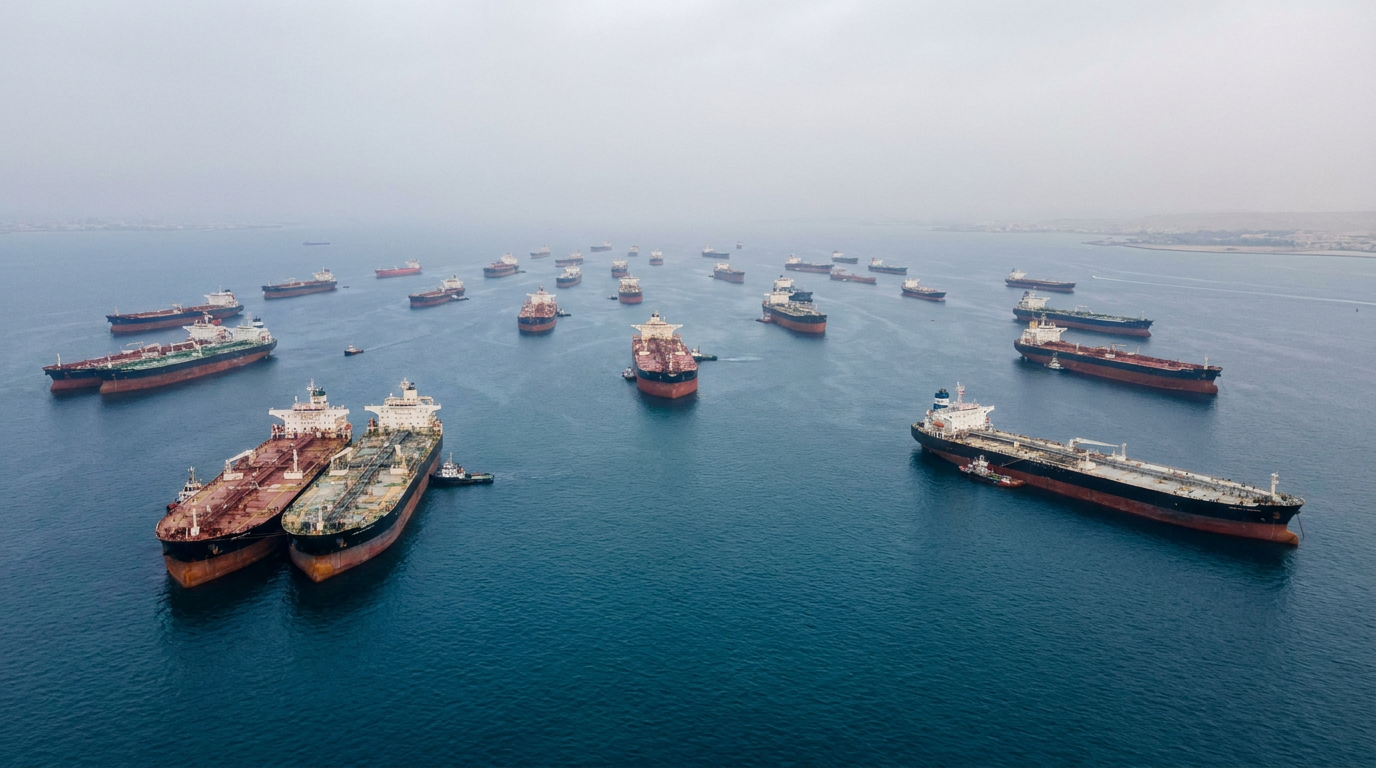
Macroeconomic forecasters warn that the ongoing blockade of the Persian Gulf is not just an inflation event, but a physical energy shortage that could force a worldwide economic contraction.
By Factlen Editorial Team
- Global Macro Forecasters
- Argue that the sheer volume of missing energy makes a global contraction mathematically inevitable if the closure persists.
- Supply Chain & Commodities Analysts
- Focus on the cascading secondary effects of the blockade, particularly in agriculture and logistics.
- U.S. Domestic Resilience Proponents
- Highlight the structural insulation of the American economy due to its status as the world's largest energy producer.
What's not represented
- · Developing Nations' Finance Ministries
- · Renewable Energy Advocates
Why this matters
A global recession driven by energy scarcity would lead to widespread industrial shutdowns, higher unemployment, and surging food costs, affecting everything from household grocery bills to the stability of the broader job market.
Key points
- Economists warn that the Strait of Hormuz closure is a physical energy shortage, not just a price shock.
- A prolonged closure could force a global recession by physically constraining industrial and logistical activity.
- The blockade has also trapped 20% of global LNG and up to 35% of urea fertilizer exports.
- While the U.S. is somewhat insulated by domestic production, it remains vulnerable to global inflation and supply chain disruptions.
For months, the closure of the Strait of Hormuz has dominated headlines as a classic oil price shock, with Brent crude surging and gasoline prices climbing worldwide. But macroeconomic forecasters are increasingly warning that viewing the crisis solely through the lens of inflation misses the true scale of the threat.[1][2]
According to a growing consensus among global economists, a prolonged closure of the strait will not merely cause a temporary spike in consumer costs; it will force a severe global recession. The distinction lies in the physical reality of the global energy market.[3][4]
When 20 percent of the world's seaborne crude oil is suddenly removed from the market, the primary economic damage does not come from the transfer of wealth from consumers to oil producers. It comes from the absolute reduction in the physical energy available to power the global economy.[4]
If the world has 20 percent less oil, it must perform 20 percent less of the work that relies on that oil. This translates directly into grounded flights, idled container ships, halted factory lines, and reduced agricultural output.[2][4]

Oxford Economics recently modeled a "Prolonged Iran War" scenario, assessing the impact of the strait remaining effectively closed for six months or more. The results point to a rare global economic contraction.[2]
In their severe scenario, global oil supplies drop by nearly 20 million barrels per day, and commercial inventories halve by mid-year. This would push Brent crude toward $190 per barrel, but more importantly, it would force physical rationing of diesel and jet fuel across Europe and Asia, directly constraining industrial activity.[2]
The Organization for Economic Cooperation and Development (OECD) echoed this alarm, warning that a sustained disruption would deal a severe blow to global growth. Under the OECD's prolonged disruption scenario, global GDP growth would slump to 1.8 percent in 2027, pushing several major economies into outright recession and spreading higher unemployment worldwide.[3]
Energy analytics firm Wood Mackenzie offered a similarly stark assessment, calling a prolonged closure the single greatest threat to global energy markets in decades. If the strait remains largely closed through the end of 2026, Wood Mackenzie projects that Brent crude could approach $200 per barrel, driving a shallow global recession in the second half of the year and causing the Middle Eastern economy to contract by nearly 11 percent.[1]

Energy analytics firm Wood Mackenzie offered a similarly stark assessment, calling a prolonged closure the single greatest threat to global energy markets in decades.
Compounding the crisis is the fact that the Strait of Hormuz is not just an oil chokepoint. It is the central artery for multiple critical commodities that underpin the modern global economy.[5][7]
Approximately 20 percent of the world's liquefied natural gas (LNG) supply, primarily from Qatar, passes through the strait. With this supply inaccessible, European and Asian natural gas prices are projected to spike, threatening electricity grids and complicating efforts to replenish winter heating storage.[1][2][5]
Furthermore, the Persian Gulf is a massive hub for global fertilizer production. The region accounts for roughly 30 to 35 percent of global urea exports and up to 30 percent of internationally traded fertilizers.[5]
The American Action Forum notes that the strait's closure has already pushed global fertilizer prices up by 30 to 40 percent. Because fertilizer accounts for a significant portion of farmers' production costs, this energy crisis is rapidly mutating into a global food security crisis, with the United States Department of Agriculture projecting noticeable increases in crop costs.[7]

The cascading effects are also crippling global logistics. The cost of global shipping has skyrocketed, with the World Container Index showing freight rates more than doubling as vessels are forced to take longer, more expensive routes to avoid the conflict zone.[7]
Amidst this bleak global outlook, the United States presents a complex exception. Unlike the oil shocks of the 1970s, which devastated the American economy, the U.S. is now the largest oil producer in the world.[5][6]
Research from the Dallas Federal Reserve highlights this structural shift, noting that domestic energy production has significantly insulated U.S. gross domestic product from the immediate physical shortages plaguing Asia and Europe. Because the U.S. produces its own energy, the GDP hit has been remarkably small compared to what it would have been decades ago.[6]

However, the U.S. is not entirely immune. Oil is a globally traded, fungible commodity, meaning American consumers still face the reality of higher prices at the pump. Furthermore, the broader inflationary pressure from rising shipping and agricultural costs threatens to overheat the U.S. economy, potentially forcing the Federal Reserve to maintain or even raise interest rates.[5][7]
Ultimately, the trajectory of the global economy now depends on a race between the depletion of temporary buffers and the duration of the geopolitical impasse. Emergency releases from the Strategic Petroleum Reserve and other global stockpiles have provided a temporary cushion, but these reserves are finite.[5]
If diplomatic efforts fail to secure a lasting reopening of the strait before these buffers are exhausted, the math of physical energy scarcity becomes inescapable. The world will simply have to make do with less power, and a global recession will transition from a worst-case scenario to an economic reality.[2][4][5]
How we got here
Feb 28, 2026
The United States and Israel launch an air war against Iran, prompting the initial disruption of maritime traffic.
Mar 4, 2026
The Strait of Hormuz is effectively closed to commercial shipping as insurers pull coverage and tanker traffic drops to near zero.
Apr 13, 2026
The U.S. initiates a naval blockade of Iranian ports, fully halting Iran's remaining crude oil exports.
May 2026
Global macroeconomic forecasters begin releasing models warning that the prolonged closure will trigger a worldwide recession.
Viewpoints in depth
Global Macro Forecasters
Argue that the sheer volume of missing energy makes a global contraction mathematically inevitable if the closure persists.
Institutions like Oxford Economics and Wood Mackenzie emphasize that the global economy is a physical system powered by energy. When 20 million barrels per day are removed from the market, the economy must shrink to match the available power supply. They argue that the focus on price inflation obscures the more dangerous reality of physical rationing, which will force factories to idle and logistics networks to halt, inevitably driving global GDP growth below 1.5 percent.
Supply Chain & Commodities Analysts
Focus on the cascading secondary effects of the blockade, particularly in agriculture and logistics.
For these analysts, crude oil is only one piece of the puzzle. They point to the stranding of 20 percent of the world's LNG and up to 35 percent of its urea fertilizer exports as the true catalysts for a broader crisis. By tracking the doubling of global shipping container costs and the 40 percent spike in fertilizer prices, they argue that the strait's closure is rapidly mutating from an energy shock into a global food security crisis that will devastate developing nations long before the oil shortage peaks.
U.S. Domestic Resilience Proponents
Highlight the structural insulation of the American economy due to its status as the world's largest energy producer.
Researchers at institutions like the Dallas Federal Reserve argue that the United States is playing a fundamentally different economic game than it did during the 1970s oil shocks. Because the U.S. now produces its own energy, the domestic GDP hit from the Hormuz closure has been remarkably muted. While they acknowledge that Americans will still face higher prices at the pump and imported inflation, they maintain that the U.S. economy is structurally protected from the physical energy rationing that threatens to plunge Europe and Asia into deep recessions.
What we don't know
- Exactly how long emergency stockpiles, such as the U.S. Strategic Petroleum Reserve, can artificially suppress prices before physical shortages become acute.
- Whether diplomatic negotiations will yield a permanent reopening of the strait before the winter heating season begins in the Northern Hemisphere.
- The extent to which artificial intelligence and structural shifts in the modern economy might insulate advanced nations from an energy-driven recession compared to the 1970s.
Key terms
- Strait of Hormuz
- A narrow waterway between the Persian Gulf and the Gulf of Oman, serving as the only sea passage for energy exports from several major Middle Eastern producers.
- Liquefied Natural Gas (LNG)
- Natural gas that has been cooled to a liquid state for easier and safer storage and transport, crucial for heating and electricity generation in Europe and Asia.
- Demand Destruction
- An economic phenomenon where persistently high prices cause consumers and businesses to permanently reduce their use of a commodity.
- Strategic Petroleum Reserve (SPR)
- An emergency stockpile of petroleum maintained by the United States Department of Energy to mitigate the impact of severe supply disruptions.
- Urea
- A highly concentrated nitrogen fertilizer produced heavily in the Persian Gulf, essential for global agricultural yields.
Frequently asked
Why doesn't the US just pump more oil to replace the missing supply?
While the U.S. is the world's largest oil producer, it is already operating near peak capacity. Furthermore, the sheer volume of oil trapped in the Persian Gulf—roughly 15 to 20 million barrels per day—far exceeds the spare production capacity of the rest of the world combined.
How does a maritime chokepoint affect global food prices?
The Persian Gulf is a major hub for fertilizer production, accounting for up to 35% of global urea exports. With these shipments blocked, fertilizer prices have surged, significantly increasing the cost of growing crops worldwide.
Are we already in a global recession?
Not yet. Emergency oil releases from strategic reserves and rerouted supply chains have provided a temporary buffer. However, economists warn that if the strait remains closed through the second half of 2026, these buffers will deplete, triggering a contraction.
Sources
Source coverage
7 outlets
3 viewpoints surfaced







[1]Wood MackenzieGlobal Macro Forecasters
Strait Talking: Iran War Scenarios and the Future of Energy
Read on Wood Mackenzie →[2]Oxford EconomicsGlobal Macro Forecasters
A rare global recession: Modelling a prolonged Iran War
Read on Oxford Economics →[3]Los Angeles TimesGlobal Macro Forecasters
OECD warns of global recession risk from prolonged Strait of Hormuz closure
Read on Los Angeles Times →[4]ForbesSupply Chain & Commodities Analysts
Long-Term Closure Of The Strait Of Hormuz Would Trigger A Worldwide Recession
Read on Forbes →[5]Brookings InstitutionU.S. Domestic Resilience Proponents
Blowback: How the Iran war may change the world
Read on Brookings Institution →[6]AxiosU.S. Domestic Resilience Proponents
Why the Iran oil shock hasn't walloped U.S. growth
Read on Axios →[7]American Action ForumSupply Chain & Commodities Analysts
Reflecting on the Iran Conflict: The Economic Costs
Read on American Action Forum →
Every angle. Every day.
Get opinion stories with full source coverage and perspective breakdowns delivered to your inbox.