
Explainer: Why the AI Market is Recalibrating Around 'Inference Economics' and Real-World ROI
The June 2026 AI stock sell-off marks a structural shift from building massive models to running them efficiently. As enterprise AI bills soar due to autonomous agents, the industry is pivoting to hybrid infrastructure and concrete business value.
By Factlen Editorial Team

- Enterprise IT Leaders
- Prioritize cost control, hybrid infrastructure, and measurable ROI for AI deployments.
- Financial Analysts
- Focus on macroeconomic impacts, sustainable cash flows, and the transition of AI into core economic infrastructure.
- Infrastructure Architects
- Advocate for optimizing compute efficiency, multi-model routing, and the 'Inference FinOps' discipline.
What's not represented
- · Cloud Hyperscalers
- · End-user employees
Why this matters
Understanding this shift is crucial for business leaders and investors, as the next phase of AI will reward companies that can deploy intelligence cost-effectively rather than those just chasing raw model size. The transition to 'inference economics' will dictate which enterprise AI projects survive the year.
Key points
- The June 2026 AI stock sell-off reflects a market pivot from speculative hype to demanding concrete business ROI.
- Global spending on running AI models (inference) has officially surpassed the cost of training them.
- Autonomous 'agentic' AI workflows are driving up enterprise infrastructure bills, requiring up to 30x more compute per task.
- Organizations are adopting 'Inference FinOps' to dynamically route workloads to the most cost-effective models.
- A shift toward 'strategic hybrid' infrastructure is accelerating as companies move high-volume AI tasks to on-premises servers.
The June 2026 AI stock sell-off dominated financial headlines, painting a picture of a technology sector in retreat. Following a massive run-up in valuations, investors abruptly hit the brakes, sparking comparisons to the dot-com bubble.[1][2]
But beneath the surface of the ticker tape, the correction does not signal a failure of artificial intelligence. Instead, it marks a profound structural maturation. The market is no longer rewarding companies simply for building massive models; it is demanding proof that those models can be deployed cost-effectively to generate real-world return on investment (ROI).[1][3][7][8]
To understand this recalibration, one must look at the underlying mechanics of how AI is consumed. For years, the industry's attention and capital were locked on "training"—the billion-dollar, months-long process of teaching a model how to think.[4][5]
That era is effectively over. In early 2026, the industry crossed a threshold known as the "Inference Flip." For the first time, global spending on running AI models—known as inference—officially surpassed the cost of training them.[5]

Inference now accounts for roughly 85% of the average enterprise AI budget. This shift has fundamentally rewritten the economics of the technology sector, moving the goalposts from raw computational power to sustainable unit economics.[4][5][6][8]
The catalyst for this financial reckoning is the rise of "agentic" AI. In 2024, most enterprise AI usage consisted of simple chatbots, where a single user prompt generated a single response.[2][5]
Today, businesses are deploying autonomous agents that plan, retrieve context, invoke external tools, and self-correct over multiple steps. While highly capable, these agentic workflows require 5 to 30 times more compute per task than standard chatbots.[5]
This has created a brutal paradox for IT departments. Even though the cost of individual AI "tokens" has plummeted by more than 80% over the last year, total enterprise bills are skyrocketing because usage is multiplying exponentially.[4][5]

The average enterprise AI budget has ballooned from $1.2 million in 2024 to over $7 million in 2026, with some Fortune 500 companies reporting monthly inference bills in the tens of millions of dollars.[4][5]
Faced with these staggering costs, boards and C-suites are demanding concrete results rather than open-ended experimentation. This pressure triggered the June market correction, which analysts describe as a classic "blowoff top"—a necessary flushing out of speculative excess.[1][7]
Faced with these staggering costs, boards and C-suites are demanding concrete results rather than open-ended experimentation.
Financial strategists are now treating leading AI platforms not as conventional software companies, but as foundational economic infrastructure, conceptually similar to telecommunications networks or energy grids.[3]
In response to the budget crisis, a new technical discipline has emerged: "Inference FinOps." Organizations are no longer sending all their data to the most expensive, frontier AI models.[4][5]

Instead, they are implementing multi-model routing. By directing 80% of routine tasks to smaller, cost-optimized open-weight models and reserving frontier models only for complex reasoning, companies are slashing their inference spend by up to 60% without sacrificing quality.[4][8]
This optimization is driving a massive shift in hardware strategy. The era of defaulting to "cloud-first" for all AI workloads is ending.[6]
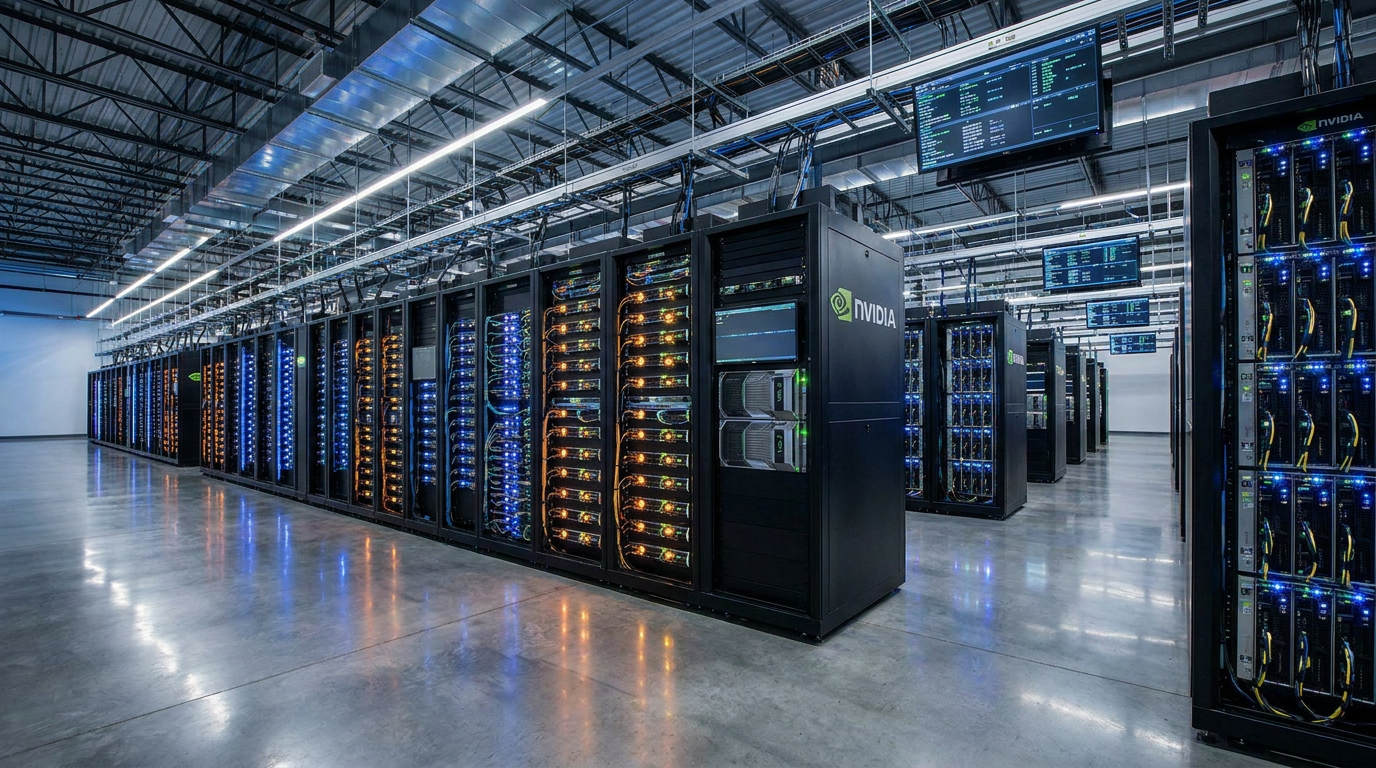
Organizations are rapidly adopting "strategic hybrid" models. They continue to use the cloud for bursty training runs and peak loads, but are repatriating sustained, high-volume inference workloads to on-premises data centers.[4][6]
The economics of owning the infrastructure are compelling. When an enterprise owns the hardware, the marginal cost of generating an AI response drops toward zero, freeing developers from the constraints of token-based pricing.[6][8]

Hardware manufacturers report that for high-utilization environments, on-premises AI servers can achieve a financial breakeven point in under four months compared to renting equivalent cloud capacity.[6]
This has given rise to "Token Economics," a new framework where success is measured by "Tokens Per Second per Dollar" (TPS/$) rather than traditional server metrics.[6]
The intelligence gap between proprietary cloud models and open-weight models has shrunk to mere months, creating a state of "fluid parity" that makes local, on-premises deployment highly viable for enterprise use cases.[8]
How we got here
Early 2023
The generative AI boom begins, with market focus entirely on training massive foundation models.
Mid 2025
Enterprise AI adoption scales, leading to early warnings of skyrocketing API and cloud costs.
Early 2026
The 'Inference Flip' occurs, as global spending on running AI models officially surpasses training costs.
June 2026
A market correction flushes out speculative AI valuations, forcing a pivot toward sustainable unit economics.
Viewpoints in depth
Enterprise IT Leaders
Focused on controlling skyrocketing token costs and implementing hybrid infrastructure.
For Chief Information Officers, the honeymoon phase of generative AI is over. Facing average annual AI budgets that have ballooned from $1.2 million to $7 million in just two years, enterprise IT is pivoting to 'Inference FinOps.' This involves auditing API usage, routing routine queries to cheaper open-weight models, and migrating high-volume workloads to on-premises servers where the marginal cost of inference drops near zero.
Financial Analysts
Viewing the market correction as a healthy transition from speculative hype to sustainable cash flows.
Market strategists largely view the June 2026 sell-off not as a collapse, but as a classic 'blowoff top' that flushes out speculative excess. Analysts are now treating AI platforms as foundational economic infrastructure—akin to telecom networks or energy grids. The new valuation metrics focus less on raw technological capability and more on 'Tokens Per Second per Dollar' (TPS/$) and demonstrable enterprise ROI.
Hardware Providers
Capitalizing on the enterprise shift toward on-premises AI deployments and edge computing.
Server manufacturers and chipmakers are experiencing a secondary boom driven by the 'Inference Flip.' As companies realize that renting cloud compute for continuous AI agents is economically unsustainable, hardware providers are selling high-density, on-premises inference racks. They argue that owning the infrastructure allows enterprises to achieve a breakeven point in under four months for high-utilization workloads.
What we don't know
- How quickly enterprise software vendors will adjust their pricing models to account for the skyrocketing costs of agentic workflows.
- Whether the shift to on-premises inference will permanently dent the growth rates of major hyperscale cloud providers.
- Exactly how long the market correction will last before valuations stabilize around the new 'Token Economics' metrics.
Key terms
- Inference
- The process of running a trained AI model to generate responses, make decisions, or process data.
- Agentic Workloads
- AI systems that autonomously plan, use tools, and self-correct over multiple steps, consuming significantly more compute than simple chatbots.
- Inference FinOps
- The financial and technical discipline of monitoring, routing, and optimizing AI compute spend across different models and hardware.
- Token Economics
- Evaluating AI infrastructure based on the cost efficiency of generating tokens (words or data fragments), rather than just raw server power.
- Blowoff Top
- A financial market pattern where asset prices rise steeply and rapidly before a sharp correction, often signaling the end of a speculative phase.
Frequently asked
Does the stock sell-off mean the AI boom is over?
No. Financial analysts view the correction as a healthy transition from speculative hype to a focus on sustainable business models and real-world ROI.
Why are enterprise AI costs rising if token prices are falling?
While the cost per token has dropped dramatically, the volume of usage has exploded. Autonomous AI agents require 5 to 30 times more compute per task than standard chatbots.
What is the 'Inference Flip'?
It is the point in early 2026 when global spending on running AI models (inference) officially surpassed the massive costs of initially training them.
Why are companies moving AI back on-premises?
For high-volume, continuous AI workloads, owning the hardware is significantly cheaper than paying cloud providers per token, with some systems reaching breakeven in under four months.
Sources
Source coverage
8 outlets
3 viewpoints surfaced








[1]TechTargetEnterprise IT Leaders
With AI valuations soaring, market seeks concrete ROI
Read on TechTarget →[2]CMC MarketsFinancial Analysts
2026 AI Outlook: Soaring AI Spend Amid Compute Constraints
Read on CMC Markets →[3]OMMAXFinancial Analysts
AI valuations are being treated as economic infrastructure
Read on OMMAX →[4]AnalyticsWeekEnterprise IT Leaders
The AI inference cost crisis of 2026
Read on AnalyticsWeek →[5]Zylos AIInfrastructure Architects
The Inference Flip: Economics of AI in 2026
Read on Zylos AI →[6]LenovoEnterprise IT Leaders
The Shift to Token Economics in Generative AI
Read on Lenovo →[7]Westminster Asset ManagementFinancial Analysts
AI Stocks in 'Blowoff Top' Phase but Correction Not a Collapse
Read on Westminster Asset Management →[8]DiscreteStackInfrastructure Architects
Sovereignty and the Marginal Cost of Inference
Read on DiscreteStack →
Every angle. Every day.
Get ai stories with full source coverage and perspective breakdowns delivered to your inbox.