
Fox Acquires Roku for $22 Billion in Massive Bet on Ad-Supported Streaming and Connected TV
Fox Corporation has agreed to purchase streaming pioneer Roku in a $22 billion cash-and-stock deal, creating the third-largest player in U.S. television viewership. The acquisition signals a major industry shift as traditional media companies move to control the television operating system and digital distribution stack.
By Factlen Editorial Team
- Strategic Integration Advocates
- Argue that combining content with distribution platforms creates necessary scale to compete with tech giants.
- Consumer & Platform Watchdogs
- Concerned about the loss of platform neutrality and the aggressive shift toward ad-supported models.
- Financial Skeptics
- Focus on the financial risks, massive debt load, and high valuation multiple Fox is paying.
What's not represented
- · Independent App Developers
- · Hardware Competitors (Samsung/LG)
Why this matters
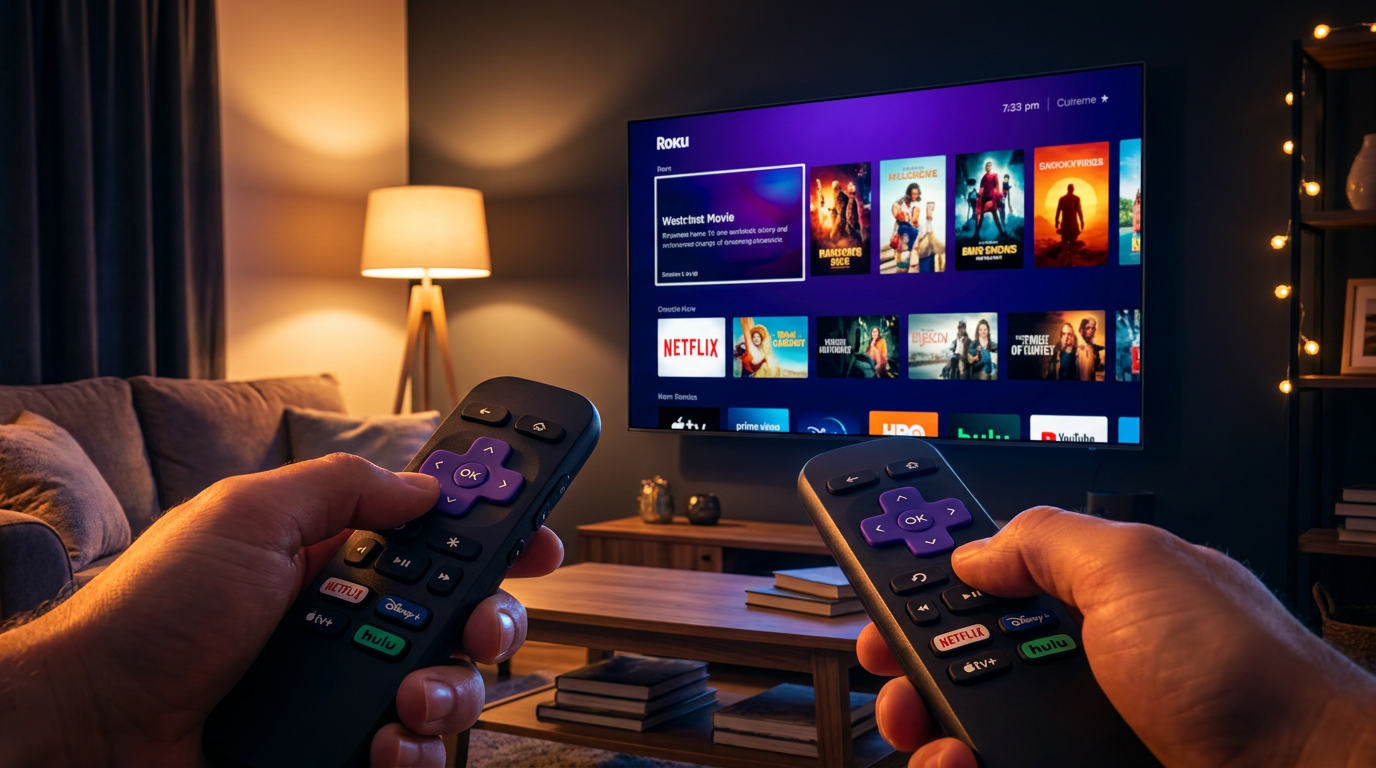
This deal fundamentally changes the streaming landscape by giving a traditional media giant control over the 'digital billboard'—the home screen that over 100 million households use to find content. For consumers, it signals an accelerated shift toward free, ad-supported streaming as companies prioritize targeted advertising over subscription fees.
Key points
- Fox Corporation has agreed to acquire streaming device maker Roku for $22 billion in a cash-and-stock transaction.
- The combined entity will become the third-largest player in U.S. television viewership, trailing only YouTube and Netflix.
- The deal signals a strategic shift toward controlling the digital distribution stack and first-party viewer data.
- Roku CEO Anthony Wood assured users that the platform will remain open and partner-friendly for competing streaming apps.
- Fox shares dropped 15% following the announcement as Wall Street reacted to the $8 billion in new debt required for the purchase.
Fox Corporation has reached a definitive agreement to acquire streaming pioneer Roku in a cash-and-stock transaction valued at approximately $22 billion. The landmark deal, announced on June 15, marks one of the most significant media consolidations of the decade. By merging Fox's legacy live sports and news broadcasting with the hardware and operating system that powers over 100 million global streaming households, the acquisition fundamentally reorders the entertainment landscape.[1][3]
Under the terms of the agreement, Roku investors will receive $96 in cash and approximately 0.97 shares of Fox Class A common stock for each Roku share, valuing the offer at $160 per share. The transaction represents a substantial premium for the streaming device manufacturer, which has navigated a volatile market in recent years. Once the deal closes, existing Fox shareholders are expected to own roughly 73% of the combined entity, while Roku shareholders will retain a 27% stake.[1][8]
The sheer scale of the combined company instantly reshapes the hierarchy of American media. By uniting Fox's broadcast networks and its ad-supported Tubi service with The Roku Channel, the new conglomerate will become the third-largest player in U.S. television by share of viewing. This catapults Fox into the upper echelon of the streaming wars, placing it directly behind industry titans YouTube and Netflix in total screen time.[3][4]

For Fox, the $22 billion purchase represents a massive strategic pivot. While the company boasts a highly profitable portfolio of live programming—including NFL broadcasts, Fox News, and the FIFA World Cup—its legacy linear television model faces continuous headwinds from cord-cutting. Acquiring Roku provides Fox with a massive "plumbing" upgrade, securing a direct pipeline into living rooms worldwide without relying on third-party cable providers or rival tech platforms.[3][8]
Industry analysts note that the acquisition highlights a deeper shift in the economics of entertainment: the battle has moved from producing premium content to controlling the digital distribution stack itself. Roku is currently the most commonly used streaming platform in the United States, operating as the primary gatekeeper for millions of viewers. By owning the Roku operating system, Fox gains unprecedented control over the television home screen, algorithmic discovery, and highly lucrative first-party viewer data.[2][5][8]
This data is the true engine of the acquisition. As consumers increasingly push back against rising subscription costs, the industry is pivoting hard toward free, ad-supported streaming television (FAST). By combining the advertising inventory of Tubi and The Roku Channel, Fox will more than double its annual connected-TV ad revenues, creating a targeted advertising juggernaut capable of competing with tech giants like Alphabet and Amazon.[3][5][7]
As consumers increasingly push back against rising subscription costs, the industry is pivoting hard toward free, ad-supported streaming television (FAST).
For everyday viewers, the immediate changes will likely be subtle. Roku founder and CEO Anthony Wood, who will join Fox's board of directors, assured customers that the platform will remain "open and partner-friendly." In a public statement, Wood emphasized that there will be no immediate alterations to the user interface, remote controls, or app availability, ensuring that the core Roku experience remains intact.[1][2][8]
Despite these assurances, the merger has sparked intense debate over platform neutrality. Because Roku hosts competing services like Netflix, Disney+, and Max, some industry watchers worry Fox might eventually prioritize its own content. Critics question whether the platform's algorithms will begin to favor Fox broadcasts in trending sections, or if the company will use its gatekeeper status to extract higher revenue shares from rival streaming apps.[4][6]

Media strategists argue that while Fox might increase its own advertising density on the home screen, it is unlikely to actively suppress competitors. Roku's business model relies heavily on taking a cut of the subscription fees and ad revenues generated by third-party apps on its platform. Alienating major content providers like Disney or Warner Bros. Discovery would undermine the very ecosystem that makes Roku valuable in the first place.[6]
The ripple effects of the deal will also be felt deeply by independent television manufacturers. Companies like Samsung and LG, which operate their own proprietary smart TV operating systems, now find themselves competing against a platform backed by a major content producer. These hardware rivals may seek to position themselves as the last truly neutral distribution platforms, potentially reshaping how streaming apps negotiate home-screen placement across the industry.[5]
Despite the clear strategic advantages, Wall Street reacted cautiously to the massive price tag. Fox shares dropped 15% following the announcement, reflecting investor anxiety over the $8 billion in new debt required to fund the transaction. Financial analysts pointed out that Fox is paying more than 100 times earnings for Roku, a steep multiple for a company with historically razor-thin profit margins. Roku shares, meanwhile, saw a modest bump as the market priced in the long regulatory road ahead.[4][8]

That regulatory road will be closely watched. The deal is expected to officially close in the first half of 2027, pending approval from both companies' shareholders and federal regulators. While the Justice Department recently cleared other major media mergers, the unique combination of a legacy broadcaster and a dominant hardware platform could invite scrutiny regarding its impact on the connected-TV advertising market.[1][3]
As the streaming industry matures, the Fox-Roku merger underscores a new reality: owning the pipes is just as valuable as owning the programming. When the deal finalizes, the television landscape will be fundamentally reordered, permanently blurring the lines between content creators, hardware manufacturers, and advertising networks.[1][5][7]
How we got here
2008
Roku releases its first set-top box after spinning off from Netflix, pioneering the connected-TV market.
2020
Fox acquires free ad-supported streaming service Tubi for $440 million, beginning its pivot toward digital streaming.
June 15, 2026
Fox and Roku announce a definitive $22 billion cash-and-stock acquisition agreement.
First Half 2027
The expected closing window for the transaction, pending regulatory and shareholder approvals.
Viewpoints in depth
Financial Analysts
Wall Street views the acquisition as a high-risk, high-reward gamble that heavily leverages Fox's balance sheet.
Market skeptics point to the $8 billion in new debt Fox is taking on to finance the deal, alongside a 27% stock dilution. By paying more than 100 times earnings for Roku—a company with historically razor-thin profit margins—analysts argue Fox is paying a massive premium. However, proponents counter that securing the digital distribution stack is an existential necessity that justifies the steep price tag.
Platform Neutrality Watchdogs
Industry observers are concerned about a major content producer owning the most popular streaming operating system.
Because Roku acts as the gatekeeper for competing services like Netflix, Disney+, and Max, critics worry Fox could eventually use its position to prioritize its own content or extract higher fees from rivals. While Fox has promised to keep the platform open, watchdogs warn that subtle algorithmic shifts in trending sections or home-screen real estate could quietly disadvantage competitors.
Media Strategists
Industry experts see the merger as a definitive shift toward controlling the 'digital billboard' rather than just content.
Strategists argue that in an era of subscription fatigue, the real power lies in owning the user interface and the first-party data it generates. By combining Tubi's ad inventory with Roku's massive household reach, Fox is building a targeted advertising juggernaut. This perspective suggests that owning the 'pipes' of the streaming ecosystem is now more valuable than producing the most critically acclaimed shows.
What we don't know
- How federal regulators will view the merger of a legacy broadcaster with a dominant streaming hardware platform.
- Whether Fox will eventually alter Roku's algorithms to favor its own content over competing streaming services.
- How independent smart TV manufacturers like Samsung and LG will adjust their strategies in response to the acquisition.
Key terms
- Connected TV (CTV)
- A television set connected to the internet, either natively as a smart TV or via a streaming device, allowing users to stream digital video.
- FAST
- Free Ad-Supported Streaming TV; platforms that offer linear channels and on-demand content for free, supported entirely by commercial breaks.
- First-Party Data
- Information a company collects directly from its customers, such as viewing habits, which is highly valuable for targeted advertising.
- Digital Distribution Stack
- The underlying technology, operating system, and user interface that delivers digital content to consumers' screens.
Frequently asked
Will my Roku device stop supporting apps like Netflix or Disney+?
No. Both Fox and Roku have stated that the platform will remain 'open and partner-friendly,' meaning competing apps will continue to be available.
Is the price of Roku devices going to increase?
There have been no announcements regarding hardware pricing. The acquisition is primarily focused on advertising revenue and software distribution rather than hardware sales.
When does the merger actually happen?
The deal is expected to officially close in the first half of 2027, assuming it passes regulatory scrutiny and shareholder votes.
Sources
Source coverage
8 outlets
3 viewpoints surfaced








[1]Fox CorporationStrategic Integration Advocates
FOX to Acquire Roku in $22 Billion Transaction
Read on Fox Corporation →[2]RokuStrategic Integration Advocates
An important update about Roku
Read on Roku →[3]CBS NewsFinancial Skeptics
Fox to acquire Roku in $22 billion deal
Read on CBS News →[4]MarketWiseFinancial Skeptics
Fox Dives Deeper Into Streaming With $22 Billion Roku Buy
Read on MarketWise →[5]InformaStrategic Integration Advocates
Analyst View: Why Fox's $22B Roku Acquisition Changes the TV Landscape
Read on Informa →[6]ZDNETConsumer & Platform Watchdogs
Fox is buying Roku for $22 billion. Here's why you shouldn't panic
Read on ZDNET →[7]NPRConsumer & Platform Watchdogs
Fox says it will buy Roku for $22B. What it means for the future of streaming
Read on NPR →[8]CBC NewsStrategic Integration Advocates
Fox agrees to buy streaming pioneer Roku for $22B US
Read on CBC News →
Every angle. Every day.
Get entertainment stories with full source coverage and perspective breakdowns delivered to your inbox.