
The EU's Carbon Tariff: A Guide to CBAM Compliance and the New Cost of Carbon-Intensive Imports
The European Union’s Carbon Border Adjustment Mechanism has officially entered its definitive phase, requiring importers to pay for the embedded carbon in industrial goods. This guide breaks down how the new €75-per-tonne carbon certificates work, who is affected, and how the policy is reshaping global trade.
By Factlen Editorial Team
- European Regulators
- Argue that CBAM is essential to prevent carbon leakage and ensure domestic industries aren't penalized for adhering to strict climate goals.
- Heavy Industry Importers
- Focus on the administrative burden of third-party verification and the immediate financial impact on supply chain costs.
- Global Trade Analysts
- View the mechanism as a fundamental restructuring of global trade that makes carbon intensity a primary commercial metric.
- Climate Policy Experts
- See CBAM as a successful catalyst for global carbon pricing, noting it forces non-EU nations to adopt their own emissions standards.
What's not represented
- · Small-to-medium enterprises (SMEs) in developing nations struggling with verification costs
Why this matters
For the first time, carbon intensity is a hard commercial variable in international trade. Companies that fail to track and verify the emissions of their supply chains face strict border blockages and mounting financial penalties, while low-carbon producers stand to gain a massive competitive advantage.
Key points
- The EU's CBAM entered its definitive, financially binding phase on January 1, 2026.
- Importers must now purchase certificates priced at €75.36 per tonne of embedded CO2.
- The regulation currently covers iron, steel, aluminum, cement, fertilizers, hydrogen, and electricity.
- Emissions data must now be verified by accredited third parties to avoid punitive default values.
- The mechanism allows importers to deduct carbon prices already paid in the product's country of origin.
On January 1, 2026, the global trade landscape fundamentally shifted. The European Union’s Carbon Border Adjustment Mechanism (CBAM) moved out of its transitional reporting phase and into its definitive, financially binding regime, marking the end of unpriced carbon entering the European market.[4]
For years, European industrial producers have operated under the EU Emissions Trading System (ETS), paying a premium for the greenhouse gases they emit. To prevent "carbon leakage"—the risk of companies relocating production to jurisdictions with weaker environmental regulations—the EU has now leveled the playing field at its borders.[5]
The mechanism is straightforward in its goal but complex in its execution: if a product manufactured outside the EU carries a heavier carbon footprint than its European equivalent, the importer must pay the difference at the border. This ensures that domestic and international producers face equivalent carbon costs.[8]
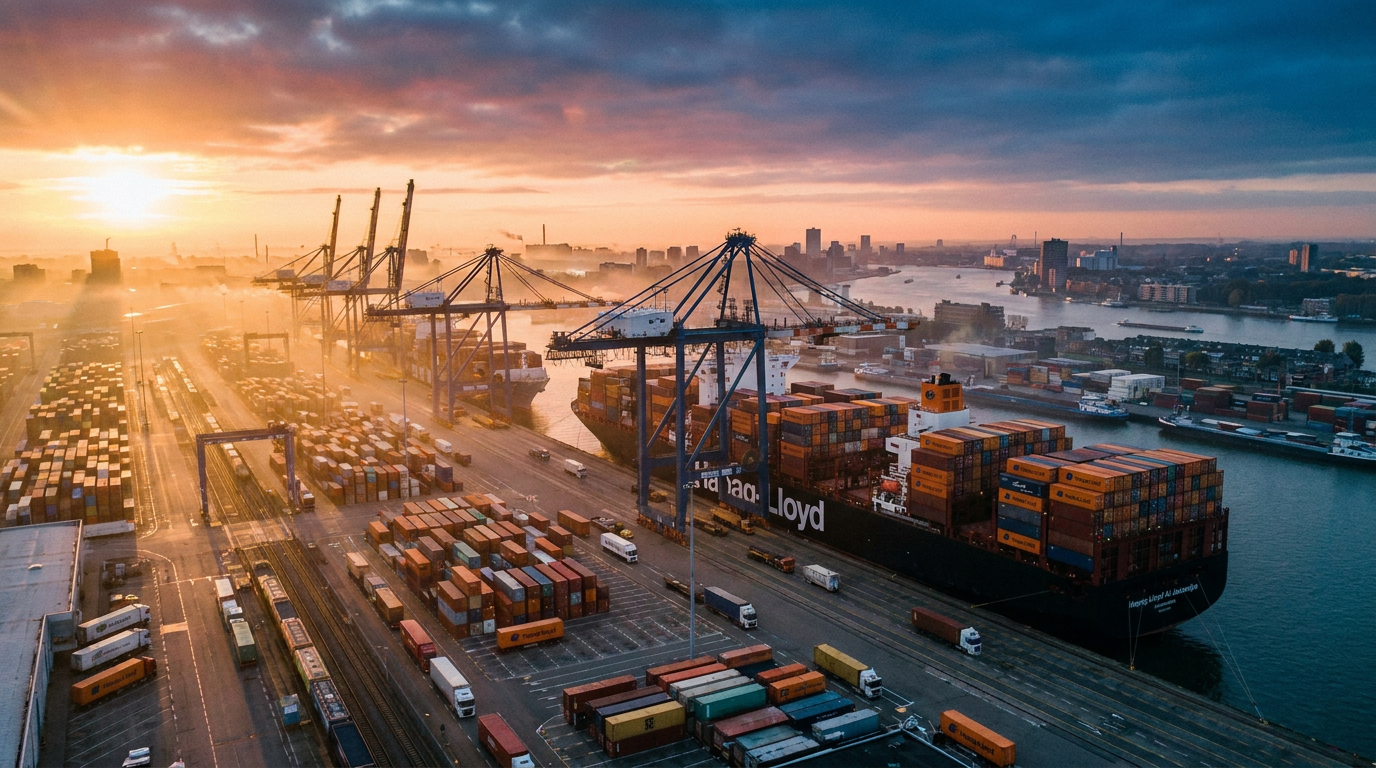
Currently, the regulation targets six highly carbon-intensive sectors: iron and steel, aluminum, cement, fertilizers, hydrogen, and electricity. These foundational materials were chosen because they represent a significant portion of global industrial emissions and are highly vulnerable to trade displacement.[3]

So, how does the financial mechanism actually work? The currency of compliance is the CBAM certificate. Importers must purchase these certificates to cover the "embedded emissions" of their goods—the total greenhouse gases generated during the manufacturing process.[6]
On April 7, 2026, the European Commission published the first official quarterly price for these certificates: €75.36 per tonne of CO2 equivalent. This price is not arbitrary; it is strictly pegged to the volume-weighted average of EU ETS auction prices from the preceding quarter, ensuring parity with domestic European carbon markets.[1][6]
Market analysts expect the pricing to remain relatively stable in the near term. Projections for the second quarter of 2026 suggest the certificate price will hover around €74 to €75 per tonne, reflecting a stabilization in the broader European carbon allowance auctions.[2]
However, importers do not immediately face the full brunt of this €75-per-tonne cost. To prevent sudden economic shocks, the EU is phasing in the financial obligation gradually between 2026 and 2034.[8]
However, importers do not immediately face the full brunt of this €75-per-tonne cost.
This phase-in mirrors the gradual phase-out of the "free allowances" that European producers historically received under the ETS. In 2026, the CBAM factor is set at just 2.5%, meaning importers only pay for a small fraction of their total embedded emissions this year, with the percentage scaling up annually.[8]
Despite the gentle initial financial slope, the administrative and strategic impacts are immediate. To bring covered goods into the European market, companies must now be registered as "Authorised CBAM Declarants."[4]

Without this authorization, customs authorities will automatically block shipments at the border. The European Commission reported that over 4,100 economic operators successfully obtained this status right around the January 1 deadline, allowing billions of euros in trade to flow uninterrupted.[4]
The most significant operational shift in 2026 is the requirement for verified data. During the 2023–2025 transitional phase, importers could rely on self-reported estimates or default values provided by the EU. Now, emissions data must be rigorously audited by accredited third-party verifiers.[8]
If an importer cannot produce verified, plant-level emissions data from their foreign suppliers, they are forced to use punitive default values. These defaults are deliberately set higher than average actual emissions and are marked up by 10% in 2026, creating a stark financial incentive for supply chain transparency.[1]
This dynamic is already reshaping global supply chains. Carbon intensity is no longer just a metric for sustainability reports; it is a hard commercial variable that directly impacts the bottom line of international trade deals.[5]

For example, aluminum produced in regions reliant on coal-fired electricity carries a significantly higher embedded carbon cost than aluminum produced using renewable energy. Buyers are actively renegotiating contracts, seeking out low-carbon suppliers to minimize their CBAM liabilities.[1]
Furthermore, the mechanism includes a crucial deduction: if a carbon price has already been paid in the country of origin, that amount can be subtracted from the CBAM obligation. This feature is intentionally designed to encourage other nations to implement their own domestic carbon pricing systems.[4]
Looking ahead, the scope of CBAM is poised to expand. The European Commission is currently reviewing proposals to extend the mechanism to approximately 180 downstream products, such as automotive parts, industrial machinery, and other manufactured goods that heavily rely on steel and aluminum.[7]
Financial institutions estimate that as the phase-in progresses and the scope widens, CBAM could add upwards of $15 billion annually to the cost of importing industrial goods into the EU over the next decade.[3]
While the first surrender of certificates is not due until September 30, 2027 (covering 2026 imports), the compliance machinery is now fully operational. For global manufacturers and European buyers alike, the era of unpriced carbon in international trade has officially come to an end.[6]
How we got here
October 2023
CBAM enters its transitional phase, requiring quarterly emissions reporting but no financial payments.
January 2026
The definitive phase begins; importers must track verified emissions and incur certificate obligations.
April 2026
The European Commission publishes the first official quarterly CBAM certificate price at €75.36/tCO2e.
February 2027
The central platform opens for importers to begin purchasing CBAM certificates.
September 2027
The first deadline for importers to surrender certificates covering their 2026 imports.
2034
The phase-in completes, with CBAM applying to 100% of embedded emissions as free EU ETS allowances are fully phased out.
Viewpoints in depth
European Policymakers
Argue that CBAM is essential to prevent carbon leakage and protect domestic industries.
European regulators maintain that without a border adjustment, the EU's ambitious climate targets would simply offshore emissions to countries with lax environmental laws. By pegging the import tariff directly to the EU Emissions Trading System, they argue the policy creates a perfectly level playing field that rewards clean innovation regardless of where a product is manufactured.
Global Exporters
Express concern over the administrative burden and the disproportionate impact on developing nations.
Manufacturers in regions like Southeast Asia and the Middle East argue that the requirement for third-party verified emissions data places a massive administrative and financial burden on their operations. Many fear that the tariff acts as a protectionist measure that will lock developing nations out of the European market before they have the capital required to transition their heavy industries to renewable energy.
Climate Economists
View the mechanism as a highly effective catalyst for global carbon pricing.
Policy experts and climate economists point to the deduction mechanism—which allows importers to subtract carbon taxes paid in the country of origin—as CBAM's most powerful feature. They note that this has already triggered a wave of new domestic carbon pricing initiatives in countries like Turkey, Indonesia, and Brazil, as governments realize they would rather collect carbon revenues domestically than forfeit them to the European Union.
What we don't know
- How quickly the EU will expand the mechanism to cover downstream manufactured goods like vehicles and machinery.
- Whether the World Trade Organization will face formal challenges from major exporting nations regarding the tariff's legality.
- How the exact methodology for deducting foreign carbon taxes will be standardized across different global pricing regimes.
Key terms
- Carbon Border Adjustment Mechanism (CBAM)
- An EU policy that applies a carbon price to imported goods to match the cost borne by domestic producers.
- Carbon Leakage
- The phenomenon where companies move production to countries with less strict greenhouse gas emissions rules to avoid climate-related costs.
- Embedded Emissions
- The total direct and indirect greenhouse gas emissions generated during the manufacturing of a specific product.
- EU Emissions Trading System (ETS)
- The European Union's cap-and-trade carbon market, which sets a limit on emissions and requires companies to buy allowances.
- Authorised CBAM Declarant
- A registered importer legally permitted to bring CBAM-covered goods into the European Union during the definitive phase.
Frequently asked
What is the current price of a CBAM certificate?
The Q1 2026 price is set at €75.36 per tonne of CO2 equivalent, based on the volume-weighted average of EU ETS auction prices.
Which goods are currently covered by CBAM?
The definitive phase currently covers iron, steel, aluminum, cement, fertilizers, hydrogen, and electricity.
When do importers actually have to pay?
While the obligation applies to goods imported from January 1, 2026, the first deadline to surrender purchased certificates is September 30, 2027.
Can importers deduct carbon taxes paid in other countries?
Yes, if a verified carbon price was already paid in the country of origin, that exact amount can be deducted from the final CBAM certificate obligation.
Sources
Source coverage
8 outlets
4 viewpoints surfaced








[1]FastmarketsHeavy Industry Importers
Importers get greater clarity on CBAM costs as Q1 2026 certificate price set at €75.36
Read on Fastmarkets →[2]SteelOrbisHeavy Industry Importers
CBAM certificate price for second quarter of 2026 expected to remain stable
Read on SteelOrbis →[3]Sustainability MagazineGlobal Trade Analysts
CBAM takes full effect across the EU in 2026
Read on Sustainability Magazine →[4]European CommissionEuropean Regulators
Carbon Border Adjustment Mechanism (CBAM) successfully entered into force on 1 January 2026
Read on European Commission →[5]EFG InternationalGlobal Trade Analysts
The EU Carbon Border Adjustment Mechanism (CBAM): A structural shift in carbon pricing
Read on EFG International →[6]CLECATHeavy Industry Importers
European Commission publishes first official CBAM certificate price
Read on CLECAT →[7]IISDClimate Policy Experts
The EU CBAM has only just entered its operational phase, yet it is already set for significant expansion
Read on IISD →[8]CBAM GuideClimate Policy Experts
EU CBAM: The Complete Carbon Border Adjustment Mechanism Guide 2026
Read on CBAM Guide →

Every angle. Every day.
Get guides stories with full source coverage and perspective breakdowns delivered to your inbox.