
IOC Announces Unprecedented $10,000 Grant for Every Olympian Starting With Milano Cortina 2026
Breaking with 130 years of tradition, the International Olympic Committee has established a $140 million fund to pay every eligible athlete a $10,000 grant, regardless of whether they win a medal.
By Factlen Editorial Team
- The International Olympic Committee
- Argues that universal grants preserve the Olympic spirit while supporting athletes' career transitions.
- Athlete Advocates
- Views the grant as a crucial, long-overdue step toward fair compensation and financial stability.
- Sports Economists
- Analyzes the payout as a relatively minor financial concession compared to the IOC's massive commercial revenues.
What's not represented
- · Athletes from developing nations who rely heavily on NOC funding
- · High-earning professional athletes deciding whether to opt out
Why this matters
For decades, thousands of Olympians have trained in financial obscurity, relying on crowdfunding or second jobs just to reach the starting line. This guaranteed $10,000 payment fundamentally changes the economics of amateur sports, providing crucial financial stability and career-transition support to athletes across the globe.
Key points
- The IOC will pay a $10,000 grant to every eligible Olympian, starting with the Milano Cortina 2026 Winter Games.
- A $140 million fund has been established to cover roughly 14,000 athletes per four-year Olympic cycle.
- The payment is a universal grant to support career transitions, not performance-based prize money.
- Athletes with anti-doping violations or ethics breaches are strictly disqualified from receiving the funds.
- The grants will be distributed through National Olympic Committees, with the first payouts scheduled for 2027.
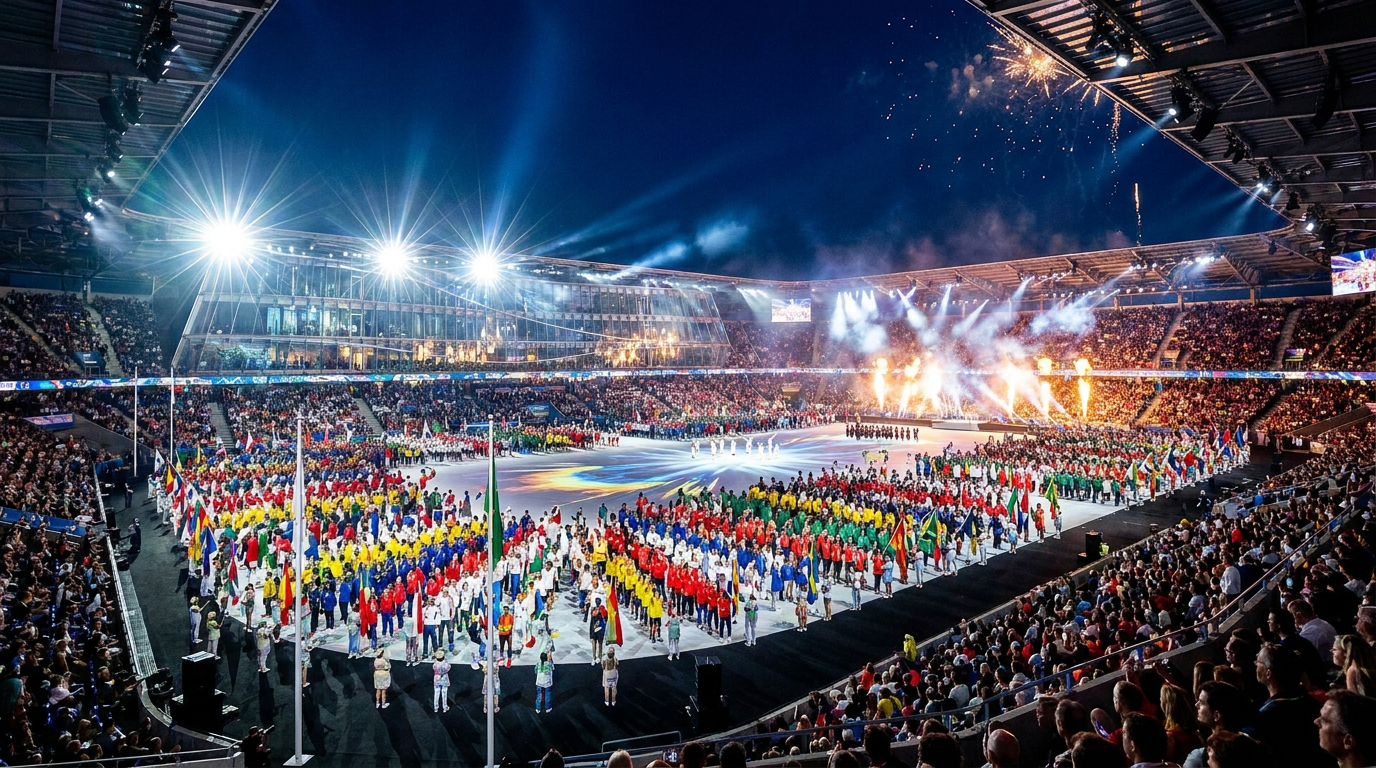
The Olympic Games have operated on a foundational, if evolving, principle for 130 years: the athletes compete for glory, their nations, and the love of sport, but not for a direct paycheck from the organizers. That era of strict financial separation has officially ended.[1]
On Wednesday, during the 146th IOC Session in Lausanne, Switzerland, the International Olympic Committee announced the creation of the "Fit for the Future Olympian Grant."[5]
Starting with the athletes who competed at the Milano Cortina 2026 Winter Games this past February, every eligible Olympian will receive a flat $10,000 USD payout.[2]
The scale of the initiative is unprecedented in Olympic history. The IOC has earmarked $140 million per four-year Olympic cycle to fund the program. With roughly 14,000 athletes competing across a combined Summer and Winter cycle, the math covers the entire global roster.[1][4]

However, the IOC is adamant about the terminology: this is not "prize money." Pau Gasol, the former NBA star who now chairs the IOC Athletes' Commission, emphasized that the funds are meant to recognize the journey, not the finish line.[6]
"This grant will be available to every Olympian. Not just medal winners. Not just athletes from certain countries," Gasol stated during the announcement. He noted that the money honors the years of sacrifice, dedication, and hard work required just to reach the Olympic stage.[1][5]
To qualify for the $10,000, an athlete must hold an "Aa" accreditation—the standard credential for active competitors—and have officially competed in the Games.[5]
The program also comes with strict compliance strings attached. Any athlete who commits an anti-doping rule violation, breaches the IOC Code of Ethics, or violates the Olympic Charter is immediately disqualified from receiving the funds.[2][3]
The program also comes with strict compliance strings attached.
Additionally, participants in the Youth Olympic Games are not eligible for the grant. The funds are strictly reserved for the senior Olympic stage, beginning retroactively with the 2026 Winter Games and continuing to the 2028 Los Angeles Summer Games and beyond.[2][4]
The delivery mechanism is designed to utilize existing bureaucratic channels. The money will not be wired directly from Lausanne to an athlete's personal bank account. Instead, the grants will be distributed through the structures of individual National Olympic Committees (NOCs) roughly six months after the Games conclude.[1][5]
Recognizing that some Olympians—such as highly paid NBA players, professional golfers, or top-tier tennis stars—do not need the financial support, the program includes an opt-out mechanism. Gasol suggested that wealthy athletes might choose to leave their allocation in the general fund to benefit future generations of Olympians.[1]
While a $140 million commitment sounds massive, sports economists note it is a relatively modest slice of the IOC's overall financial pie. The organization generated $7.7 billion in commercial revenue during the 2021–2024 cycle, meaning the new athlete grant program represents less than two percent of its quadrennial income.[2][3]

The move comes after years of mounting pressure on the IOC to share its billions directly with the talent that drives the broadcast ratings. The conversation reached a boiling point ahead of the 2024 Paris Games when World Athletics unilaterally announced it would pay $50,000 to track and field gold medalists.[6]
IOC President Kirsty Coventry, who took office in 2025, had previously faced criticism for stating she did not believe in paying athletes. However, she later clarified that her opposition was strictly to performance-based prize money, which she argued disproportionately rewards a tiny, already-famous elite.[2][4]
By structuring the payout as a universal grant, Coventry and the IOC executive board found a compromise. The flat $10,000 fee preserves the egalitarian spirit of the Olympic Village while addressing the very real financial struggles of rank-and-file competitors.[3][4]

For athletes in sports like modern pentathlon, rowing, or bobsled—where lucrative sponsorships are virtually nonexistent and training costs are exorbitant—a guaranteed $10,000 provides crucial stability. It can fund a year of equipment, cover travel expenses, or ease the transition into a post-athletic career.[3]
The IOC was also careful to stipulate that this new grant will not cannibalize existing financial support. The $140 million fund is entirely separate from "Olympic Solidarity," the existing $650 million program that directs grants to NOCs in developing nations to help athletes qualify for the Games.[4][5]
The timeline for the rollout is already in motion. The IOC is currently finalizing the digital application process. Athletes from the Milano Cortina Games will be able to apply at the end of 2026, with the first wave of payments scheduled to hit accounts in 2027.[2][5]
Ultimately, this universal grant marks a definitive shift in the Olympic movement. The concept of pure amateurism has been slowly dismantled since the 1980s, but direct payment from the IOC to every single athlete represents the final step in acknowledging that the Games are a professionalized enterprise built on the backs of its competitors.[1][3]
How we got here
1896
The modern Olympic Games are founded on strict principles of amateurism, forbidding athletes from receiving financial compensation.
1986
The IOC begins allowing professional athletes to compete, slowly dismantling the amateurism rules over the following decades.
April 2024
World Athletics announces it will pay $50,000 to track and field gold medalists at the Paris Games, intensifying pressure on the IOC.
February 2026
The Milano Cortina Winter Games conclude, serving as the first Olympics where athletes will retroactively qualify for the new grant.
June 24, 2026
The IOC officially announces the $140 million 'Fit for the Future Olympian Grant' during its 146th Session in Lausanne.
2027
The first wave of $10,000 payments is scheduled to be distributed to eligible Milano Cortina athletes.
Viewpoints in depth
The International Olympic Committee
The IOC views the grant as a way to honor the universal sacrifice of all athletes without turning the Games into a prize-money competition.
For the IOC, the distinction between a "grant" and "prize money" is paramount. By giving $10,000 to the last-place finisher in the luge as well as the gold medalist in downhill skiing, the organization maintains its philosophical stance that participation is the ultimate achievement. IOC leadership argues this egalitarian approach prevents the Olympic Games from becoming a purely transactional sporting event, while still providing meaningful financial support for career transitions.
Athlete Advocates
Athlete advocacy groups celebrate the move as a long-overdue step toward fair compensation, though some argue it is only a starting point.
For years, athlete unions and advocates have pointed out the stark contrast between the IOC's multi-billion dollar broadcast revenues and the poverty-line existence of many Olympic competitors. While the $10,000 grant is widely praised as a massive victory for athlete welfare, some advocates argue that $140 million—less than two percent of the IOC's quadrennial revenue—is still too small a share of the pie. They view this grant not as a final settlement, but as the opening of a door to broader revenue-sharing models in the future.
International Sports Federations
Governing bodies of individual sports see the grant as a relief valve that reduces the pressure on them to provide direct prize money.
When World Athletics broke ranks in 2024 to offer $50,000 to track and field gold medalists, it put immense pressure on other international federations—many of which operate on shoestring budgets—to follow suit. The IOC's universal grant helps level the playing field across different sports. Federations governing less lucrative events, such as archery or modern pentathlon, can now assure their athletes that they will receive a baseline financial reward simply for qualifying, removing the burden from the federations themselves.
What we don't know
- How many high-earning professional athletes will actually choose to opt out of the grant to leave funds for future Olympians.
- Whether the $10,000 figure will be adjusted for inflation or increased in future Olympic cycles.
- The exact logistical timeline for how quickly National Olympic Committees will disburse the funds once they receive them from the IOC.
Key terms
- Fit for the Future Olympian Grant
- The official name of the IOC's new $140 million fund designed to provide a $10,000 payment to every eligible Olympic athlete.
- National Olympic Committee (NOC)
- The national organizations (like the USOPC or Team GB) responsible for coordinating their country's participation in the Olympic Games, which will handle the distribution of the new grants.
- Aa Accreditation
- The specific credential given to active, competing athletes at the Olympic Games, which serves as the baseline requirement for grant eligibility.
- Olympic Solidarity
- An existing IOC program that distributes $650 million to NOCs, particularly in developing nations, to help athletes train and qualify for the Games.
Frequently asked
Do athletes only get the money if they win a medal?
No. The $10,000 grant is available to every eligible athlete who competes in the Games, regardless of where they finish in the standings.
Are professional athletes like NBA players eligible?
Yes. All competitors with an Aa accreditation are eligible, though the IOC has suggested that highly paid professionals may choose to opt out and leave the money in the fund for others.
When will the athletes actually receive the money?
The application process for the Milano Cortina 2026 athletes will open at the end of the year, with the first payments expected to be distributed in 2027.
What disqualifies an athlete from receiving the grant?
Athletes who commit an anti-doping rule violation, breach the IOC Code of Ethics, or violate the Olympic Charter will forfeit their eligibility for the funds.
Does this replace existing Olympic funding?
No. The IOC confirmed that the new grant will not decrease or detract from the existing Olympic Solidarity funds provided to national committees.
Sources
Source coverage
7 outlets
3 viewpoints surfaced







[1]The GuardianAthlete Advocates
IOC scraps 130 years of tradition by paying athletes $10,000 at Olympics
Read on The Guardian →[2]Front Office SportsThe International Olympic Committee
The IOC Will Offer Every Eligible Olympian a $10,000 Grant
Read on Front Office Sports →[3]Business StandardSports Economists
IOC's plan to pay eligible Olympians $10,000 marks a historic shift in athlete support
Read on Business Standard →[4]CBCAthlete Advocates
IOC commits to paying $10,000 grants to athletes after Summer or Winter Games
Read on CBC →[5]Olympics.comThe International Olympic Committee
An Olympic first: IOC to set up “Fit for the Future Olympian Grant” to support all Olympians with USD 10,000
Read on Olympics.com →[6]South China Morning PostSports Economists
IOC breaks with tradition to offer all Olympic competitors US$10,000 in cash grants
Read on South China Morning Post →[7]SwimSwamAthlete Advocates
IOC Announces New Grant Paying Each Olympian $10,000 USD Beginning In 2026
Read on SwimSwam →
Every angle. Every day.
Get sports stories with full source coverage and perspective breakdowns delivered to your inbox.