
Dongfeng Confirms Mass Production of 1,000km Solid-State EV Battery for 2026
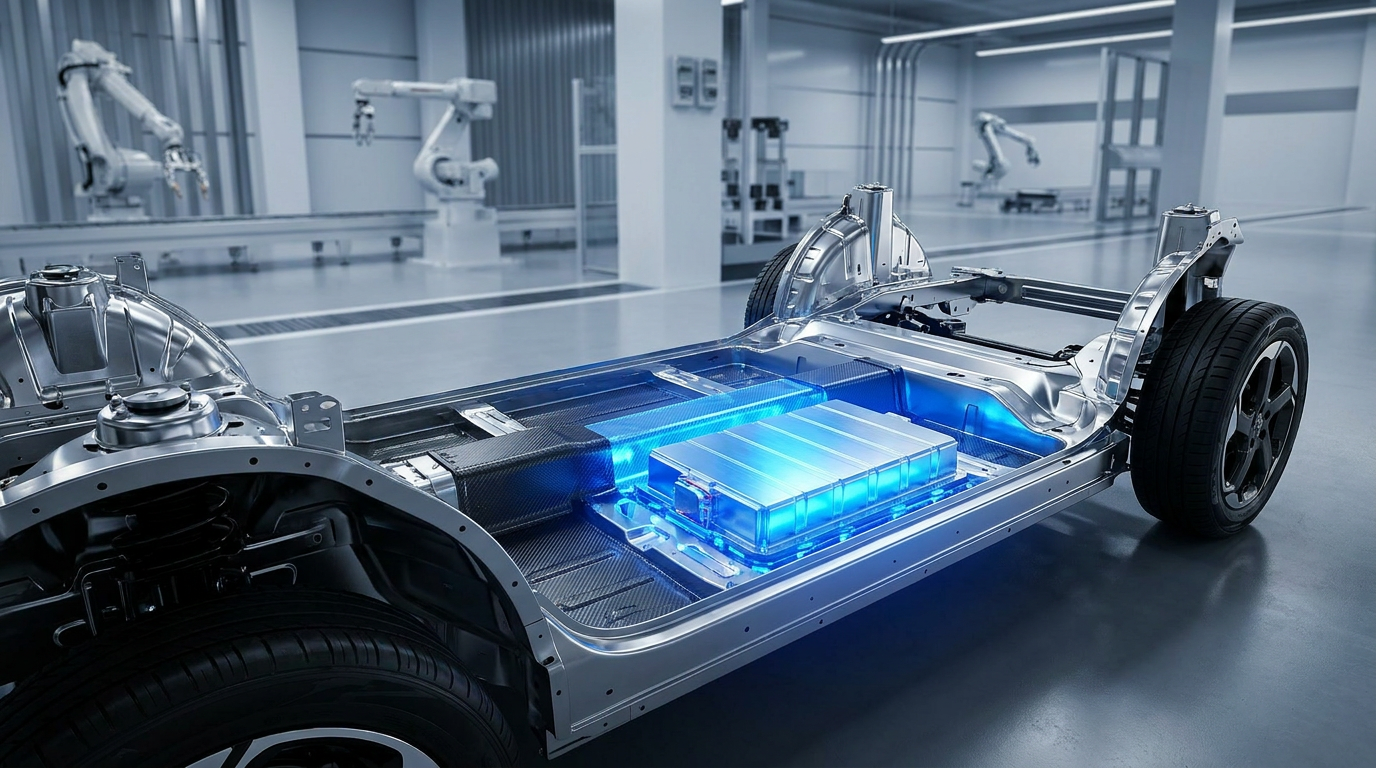
Chinese automaker Dongfeng Motor will begin mass-producing a next-generation solid-state battery in late 2026, promising a 1,000-kilometer range, extreme cold-weather resilience, and a 30% weight reduction.
By Factlen Editorial Team
- Automakers & Battery Developers
- Focused on pushing the boundaries of energy density and accelerating commercialization timelines.
- Battery Purists & Regulators
- Concerned with strict technical definitions and preventing consumer confusion over 'solid-state' marketing.
- Consumer & Industry Analysts
- Prioritizing the elimination of range anxiety, cold-weather performance drops, and fire risks.
What's not represented
- · Environmental Groups
- · Raw Material Suppliers
Why this matters
Range anxiety, cold-weather degradation, and fire risks are the three biggest hurdles to global EV adoption. A commercialized solid-state battery that solves all three simultaneously could trigger a massive acceleration in the transition away from fossil fuels.
Key points
- Dongfeng Motor will begin mass-producing its new solid-state EV battery in the second half of 2026.
- The battery boasts an energy density of 350 Wh/kg, enabling ranges over 1,000 kilometers.
- The pack is 30% lighter than traditional lithium-ion batteries and eliminates flammable liquid electrolytes.
- In extreme cold (-30°C), the battery retained 74% of its charge during testing in Mohe, China.
- The technology is technically a 'semi-solid' oxide-polymer composite, blending solid and liquid elements.
Range anxiety has long been the primary psychological barrier to widespread electric vehicle adoption. Now, one of China's oldest automakers is claiming to have solved it. Dongfeng Motor has confirmed it will begin mass production of a new battery in the second half of 2026 that promises to push driving ranges past the 1,000-kilometer (620-mile) mark on a single charge.[1][2][4]
The technology at the center of this milestone is the much-anticipated "solid-state" battery. For years, the auto industry has viewed solid-state chemistry as the holy grail of EV development—a technology that could simultaneously double range, slash charging times, and eliminate the fire risks associated with current lithium-ion packs.[1][5]
According to regional government reports from Hubei, Dongfeng's new cells achieve an energy density of 350 watt-hours per kilogram (Wh/kg). This represents a massive leap over today's mainstream lithium iron phosphate (LFP) cells, effectively packing significantly more energy into a smaller physical footprint.[2][3][4][6]

The weight reduction alone is a critical breakthrough. Dongfeng claims its new battery pack is approximately 30 percent lighter than traditional liquid-electrolyte counterparts. In the physics of electric vehicles, shedding weight creates a virtuous cycle: a lighter car requires less energy to move, which in turn extends the range even further without requiring a physically larger battery.[2][4]
But the most transformative claim centers on safety. Conventional lithium-ion batteries rely on liquid electrolytes to shuttle ions between the anode and cathode. Under extreme conditions—such as a severe collision or a manufacturing defect—these volatile liquids can overheat, leading to a dangerous chain reaction known as thermal runaway.[2][3]
Dongfeng's design replaces this flammable liquid with a stable solid electrolyte material. The company reports that during rigorous physical compression tests, the battery cells remained fully operational even after heavy machinery deformed their shape by 50 percent. In separate thermal endurance trials, the components survived direct heat exposure at 170 degrees Celsius (338 degrees Fahrenheit) with no signs of smoke or fire.[2][3][4]

The battery also addresses the notorious "winter penalty" that plagues modern EVs. Freezing temperatures typically cause severe drops in battery capacity because the liquid electrolyte thickens, slowing down the chemical reactions required to discharge power.[2]
The battery also addresses the notorious "winter penalty" that plagues modern EVs.
To prove its new chemistry could withstand the cold, Dongfeng conducted calibration testing earlier this year in Mohe, China's northernmost city. Despite ambient temperatures plunging to -30 degrees Celsius (-22 degrees Fahrenheit), the battery successfully retained more than 74 percent of its electrical charge, maintaining a functional range that still exceeded 1,000 kilometers.[3][4][6]

However, there is a crucial technical caveat to Dongfeng's "solid-state" label. Battery purists and industry analysts note that the company's oxide-polymer composite is more accurately described as a "semi-solid" or hybrid construction. It blends a solid electrolyte material with residual liquid elements to maintain conductivity.[6]
This distinction is not merely academic. China's industry regulator has reportedly been drafting rules to standardize naming conventions, potentially requiring that semi-solid batteries be explicitly labeled as "solid-liquid batteries" to prevent public confusion with fully solid-state devices currently in development by companies like Toyota and QuantumScape.[6]
Despite the semantic debate, Dongfeng's pragmatic approach—choosing an oxide-polymer route—was a deliberate strategy to accelerate commercialization. This hybrid chemistry utilizes an established raw material supply chain and functions seamlessly with existing factory production equipment, allowing the automaker to bypass the manufacturing bottlenecks that have delayed pure solid-state designs.[3][4][5]
The company is already running a fully automated pilot production line that encompasses more than 20 processes, from material coating to welding. Zhang Wei, head of the solid-state battery laboratory at Dongfeng's research institute, confirmed that the automaker maintains 100 percent self-reliance in its core technology, controlling the entire process from electrode formulation to full pack integration.[2][3][5]

Dongfeng is not operating in a vacuum. The announcement places the automaker at the forefront of a fierce global race. Domestic rivals like BYD and Chery are aggressively pursuing their own next-generation chemistries, while international players like Stellantis are testing semi-solid cells from suppliers like Factorial.[1][6]
To maintain its momentum, Dongfeng recently formed the Hubei Solid-State Battery Industry Technology Innovation Consortium, partnering with 18 academic and industrial institutions. The group is already looking past the 2026 launch, drafting blueprints for even higher-density, fast-charging iterations expected by 2027.[2][3][4]
If Dongfeng can successfully scale this technology from pilot lines to mass-market showrooms later this year, the implications for the global auto industry are profound. A 1,000-kilometer battery that won't catch fire and survives the freezing cold doesn't just improve the electric vehicle—it fundamentally removes the last remaining compromises of abandoning the combustion engine.[1][2]
How we got here
2018
Dongfeng establishes a dedicated research team to focus on oxide-polymer composite battery technology.
2019
The company completes development of its first-generation solid-state battery system.
2021
Dongfeng secures China's first certification for a solid-state battery passenger vehicle.
Early 2026
Prototype batteries successfully complete extreme cold-weather calibration testing in Mohe, China.
May 2026
Dongfeng forms an innovation consortium with 18 institutions to accelerate solid-state development.
H2 2026
Targeted launch for mass production and vehicle integration of the 1,000km battery.
Viewpoints in depth
Automakers & Battery Developers
Focused on pushing the boundaries of energy density and accelerating commercialization timelines.
Companies like Dongfeng, BYD, and Chery view hybrid or semi-solid chemistries as the most pragmatic stepping stone. By utilizing existing manufacturing equipment and established supply chains, they argue that getting a 1,000km battery to market now is far more valuable than waiting another decade for pure solid-state perfection. For these manufacturers, the priority is scaling production to meet consumer demand and lower costs.
Battery Purists & Regulators
Concerned with strict technical definitions and preventing consumer confusion over 'solid-state' marketing.
Industry watchdogs and physicists emphasize that 'semi-solid' batteries still contain liquid electrolytes, meaning they don't fully achieve the theoretical safety and density maximums of true solid-state cells. Regulators in China are actively drafting rules to ensure these hybrid packs are labeled accurately as 'solid-liquid batteries' so consumers understand exactly what chemistry is powering their vehicles, preventing the dilution of the solid-state term.
Consumer & Industry Analysts
Prioritizing the elimination of range anxiety, cold-weather performance drops, and fire risks.
For everyday drivers and market analysts, the exact chemical composition matters less than the real-world results. Advocates celebrate the 1,000km range and the 74% retention rate in freezing temperatures, noting that these metrics finally make EVs a viable option for rural drivers and those living in harsh winter climates. To this camp, the technology represents the final nail in the coffin for internal combustion engines.
What we don't know
- The exact pricing premium Dongfeng will charge for vehicles equipped with the new solid-state packs.
- How quickly the company can scale production beyond its initial 0.2 GWh pilot line to meet global demand.
- Whether the 'semi-solid' designation will face regulatory pushback in international markets outside of China.
Key terms
- Solid-State Battery
- A battery technology that uses solid electrodes and a solid electrolyte, rather than the liquid or polymer gel electrolytes found in conventional lithium-ion batteries.
- Energy Density
- The amount of energy a battery can hold relative to its weight, typically measured in watt-hours per kilogram (Wh/kg).
- Thermal Runaway
- A dangerous chain reaction within a battery cell where an increase in temperature changes the conditions in a way that causes a further increase in temperature, often leading to fires.
- Semi-Solid Battery
- A hybrid battery construction that blends solid electrolyte materials with a small amount of residual liquid electrolyte to maintain conductivity and ease manufacturing.
- Oxide-Polymer Composite
- The specific chemical route Dongfeng chose for its electrolyte, combining stable oxide ceramics with flexible polymers to balance safety and manufacturability.
Frequently asked
What is the range of Dongfeng's new battery?
The battery is expected to deliver a driving range exceeding 1,000 kilometers (about 620 miles) on a single charge.
Is it a true solid-state battery?
Technically, it is a 'semi-solid' or hybrid battery. It uses an oxide-polymer composite that blends a solid electrolyte with a small amount of liquid to help conduct energy.
How does it perform in the winter?
In tests conducted at -30°C (-22°F), the battery retained over 74% of its electrical charge, significantly outperforming traditional lithium-ion batteries in freezing conditions.
When will cars with this battery be available?
Dongfeng plans to begin mass production and vehicle integration of the battery in the second half of 2026.
Sources
Source coverage
6 outlets
3 viewpoints surfaced






[1]CarsGuideAutomakers & Battery Developers
Dongfeng solid-state batteries to be mass-produced in 2026 with 1000km-plus of driving range
Read on CarsGuide →[2]ArenaEVAutomakers & Battery Developers
Dongfeng targets late 2026 for mass production of long-range solid-state batteries
Read on ArenaEV →[3]CarNewsChinaConsumer & Industry Analysts
Dongfeng's solid-state battery to exceed 1,000 km range, launching in 2026
Read on CarNewsChina →[4]Battery-TechConsumer & Industry Analysts
Dongfeng Motor to Mass Produce 350 Wh/kg Solid-State Batteries by H2 2026
Read on Battery-Tech →[5]GasgooAutomakers & Battery Developers
Dongfeng Motor to mass-produce next-generation solid-state batteries in H2 2026
Read on Gasgoo →[6]NewMobilityBattery Purists & Regulators
Dongfeng 'solid-state' battery is coming… with a catch
Read on NewMobility →

Every angle. Every day.
Get technology stories with full source coverage and perspective breakdowns delivered to your inbox.