
The Science of Biochar: How Carbon-Negative Concrete Is Decarbonizing Residential Construction
By replacing traditional sand and cement with pyrolyzed organic waste, materials scientists are transforming residential foundations and walls into permanent carbon sinks.
By Factlen Editorial Team
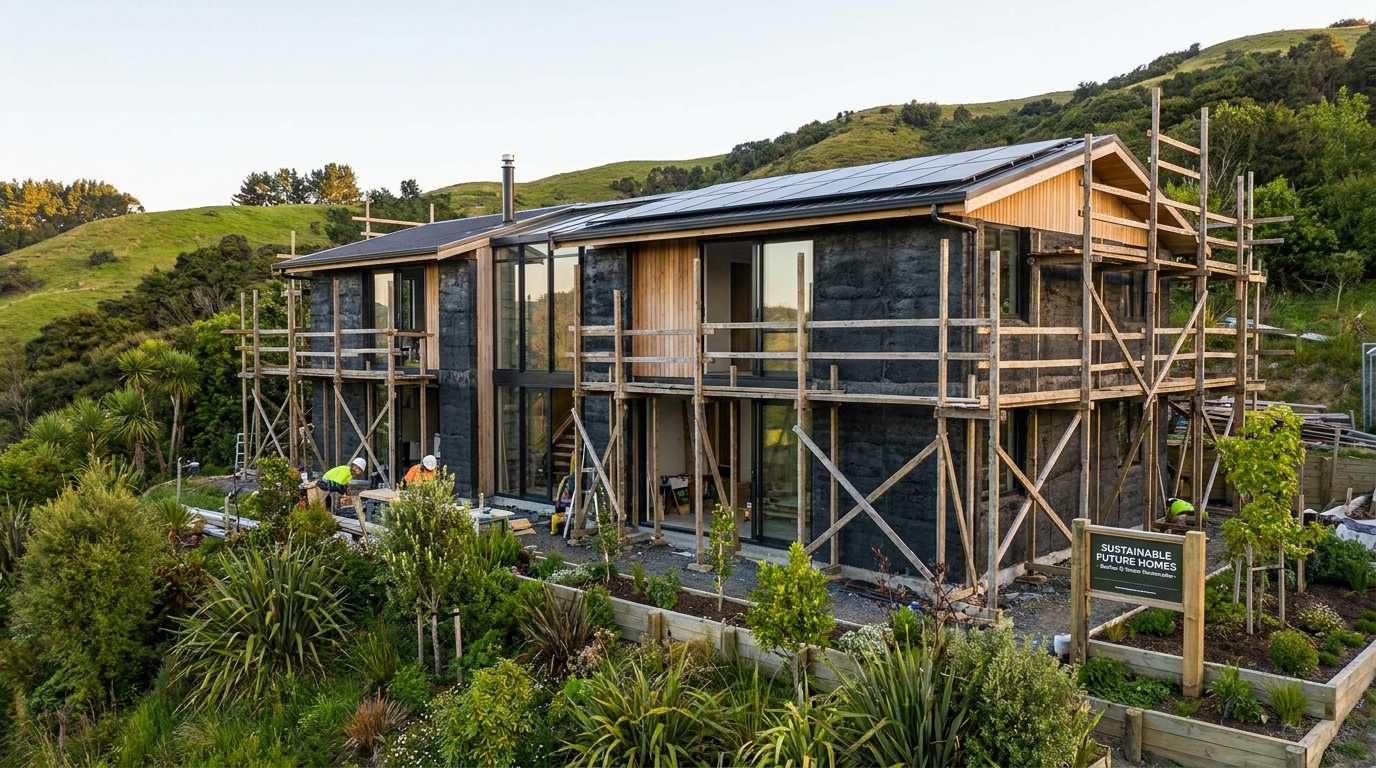
- Sustainable Materials Engineers
- Focus on optimizing the chemical integration of biochar to maximize both compressive strength and carbon sequestration.
- Traditional Concrete Manufacturers
- Emphasize the logistical challenges of scaling biochar, particularly regarding water absorption and workability at the batch plant.
- Climate Policy Advocates
- View biochar concrete as a critical, scalable carbon dioxide removal (CDR) technology necessary to decarbonize the heavy industry sector.
What's not represented
- · Municipal Waste Managers
- · Home Insurance Underwriters
Why this matters
Concrete production is responsible for roughly 8% of global carbon emissions. Transitioning to biochar-enhanced materials allows the residential construction industry to actively remove carbon from the atmosphere while building stronger, more energy-efficient homes.
Key points
- Traditional cement production accounts for roughly 8% of global carbon emissions.
- Biochar is created by heating organic waste without oxygen, turning it into a stable carbon sink.
- Adding biochar to concrete permanently locks carbon into residential foundations and walls.
- Optimal biochar blends (3-10%) increase compressive strength and improve internal curing.
- Biochar's porous structure provides homes with passive thermal insulation and moisture regulation.
- High water absorption remains an engineering challenge, requiring precise mix calibration.
Concrete is the second most consumed substance on Earth after water, and its environmental toll is staggering. Traditional Portland cement manufacturing accounts for roughly eight percent of global carbon dioxide emissions, driven by the extreme heat required to calcine limestone. For decades, the residential construction industry has struggled to reconcile the demand for durable, affordable housing with the urgent need to decarbonize. But a breakthrough in materials science is rapidly shifting the paradigm from damage reduction to active climate repair.[1][2]
The catalyst for this transformation is biochar, a highly stable, carbon-rich material that is turning residential foundations, walls, and even interior architectural elements into permanent carbon sinks. By integrating biochar into concrete mixes, engineers are not merely offsetting emissions; they are creating "carbon-negative" building materials. In these advanced composites, more carbon is permanently locked inside the physical structure of the home than was emitted during the material's production and transport.[2][7]
To understand how a building can subtract carbon from the atmosphere, one must look at the mechanism of pyrolysis. When organic matter—such as forestry residue, agricultural waste, or even spent coffee grounds—naturally decomposes, it releases its stored carbon back into the air as carbon dioxide. Pyrolysis interrupts this cycle. By heating the biomass to extreme temperatures in an oxygen-deprived environment, the organic material does not burn. Instead, it undergoes chemical decomposition, leaving behind a porous, charcoal-like substance.[1][4]
This resulting biochar is remarkably stable, capable of trapping carbon for centuries. For every kilogram of biochar produced, up to three kilograms of carbon dioxide are prevented from re-entering the atmosphere. When this biochar is subsequently embedded into the alkaline environment of a concrete matrix, the carbon is effectively entombed. It cannot degrade, off-gas, or escape, transforming the very fabric of a residential home into a long-term climate vault.[1][5]

The sourcing of the biomass itself introduces a powerful circular economy dynamic to residential construction. Rather than harvesting virgin materials, biochar producers utilize localized waste streams that would otherwise burden municipal landfills. In urban centers, this might mean upcycling discarded shipping pallets and construction timber; in agricultural regions, it involves converting rice husks, bagasse, or nut shells. This localized production model reduces the transportation emissions associated with raw material delivery while simultaneously solving regional waste management challenges.[2][4]
Beyond its environmental credentials, biochar is fundamentally altering the mechanical chemistry of concrete. In a standard mix, cement acts as the binder that holds sand and gravel aggregates together. Biochar can be introduced either as a supplementary cementitious material to partially replace the carbon-intensive cement, or as a lightweight replacement for fine aggregates like sand. Because biochar is highly porous, it fundamentally changes how the concrete cures and hardens over time.[3][6]
These microscopic pores act as internal water reservoirs during the curing process. As the cement hydrates and begins to dry, the biochar slowly releases its stored moisture back into the surrounding matrix. This internal curing mechanism promotes a more complete hydration of the cement particles, reducing the micro-cracking that typically plagues traditional concrete as it shrinks. The result is a denser, more resilient interfacial transition zone between the binder and the aggregates.[3][4]
These microscopic pores act as internal water reservoirs during the curing process.
The structural benefits of this altered chemistry are significant. Materials scientists have found that when biochar is added in optimized proportions—typically between three and ten percent of the cementitious mass—it actively enhances the material's compressive strength. Some laboratory studies have recorded compressive strength increases of up to 24.2 percent with a ten percent biochar blend. This allows residential builders to achieve the necessary structural integrity while using less overall material.[2][4]

The advantages extend beyond raw load-bearing capacity into the realm of passive home performance. The same cellular porosity that aids in curing also traps microscopic pockets of air within the finished walls. This significantly lowers the thermal conductivity of the concrete, transforming structural walls into active thermal insulators. Homes built with biochar-enhanced concrete experience reduced heat transfer, keeping interiors cooler in the summer and warmer in the winter without relying heavily on mechanical HVAC systems.[2][7]
Furthermore, the material exhibits excellent moisture-regulating properties. The biochar network can absorb excess indoor humidity and release it when the air becomes dry, passively stabilizing the indoor climate. This breathable quality reduces the risk of mold and condensation, creating a healthier indoor environment. Acoustic damping is also improved, as the porous structure absorbs sound waves, reducing noise transmission between rooms and from the outside environment.[2][7]
Despite these profound advantages, scaling biochar concrete from laboratory curiosity to neighborhood standard involves navigating specific chemical uncertainties. The primary engineering challenge lies in biochar's extreme water absorption. If the biochar is not properly pre-soaked or if the mix design is not meticulously calibrated, the biochar will aggressively pull water away from the cement paste. This drastically reduces the "slump" or workability of the wet concrete, making it stiff, difficult to pour, and prone to structural voids.[3][6]

There is also a strict threshold effect regarding the dosage. While a five to ten percent replacement yields optimal strength and carbon sequestration, pushing the biochar content higher begins to degrade the material's performance. At replacement levels of twenty percent or more, the sheer volume of porous, low-density particles overwhelms the cement binder. The concrete becomes overly porous, leading to a sharp drop in both compressive and flexural strength, rendering it unsuitable for load-bearing residential applications.[3][6]
To bypass these limitations, the industry is rapidly standardizing pre-treatment protocols and developing specialized admixtures that maintain workability without sacrificing the carbon-negative benefits. Commercial momentum is accelerating, driven by successful high-profile demonstrations. At the 2025 Architecture Biennale, building materials giant Holcim partnered with Pritzker Prize-winning architect Alejandro Aravena to unveil a full-scale residential housing prototype constructed entirely from net-zero biochar concrete and recycled aggregates.[1][7]
This prototype proved that biochar concrete could be deployed using standard precast panel techniques, allowing for rapid, scalable residential construction. Other specialized startups, such as ecoLocked and SolidCarbon, are now commercializing drop-in biochar admixtures that concrete batch plants can use without retrofitting their existing equipment. In some advanced custom mixes, the carbon footprint has been driven down to negative 14 kilograms of carbon dioxide per cubic meter.[1][4]

The implications for residential architecture and interior design are vast. Because biochar concrete can be cast into precise shapes and features a unique, subtly textured aesthetic, it is increasingly being used for exposed interior walls, thermal mass flooring, and even built-in architectural furniture. By turning the heaviest components of a home into active carbon sinks, the construction industry is finally charting a viable path toward a built environment that heals the climate rather than harming it.[2][7]
How we got here
Early 2000s
Biochar is primarily researched and utilized as an agricultural soil amendment to improve crop yields.
2018
Materials scientists begin publishing robust data on biochar's ability to improve the compressive strength of cement composites.
2022
Carbon removal startups begin selling biochar carbon credits to major tech corporations to fund industrial scaling.
2024
Specialized admixtures are commercialized, allowing standard concrete batch plants to integrate biochar without new equipment.
May 2025
Holcim and ELEMENTAL unveil a full-scale residential housing prototype built entirely from net-zero biochar concrete at the Venice Biennale.
Viewpoints in depth
Sustainable Materials Engineers
Focus on optimizing the chemical integration of biochar to maximize both compressive strength and carbon sequestration.
For materials scientists, biochar is not just an environmental offset; it is a functional upgrade to concrete chemistry. Researchers emphasize that the microscopic porosity of biochar fundamentally changes the hydration process of cement. By acting as an internal water reservoir, biochar mitigates the autogenous shrinkage that typically causes micro-cracking in standard concrete. Their primary focus is on identifying the optimal feedstock—such as hardwood versus agricultural waste—and the precise pyrolysis temperatures required to maximize the material's structural benefits without compromising the integrity of the interfacial transition zone.
Traditional Concrete Manufacturers
Emphasize the logistical challenges of scaling biochar, particularly regarding water absorption and workability at the batch plant.
While acknowledging the carbon benefits, the traditional concrete industry views biochar integration through the lens of operational friction and scale. The primary concern is workability. Because biochar aggressively absorbs water, it can drastically reduce the 'slump' of a concrete mix, making it stiff and difficult to pump or pour on a residential job site. Manufacturers argue that until pre-soaked biochar aggregates or specialized superplasticizer admixtures become universally standardized and cost-competitive, widespread adoption will be limited to bespoke architectural projects rather than everyday residential foundations.
Climate Policy Advocates
View biochar concrete as a critical, scalable carbon dioxide removal (CDR) technology necessary to decarbonize the heavy industry sector.
Climate advocates and carbon market analysts see biochar concrete as one of the few viable pathways to neutralize the 8% of global emissions generated by the cement industry. Rather than relying on prohibitively expensive carbon capture and storage (CCS) at cement plants, they argue that biochar turns the end-product itself into a distributed carbon sink. This camp pushes for updated building codes and public procurement mandates that would require a certain percentage of carbon-negative materials in new residential construction, thereby accelerating the financial viability of the biochar supply chain.
What we don't know
- How the long-term durability of biochar concrete will hold up over 50 to 100 years of freeze-thaw cycles in extreme climates.
- Whether the global supply of sustainable biomass waste is sufficient to meet the demands of the entire concrete industry if biochar becomes a universal standard.
- How quickly municipal building codes will adapt to explicitly permit high-percentage biochar replacements in load-bearing residential structures.
Key terms
- Pyrolysis
- The process of heating organic material to extreme temperatures in an oxygen-free environment, preventing it from burning and converting it into stable carbon.
- Biochar
- A highly porous, charcoal-like substance created through pyrolysis that acts as a permanent carbon sink.
- Portland Cement
- The most common type of general-use cement, known for its high carbon footprint due to the energy-intensive process of heating limestone.
- Internal Curing
- A process where porous materials inside the concrete slowly release absorbed water as the cement dries, preventing shrinkage and micro-cracking.
- Slump
- A measure of the workability or fluidity of wet concrete before it sets; biochar can reduce slump if it absorbs too much water from the mix.
Frequently asked
What makes biochar concrete carbon-negative?
Biochar is made from organic waste that would normally decompose and release CO2. By turning it into stable charcoal and locking it in concrete, more carbon is permanently stored in the building than was emitted during the concrete's production.
Does adding biochar make the concrete weaker?
No, when added in optimal amounts (typically 3% to 10%), biochar actually improves the concrete's compressive strength by aiding the internal curing process. However, adding too much (over 15-20%) can weaken the structure.
Can biochar concrete be used for standard home foundations?
Yes. With the correct mix design, biochar concrete meets the structural requirements for load-bearing residential foundations, walls, and precast panels.
How does biochar improve a home's energy efficiency?
The porous nature of biochar traps microscopic air pockets within the concrete, which lowers the material's thermal conductivity and provides passive insulation against heat and cold.
Sources
Source coverage
7 outlets
3 viewpoints surfaced







[1]HolcimTraditional Concrete Manufacturers
Embracing the power of biochar in sustainable construction
Read on Holcim →[2]Biochar TodaySustainable Materials Engineers
Biochar as a Scientific Material for Construction Applications
Read on Biochar Today →[3]MDPISustainable Materials Engineers
Effect of Biochar on the Mechanical Properties of Concrete
Read on MDPI →[4]CarbonfutureClimate Policy Advocates
Decarbonizing Construction with Carbon Removal
Read on Carbonfuture →[5]Puro.earthClimate Policy Advocates
Biochar in Concrete: Lowering Emissions While Enhancing Performance
Read on Puro.earth →[6]ResearchGateSustainable Materials Engineers
Biochar Concrete: A state-of-the-art review
Read on ResearchGate →[7]Factlen Editorial TeamClimate Policy Advocates
Synthesis by Factlen editorial team
Read on Factlen Editorial Team →
Every angle. Every day.
Get home stories with full source coverage and perspective breakdowns delivered to your inbox.