
The 2027 ICC Cricket World Cup: Early Contenders and Dark Horses
With the 2027 ICC Cricket World Cup in southern Africa approaching, defending champions Australia and top-ranked India lead the pack of early favorites. Meanwhile, host nation South Africa is building a squad aimed at breaking their historic World Cup curse.
By Factlen Editorial Team
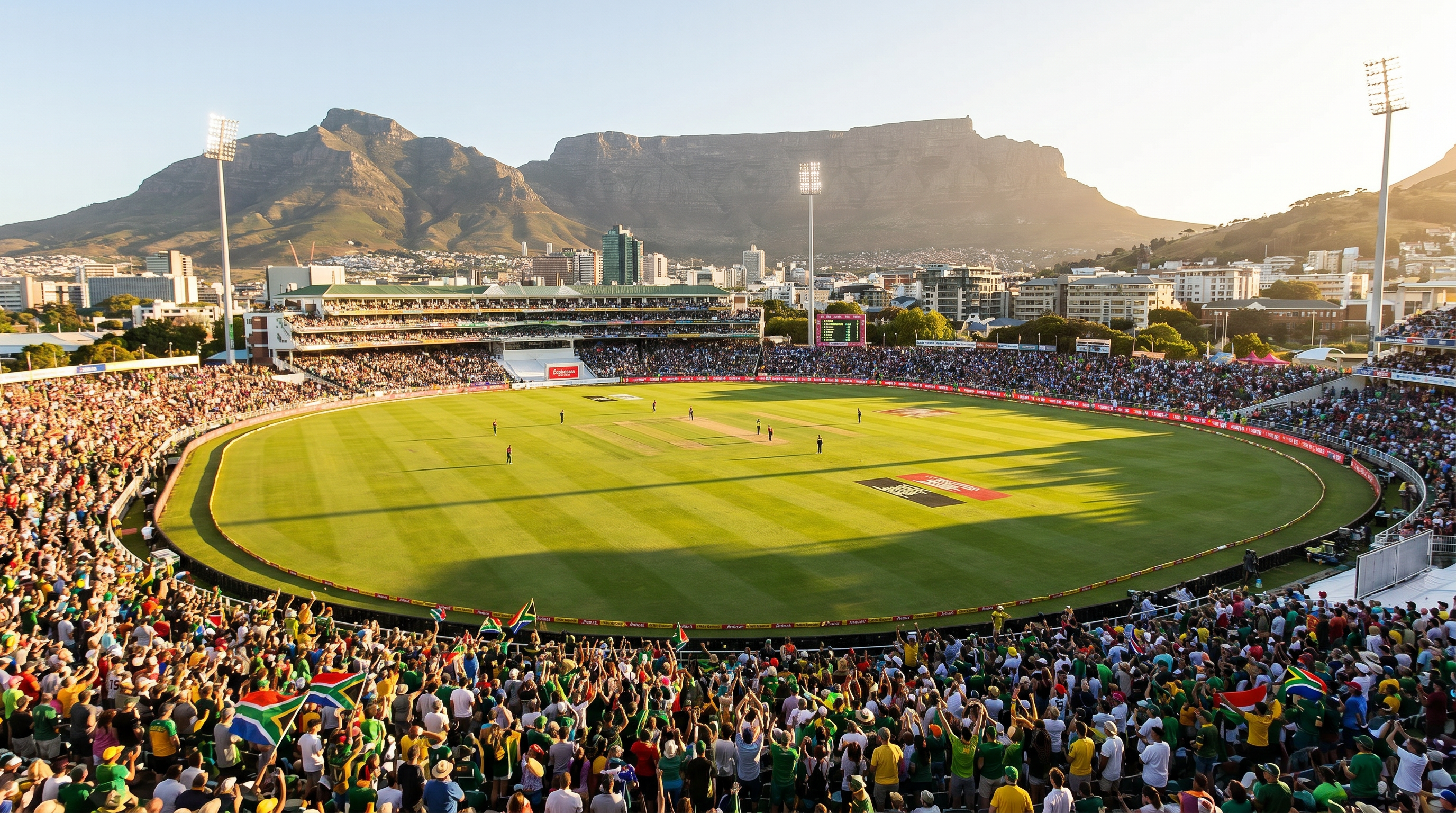
- Neutral Analysts
- Focuses on the objective depth and tournament pedigree of top-ranked teams like India and Australia.
- National Team Supporters
- Highlights the optimism around South Africa's strategic squad building and the advantage of playing at home.
- Tactics Writers
- Analyzes the specific bilateral schedules and ranking math needed for teams to qualify.
- Official Stance
- Represents the governing bodies' focus on tournament structure and associate nation pathways.
What's not represented
- · Zimbabwean Supporters
- · Non-Qualifying Associate Nations
Why this matters
The expansion to a 14-team format and the return to African soil for the first time since 2003 promises one of the most competitive and unpredictable World Cups in recent history, offering emerging nations a rare spotlight alongside traditional powerhouses.
Key points
- The 2027 ICC Cricket World Cup will be co-hosted by South Africa, Zimbabwe, and Namibia.
- The tournament expands to 14 teams, utilizing a Super Six format similar to the 2003 edition.
- India and Australia are early favorites based on current ODI rankings and tournament pedigree.
- South Africa is using its 2026 bilateral schedule to build a squad capable of winning at home.
- England faces pressure to improve their 8th-place ranking to secure direct qualification.
- Namibia must navigate the global qualifier pathway despite being a co-host.
The 2027 ICC Men's Cricket World Cup is steadily approaching, promising to bring the pinnacle of the 50-over game back to the African continent for the first time since 2003. Scheduled for October and November 2027, the tournament will be co-hosted by South Africa, Zimbabwe, and Namibia.[4]
This edition marks a significant shift in the global cricketing landscape, as the International Cricket Council (ICC) expands the tournament from 10 to 14 teams. The format will mirror the beloved 2003 structure, dividing teams into two groups of seven, with the top three from each advancing to a high-stakes Super Six stage before the semi-finals.[4]
As the qualification cycle intensifies in mid-2026, the global hierarchy is taking definitive shape. The top eight teams in the ICC ODI rankings on March 31, 2027, will secure direct entry, bypassing the treacherous global qualifier tournament.[4]

At the summit of these rankings sits India, operating as the undisputed early favorite. The Men in Blue have dominated the 50-over format over the past year, boasting an impressive rating of 118 and fresh off an undefeated campaign to claim the 2025 Champions Trophy.[1][5]
India's success is built on a seamless generational transition and a packed 2026 bilateral schedule designed to fine-tune their combinations. With 18 ODIs slated for the year, the squad boasts unmatched depth in both spin-bowling and top-order batting, making them the team to beat regardless of the conditions.[5][6]
Breathing down their necks are the defending champions, Australia. Currently ranked third globally, the Australians possess an unrivaled tournament pedigree. Their ability to compartmentalize bilateral form and peak precisely when global silverware is on the line makes them a perennial threat.[1]
For the host nations, the 2027 World Cup represents both a monumental opportunity and a heavy burden of expectation. South Africa, currently ranked fourth, is desperate to shed its historical struggles in knockout matches and claim a maiden World Cup title on home soil.[1]
For the host nations, the 2027 World Cup represents both a monumental opportunity and a heavy burden of expectation.
The Proteas are actively using their 2026 fixtures to build a robust squad. Under the leadership of ODI captain Temba Bavuma and T20 skipper Aiden Markram, the team is blending experienced campaigners with explosive new talent to manage a heavy international workload.[2][3]

The return of express fast bowler Anrich Nortje to the white-ball setup has injected fresh lethal pace into the South African attack. Head coach Shukri Conrad has explicitly stated that current series are being used to finalize roles and combinations for the 2027 showpiece.[2]
While South Africa and Zimbabwe enjoy automatic qualification as full-member hosts, the third co-host, Namibia, faces a steeper climb. As an associate member, Namibia must navigate the grueling qualification pathway to earn the right to play in front of their home supporters in Windhoek.[4]
The race for direct qualification has also generated unexpected drama at the lower end of the top ten. England, the 2019 champions, endured a disastrous 2025 campaign, winning just four of their 15 ODIs and plummeting to eighth in the global rankings.[1]
This dramatic slide represents England's lowest ODI ranking in two decades. They now face immense pressure to string together victories in late 2026 to avoid slipping into the global qualifier tournament—a fate that would be unthinkable for a team of their resources.[1]

Meanwhile, New Zealand quietly maintains its status as the ultimate dark horse. Ranked second in the world, the Black Caps consistently punch above their weight in ICC events, relying on tactical discipline and a cohesive team culture to dismantle more heavily favored opponents.[1]
The expansion to 14 teams is widely celebrated as a victory for the global development of the game. It guarantees more opportunities for associate nations to test themselves against full-member powerhouses on the biggest stage, ensuring the qualification pathway remains fiercely competitive.[4]
With over a year of intense bilateral cricket still to be played, form and fitness will inevitably fluctuate. However, the foundational narratives—India's dominance, Australia's pedigree, South Africa's home ambition, and England's desperate rebuild—are already setting the stage for a historic tournament in southern Africa.[1][4]
How we got here
2003
South Africa and Zimbabwe previously co-hosted the ICC Cricket World Cup.
2023
Australia claimed their sixth World Cup title in India.
2025
India won the Champions Trophy undefeated, cementing their No. 1 ranking.
Early 2026
England's ODI ranking slipped to eighth, marking a 20-year low.
March 2027
The cutoff date for the top eight teams to secure direct qualification.
Viewpoints in depth
Neutral Analysts
Focuses on the objective depth and tournament pedigree of top-ranked teams like India and Australia.
Analysts emphasize that while the tournament is over a year away, foundational depth in spin-bowling and top-order batting makes India the mathematical favorite. They also point to Australia's historical ability to peak during ICC events, arguing that bilateral form is often a poor predictor for the defending champions.
National Team Supporters
Highlights the optimism around South Africa's strategic squad building and the advantage of playing at home.
For local fans, the 2027 World Cup is seen as the ultimate opportunity to break the Proteas' knockout curse. Supporters are heavily invested in the integration of young express pacers and the steady leadership of Temba Bavuma, believing that familiar pitches and home crowds will provide the necessary edge.
Tactics Writers
Analyzes the specific bilateral schedules and ranking math needed for teams to qualify.
Tactical observers are closely monitoring the bottom half of the top ten, particularly England's precarious position. They argue that the pressure of securing direct qualification by March 2027 will force teams to abandon experimental lineups in bilateral series and play knockout-style cricket much earlier than anticipated.
Official Stance
Represents the governing bodies' focus on tournament structure and associate nation pathways.
Administrators view the expansion to 14 teams as a critical milestone for the sport's global footprint. By mirroring the successful 2003 format, they aim to guarantee high-stakes matchups while providing a vital, visible platform for emerging nations to compete against established full members.
What we don't know
- Which associate nations will successfully navigate the global qualifiers to join the 14-team field.
- Whether England can recover their form in time to avoid the qualification tournament.
- The exact venues and match schedules across the three host nations.
Key terms
- One Day International (ODI)
- A form of limited-overs cricket played between two international teams, where each team faces a maximum of 50 overs.
- Super Six
- A tournament stage where the top teams from the initial group phase advance to play against qualifiers from the other group.
- Associate Member
- A country where cricket is firmly established and organized, but which does not qualify for Full Member status or automatic World Cup entry.
- Bilateral Series
- A series of matches played exclusively between two touring national teams, outside of a multi-nation tournament.
Frequently asked
When and where is the 2027 Cricket World Cup?
The tournament is scheduled for October and November 2027, co-hosted by South Africa, Zimbabwe, and Namibia.
How many teams will participate in 2027?
The tournament will feature an expanded format with 14 teams, up from the 10 teams that competed in 2019 and 2023.
Do all host nations automatically qualify?
South Africa and Zimbabwe automatically qualify as Full Members, but Namibia must earn their spot through the global qualification pathway.
How do teams qualify directly?
The top eight teams in the ICC Men's ODI Team Rankings on March 31, 2027, will secure direct entry into the tournament.
Sources
Source coverage
6 outlets
4 viewpoints surfaced






[1]WisdenNeutral Analysts
ICC Test, ODI and T20I team rankings at the start of 2026: India and England hit 10 and 20-year lows
Read on Wisden →[2]ICCOfficial Stance
South Africa T20I and ODI squads named for India series
Read on ICC →[3]Hindustan TimesNational Team Supporters
South Africa Squad 2026
Read on Hindustan Times →[4]Jagran JoshNeutral Analysts
Where is the Next World Cup? Host Countries, Teams and Qualification
Read on Jagran Josh →[5]The Indian ExpressTactics Writers
India cricket schedule 2026: T20 World Cup, WTC final and 49 matches across formats
Read on The Indian Express →[6]OlympicsOfficial Stance
Indian cricket teams' 2026 schedule: T20 World Cup title defence in focus
Read on Olympics →

More in sports
See all 332 stories →Pro Volleyball Boom
The $100M Turf War Building America's First Sustainable Pro Volleyball Ecosystem
6 sources

Adaptive Gaming
How Adaptive Tech and Modular Design Are Leveling the Esports Playing Field
7 sources

Sports Tech
How Artificial Intelligence is Revolutionizing Soccer Scouting and Player Recruitment
8 sources

Fighter Safety
How Impact-Sensing Smart Gloves Are Changing the Science of Boxing Safety
7 sources
Every angle. Every day.
Get sports stories with full source coverage and perspective breakdowns delivered to your inbox.