
The 2026 Guide to Sleep Trackers: Smart Rings vs. Watches vs. Mattress Sensors
As sleep tracking technology matures, the choice between rings, watches, and contactless sensors comes down to a trade-off between data granularity and nighttime comfort.
By Factlen Editorial Team
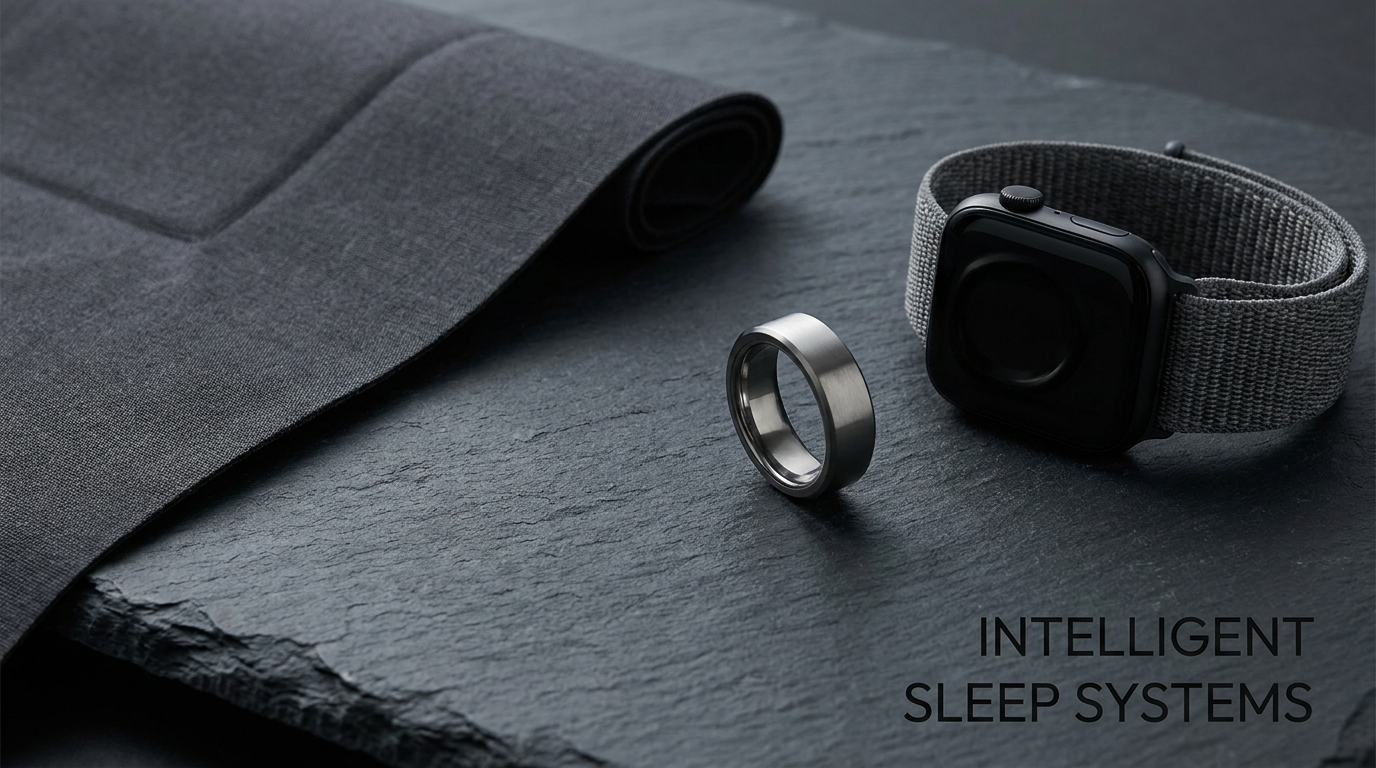
- Wearable Minimalists
- Advocate for smart rings due to their superior nighttime comfort and passive data collection.
- All-in-One Power Users
- Prefer smartwatches for their combined daytime productivity, fitness tracking, and medical alerts.
- Frictionless Sleepers
- Favor under-mattress sensors to avoid wearing any device to bed, prioritizing comfort over granular data.
- Clinical Skeptics
- Emphasize that consumer devices cannot replace polysomnography and warn against sleep-data anxiety.
What's not represented
- · Budget-conscious consumers relying on free smartphone apps
- · Parents tracking infant or toddler sleep patterns
Why this matters
Choosing the right sleep tracker determines whether you actually wear it consistently enough to gather useful data. Understanding the trade-offs between comfort, accuracy, and friction ensures you invest in a tool that improves your rest rather than adding to your daily anxiety.
Key points
- Smart rings offer the highest sleep-stage accuracy due to stable finger placement and high nighttime compliance.
- Smartwatches provide unmatched versatility and FDA-cleared medical alerts, but their bulk can cause tracker fatigue.
- Under-mattress sensors eliminate the need to wear a device entirely, though they sacrifice granular cardiovascular data.
- All consumer wearables rely on algorithmic estimates for sleep staging and cannot replace clinical polysomnography.
- Sleep experts warn that obsessing over daily sleep scores can paradoxically cause insomnia, a condition known as orthosomnia.
With over 100 million wearable sleep trackers sold globally in recent years, the quest for the perfect night of rest has transformed into a data-driven science. By 2026, the market has matured past the clunky, inaccurate pedometers of the previous decade, splitting into three distinct technological ecosystems: smart rings, smartwatches, and under-mattress sensors. Each form factor promises to decode the mysteries of our nocturnal hours, translating tossing and turning into actionable recovery scores. Yet, as the technology has advanced, the choice between these devices has become less about which one is objectively superior and more about a fundamental lifestyle trade-off. Consumers must now weigh the friction of wearing a device against the granularity of the data they desire, navigating a landscape where the pursuit of perfect sleep can sometimes induce more anxiety than relaxation. Understanding the specific strengths, limitations, and clinical evidence behind each approach is essential for turning raw biometric data into genuinely useful health decisions.[5][7]
The foundation of modern consumer sleep tracking relies on a combination of accelerometry to detect movement and photoplethysmography to measure heart rate and blood oxygen levels. By shining a green or red light into the skin and measuring the reflection, these sensors track the microscopic expansion and contraction of capillaries with each heartbeat. This allows modern devices to measure heart rate variability, a crucial metric that indicates whether the nervous system has successfully shifted from daytime stress into nighttime recovery. While early trackers simply guessed when a user was asleep based on a lack of movement, today’s algorithms synthesize temperature, respiration, and cardiovascular data to estimate specific sleep stages, including light, deep, and rapid eye movement sleep. However, the accuracy of these measurements depends entirely on how consistently and closely the sensor maintains contact with the body throughout the night.[4][6]
When evaluating smart rings like the Oura Ring 4 or the Samsung Galaxy Ring, the case for them centers entirely on nighttime compliance and physiological sensor placement. Weighing a mere three to seven grams, rings are virtually unnoticeable, solving the primary issue of tracker fatigue that plagues wrist-bound devices. Because the arteries in the finger are closer to the skin surface and feature a denser capillary network than the wrist, rings capture a remarkably clean optical signal that is less susceptible to motion artifacts when a sleeper rolls over. The case against smart rings involves their lack of real-time utility; without a screen, they cannot deliver daytime notifications, and their active heart-rate tracking during intense exercise generally falls short of dedicated sports watches.[2][6]

The clinical evidence strongly supports the smart ring as the premier overnight wearable. Independent validation studies from 2025 demonstrate that top-tier smart rings achieve roughly a 96 to 98 percent correlation with clinical polysomnography equipment for detecting light, deep, and rapid eye movement sleep stages. Because the ring is held firmly in place by the structure of the finger, it avoids the positional drift that frequently corrupts wrist-based data. Consequently, a smart ring fits well when a user’s primary goal is frictionless, highly accurate overnight recovery tracking, and they prefer a discreet device with a multi-day battery life. It does not fit well for athletes who need real-time pacing data during a marathon or users who want to leave their smartphone at home while staying connected.[1][6]
The clinical evidence strongly supports the smart ring as the premier overnight wearable.
For smartwatches like the Apple Watch Series 11 or the Samsung Galaxy Watch Ultra, the case for adoption is rooted in unmatched, all-in-one versatility. These devices serve as comprehensive health hubs, seamlessly transitioning from tracking a midday cycling session with precision GPS to monitoring overnight respiration. The latest generation of flagship watches also boasts FDA-cleared medical features, including the ability to detect signs of moderate to severe sleep apnea by analyzing breathing disturbances over a thirty-day period. The case against the smartwatch for sleep tracking primarily involves physical comfort and battery logistics. Weighing between forty and eighty grams, watches can feel bulky and restrictive under the covers, leading many users to simply take them off. Furthermore, the power demands of bright screens and cellular connectivity mean that daily charging is often required, frequently forcing users to choose between tracking their sleep or having a full battery for the workday.[2][3]
The evidence regarding smartwatch sleep accuracy reveals a slight compromise in exchange for their broad utility. While they are exceptionally precise at detecting overall sleep versus wakefulness, their sleep-staging correlation with clinical equipment hovers around 85 to 90 percent, slightly trailing smart rings due to the sensor shifting on the wrist during the night. Ultimately, a smartwatch fits well when a consumer wants a single device to manage daytime productivity, track complex active workouts, and monitor baseline overnight health without buying specialized equipment. It does not fit well for individuals with sensory sensitivities who find wristwear irritating in bed, or for those who suffer from battery anxiety and despise the daily ritual of placing their device on a charging puck.[3][6]

The third category, under-mattress sensors like the Withings Sleep Analyzer, offers a radically different approach. The case for these contactless trackers is absolute zero friction. Users simply slip a pneumatic pad beneath their mattress, plug it into the wall, and go to sleep without wearing any electronics on their body. These sensors use advanced ballistocardiography to detect the microscopic mechanical movements of the heart beating and lungs expanding through the mattress layers. The case against mattress sensors is their inherent lack of portability and limited data scope. They cannot travel with the user on business trips or vacations, resulting in frustrating gaps in long-term data trends. Additionally, if a user shares a bed with a restless partner or a large pet, the sensor can sometimes struggle to isolate the primary user's biometric signature, requiring sophisticated algorithmic filtering that isn't always perfect.[2][5]
Clinical evidence shows that under-mattress sensors are highly reliable for tracking total sleep duration, detecting snoring, and identifying severe breathing disturbances, but they fall short of wearables when it comes to granular sleep staging and precise heart rate variability metrics. An under-mattress sensor fits well when a user absolutely refuses to wear a device to bed, experiences tracker fatigue, or simply wants a set-it-and-forget-it solution to monitor broad sleep trends and apnea risks. It does not fit well for frequent travelers, individuals seeking detailed cardiovascular recovery scores to optimize athletic training, or those who want to track their daytime stress and activity levels alongside their nocturnal data.[1][5]

Regardless of the chosen form factor, sleep specialists emphasize a crucial reality check regarding the accuracy of all consumer devices. While modern trackers detect the difference between sleep and wakefulness with greater than 95 percent sensitivity, their ability to perfectly classify deep versus rapid eye movement sleep remains an algorithmic guesstimate. No consumer device can measure brain waves, which is the clinical gold standard used in polysomnography. Clinical skeptics warn that fixating on achieving a perfect sleep score or stressing over a reported lack of deep sleep can paradoxically trigger insomnia—a phenomenon known as orthosomnia. The true value of any sleep tracker lies not in the absolute precision of a single night's data, but in observing behavioral trends over months, empowering users to understand how late meals, alcohol, or consistent bedtimes actually impact their long-term recovery.[4][7]
Viewpoints in depth
Wearable Minimalists
Advocates for smart rings argue that the best sleep tracker is the one you forget you are wearing.
This camp emphasizes that nighttime compliance is the single most important factor in sleep tracking. Because rings weigh only a few grams and lack distracting screens, users are far more likely to wear them consistently. They point to clinical data showing that the finger's dense capillary network provides a superior optical signal for heart rate variability, making rings the undisputed champion for passive, overnight recovery monitoring without the friction of daily charging.
All-in-One Power Users
Supporters of smartwatches prioritize versatile devices that bridge the gap between daytime productivity and nighttime health.
For this group, a dedicated sleep tracker is an unnecessary expense when a flagship smartwatch can do it all. They value the ability to track complex GPS workouts, receive notifications, and monitor sleep with a single device. Furthermore, they highlight the advanced, FDA-cleared medical features available on modern watches, such as sleep apnea detection and electrocardiograms, arguing that the slight drop in sleep-staging accuracy is a worthwhile trade-off for comprehensive, real-time health alerts.
Frictionless Sleepers
Proponents of under-mattress sensors believe that technology should monitor sleep without physically touching the user.
This perspective caters to individuals who suffer from tracker fatigue or sensory sensitivities that make wearing jewelry or watches in bed uncomfortable. By utilizing advanced ballistocardiography from beneath the mattress, these users can gather highly accurate data on total sleep duration and breathing disturbances without altering their nighttime routine. They argue that removing the physical device from the body entirely is the ultimate luxury in health tracking, even if it means sacrificing some granular cardiovascular data.
Clinical Skeptics
Medical professionals and sleep researchers caution against over-relying on consumer algorithms to diagnose sleep quality.
This camp frequently reminds users that no consumer wearable can measure brain waves, which remains the gold standard for clinical polysomnography. They warn that fixating on algorithmic sleep scores or stressing over a perceived lack of deep sleep can induce orthosomnia—an unhealthy obsession with perfect sleep that paradoxically causes insomnia. Instead of treating tracker data as absolute medical truth, they advise using it to identify broad behavioral trends, such as how alcohol consumption or inconsistent bedtimes affect overall resting heart rate.
What we don't know
- How quickly consumer algorithms will improve to match the deep-sleep accuracy of clinical brain-wave monitoring.
- Whether future smart rings will be able to incorporate FDA-cleared sleep apnea detection without sacrificing battery life.
Key terms
- Photoplethysmography (PPG)
- An optical technology that shines light into the skin to measure changes in blood flow, used by wearables to track heart rate.
- Heart Rate Variability (HRV)
- The fluctuation in the time intervals between adjacent heartbeats, serving as a key indicator of physical recovery and nervous system balance.
- Polysomnography (PSG)
- A comprehensive, clinical sleep study that measures brain waves, blood oxygen, heart rate, and breathing, considered the gold standard for sleep analysis.
- Ballistocardiography
- A non-invasive method used by mattress sensors to detect the microscopic mechanical movements of the body caused by the heart beating and blood pumping.
Frequently asked
Which sleep tracker is the most accurate?
For detecting exactly when you fall asleep and wake up, all top-tier devices are highly accurate (over 95%). For identifying specific sleep stages like REM or deep sleep, smart rings currently lead the consumer market due to their stable sensor placement on the finger.
Can a smartwatch diagnose sleep apnea?
While devices like the Apple Watch Series 11 have FDA-cleared features to detect breathing disturbances that suggest moderate to severe sleep apnea, they cannot officially diagnose the condition. They are screening tools designed to prompt a conversation with a doctor.
Do under-mattress sensors work if two people share a bed?
Yes, but with caveats. High-end mattress sensors use algorithms to isolate the primary user's biometric signature, but heavy movement from a partner or a large pet can occasionally introduce noise into the data.
What is orthosomnia?
Orthosomnia is a term coined by researchers to describe an unhealthy obsession with achieving perfect sleep data. Ironically, the anxiety caused by constantly checking sleep scores can make it harder to actually fall asleep.
Sources
Source coverage
7 outlets
4 viewpoints surfaced







[1]Wearable Wellness GuideClinical Skeptics
Sleep Trackers and Therapy Device Guide (2026)
Read on Wearable Wellness Guide →[2]TechRadarAll-in-One Power Users
Best sleep trackers 2026
Read on TechRadar →[3]WareableAll-in-One Power Users
Best sleep trackers 2026: Tested and rated options from our reviews
Read on Wareable →[4]The Better Sleep ClinicClinical Skeptics
Sleep Trackers & Sleep Measurement
Read on The Better Sleep Clinic →[5]Span PostFrictionless Sleepers
Wearables vs. Mattress Sensors vs. Apps: The Core Tradeoffs
Read on Span Post →[6]Joint CorpWearable Minimalists
Smart Ring vs Fitness Tracker vs Smartwatch: Ultimate Comparison 2026
Read on Joint Corp →[7]Factlen Editorial TeamWearable Minimalists
Synthesis by Factlen editorial team
Read on Factlen Editorial Team →



Every angle. Every day.
Get guides stories with full source coverage and perspective breakdowns delivered to your inbox.