
The Emerging Science of Psychobiotics: How Gut Bacteria Are Being Used to Treat Depression
Recent clinical trials and large-scale population studies provide concrete evidence that the gut-brain axis can be targeted to improve mental health. While anxiety results remain mixed, specific probiotic strains are showing consistent benefits as an adjunct therapy for depression.
By Factlen Editorial Team
- Clinical Researchers
- Emphasize rigorous clinical trials, strain specificity, and the role of probiotics as an adjunct therapy.
- Public Health & Dietary Advocates
- Focus on accessible, lifestyle-based interventions like fermented foods to build population-level mental resilience.
- Precision Medicine Pioneers
- Aim to map individual microbiomes to develop highly targeted, personalized psychiatric treatments.
What's not represented
- · Patients with treatment-resistant depression
- · Traditional psychiatrists skeptical of non-pharmacological interventions
Why this matters
With up to 40% of depression patients failing to respond to standard antidepressants, psychobiotics offer a scientifically grounded, low-side-effect alternative. Understanding this connection empowers individuals to actively support their mental resilience through accessible dietary and supplement choices.
Key points
- The gut-brain axis is a bidirectional communication network linking the digestive tract to the central nervous system.
- Psychobiotics are live microorganisms that confer mental health benefits by modulating neuroinflammation and neurotransmitter signaling.
- Large population studies have linked specific bacterial overabundances and depletions to the onset of clinical depression.
- Clinical trials show consistent benefits of probiotics as an adjunct therapy for Major Depressive Disorder, though anxiety results remain mixed.
- Efficacy is highly strain-specific, with Bifidobacterium longum and Lactobacillus rhamnosus showing the most clinical promise.
For decades, the medical consensus viewed depression and anxiety almost exclusively as chemical imbalances originating within the brain. Treatment focused heavily on central neurotransmitter systems, primarily through selective serotonin reuptake inhibitors (SSRIs). However, a paradigm shift is currently sweeping through the biological sciences, redirecting the focus downward to the digestive tract.[7]
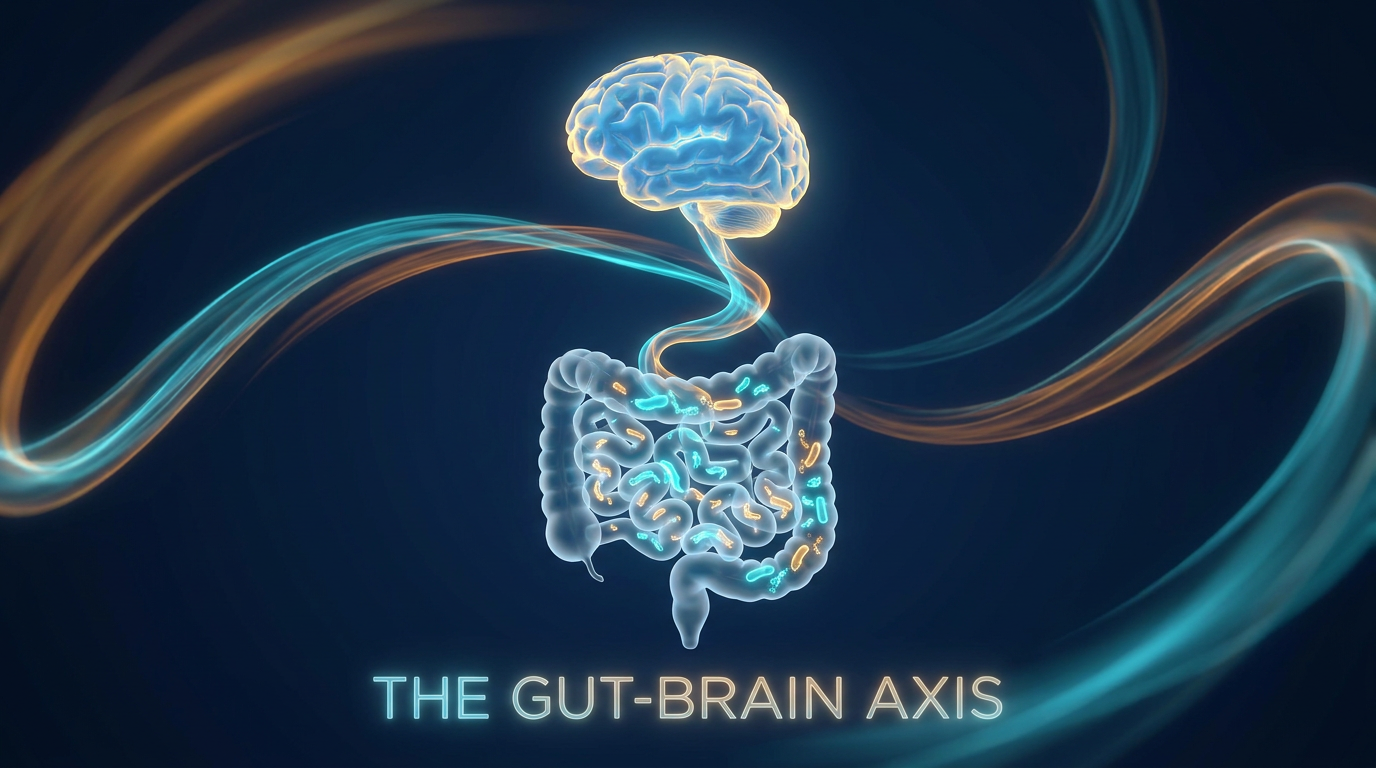
The emerging field centers on the "gut-brain axis," a complex, bidirectional communication network linking the enteric nervous system of the gut with the central nervous system. Researchers are now investigating "psychobiotics"—a specialized class of live microorganisms that, when ingested in adequate amounts, confer measurable mental health benefits.[2]
The scale of the evidence supporting this connection has grown from small animal models to massive human population studies. In a landmark analysis conducted in the Netherlands, researchers examined the fecal microbiomes and mental health surveys of 2,539 adults. The data revealed consistent, robust connections between specific bacterial populations and the presence or absence of depressive symptoms.[1][4]
The microbial signatures of mental health are becoming increasingly precise. The Netherlands study found that an overabundance of the bacterium Eggerthella was strongly linked to depression, while a depleted population of Subdoligranulum correlated with the onset of depressive symptoms. These findings suggest that dysbiosis—a disturbance in the gut microbiome's equilibrium—may be a fundamental driver of psychiatric distress.[1][2][4]

How exactly do microbes residing in the colon influence mood? The mechanisms are multifaceted. Psychobiotics do not merely act locally; they modulate peripheral pathways that communicate directly with the brain. One primary route is the vagus nerve, a major neural highway that transmits signals from the gut to the brainstem.[3]
Furthermore, gut bacteria act as microscopic pharmacies. They synthesize neuroactive metabolites, including short-chain fatty acids (SCFAs), gamma-aminobutyric acid (GABA), and precursors to serotonin. By producing these compounds, the microbiome directly influences the availability of the chemical messengers that regulate emotion and cognition.[3][7]
Inflammation and stress response represent another critical pathway. Psychobiotics have demonstrated the ability to lower cortisol levels and modulate the hypothalamic-pituitary-adrenal (HPA) axis, which governs the body's stress response. By improving the integrity of the intestinal barrier, these beneficial bacteria prevent pro-inflammatory cytokines from entering the bloodstream and triggering neuroinflammation.[2][3]
Inflammation and stress response represent another critical pathway.
The clinical efficacy of psychobiotics is now being rigorously tested. A comprehensive umbrella review of randomized controlled trials evaluated the use of probiotics as an adjunct therapy for depression. The review concluded that probiotic interventions demonstrate consistent, statistically significant benefits for patients with Major Depressive Disorder (MDD).[2]
This is particularly vital given the limitations of current pharmacotherapy. Globally, an estimated 3.8% of the population suffers from depression, yet only 60% to 70% of patients respond adequately to standard antidepressants. Psychobiotics offer a promising, low-side-effect adjunct therapy, especially for treatment-resistant cases.[2]

However, the evidence is not uniformly positive across all psychiatric conditions. While the data for depression is robust, recent systematic reviews found that psychobiotic treatments for anxiety remain markedly inconsistent. In healthy populations with low baseline stress, probiotic interventions often fail to outperform placebos in reducing anxiety symptoms.[3]
Researchers emphasize that efficacy is highly strain-specific. Not all probiotics function as psychobiotics. Strains such as Bifidobacterium longum (specifically M-16 V) and Lactobacillus rhamnosus have shown the most promise in clinical settings, reducing stress-related heart rate responses and improving sleep quality.[3]
The US government is now heavily investing in this frontier. The Advanced Research Projects Agency for Health (ARPA-H) recently launched the "GUT-FEELINGS" project, a major initiative aimed at identifying non-pharmacological microbiome-modulating interventions. The project utilizes large-scale, decentralized clinical trials to target the gut-brain axis for precision mental health.[5]

Similar clinical trials are underway globally, examining the relationship between medical body health, mental health, and digestive microbes in patients with serious mental illnesses. These studies aim to map the exact correlations between blood biomarkers, gut taxa, and cognitive function.[6]
Beyond targeted supplements, everyday dietary choices play a foundational role. Diets rich in prebiotics—the fibers that feed beneficial bacteria—and fermented foods have been shown to enhance microbial stability and lower perceived stress levels. This empowers individuals to actively support their mental resilience through accessible nutritional changes.[3][4]
The integration of psychobiotics into conventional care models represents a step toward more personalized, gut-targeted psychiatry. While they are not a standalone cure, the growing evidence pack confirms that tending to our microbial ecosystems is a vital, scientifically grounded strategy for cultivating mental well-being.[7]
How we got here
2013
The term 'psychobiotics' is first coined by researchers to describe microbes with potential psychiatric benefits.
2022
Large population studies begin confirming specific bacterial signatures linked to clinical depression.
2024
Umbrella reviews of clinical trials confirm the consistent benefits of probiotics as an adjunct therapy for Major Depressive Disorder.
2025
The US ARPA-H agency launches the GUT-FEELINGS project to fund large-scale precision mental health trials based on the microbiome.
Viewpoints in depth
Clinical Researchers
Focus on rigorous RCTs, strain specificity, and the need for more data before replacing standard antidepressants.
Clinical researchers emphasize that while the gut-brain connection is undeniable, translating this into reliable therapies requires rigorous, double-blind randomized controlled trials. They caution against the over-commercialization of generic probiotics, stressing that efficacy is highly strain-specific. Their primary goal is to establish standardized dosages and identify which specific bacterial strains can reliably serve as adjunct therapies for patients who do not respond to traditional SSRIs.
Public Health & Dietary Advocates
Focus on accessible, low-cost interventions like fermented foods and prebiotics to build population-level resilience.
Public health experts view the gut-brain axis as an opportunity for preventive, population-level mental health care. Rather than focusing solely on engineered probiotic pills, this camp advocates for dietary shifts—specifically increasing the intake of prebiotics and fermented foods. They argue that empowering individuals to cultivate a healthy microbiome through accessible, everyday nutrition is a highly cost-effective strategy for reducing the societal burden of stress and mild depression.
Precision Medicine Pioneers
Focus on mapping individual microbiomes to tailor specific psychobiotic cocktails for targeted psychiatric treatment.
Pioneers in precision medicine, backed by initiatives like ARPA-H, envision a future where psychiatric care begins with a stool sample. Because every individual's microbiome is unique, they argue that broad-spectrum probiotics will always yield mixed results. By mapping a patient's specific dysbiosis, these researchers aim to develop highly personalized psychobiotic interventions that target exact metabolic deficiencies, moving psychiatry away from trial-and-error prescribing.
What we don't know
- Whether psychobiotics can be used as a primary, standalone treatment for severe depression, rather than just an adjunct therapy.
- The exact dosages and treatment durations required to achieve lasting changes in the microbiome.
- Why psychobiotic interventions show consistent benefits for depression but highly inconsistent results for anxiety.
Key terms
- Gut-Brain Axis
- The bidirectional communication network linking the enteric nervous system of the digestive tract with the central nervous system.
- Psychobiotics
- Live microorganisms that confer mental health benefits to the host when consumed in adequate amounts.
- Dysbiosis
- An imbalance or disturbance in the natural equilibrium of the gut microbiome, often linked to inflammation and disease.
- Vagus Nerve
- A major neural highway that transmits signals directly from the digestive system to the brainstem.
- Short-Chain Fatty Acids (SCFAs)
- Neuroactive metabolites produced by gut bacteria that help regulate inflammation and brain function.
Frequently asked
What are psychobiotics?
Psychobiotics are specialized strains of live bacteria (probiotics) that, when ingested in adequate amounts, confer measurable mental health benefits by interacting with the gut-brain axis.
Can probiotics replace my antidepressants?
No. Current clinical guidelines view psychobiotics as a promising adjunct (add-on) therapy, particularly for treatment-resistant cases, rather than a standalone replacement for prescribed medication.
Which probiotic strains are best for mental health?
Research highlights specific strains like Bifidobacterium longum and Lactobacillus rhamnosus as having the most robust clinical evidence for reducing stress and depressive symptoms.
Does diet affect the gut-brain axis?
Yes. Diets rich in prebiotics (fibers that feed beneficial bacteria) and fermented foods have been shown to enhance microbial stability and lower perceived stress levels.
Sources
Source coverage
7 outlets
3 viewpoints surfaced







[1]Nature CommunicationsClinical Researchers
The gut microbiome and depression: a population-based study
Read on Nature Communications →[2]Nutrients JournalClinical Researchers
Psychobiotics in the Management of Depressive Disorders: A Review
Read on Nutrients Journal →[3]Frontiers in NutritionClinical Researchers
Psychobiotics and Mental Health: A Systematic Review of Clinical Trials
Read on Frontiers in Nutrition →[4]UCLA HealthPublic Health & Dietary Advocates
Ask the Doctors: Gut microbiome linked to depression
Read on UCLA Health →[5]ARPA-HPrecision Medicine Pioneers
GUT-FEELINGS: Using Citizen Science for Large-Scale Microbiome Clinical Trials
Read on ARPA-H →[6]ClinicalTrials.govPrecision Medicine Pioneers
Microbiome and the Gut-Brain Axis in Serious Mental Illness
Read on ClinicalTrials.gov →[7]Factlen Editorial TeamPublic Health & Dietary Advocates
Synthesis by Factlen editorial team
Read on Factlen Editorial Team →

More in science
See all 5 stories →


Every angle. Every day.
Get science stories with full source coverage and perspective breakdowns delivered to your inbox.