
How 13-Centimeter Fence Gaps Are Rewiring Urban Biodiversity
A growing body of evidence shows that "micro-corridors"—tiny, intentional pathways between private properties—are highly effective at reversing habitat fragmentation and sustaining urban wildlife.
By Factlen Editorial Team
- Urban Ecologists
- Argue that landscape permeability is the most critical factor in urban biodiversity, prioritizing connectivity over isolated habitat quality.
- Citizen Conservationists
- Believe that grassroots, community-led actions—like cutting holes in private fences—are the most effective way to rapidly scale wildlife networks.
- Municipal Planners
- Focus on formalizing green infrastructure through policy, valuing corridors for their human co-benefits like heat reduction and stormwater management.
What's not represented
- · Property Developers
- · Domestic Pet Owners
Why this matters
As cities expand, traditional conservation methods are failing to protect local wildlife. Understanding how small, community-led modifications can restore ecological networks empowers residents to directly improve biodiversity in their own backyards.
Key points
- Urbanization and solid fencing have severely fragmented habitats, leading to localized wildlife population declines.
- Micro-corridors, such as 13-centimeter fence gaps, restore ecological permeability and allow animals to forage safely.
- Grassroots campaigns have successfully created over 120,000 of these pathways in the UK alone.
- Studies show a 39% increase in hedgehog sightings in gardens after the implementation of micro-corridors.
- The concept also benefits birds and insects through "aerial corridors" like connected balcony planters.
- Poorly designed corridors can act as ecological traps, highlighting the need for strategic placement.
For decades, the prevailing model of wildlife conservation has centered on protecting massive, isolated tracts of wilderness. However, as global urbanization accelerates, biologists and urban ecologists are increasingly focusing on a different scale of intervention: the "micro-corridor." Rather than relying solely on large nature reserves, this emerging paradigm seeks to weave ecological permeability directly into the fabric of densely populated cities. By strategically connecting fragmented patches of green space—such as private gardens, railway embankments, and cemetery borders—communities are creating functional networks that allow wildlife to navigate the concrete jungle. This shift in focus acknowledges that the key to sustaining urban biodiversity lies not just in enriching individual habitats, but in building bridges between them, transforming isolated oases into a continuous, life-sustaining web.[3][7]
The biological imperative for these corridors stems from the severe impacts of habitat fragmentation. As cities expand, infrastructure such as solid wooden fences, concrete gravel boards, and multi-lane roads carve up once-continuous landscapes into isolated ecological islands. For many terrestrial species, these barriers restrict movement, limit access to foraging grounds, and severely curtail mating opportunities. Over time, this isolation leads to a loss of genetic diversity and makes local populations highly vulnerable to localized extinction. In the United Kingdom, for instance, the West European hedgehog has experienced marked population declines, driven in part by the increasing impenetrability of suburban boundaries that prevent them from roaming the distances required to survive.[2][5][6]
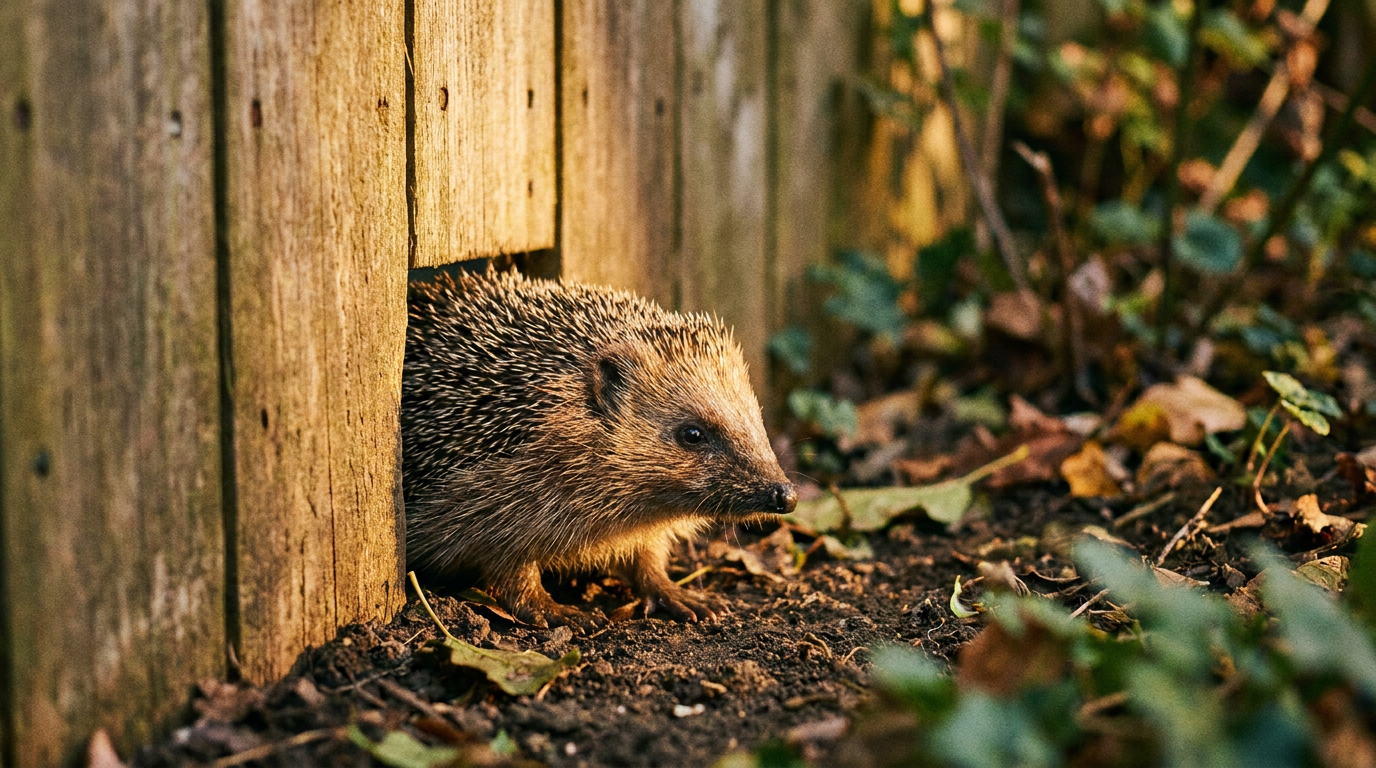
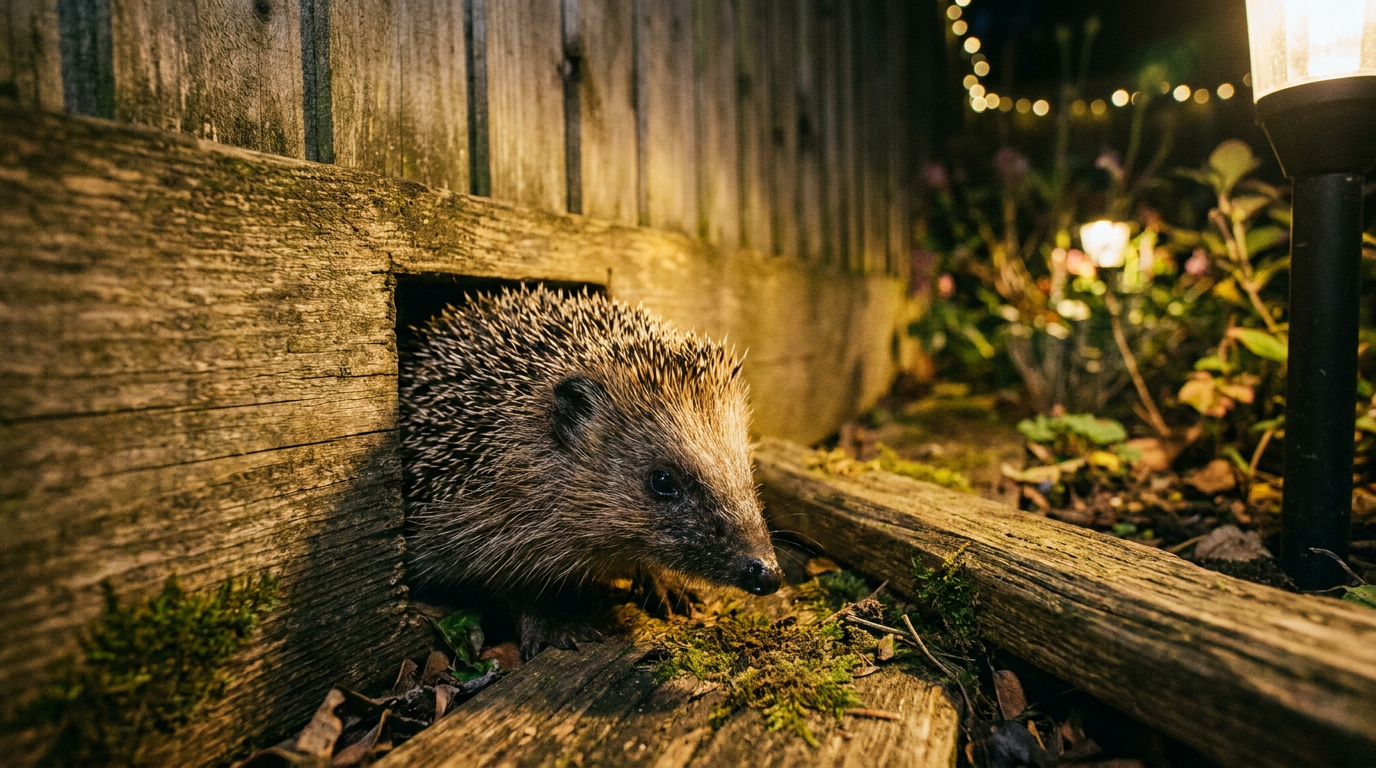
A micro-corridor directly addresses this fragmentation through small, intentional modifications to the built environment. The mechanism is elegantly simple: by creating a gap as small as 13 centimeters at the base of a garden fence, residents can instantly transform an impassable barrier into a permeable gateway. These tiny access points allow small mammals, amphibians, and invertebrates to move freely between properties without having to navigate dangerous roads. When multiplied across a neighborhood, these individual gaps link together to form a continuous network, effectively expanding the functional habitat available to urban wildlife by orders of magnitude and allowing natural foraging behaviors to resume.[1][7]

The most prominent real-world application of this concept is the UK's "Hedgehog Highway" initiative. Recent coverage by BBC News highlighted the success of these tiny highways in helping London's hedgehogs safely traverse the capital. The grassroots campaign, spearheaded by conservation groups, encourages citizens to cut small holes in their fences and log their locations on a national map. To date, volunteers have created an estimated 120,000 such highways across the country, demonstrating how decentralized, community-led actions can yield landscape-scale ecological benefits. This massive public engagement effort proves that significant conservation milestones can be achieved without relying solely on state-funded infrastructure projects.[1][2][6]
The empirical evidence supporting the efficacy of these micro-corridors is highly encouraging. Studies monitoring urban hedgehog populations before and after the installation of fence gaps have recorded significant increases in animal activity. In one targeted study area, researchers documented a 39 percent increase in hedgehog sightings and a 21 percent increase in the number of gardens showing evidence of active hedgehog access points. By reducing the need for these animals to make perilous road crossings, the corridors directly lower mortality rates while simultaneously expanding their foraging territories and genetic pool, providing a measurable boost to local population health.[2][6]

However, the true power of the micro-corridor lies in the network effect, which requires coordinated action beyond individual properties. Research published in PLOS ONE analyzed the connectivity of over 11,000 garden boundaries and found that while individual highways are beneficial, their impact is maximized only when entire streets participate. The study revealed that many highways were created in boundaries that were already traversable via natural holes, and that true landscape permeability requires a strategic, neighborhood-wide approach to eliminate ecological "blind spots." A single connected garden is a refuge, but a connected street is a functional ecosystem.[2][7]
However, the true power of the micro-corridor lies in the network effect, which requires coordinated action beyond individual properties.
While hedgehogs serve as the flagship species for this movement, the biological benefits of micro-corridors extend to a wide array of urban fauna. Research detailed in the Canadian Field-Naturalist documented the use of narrow, linear corridors by eastern coyotes in heavily urbanized areas of Boston. The study found that these larger mammals actively utilized micro-corridors—such as railroad lines and holes in cemetery fences—to navigate the dense urban matrix. This highlights that even apex predators rely on these subtle infrastructural features to maintain functional territories within city limits, proving the concept's viability across different scales of wildlife.[4]
Avian and invertebrate populations also reap substantial rewards from enhanced urban connectivity. Continuous lines of dense shrubs, native flower beds, and even coordinated balcony planters can function as "pollinator paths" or aerial micro-corridors. These vegetated linkages facilitate the movement of bees, butterflies, and birds across the urban canopy, supporting the vital dispersal of seeds and pollen. By reducing the isolating effects of habitat fragmentation, these green corridors help maintain the genetic diversity of urban bird populations and decrease the likelihood of fatal collisions with buildings, creating a safer airspace for migratory and resident species alike.[5][7]

The concept of urban permeability is now expanding beyond physical gaps in fences to include the very materials used in city construction. Urban ecologists are increasingly exploring "bioreceptive" building materials—such as porous ceramics or bio-derived composites—that are deliberately engineered to promote the colonization of mosses, lichens, and microorganisms. These living surfaces act as ecological stepping stones, integrating biological functions directly into architectural structures. By turning sterile walls into micro-habitats, cities can further blur the line between the built environment and natural ecosystems, embedding conservation into the very foundations of urban development.[3]
The proliferation of these green and blue infrastructure networks also delivers measurable co-benefits for human residents. Studies in Landscape and Urban Planning confirm that well-designed urban green spaces and corridors significantly improve local air quality, mitigate the urban heat island effect, and enhance stormwater management. Furthermore, the presence of thriving wildlife and accessible nature within city limits has been strongly linked to improved mental health, reduced stress, and a deeper sense of environmental stewardship among urban populations. In this way, designing cities for wildlife inherently makes them more livable for humans.[5][7]
Despite these clear advantages, the implementation of micro-corridors is not without its scientific and practical uncertainties. Ecologists warn that poorly designed corridors can inadvertently function as "ecological traps." If a corridor funnels wildlife into areas with high predation risks, heavy pesticide use, or dense vehicular traffic, it may actually increase mortality rates rather than alleviate them. Consequently, the strategic placement and ecological suitability of these pathways are critical variables. Conservationists must ensure that corridors lead to safe, resource-rich habitats rather than dead ends, requiring ongoing monitoring and adaptive management to guarantee their success.[3][7]
On a practical level, the primary obstacle to scaling these networks is human coordination. The PLOS ONE survey data indicated that the most common barriers to creating hedgehog highways were concerns over boundary ownership and a reluctance to communicate with neighbors. Because property lines are inherently shared spaces, establishing a functional micro-corridor requires a degree of social cohesion and collective agreement that can be difficult to achieve in highly atomized urban environments. Overcoming this requires shifting the cultural mindset from viewing fences as absolute barriers to seeing them as shared ecological responsibilities.[2][6]

To overcome these hurdles, conservationists emphasize the need for targeted public engagement and supportive municipal policies. Local governments are increasingly recognizing the value of ecological connectivity, with some councils incorporating biodiversity mandates and wildlife-friendly design principles into their official green plans. By formalizing these concepts in urban planning documents, municipalities can incentivize developers and homeowners to prioritize permeability from the outset. Shifting the narrative from isolated garden conservation to collaborative landscape management empowers residents to view their private spaces as vital nodes in a much larger, life-sustaining web.[1][7]
Ultimately, the science of micro-corridors represents a profound evolution in urban ecology. It proves that supporting robust biodiversity does not always require vast tracts of untouched wilderness; sometimes, it simply requires a 13-centimeter hole in a fence. As urbanization continues to reshape the planet, these tiny, intentional pathways offer a scientifically grounded, community-driven blueprint for weaving nature back into the heart of our cities. By embracing permeability, we can ensure that both human and wildlife populations thrive in tandem, creating resilient urban ecosystems for the future.[1][7]
How we got here
2011
The 'Hedgehog Street' campaign launches in the UK to combat severe population declines through community action.
2019
Ecological research highlights that impenetrable urban boundaries are a primary driver of habitat fragmentation for small mammals.
2021
Studies confirm that community-led micro-corridors significantly increase local wildlife sightings and foraging ranges.
June 2026
Local councils increasingly adopt formal green plans mandating wildlife connectivity in urban development.
Viewpoints in depth
Urban Ecologists
Prioritize landscape permeability and genetic diversity over isolated habitat quality.
From an ecological standpoint, a perfectly manicured, resource-rich garden is functionally useless if wildlife cannot access it. Urban ecologists argue that the primary focus of city conservation must be connectivity. By studying the movement patterns of species ranging from insects to coyotes, they emphasize that genetic diversity and population resilience depend entirely on the ability of animals to roam, forage, and mate across wide territories. To this camp, a network of mediocre habitats is vastly superior to a single, isolated oasis.
Citizen Conservationists
Believe that grassroots, community-led actions are the most effective way to rapidly scale wildlife networks.
Volunteer groups and citizen scientists champion the micro-corridor as a democratizing force in conservation. They argue that waiting for large-scale municipal infrastructure projects is too slow to halt biodiversity loss. Instead, they focus on the immediate, tangible impact of individual actions—like cutting a hole in a fence or planting a native shrub. This perspective values community engagement and education, viewing every homeowner as an active participant in a decentralized, landscape-scale ecological restoration project.
Municipal Planners
Focus on integrating green infrastructure into formal policy to balance biodiversity with human co-benefits.
For city planners and local governments, micro-corridors are part of a broader strategy to build resilient urban environments. While they recognize the intrinsic value of biodiversity, they often justify these initiatives through their human co-benefits. Planners emphasize that vegetated corridors, green roofs, and permeable boundaries also serve to mitigate the urban heat island effect, manage stormwater runoff, and improve public health. Their goal is to formalize these practices into building codes and zoning laws, ensuring that future development inherently supports ecological connectivity.
What we don't know
- The exact threshold of neighborhood participation required to achieve maximum ecological benefit from a micro-corridor network.
- How the long-term use of bioreceptive building materials will impact the structural integrity of urban architecture.
- The full extent to which micro-corridors might inadvertently facilitate the spread of urban diseases or invasive species.
Key terms
- Micro-corridor
- A small, narrow pathway—such as a fence gap or vegetated strip—that allows wildlife to move safely between fragmented urban habitats.
- Habitat fragmentation
- The process by which large, continuous habitats are divided into smaller, isolated patches, typically by human infrastructure.
- Ecological trap
- A low-quality habitat that animals are attracted to, which ultimately reduces their survival or reproduction rates.
- Bioreceptive materials
- Construction materials deliberately engineered to promote the growth of mosses, lichens, and other beneficial microorganisms.
- Permeability
- In ecology, the degree to which a landscape allows for the safe movement of organisms across it.
Frequently asked
How big does a hole need to be for a hedgehog?
A gap of 13 centimeters (about 5 inches) square is sufficient for a hedgehog to pass through while keeping most domestic pets contained.
Do micro-corridors only benefit hedgehogs?
No. While hedgehogs are a flagship species, these corridors also support amphibians, reptiles, insects, and even larger mammals like urban coyotes.
Can a poorly placed corridor harm wildlife?
Yes. If a corridor funnels animals toward busy roads, predators, or areas with heavy pesticide use, it can act as an "ecological trap" that increases mortality.
How can I create an aerial corridor?
Residents without ground-level gardens can create aerial corridors by aligning balcony planters with native flowers, providing stepping stones for birds and pollinators.
Sources
Source coverage
7 outlets
3 viewpoints surfaced







[1]BBC NewsMunicipal Planners
The tiny highway helping the capital's hedgehogs
Read on BBC News →[2]PLOS ONECitizen Conservationists
Hedgehog Street: A public engagement campaign aimed at recruiting volunteers to create access points across garden boundaries
Read on PLOS ONE →[3]Frontiers in Ecology and EvolutionUrban Ecologists
Micro-ecologies of the city: Urban infrastructure as multispecies habitat
Read on Frontiers in Ecology and Evolution →[4]Canadian Field-NaturalistUrban Ecologists
Use of 'micro-corridors' by eastern Coyotes, Canis latrans, in a heavily urbanized area
Read on Canadian Field-Naturalist →[5]Landscape and Urban PlanningMunicipal Planners
Relative importance of quantitative and qualitative aspects of urban green spaces in promoting health and biodiversity
Read on Landscape and Urban Planning →[6]People's Trust for Endangered SpeciesCitizen Conservationists
Communities need to work together to protect hedgehogs
Read on People's Trust for Endangered Species →[7]Factlen Editorial Team
Synthesis by Factlen editorial team
Read on Factlen Editorial Team →

More in science
See all 5 stories →

Every angle. Every day.
Get science stories with full source coverage and perspective breakdowns delivered to your inbox.