
Heat Pump vs. Vented Dryers: The Complete 2026 Cost and Performance Breakdown
As utility rates rise and energy rebates expand, heat pump dryers offer massive efficiency gains over traditional vented models, but the upfront costs and longer drying times require a careful trade-off analysis.
By Factlen Editorial Team
- Efficiency Advocates
- Focus on the lifetime savings, carbon footprint reduction, and fabric preservation.
- Budget-Focused Shoppers
- Focus on the immediate out-of-pocket expense, the reliability of older tech, and the speed of getting laundry done.
- Appliance Technicians
- Focus on the mechanical complexity of heat pumps, the necessity of cleaning secondary filters, and the elimination of dangerous lint buildup in wall ducts.
What's not represented
- · Landlords and property developers weighing the upfront installation costs of venting infrastructure versus providing premium ventless appliances.
Why this matters
Choosing the right dryer in 2026 is no longer just about convenience; it is a major financial decision that impacts your monthly utility bills, your home's carbon footprint, and the lifespan of your wardrobe.
Key points
- Heat pump dryers use a closed-loop refrigeration system to recycle warm air, cutting energy use by 28 to 60 percent.
- Traditional vented dryers are cheaper upfront and dry clothes faster, but they waste energy by expelling heated air outside.
- The lower operating temperatures of heat pump dryers (110–140°F) are significantly gentler on fabrics, reducing shrinkage and wear.
- Because they are ventless, heat pump dryers can be installed in closets, apartments, or interior rooms without exterior wall access.
- Government rebates, such as the US Home Energy Rebates Program, can offset the higher purchase price of a heat pump dryer by up to $840.
- Vented dryers remain a practical choice for households with tight immediate budgets, low laundry volume, and existing clean ductwork.
For decades, the laundry room has been dominated by a single, undisputed champion: the traditional vented dryer. It is a familiar appliance that reliably blasts hot air through tumbling clothes and expels the moisture outside. However, as electricity rates climb and environmental awareness deepens in 2026, a fundamentally different technology is rapidly gaining ground. The heat pump dryer, long popular in Europe, has matured into a mainstream option for North American and Australian households. Promising massive energy savings, gentler fabric care, and flexible installation, the heat pump dryer represents a complete reimagining of how we dry our clothes. Yet, this innovation comes with a steeper upfront price tag and a shift in laundry habits. For consumers standing in the appliance aisle, the choice between sticking with the tried-and-true vented model or investing in a modern heat pump unit requires a careful analysis of long-term costs, household routines, and spatial constraints.[7]
To understand the trade-offs, it is essential to first examine the baseline. These traditional machines operate essentially like giant hair dryers: they pull in ambient air from the laundry room, heat it using electric coils or a gas burner, and force it through the wet garments. The resulting hot, humid air is then pushed out of the house through an external exhaust duct. Because they use high heat—often reaching between 125 and 175 degrees Fahrenheit—vented dryers excel at rapid evaporation. The case for the traditional vented dryer rests heavily on its simplicity, speed, and low initial cost. A standard load can easily be finished in 45 to 60 minutes, making it ideal for large families managing mountains of weekend laundry. Furthermore, the technology is mechanically straightforward, which keeps manufacturing costs low and makes repairs relatively inexpensive. For a household that needs to power through multiple loads of heavy towels in a single afternoon, the vented dryer remains an incredibly effective tool.[2][4][5]
However, the argument against the vented dryer centers on its sheer inefficiency. By constantly drawing in conditioned room air, heating it, and immediately throwing it outside, vented models are notorious energy hogs. In fact, they are often the second most energy-intensive appliance in a home, trailing only the HVAC system. Over a year of regular use, this open-loop process consumes between 700 and 1,000 kilowatt-hours of electricity, driving up monthly utility bills significantly. There are also hidden costs to the vented design. Every time a vented dryer runs in the winter, it expels warm indoor air, forcing the home's heating system to work harder to replace it. Additionally, the high temperatures required for fast drying can be brutal on fabrics, leading to premature wear, fading, and shrinkage. Finally, the absolute requirement for an external vent severely limits where the machine can be installed and introduces the ongoing maintenance chore of cleaning the ductwork to prevent lint buildup and fire hazards.[4][5][6]

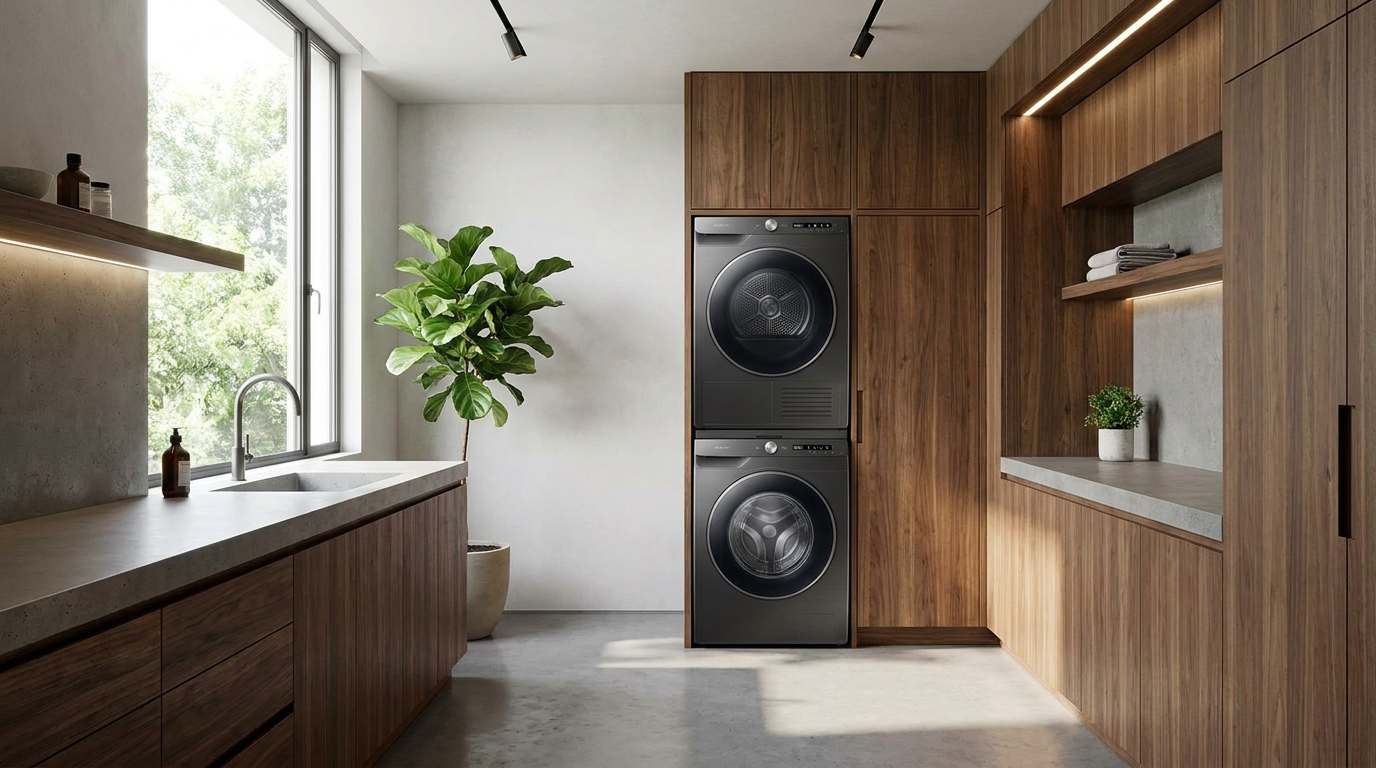
Enter the challenger: the heat pump dryer. The case for the heat pump model is built entirely around its revolutionary closed-loop efficiency. Instead of venting air outside, these machines use a refrigeration cycle—much like an air conditioner running in reverse. The dryer heats the air and passes it through the tumbling clothes to absorb moisture, keeping all the thermal energy contained within the appliance itself. The mechanics of this closed-loop system are elegantly efficient. Rather than exhausting the humid air, the machine pushes it through a cold evaporator coil. The sudden temperature drop causes the moisture to condense into liquid water, which is either collected in a removable tank or pumped directly down a drain. The now-dry air is reheated by the condenser coil and sent back into the drum to continue the cycle, wasting almost zero ambient heat.[1][4][6]
The case for the heat pump model is built entirely around its revolutionary closed-loop efficiency.
Because it recycles its own heat, an Energy Star certified heat pump dryer uses 28 to 60 percent less electricity than a standard vented model. This drastically lowers utility bills and reduces the home's overall carbon footprint. For eco-conscious consumers, eliminating the need to burn natural gas or draw massive amounts of grid power for laundry is a major step toward a fully electrified, sustainable household. The evidence supporting the financial benefits of heat pump technology is substantial. According to data from Energy Star and appliance experts, households that switch to a heat pump dryer can expect to save between $130 and $175 annually on their electricity bills, depending on local utility rates. In regions with high energy costs, the savings accumulate even faster, easily offsetting the higher purchase price over the appliance's lifespan.[1][4]

Furthermore, the financial equation in 2026 is heavily influenced by government incentives. In the United States, the Home Energy Rebates Program, funded by the Inflation Reduction Act, provides point-of-sale discounts of up to $840 for qualifying low- and moderate-income households that install an Energy Star certified heat pump dryer. When these rebates are factored in, the lifetime total cost of ownership for a heat pump dryer almost always undercuts that of a traditional vented model. Even without top-tier rebates, the steady accumulation of monthly energy savings means that the break-even point for a heat pump dryer typically arrives within three to five years of regular use, making it a highly rational long-term investment for homeowners.[6][7]
Beyond energy savings, the heat pump dryer offers significant advantages in fabric care and installation flexibility. Because the system relies on dehumidification rather than brute-force heat, these machines operate at much lower temperatures—typically between 110 and 140 degrees Fahrenheit. This gentler approach preserves the elasticity of activewear, prevents wool from shrinking, and extends the overall lifespan of a wardrobe. Additionally, the ventless design is a game-changer for home renovations and apartment living. Without the need to punch a hole in an exterior wall, a heat pump dryer can be installed in a hallway closet, a kitchen under-counter space, or an interior bathroom. As long as there is a standard electrical outlet and a way to manage the condensed water, the appliance can seamlessly integrate into floor plans that would completely reject a vented machine.[3][4][5]

Conversely, the case against the heat pump dryer focuses on its higher upfront purchase price, longer cycle times, and specific maintenance needs. Even with rebates, the sticker price of a heat pump model is typically $600 to $800 higher than a basic vented unit. More noticeably, the gentler drying temperatures mean that laundry takes longer. A load that a vented dryer finishes in 45 minutes might take 75 to 90 minutes in a heat pump model, requiring households to adjust their laundry rhythms. Finally, while heat pump owners never have to clean a wall duct, they must regularly clean a secondary condenser filter located at the bottom of the machine to ensure the heat exchanger coils remain free of lint and operate at peak efficiency.[2][4]

Ultimately, the heat pump dryer fits exceptionally well when a family does laundry frequently, faces high local electricity rates, or wants to reduce their environmental impact. It is the undisputed choice for homes without existing exterior vents and anyone who prioritizes the longevity of their clothing. On the other hand, the traditional vented dryer still fits well when a household has a tight upfront budget, only does laundry occasionally, and prioritizes getting multiple loads dried as quickly as possible. For buyers who plan to stay in their current home for several years, the long-term utility savings and available government rebates make the heat pump dryer a financially sound and highly sustainable investment that modernizes the laundry experience.[5][7]
How we got here
Early 2000s
Heat pump dryers begin gaining widespread adoption in Europe due to high energy costs and strict efficiency regulations.
2014
The first major wave of heat pump dryers is introduced to the North American market, though initial adoption is slow due to high prices.
2022
The US passes the Inflation Reduction Act, allocating billions for point-of-sale rebates on high-efficiency electric appliances, including heat pump dryers.
2024-2025
Major appliance brands expand their heat pump dryer lineups, offering larger drum capacities that appeal to North American and Australian consumers.
2026
Heat pump dryers reach mainstream viability as utility rates rise and state-level rebate programs become fully accessible to consumers.
Viewpoints in depth
Efficiency Advocates
Focus on the lifetime savings, carbon footprint reduction, and fabric preservation.
This camp argues that the traditional vented dryer is an outdated energy drain that has no place in a modern, electrified home. By pointing to data from Energy Star and state energy authorities, they emphasize that the 28 to 60 percent reduction in electricity usage not only slashes utility bills but significantly lowers a household's carbon footprint. Furthermore, they highlight that the gentler, lower-temperature drying process protects expensive clothing from heat damage, adding a hidden layer of financial savings by extending the life of a wardrobe.
Budget-Focused Shoppers
Focus on the immediate out-of-pocket expense, the reliability of older tech, and the speed of getting laundry done.
For this group, the upfront premium of a heat pump dryer—often $600 to $800 more than a standard model—is a difficult hurdle, especially for renters or those who don't plan to stay in their current home long enough to see the break-even point. They argue that if a home already has a clean, functioning exhaust vent, a traditional dryer offers unbeatable value and speed. The ability to dry a heavy load of towels in 45 minutes is seen as a practical necessity for large, busy families who cannot afford to wait 90 minutes per cycle.
Appliance Technicians
Focus on the mechanical complexity of heat pumps, the necessity of cleaning secondary filters, and the elimination of dangerous lint buildup in wall ducts.
Technicians view the debate through the lens of maintenance and longevity. On one hand, they praise heat pump dryers for eliminating the need for external wall ducts, which are notorious for accumulating lint and causing devastating house fires when neglected. On the other hand, they caution that heat pump systems are mechanically complex refrigeration units that require specialized service if they break. They also stress that owners must be diligent about cleaning the secondary condenser filter; failing to do so can choke the machine's airflow, drastically increasing drying times and potentially damaging the compressor.
What we don't know
- How quickly manufacturing scale will bring the baseline price of heat pump dryers down to match traditional vented models.
- Whether future building codes in more regions will outright ban the installation of new vented dryers to meet emission standards.
Key terms
- Heat Pump Dryer
- A ventless dryer that uses a closed-loop refrigeration system to heat air, extract moisture from clothes, and recycle the warm air.
- Vented Dryer
- A traditional dryer that draws in room air, heats it, passes it through tumbling clothes, and exhausts the hot, moist air outside through a duct.
- Condenser Filter
- A secondary filter in heat pump dryers that protects the heat exchanger coils from fine lint and must be cleaned regularly.
- Closed-Loop System
- An airflow system that continuously recirculates the same air rather than pulling in fresh air and expelling it, maximizing energy efficiency.
Frequently asked
Do heat pump dryers take longer to dry clothes?
Yes. Because they operate at lower, gentler temperatures, a load that takes 45 minutes in a vented dryer will typically take 75 to 90 minutes in a heat pump model.
Can I install a heat pump dryer anywhere?
Yes. Because they are ventless, they can be installed in closets, apartments, or interior rooms, requiring only a standard power outlet and a way to drain the condensed water.
Are there government rebates for buying a heat pump dryer?
In the US, the Home Energy Rebates Program offers up to $840 for installing an Energy Star certified heat pump dryer, depending on household income and state implementation.
Do heat pump dryers require special maintenance?
Yes. Owners must regularly empty the water collection tank (if it isn't plumbed to a drain) and routinely clean a secondary condenser filter to keep the machine running efficiently.
Sources
Source coverage
7 outlets
3 viewpoints surfaced







[1]Energy StarEfficiency Advocates
Heat Pump Clothes Dryers and Energy Efficiency
Read on Energy Star →[2]Consumer ReportsBudget-Focused Shoppers
Clothes Dryer Buying Guide
Read on Consumer Reports →[3]Choice AustraliaEfficiency Advocates
Are heat pump dryers worth the money?
Read on Choice Australia →[4]Yale ApplianceAppliance Technicians
Heat Pump vs. Vented Dryers: Which Is Better?
Read on Yale Appliance →[5]The Good GuysBudget-Focused Shoppers
Heat Pump Dryer vs Vented: which type is right for you?
Read on The Good Guys →[6]NY State Energy ResearchEfficiency Advocates
Save Energy and Money With Heat Pump Dryers
Read on NY State Energy Research →[7]Factlen Editorial TeamEfficiency Advocates
Synthesis by Factlen editorial team
Read on Factlen Editorial Team →

Every angle. Every day.
Get shopping stories with full source coverage and perspective breakdowns delivered to your inbox.