
Michael J. Fox Foundation and ASAP Launch $261 Million Push to Decode Parkinson's Biology
A massive $261 million investment aims to map the biological blueprint of Parkinson's disease and accelerate personalized treatments. The funding expands a global research network designed to break down scientific silos and decode why the disease varies so widely among patients.
By Factlen Editorial Team
- Open Science Advocates
- This camp argues that breaking down institutional silos and sharing data freely is the fastest way to cure complex diseases.
- Precision Medicine Researchers
- This viewpoint emphasizes that Parkinson's is not a single disease and must be treated based on individual biological profiles.
- Clinical Translation Focus
- This perspective prioritizes moving laboratory discoveries into human trials as quickly and safely as possible.
What's not represented
- · Patients in developing nations with limited trial access
- · Independent biotech startups outside the CRN network
Why this matters
By breaking down traditional scientific silos and funding standardized, open-source research tools, this initiative drastically shortens the timeline from laboratory discovery to actual clinical treatments. For the millions affected by Parkinson's, it represents a concrete step toward personalized therapies that target the disease's root causes rather than just its symptoms.
Key points
- ASAP and the Michael J. Fox Foundation announced $261 million to expand the Collaborative Research Network.
- The funding supports 32 new international teams tasked with decoding the biological heterogeneity of Parkinson's disease.
- A major focus is 'Tool Generation,' creating standardized CRISPR cell lines and viral vectors that will be shared globally without restriction.
- The initiative aims to eliminate technical roadblocks and accelerate the development of personalized, disease-modifying therapies.
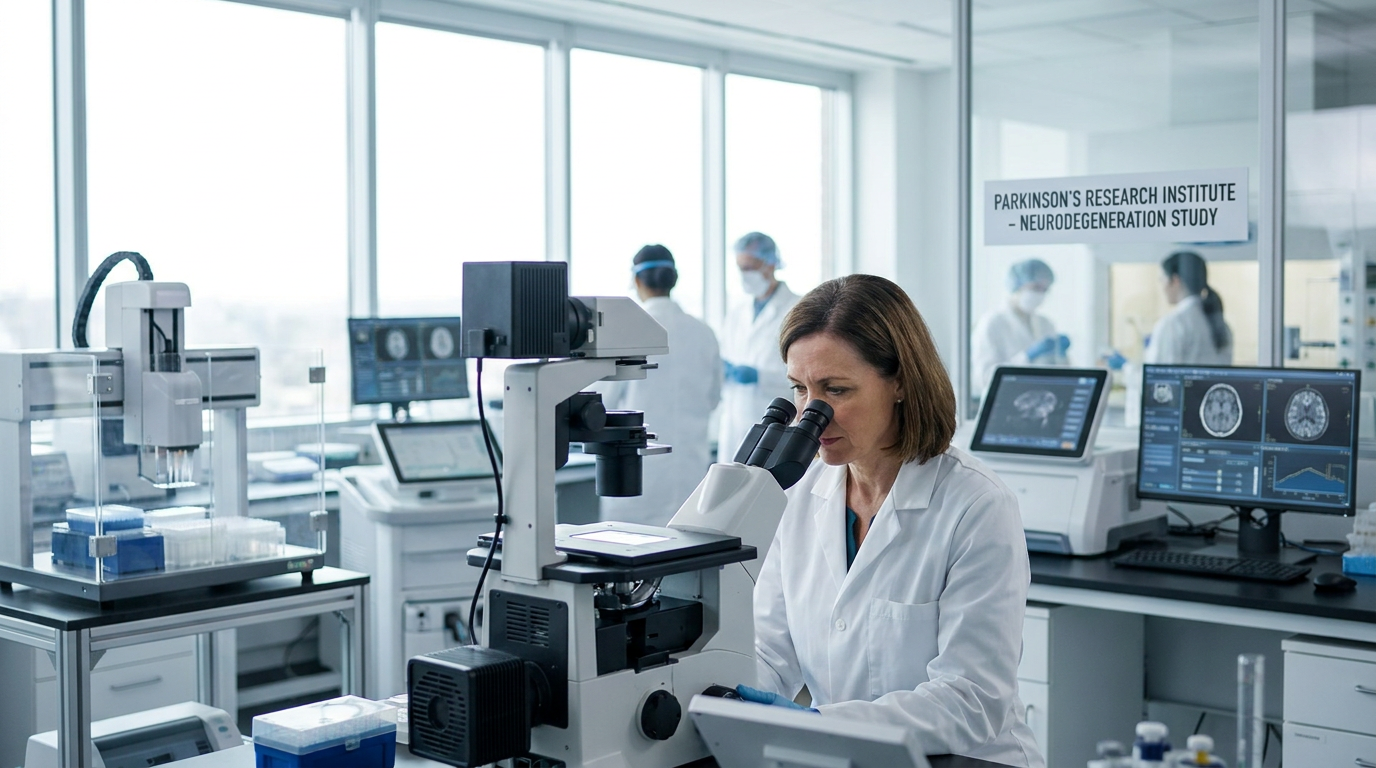
In a massive push to decode the underlying biology of Parkinson's disease, Aligning Science Across Parkinson's (ASAP) and The Michael J. Fox Foundation (MJFF) have announced a joint $261 million investment. The funding is designed to map the biological blueprint of the disease and build a standardized toolkit of global research resources. Rather than funding isolated laboratories, the initiative is expanding a Collaborative Research Network (CRN) that mandates open science and international cooperation.[1][2]
The scale of the 2026 investment reflects a maturing field that is moving beyond basic awareness into high-stakes scientific acceleration. This latest round brings ASAP's total investment in the CRN to more than $550 million since its inception. For the Michael J. Fox Foundation, which acts as the implementation partner for the grants, the initiative builds on a staggering legacy of having funded over $2.5 billion in Parkinson's research to date.[1][6]
At the heart of this new funding is a frustrating clinical reality: Parkinson's disease is profoundly heterogeneous. Researchers still do not fully understand why the disease develops or how it progresses, and answering those questions is complicated by the wide variation in symptoms, age of onset, and rate of progression between individual patients. By systematically accounting for this inherent heterogeneity, scientists hope to validate therapeutic targets within a human biological context.[1][2]

To tackle this complexity, the $261 million will be distributed across 32 new international and multidisciplinary teams. These groups are not working in silos; they are required to share data, tools, and discoveries openly to accelerate progress across the entire field. With the addition of these new cohorts, the CRN now encompasses nearly 400 researchers across 187 institutions in 24 countries, making it one of the largest coordinated efforts in the history of neurodegenerative research.[2][4]
A significant portion of the new funding is dedicated to dismantling technical roadblocks that have historically stalled drug development. Six of the 32 new teams are specifically focused on "Tool Generation." When a researcher in one location cannot replicate the results of a peer because they are using inconsistent chemical probes or unsuitable antibodies, scientific progress grinds to a halt.[4]
A significant portion of the new funding is dedicated to dismantling technical roadblocks that have historically stalled drug development.
To eliminate this technical uncertainty, these specialized teams are developing next-generation laboratory resources, including CRISPR-engineered cell lines, standardized mouse models, and advanced viral vectors. Once validated, these tools will be made readily available to the global research community with absolutely no restrictions on their reuse. This ensures that researchers everywhere are working from a common, high-quality baseline.[1][4]
The initiative is also funding bold, high-risk scientific ideas to explore the root causes of the disease. For instance, ASAP has awarded a $9 million grant to scientists at Cedars-Sinai to investigate environmental risk factors. This team will study how exposure to specific pesticides and air pollutants interacts with genetic vulnerabilities to trigger the development of Parkinson's.[3]

Advanced technology is playing a crucial role in this new wave of research. Teams are utilizing artificial intelligence and advanced imaging to identify and characterize subtypes of Parkinson's in a systematic, data-driven way. AI is particularly adept at image detection, allowing researchers to spot subtle patterns or features in brain tissue that human analysts might miss, further decoding the disease's variability.[3]
The ultimate goal of this massive infrastructure investment is clinical translation—moving discoveries from the laboratory bench to the patient's bedside. The MJFF's 2026 public messaging has become increasingly explicit about this finish line: detecting the disease earlier, treating it more precisely, and eventually eliminating it. The foundation is prioritizing therapies that target the underlying biology of Parkinson's rather than merely managing its symptoms.[6]
This biological focus is already yielding tangible clinical momentum. The MJFF and its partners are currently funding advanced trials, such as the testing of an injectable growth factor treatment developed by Herantis Pharma, which recently showed positive biomarker data in human subjects. Another trial underway in Amsterdam is testing a novel drug designed to repair mitochondria and protect dopamine-producing cells from dying over time.[5]

By funneling innovative ideas into a streamlined research and development pipeline, the expanded Collaborative Research Network aims to accelerate the development of the next generation of personalized therapies. The collaborative model acts as a force multiplier, bringing together complementary expertise across different disciplines to answer questions that no single laboratory could solve alone.[2][3]
For the millions of families affected by Parkinson's disease, this $261 million investment represents a paradigm shift in how celebrity philanthropy operates. Instead of one-off donations for awareness, the focus has shifted to building permanent, open-source scientific infrastructure. It is a concerted, global effort to turn biological discoveries into treatments that patients can feel in their daily lives.[6]
How we got here
2020
Aligning Science Across Parkinson's (ASAP) establishes the Collaborative Research Network with its first cohort of 21 teams.
2023
The Michael J. Fox Foundation announces a major breakthrough in Parkinson's biomarker detection, validating the need for deeper biological mapping.
April 2026
ASAP and MJFF announce a $261 million expansion, funding 32 new teams to map the disease's biological blueprint.
2026-2029
The newly funded teams will execute three-year projects focused on tool generation and decoding disease heterogeneity.
Viewpoints in depth
Open Science Advocates
This camp argues that breaking down institutional silos and sharing data freely is the fastest way to cure complex diseases.
Proponents of the Collaborative Research Network model believe that traditional scientific research is too competitive and siloed, which slows down progress. By mandating that all funded teams share their datasets, CRISPR cell lines, and chemical probes without restriction, they argue the entire global research community can move forward simultaneously. This approach eliminates the technical uncertainty that occurs when different labs use inconsistent tools, ensuring that breakthroughs in one country can be immediately validated and built upon in another.
Precision Medicine Researchers
This viewpoint emphasizes that Parkinson's is not a single disease and must be treated based on individual biological profiles.
Researchers focused on disease heterogeneity argue that the historical failure to find a universal cure for Parkinson's stems from treating it as a monolith. They advocate for deep biological mapping to understand how aging, co-pathologies, and environmental factors—such as exposure to specific pesticides—interact with a patient's unique genetic vulnerabilities. By identifying distinct subtypes of the disease, these scientists believe the field can develop targeted, personalized therapies that address the root cause of an individual's specific pathology.
Clinical Translation Focus
This perspective prioritizes moving laboratory discoveries into human trials as quickly and safely as possible.
For clinical investigators and patient advocacy groups, the ultimate measure of success is a treatment that patients can feel in their daily lives. While they support basic biological research, this camp emphasizes the urgent need to translate those findings into actionable diagnostics and disease-modifying drugs. They point to ongoing trials for mitochondrial repair drugs and injectable growth factors as evidence that the field must maintain a relentless focus on human applications, ensuring that massive funding rounds ultimately result in therapies that slow or stop disease progression.
What we don't know
- How quickly the standardized laboratory tools developed by these teams will result in new, viable drug candidates.
- The exact mechanisms by which environmental factors, like pesticides, interact with specific genetic vulnerabilities to trigger the disease.
- Whether the AI-driven imaging techniques will successfully identify previously unknown subtypes of Parkinson's in diverse populations.
Key terms
- Heterogeneity
- In medicine, the wide variation in how a disease develops, presents symptoms, and progresses among different patients.
- CRISPR
- A powerful tool for editing genomes, allowing researchers to easily alter DNA sequences and modify gene function for disease modeling.
- Biomarker
- A measurable indicator of the severity or presence of some disease state, crucial for early diagnosis and tracking treatment efficacy.
- Viral Vectors
- Tools commonly used by molecular biologists to deliver genetic material into cells, essential for creating standardized disease models.
- Open Science
- A movement to make scientific research, data, and dissemination accessible to all levels of an inquiring society, free of restrictions.
Frequently asked
What is the goal of the $261 million investment?
The funding aims to map the biological blueprint of Parkinson's disease, understand why it varies between patients, and build standardized research tools to accelerate personalized treatments.
Who is providing the funding?
The investment is a partnership between Aligning Science Across Parkinson's (ASAP)—backed by the Sergey Brin Family Foundation—and The Michael J. Fox Foundation for Parkinson's Research.
What is the Collaborative Research Network?
It is a global community of multidisciplinary scientific teams that share data, tools, and discoveries openly, moving away from traditional siloed research models.
How does this help patients in the short term?
By standardizing laboratory tools and breaking down technical roadblocks, the initiative aims to speed up the translation of biological discoveries into clinical trials for new therapies.
Sources
Source coverage
6 outlets
3 viewpoints surfaced






[1]PR NewswirePrecision Medicine Researchers
Aligning Science Across Parkinson's and The Michael J. Fox Foundation Expand Global Research Initiative with $261M Investment Toward Personalized Treatments
Read on PR Newswire →[2]Parkinson's News TodayPrecision Medicine Researchers
MJFF and ASAP invest $261M in global network for Parkinson's research
Read on Parkinson's News Today →[3]AlzforumOpen Science Advocates
Philanthropy Funnels $261 Million into Parkinson's Research
Read on Alzforum →[4]Parkinson's RoadmapOpen Science Advocates
Reducing Technical Uncertainty in Parkinson's Research
Read on Parkinson's Roadmap →[5]Parkinson's UKClinical Translation Focus
First participants receive NRG drug, further information on Herantis' treatment
Read on Parkinson's UK →[6]Bottega del SartoClinical Translation Focus
Fox's Foundation In 2026: What's Changed
Read on Bottega del Sarto →

Every angle. Every day.
Get entertainment stories with full source coverage and perspective breakdowns delivered to your inbox.