
How the US-Iran Interim Deal Reopens the Strait of Hormuz and Reshapes the Global Economy
The United States and Iran have signed a 14-point memorandum of understanding to halt their 110-day conflict, lifting the naval blockade and granting a 60-day toll-free window for global shipping. However, disputes over future transit fees and regional proxy clashes threaten the fragile economic relief.
By Factlen Editorial Team
- US Administration
- Argues the deal averts global economic catastrophe and uses the 60-day window to negotiate a permanent end to Iran's nuclear program.
- Iranian Government
- Views the deal as a sovereign victory, asserting the right to charge transit fees in the Strait of Hormuz after the grace period.
- Global Markets & Shippers
- Focused purely on the safe, toll-free transit of energy supplies and deeply concerned about the precedent of mandatory Iranian maritime insurance.
- Regional Security Skeptics
- Warns that the interim deal rewards Tehran's blockade tactics and remains highly vulnerable to collapse due to proxy conflicts.
What's not represented
- · Omani Port Authorities
- · European Energy Consumers
Why this matters
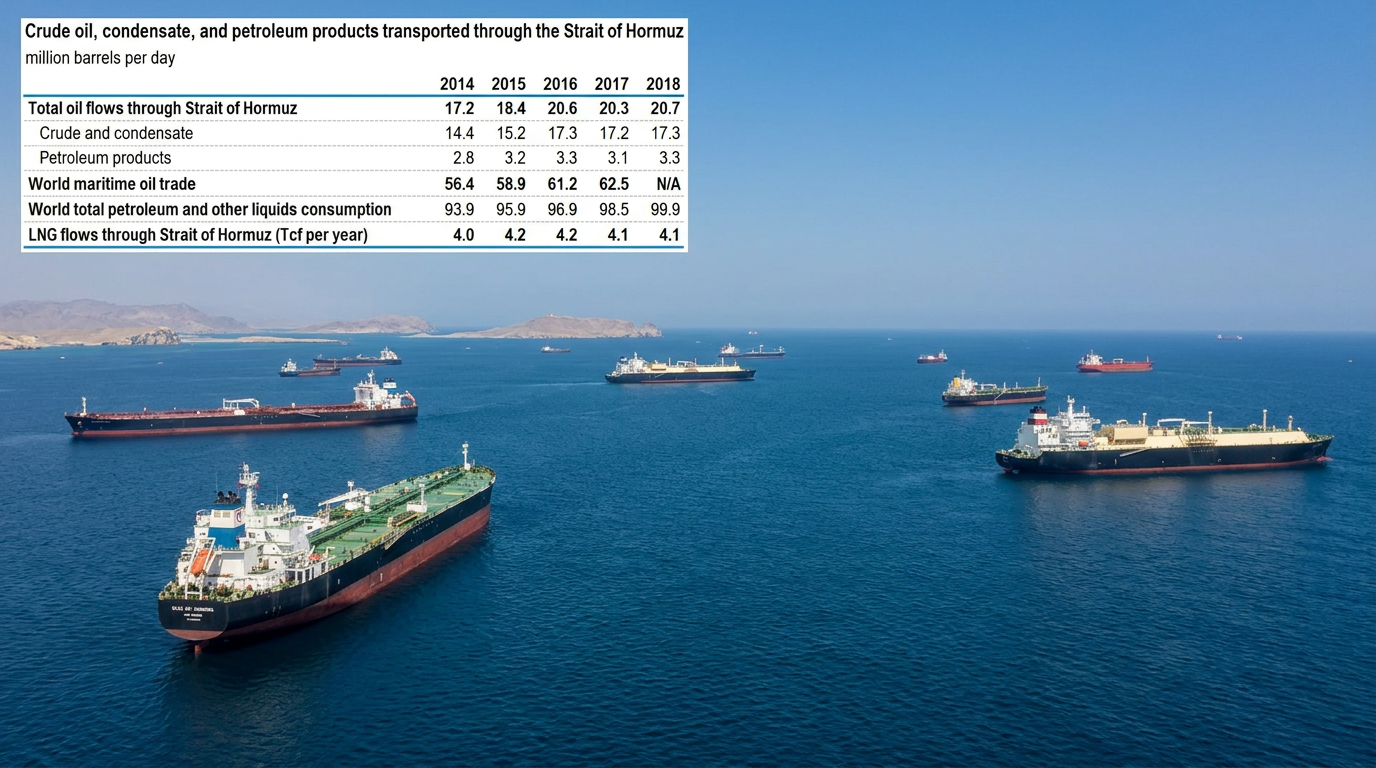
The Strait of Hormuz handles 20% of the world's oil supply. The reopening of this vital chokepoint immediately lowers global energy prices and eases inflation, but Iran's plan to impose future transit tolls could permanently alter the cost of global shipping.
Key points
- The U.S. and Iran signed a 14-point interim deal to end their 110-day conflict.
- The U.S. lifted its naval blockade, allowing commercial tankers to resume transit through the Strait of Hormuz.
- The agreement includes a 60-day toll-free window, after which Iran intends to charge transit and insurance fees.
- Iran will receive immediate oil export waivers and access to a conditional $300 billion reconstruction fund.
- Technical peace talks in Switzerland were delayed due to renewed fighting between Israel and Hezbollah.
After 110 days of a conflict that choked global energy markets, the United States and Iran have signed a 14-point interim memorandum of understanding to halt hostilities and reopen the Strait of Hormuz. The immediate economic effect was palpable across the globe: Brent crude prices dropped to their lowest levels since early March, and global equities ended the week on a cautious but optimistic note. The agreement marks a sudden de-escalation in a war that had severed vital supply chains and forced the world to confront the fragility of its energy infrastructure.[1][2][3]
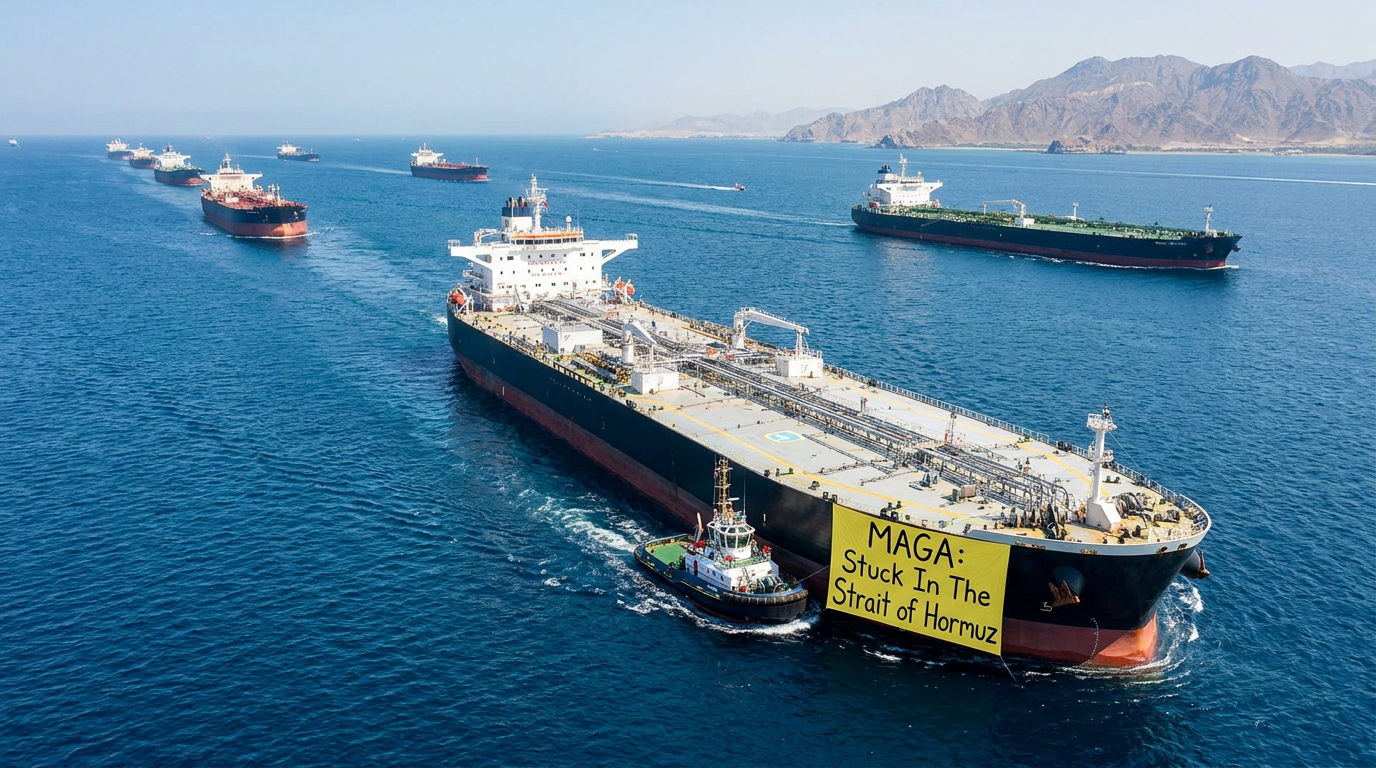
The stakes of the naval standoff were existential for the global economy. The Strait of Hormuz is a narrow, 21-mile-wide chokepoint between Oman and Iran through which roughly 20 percent of the world’s oil and liquefied natural gas flows. For nearly four months, the waterway was effectively paralyzed by Iranian military threats and a retaliatory U.S. naval blockade, driving up inflation and threatening what U.S. officials warned could become a worldwide economic depression.[3][7]
Under the new diplomatic framework, the U.S. military officially lifted its naval blockade of Iranian ports on Thursday, allowing commercial vessels to resume transit. In return, Iran committed to facilitating the safe passage of ships from the Persian Gulf to the Gulf of Oman. Tehran pledged to remove technical obstacles and naval mines within 30 days to restore pre-war traffic volumes, effectively unbottlenecking the millions of barrels of crude that had been trapped in the region.[1][2][3]
Early indicators suggest the mechanism is beginning to work. Maritime data firms have observed a steady resumption of verified crossings across the monitored zone, with commercial energy traffic—including oil supertankers and liquefied natural gas carriers—reappearing in the Gulf of Oman. Shipowners and insurers, however, remain highly cautious as they assess the immediate security situation, the presence of naval escorts, and the practical handling of vessels entering the Gulf.[7][8]

Despite the resumption of traffic, the agreement's most contentious economic mechanism—the future cost of transit—remains unresolved. The memorandum guarantees a 60-day "toll-free" window for commercial vessels. U.S. officials have insisted that international waterways must remain permanently free of tolls under maritime law, framing the 60-day grace period as a runway to establish a long-term administrative framework negotiated alongside Oman and other Gulf states.[3][7][8]
Tehran has offered a sharply different interpretation of the waterway's future. Mohammad Bagher Ghalibaf, Iran’s chief negotiator, stated unequivocally on state television that the strait "will not return to pre-war conditions." He asserted Iranian sovereignty over the corridor and confirmed that Tehran fully intends to collect service fees from international shipping companies once the 60-day window expires.[3][8]
Moving swiftly to formalize its control, Iran’s newly created Persian Gulf Strait Authority has already introduced mandatory, Iran-approved insurance for all transiting vessels. While this insurance is being provided free of charge during the initial 60 days, the authority's terms explicitly reserve the right to introduce mandatory paid coverage afterward. Shipping companies and the International Maritime Organization have warned that allowing such charges could set a destabilizing precedent, effectively rewriting global maritime law.[4]
Beyond the administration of the strait, the interim deal offers Iran a massive, albeit conditional, economic lifeline. The U.S. Treasury Department is slated to issue immediate waivers allowing Iran to export crude oil, petrochemical products, and derivatives. This marks a significant reversal of the previous sanctions regime, providing Tehran with immediate liquidity and allowing Iranian crude to re-enter a thirsty global market.[2][3]
Beyond the administration of the strait, the interim deal offers Iran a massive, albeit conditional, economic lifeline.
The most ambitious financial component of the memorandum is a proposed 300 billion dollar comprehensive plan for the rehabilitation and economic development of Iran. U.S. officials stressed that this fund, which would be backed by regional partners, is strictly tied to performance and compliance with a final peace agreement. The structure is designed to ensure that no funds are released until Tehran verifiably dismantles its nuclear capabilities.[2][3]

Critics of the deal argue that these financial incentives amount to a strategic victory for Iran. By securing immediate oil waivers and the lifting of the naval blockade before a permanent nuclear agreement is reached, Tehran has successfully leveraged its ability to disrupt global trade into tangible economic relief. Analysts note that Iran has demonstrated that its threats to close the strait are not mere bluster, fundamentally altering the balance of power and proving its capacity to hold the global economy hostage.[1][3][6]
The interim agreement initiates a strict 60-day clock for Washington and Tehran to negotiate a permanent settlement. These upcoming talks are expected to tackle the thorniest issues of the conflict, primarily Iran's nuclear program, its stockpile of highly enriched uranium, and its ballistic missile capabilities. Given that the 2015 nuclear accord took over 18 months to negotiate, diplomatic experts are deeply skeptical that a comprehensive treaty can realistically be forged in just two months.[1][3][5]
The fragility of the diplomatic process was laid bare on Friday when the first round of technical talks, scheduled to take place in Switzerland, was abruptly postponed. The delay was triggered not by disagreements over the text of the memorandum, but by intense overnight military clashes in southern Lebanon between Israel and the Iran-backed militant group Hezbollah.[5]
The memorandum of understanding explicitly calls for an immediate and permanent end to military operations on all fronts, including Lebanon, to ensure regional stability during the negotiation window. Iran insisted that the fighting must stop before its delegation would travel to Geneva, prompting U.S. officials to cancel the American delegation's trip while citing logistical challenges.[3][5]

Late Friday, regional diplomats reported that Israel and Hezbollah had agreed to renew a ceasefire, potentially clearing the way for the U.S.-Iran talks to be rescheduled. Yet the sudden flare-up underscores how easily the broader peace effort could be derailed by regional proxies and allied nations operating outside the direct control of Washington and Tehran.[5]
For the global economy, the next 60 days represent a precarious waiting game. If the interim deal holds and evolves into a permanent framework, the stabilization of energy prices could ease inflationary pressures and restore confidence in global supply chains. If the talks collapse and the strait is once again contested, the cascading effects on consumer costs and international trade will be immediate, severe, and potentially catastrophic.[1][6]
How we got here
Feb 2026
The U.S.-Iran conflict begins, leading to a blockade of the Strait of Hormuz and a spike in global energy prices.
June 17, 2026
The U.S. and Iran electronically sign a 14-point memorandum of understanding to halt hostilities.
June 18, 2026
The U.S. lifts its naval blockade, and commercial oil tankers begin crossing the strait.
June 19, 2026
Planned technical talks in Switzerland are delayed due to renewed fighting between Israel and Hezbollah in Lebanon.
Viewpoints in depth
US Administration's view
The interim deal averts a global economic depression and provides a 60-day window to dismantle Iran's nuclear program.
U.S. officials argue that the immediate priority was halting the economic bleeding caused by the blockade of the Strait of Hormuz. By securing a 60-day toll-free window, the administration believes it has stabilized global energy markets while retaining ultimate leverage. They emphasize that the proposed $300 billion reconstruction fund and the unfreezing of Iranian assets are strictly tied to verifiable performance on nuclear disarmament, ensuring Tehran receives no long-term benefits without dismantling its weapons capabilities.
Iranian Government's view
The agreement is a sovereign victory that forces the U.S. to lift its blockade and acknowledges Iran's control over the strait.
Tehran views the 110-day conflict as proof that its control over the Strait of Hormuz is a potent, undeniable geopolitical weapon. Iranian negotiators assert that the waterway will never return to its pre-war status. While they agreed to a 60-day grace period, they maintain that Iran holds sovereign rights over the strait and will impose mandatory insurance and service fees on all commercial vessels once the window closes. Furthermore, they view the immediate oil export waivers as a necessary capitulation by Washington.
Global Markets & Shippers' view
The industry is relieved by the resumption of traffic but deeply anxious about the precedent of Iranian transit tolls.
For maritime insurers and global energy markets, the interim deal is a double-edged sword. The immediate drop in Brent crude prices reflects profound relief that the 20% of global oil supply bottlenecked in the Gulf can finally move. However, shipping authorities and the International Maritime Organization warn that Iran's newly formed Persian Gulf Strait Authority sets a dangerous precedent. If Tehran successfully mandates Iranian insurance and transit tolls, it could fundamentally rewrite international maritime law and permanently inflate the cost of global shipping.
Regional Security Skeptics' view
The deal rewards Iranian blockade tactics and remains highly vulnerable to collapse from proxy conflicts.
Security analysts and regional observers caution that the memorandum of understanding is merely a fragile ceasefire, not a lasting peace. They argue that by granting immediate oil waivers and lifting the naval blockade before securing nuclear concessions, the U.S. surrendered its primary economic leverage. Furthermore, the immediate delay of the Geneva talks due to clashes between Israel and Hezbollah in Lebanon highlights the inherent instability of the agreement, proving that regional proxies can derail the diplomatic process at any moment.
What we don't know
- Whether Iran will actually impose transit tolls after the 60-day window expires.
- If the U.S. and Iran can successfully negotiate a permanent nuclear agreement within the 60-day timeframe.
- How regional proxy conflicts, such as the Israel-Hezbollah clashes, will impact the broader peace process.
Key terms
- Strait of Hormuz
- A narrow, strategically vital waterway between the Persian Gulf and the Gulf of Oman through which a fifth of the world's oil flows.
- Memorandum of Understanding (MoU)
- A formal, non-binding agreement outlining the broad terms of the interim peace deal and the 60-day negotiation window.
- Persian Gulf Strait Authority
- A newly created Iranian regulatory body that is mandating Iran-approved insurance for all vessels transiting the strait.
- Naval Blockade
- The U.S. military operation that previously prevented commercial ships from entering or leaving Iranian ports during the 110-day conflict.
Frequently asked
Is the Strait of Hormuz completely open now?
Yes, the U.S. lifted its naval blockade and commercial tankers have resumed transit, though Iran has up to 30 days to fully clear naval mines.
Will ships have to pay a toll to cross the Strait?
The agreement guarantees a 60-day toll-free window. However, Iran has stated it intends to charge service and insurance fees once that period expires, which the U.S. opposes.
What does Iran get out of this interim deal?
Iran receives immediate waivers to export crude oil, the lifting of the U.S. naval blockade, and the prospect of a $300 billion reconstruction fund if a final nuclear deal is reached.
Why were the peace talks in Switzerland delayed?
The initial round of negotiations was postponed after intense military clashes between Israel and Hezbollah in Lebanon, prompting Iran to demand a ceasefire before proceeding.
Sources
Source coverage
8 outlets
4 viewpoints surfaced








[1]ReutersGlobal Markets & Shippers
Traffic flows through Hormuz as US-Iran deal takes effect, questions remain
Read on Reuters →[2]BloombergUS Administration
Iran to gain major financial relief under interim deal with U.S.
Read on Bloomberg →[3]The GuardianIranian Government
US-Iran deal takeaways: reopening the strait of Hormuz, waived oil sanctions and Lebanon
Read on The Guardian →[4]Lloyd's ListIranian Government
Iran imposes mandatory insurance on ships transiting Strait of Hormuz, with fees likely to follow
Read on Lloyd's List →[5]CBS NewsRegional Security Skeptics
Israel and Hezbollah agree to Lebanon truce, officials say, as fighting delays U.S.-Iran talks
Read on CBS News →[6]Chatham HouseRegional Security Skeptics
The next Strait of Hormuz crisis could be even worse
Read on Chatham House →[7]Business InsiderUS Administration
2 key details about the Strait of Hormuz in the agreement Trump and Iran just signed
Read on Business Insider →[8]Trans.INFOGlobal Markets & Shippers
US-Iran deal gives Hormuz 60-day toll-free window
Read on Trans.INFO →
Every angle. Every day.
Get business stories with full source coverage and perspective breakdowns delivered to your inbox.