
How Smartwatches and Wearables Actually Impact Cardiovascular Health
As millions adopt smartwatches to monitor their hearts, new research clarifies exactly when these devices improve cardiovascular outcomes and when they just cause unnecessary anxiety.
By Factlen Editorial Team
- Clinical Cardiologists
- Value the diagnostic potential of wearables but warn against the anxiety and systemic strain caused by false positives in healthy patients.
- Consumer Tech Advocates
- Believe that democratizing access to continuous biometric data empowers patients and shifts healthcare from reactive to proactive.
- Public Health Researchers
- Focus on the digital divide, warning that wearable health benefits currently bypass the low-income populations most at risk for heart disease.
What's not represented
- · Health Insurance Providers
- · Medical Device Regulators
Why this matters
Understanding the true clinical value of wearables helps users move beyond simply counting steps to actively managing heart disease risks, potentially catching arrhythmias early without overwhelming their doctors.
Key points
- Smartwatches effectively increase daily physical activity by gamifying movement, which directly lowers cardiovascular risk.
- Optical sensors and wearable ECGs are highly accurate at detecting Atrial Fibrillation, a leading cause of stroke.
- The widespread use of wearables by healthy, low-risk individuals has led to a surge in false positives and medical anxiety.
- Doctors struggle to integrate continuous, unstructured wearable data into traditional Electronic Health Record systems.
- Future wearable advancements aim to tackle non-invasive blood pressure monitoring, though significant technical hurdles remain.
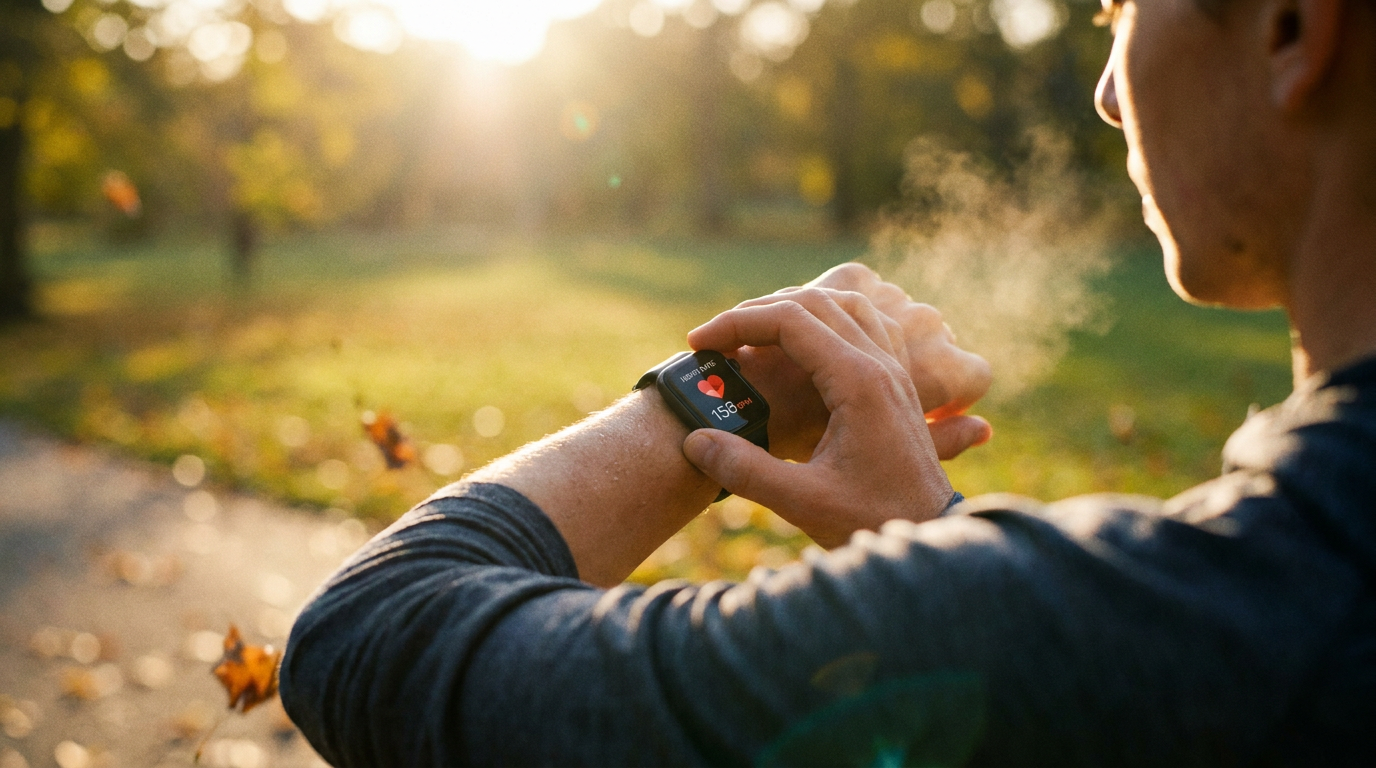
The modern wrist has become prime real estate for health monitoring. What began as simple step-counting pedometers has evolved into sophisticated biometric dashboards. Today, devices from Apple, Google, Garmin, and Whoop promise to keep a watchful eye on cardiovascular health, offering features ranging from continuous heart rate tracking to on-demand electrocardiograms. For millions of users, the appeal is clear: the ability to detect a silent heart condition before it becomes a life-threatening emergency.[1][4]
But as the technology matures and adoption reaches unprecedented levels, the medical community is asking a critical question: do these wearables actually improve long-term cardiovascular outcomes? Recent comprehensive reviews and clinical trials are finally providing a nuanced answer. The consensus suggests that while smartwatches are remarkable tools for specific use cases, their broader impact on population health is complicated by false positives, data overload, and behavioral psychology.[1][2]
The most proven benefit of cardiovascular wearables lies in their original purpose: behavior modification. Cardiovascular disease remains the leading cause of death globally, and sedentary lifestyles are a primary driver. Wearables excel at gamifying movement. Features like closing daily activity rings or hitting personalized step goals leverage psychological principles to encourage consistent physical activity. Studies consistently show that users who engage with these features increase their daily moderate-to-vigorous physical activity by an average of 30 to 40 minutes.[3][5]
This incremental increase in daily movement has profound clinical implications. Regular physical activity lowers blood pressure, improves lipid profiles, and enhances insulin sensitivity. For patients recovering from a cardiac event, such as a heart attack, wearables have become invaluable tools in cardiac rehabilitation programs. They provide both the patient and the care team with objective data on recovery progress, ensuring that the patient is safely increasing their activity levels without overexerting their healing heart.[2][4]
Beyond step counting, the most significant medical leap for wearables has been the detection of Atrial Fibrillation (AFib). AFib is an irregular and often very rapid heart rhythm that can lead to blood clots in the heart, significantly increasing the risk of stroke and heart failure. Because AFib can be intermittent and asymptomatic, it frequently goes undiagnosed until a catastrophic event occurs. Wearables offer a solution by passively monitoring the user's pulse in the background throughout the day and night.[1][3]
The mechanism behind this passive monitoring is a technology called photoplethysmography (PPG). The back of the smartwatch emits green LED light into the skin of the wrist. Blood absorbs green light, so between heartbeats, when blood flow is lower, less light is absorbed. By measuring these micro-fluctuations in light absorption hundreds of times per second, the device's algorithm can calculate the heart rate and detect the irregular rhythms characteristic of AFib.[4][6]

The mechanism behind this passive monitoring is a technology called photoplethysmography (PPG).
When the PPG sensor detects a potential irregularity, modern smartwatches prompt the user to take an active electrocardiogram (ECG). By placing a finger on the watch's digital crown or side button, the user completes an electrical circuit across their body, allowing the device to record the electrical signals that make the heart beat. Clinical trials, including massive studies involving hundreds of thousands of participants, have demonstrated that these wearable ECGs are highly accurate at confirming AFib, boasting positive predictive values that rival traditional clinical equipment.[3][5]

However, this technological triumph introduces a significant clinical challenge: the problem of false positives and the worried well. Wearables are disproportionately purchased by younger, affluent, and generally healthy individuals who are at very low risk for serious cardiovascular events. When a healthy 30-year-old receives a notification about an irregular heart rhythm, which could be triggered by a harmless premature ventricular contraction, caffeine intake, or even a loose watch band, it often leads to severe anxiety.[1][6]
This anxiety drives a surge in unnecessary medical utilization. Patients rush to emergency rooms or demand urgent appointments with cardiologists, bringing printouts of their smartwatch ECGs. For the vast majority of these low-risk individuals, the subsequent clinical workup reveals no underlying disease. This phenomenon strains healthcare resources, increases systemic costs, and subjects healthy individuals to potentially invasive and expensive follow-up testing that they never needed in the first place.[2][5]
Furthermore, the medical system is currently ill-equipped to handle the sheer volume of patient-generated health data. Electronic Health Record systems are designed to store discrete clinical data points collected during a medical visit, not continuous streams of biometric data from consumer devices. When a patient presents a doctor with months of heart rate variability charts and sleep scores, the physician often lacks the time, tools, and standardized protocols to interpret this data meaningfully.[1][4]
The lack of integration creates a frustrating disconnect. Patients feel empowered by their data and expect their doctors to use it to optimize their care. Doctors, already facing severe time constraints and burnout, view the unstructured data dump as a liability rather than an asset. Bridging this gap requires the development of intermediary software platforms that can filter wearable data, flag clinically relevant trends, and present them to the physician in a concise, actionable format.[5][6]

Another critical limitation of the current wearable landscape is the digital divide. The populations that suffer the highest burden of cardiovascular disease, often lower-income communities and older adults, are the least likely to own expensive smartwatches. If the benefits of continuous health monitoring remain confined to those who can afford premium consumer electronics, wearables threaten to exacerbate existing health disparities rather than solve them.[2][3]
Looking ahead, the next frontier for cardiovascular wearables is non-invasive blood pressure monitoring. Hypertension is a massive global health crisis, and traditional cuff-based measurements are episodic and often inaccurate due to white coat syndrome in clinical settings. Several tech companies are developing advanced optical sensors and algorithms capable of estimating blood pressure continuously from the wrist. If perfected and clinically validated, this feature could fundamentally transform the management of hypertension.[4][6]

Ultimately, smartwatches and fitness trackers are powerful tools, but they are not replacements for professional medical care. They are most effective when used to establish baseline awareness, motivate healthy behavioral changes, and serve as an early warning system for specific arrhythmias in targeted populations. As the technology evolves, the focus must shift from simply gathering more data to generating actionable insights that seamlessly integrate into the healthcare ecosystem.[1][2]
How we got here
2015
Apple releases the first Apple Watch, primarily marketed as a notification device and basic fitness tracker.
2018
The FDA clears the Apple Watch Series 4 to offer an over-the-counter electrocardiogram (ECG) feature.
2020
Massive clinical trials validate the accuracy of smartwatch algorithms in detecting Atrial Fibrillation.
2023
Wearable adoption surges, leading to increased reports of patient anxiety and data overload in cardiology clinics.
2026
Research shifts toward integrating patient-generated health data into standard medical workflows and developing blood pressure sensors.
Viewpoints in depth
Clinical Cardiologists
Medical professionals grappling with the influx of patient-generated data.
Cardiologists acknowledge that wearables have saved lives by catching asymptomatic AFib in high-risk patients. However, they are increasingly frustrated by the 'worried well'—healthy young adults who flood clinics after receiving an irregular rhythm notification caused by a loose watch band or a harmless palpitation. Physicians argue that without robust software to filter the noise, the raw data generated by these devices is more of a liability than a diagnostic tool.
Consumer Tech Advocates
Proponents of democratizing personal health data through consumer electronics.
Tech advocates argue that the traditional medical model—seeing a doctor once a year for a snapshot of your health—is fundamentally broken. They view wearables as the ultimate empowerment tool, allowing individuals to take ownership of their cardiovascular health. From this perspective, the friction currently experienced in doctors' offices is simply the growing pain of a medical system that has not yet adapted to the era of continuous, proactive health monitoring.
Public Health Researchers
Experts focused on population-level health outcomes and healthcare equity.
Public health experts view the wearable revolution with cautious optimism, heavily tempered by concerns over the digital divide. They point out that cardiovascular disease disproportionately affects lower-income populations who cannot afford $400 smartwatches. Researchers warn that unless these devices are subsidized or integrated into public health initiatives, wearables will only widen the gap in health outcomes between the wealthy and the vulnerable.
What we don't know
- Whether the long-term use of wearables actually reduces overall mortality rates across diverse populations.
- How quickly Electronic Health Record systems will evolve to seamlessly ingest and analyze continuous biometric data.
- When non-invasive, cuffless blood pressure monitoring will become clinically reliable on consumer smartwatches.
Key terms
- Atrial Fibrillation (AFib)
- An irregular and often very rapid heart rhythm that can lead to blood clots, increasing the risk of stroke and heart failure.
- Photoplethysmography (PPG)
- An optical technique used by smartwatches that shines light into the skin to measure changes in blood volume and calculate heart rate.
- Electrocardiogram (ECG)
- A test that records the electrical signals of the heart to check for different heart conditions, now available on many premium smartwatches.
- False Positive
- A test result that incorrectly indicates that a particular condition or attribute is present, often causing unnecessary anxiety.
- Patient-Generated Health Data
- Health-related data created, recorded, or gathered by patients themselves, primarily through wearable devices and smartphone apps.
Frequently asked
Can a smartwatch detect a heart attack?
No. Smartwatches cannot detect heart attacks, which are caused by blocked arteries. They are designed to detect electrical arrhythmias, such as Atrial Fibrillation.
Should I go to the ER if my watch detects an irregular rhythm?
If you are young, healthy, and have no symptoms, it may be a false positive. However, you should consult a doctor to interpret the data, especially if you experience chest pain or shortness of breath.
Do smartwatches accurately measure blood pressure?
Currently, consumer smartwatches cannot reliably measure blood pressure without a traditional cuff calibration, though tech companies are actively developing this capability.
Sources
Source coverage
6 outlets
3 viewpoints surfaced






[1]STAT NewsConsumer Tech Advocates
Do wearables actually help people with cardiovascular disease?
Read on STAT News →[2]American Heart AssociationClinical Cardiologists
Cardiovascular Health and Wearable Technology: A Scientific Statement
Read on American Heart Association →[3]Nature MedicinePublic Health Researchers
Clinical validation of smartwatch algorithms for atrial fibrillation
Read on Nature Medicine →[4]The VergeConsumer Tech Advocates
The reality of smartwatch heart monitoring
Read on The Verge →[5]MedscapeClinical Cardiologists
Patient-Generated Health Data: The Cardiologist's Dilemma
Read on Medscape →[6]CNN HealthPublic Health Researchers
Your Apple Watch might be making you anxious about your heart
Read on CNN Health →
Every angle. Every day.
Get health stories with full source coverage and perspective breakdowns delivered to your inbox.