
How Mutational Buffering Proteins Protect Cells and Expose New Cancer Vulnerabilities
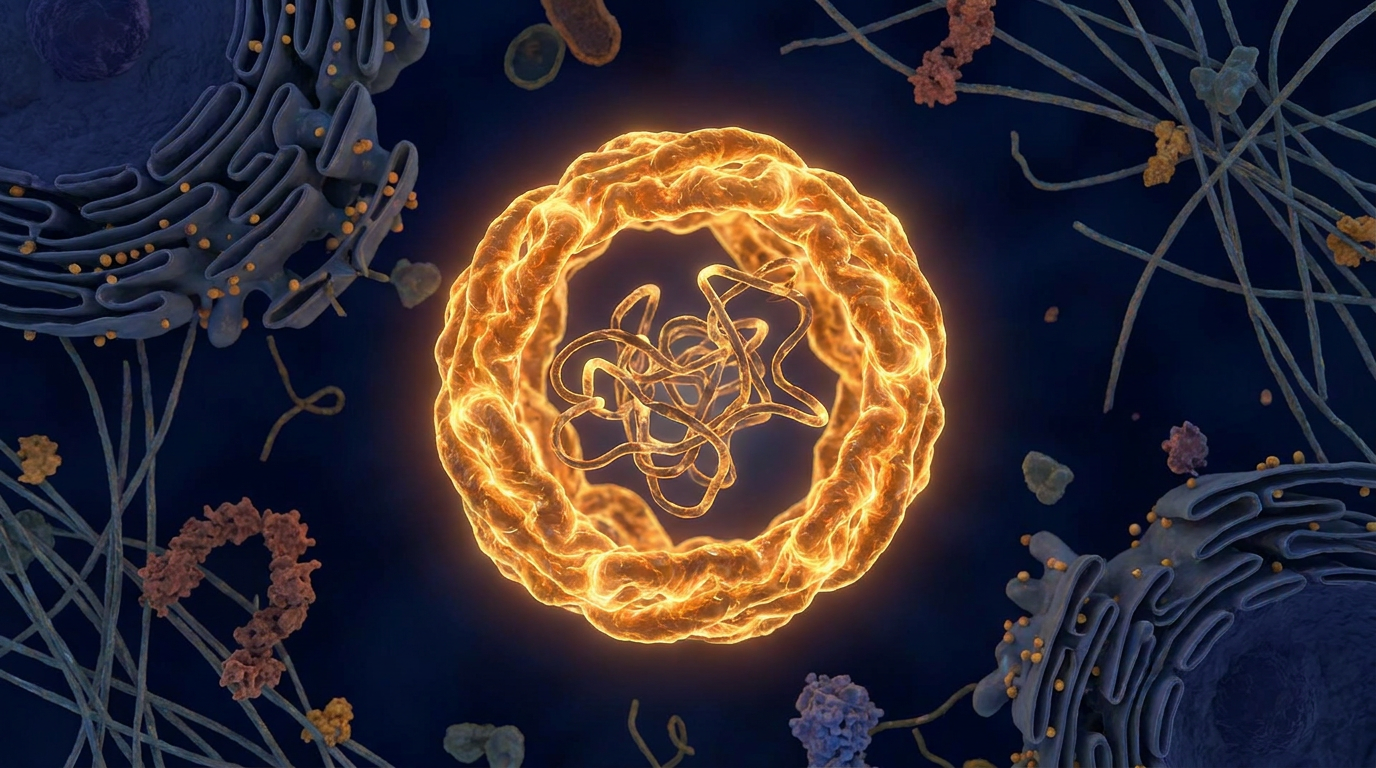
Molecular chaperones act as cellular mechanics to fix misfolded proteins caused by genetic mutations. Researchers are now targeting this buffering system to cause highly mutated cancer cells to collapse under their own genetic weight.
By Factlen Editorial Team
- Oncology Researchers
- View mutational buffering as a critical vulnerability that can be exploited to destroy tumors.
- Evolutionary Biologists
- Focus on how buffer proteins drive adaptation by allowing hidden genetic variation to accumulate.
- Clinical Pharmacologists
- Emphasize the translational challenges of turning chaperone inhibitors into safe, approved drugs.
What's not represented
- · Patient advocacy groups
- · Structural biologists
Why this matters
Understanding how cells survive genetic errors is unlocking an entirely new class of cancer therapies. By disabling the specific proteins that tumors rely on to manage their mutations, doctors could selectively destroy cancer cells while leaving healthy tissue unharmed.
Key points
- Cells rely on molecular chaperones like HSP90 to physically correct misfolded proteins caused by genetic mutations.
- This buffering system allows organisms to accumulate hidden genetic variation, which can fuel rapid evolution during times of stress.
- Highly mutated cancer cells become addicted to these chaperones to survive the toxic buildup of their own damaged proteins.
- Targeting chaperone proteins with low-dose inhibitors can selectively destroy tumors while sparing healthy tissue.
The human body is a factory of constant replication, and with replication comes error. Every time a cell divides, its DNA polymerase machinery introduces typos into the genetic code. While the body has proofreading mechanisms, some errors inevitably slip through the cracks.[6]
While a tiny fraction of these mutations are advantageous, and a few drive the runaway growth of cancer, the vast majority are deleterious. They are "passenger" mutations that alter the amino acid sequence of proteins, causing them to misfold, clump together, or lose their function entirely.[2]
In theory, a cell accumulating thousands of these passenger mutations should undergo severe proteotoxic stress and die. Yet, both healthy organisms and heavily mutated cancer cells routinely survive this genetic baggage, maintaining their cellular functions despite a compromised genome.[2]
The answer to this paradox lies in a specialized class of molecules known as "buffer proteins" or molecular chaperones. As highlighted in recent scientific briefings, these proteins act as a cellular quality-control system, physically forcing mutated, misshapen proteins into their correct three-dimensional structures.[1]

The most famous of these chaperones is Heat Shock Protein 90 (HSP90). Originally discovered for its role in helping cells survive heat stress, HSP90 is now recognized as a master regulator of mutational robustness across the tree of life.[3]
By stabilizing misfolded proteins, HSP90 effectively masks the phenotypic consequences of genetic mutations. The mutated gene still produces a flawed protein, but the chaperone acts as a scaffold, allowing it to function normally and preventing toxic buildup.[4]
This buffering capacity has profound implications for evolutionary biology. Because the mutations are masked, they can accumulate silently in a population over generations—a phenomenon known as "cryptic genetic variation."[3]
When an organism experiences severe environmental stress, the chaperone proteins are diverted away from their buffering duties to deal with the immediate crisis. The hidden mutations are suddenly unmasked, unleashing a wave of new physical traits that natural selection can act upon.[7]
But this evolutionary superpower has a dark side in human disease. Cancer cells, which divide rapidly and often have defective DNA repair mechanisms, accumulate passenger mutations at an astonishing rate.[5]
But this evolutionary superpower has a dark side in human disease.
A comprehensive analysis of over 10,000 human tumors revealed that cancers with the highest mutational burdens do not succumb to protein misfolding. Instead, they adapt by massively upregulating the expression of proteostasis machinery, including chaperones like HSP90 and the proteasome degradation system.[2]

The evidence for this adaptation is robust. Researchers utilizing generalized linear mixed models found a direct, causal correlation between a tumor's mutational load and its reliance on these buffer proteins.[2]
This reliance creates a unique Achilles' heel. When scientists disrupted chaperone functions in high-mutation cancer cell lines using targeted therapies or RNA interference, the cancer cells rapidly lost viability. They essentially collapsed under the weight of their own mutations.[5]
The clinical implications are already coming into focus. For instance, recent studies have demonstrated that HSP90 buffers specific structural mutations in the BRCA1 gene, a major driver of breast and ovarian cancers.[4]
By stabilizing these mutated BRCA1 proteins, HSP90 not only allows the cancer to survive but also actively confers resistance to standard treatments, such as PARP inhibitors, allowing the tumor to evade destruction.[4]
However, administering low-dose HSP90 inhibitors strips away this buffering protection. This selectively hypersensitizes the cancer cells to therapy, triggering cell death while sparing healthy tissues that do not carry the same heavy mutational burden.[4]

Despite these promising findings, significant uncertainties remain. Evolutionary biologists still debate whether mutational robustness is an actively evolved trait or simply a biochemical side-effect of chaperones performing their normal folding duties.[3]
Furthermore, while chaperone inhibitors have been explored in oncology for decades, translating them into approved therapies has been challenging due to toxicity. Healthy cells also require chaperones, albeit usually at lower levels than highly mutated tumors.[6]
The next frontier in this research will involve identifying the specific thresholds at which cancer cells become irreversibly addicted to mutational buffering, allowing for precise, targeted interventions that maximize efficacy while minimizing side effects.[6]
As the scientific community maps the intricate networks of protein folding and degradation, the narrative around genetic mutations is shifting. They are no longer seen just as drivers of disease, but as a heavy cargo that tumors must actively manage to survive.[1]
By targeting the very mechanisms that protect cells from deadly mutations, researchers are opening a new chapter in precision medicine—one that turns a cancer's greatest evolutionary trick against itself.[6]
How we got here
1998
Researchers first propose that the chaperone protein HSP90 acts as an evolutionary capacitor, masking genetic variation in fruit flies.
2018
Studies reveal that proteins heavily reliant on HSP90 evolve faster because the chaperone protects them from the negative effects of mutations.
2023
Comprehensive analysis of over 10,000 human tumors demonstrates that cancers massively upregulate proteostasis machinery to survive their own mutational load.
June 2026
New research highlights how targeting these buffering proteins can overcome therapy resistance in specific genetic cancers, such as those driven by BRCA1 mutations.
Viewpoints in depth
Evolutionary Biologists
Focus on how buffer proteins drive adaptation by allowing hidden genetic variation to accumulate.
For evolutionary biologists, chaperone proteins like HSP90 are the ultimate capacitors of evolution. By masking the physical effects of genetic mutations, these proteins allow organisms to silently accumulate a vast reservoir of 'cryptic' genetic variation over generations. When a population is subjected to severe environmental stress—such as extreme heat or starvation—the chaperones are diverted to handle the immediate crisis. This sudden withdrawal of buffering unmasks the hidden mutations all at once, producing a wide array of new physical traits that natural selection can act upon, driving rapid evolutionary adaptation.
Oncology Researchers
View mutational buffering as a critical vulnerability that can be exploited to destroy tumors.
Cancer researchers view the buffering system through the lens of therapeutic opportunity. Tumors are essentially broken cellular machines, accumulating thousands of 'passenger' mutations as they rapidly divide. Without chaperones to constantly refold the resulting misshapen proteins, these cancer cells would die from proteotoxic stress. By identifying the specific threshold at which a tumor becomes entirely dependent on this buffering system, oncologists hope to deploy targeted chaperone inhibitors. This approach aims to achieve 'synthetic lethality,' where the inhibitor strips away the cancer's structural support, causing it to collapse while leaving healthy, less-mutated cells unharmed.
Clinical Pharmacologists
Emphasize the translational challenges of turning chaperone inhibitors into safe, approved drugs.
While the underlying biology of mutational buffering is sound, clinical pharmacologists point to the historical difficulty of drugging these pathways. Chaperone proteins are not exclusive to cancer; they are fundamental to the survival of every healthy cell in the human body. Previous generations of HSP90 inhibitors often failed in clinical trials because the doses required to kill the tumor also caused unacceptable toxicity in healthy tissues. The current pharmacological focus is on finding the 'Goldilocks' zone—using ultra-low doses of inhibitors in combination with other therapies, or developing next-generation drugs that only target the specific chaperone complexes upregulated in high-mutation cancers.
What we don't know
- Whether mutational robustness evolved actively as a survival mechanism or is simply a side-effect of normal protein folding.
- The exact threshold of mutational burden required to make a tumor entirely dependent on chaperone proteins.
- How to perfectly balance chaperone inhibitor doses to maximize tumor destruction without causing toxicity in healthy cells.
Key terms
- Molecular chaperone
- A specialized protein that assists in the folding, unfolding, and assembly of other macromolecular structures.
- Proteostasis
- The dynamic process by which cells control the abundance and folding of their proteins to maintain cellular health.
- Passenger mutation
- A genetic alteration that does not directly drive cancer growth but accumulates alongside disease-causing mutations.
- Cryptic genetic variation
- Genetic mutations that remain hidden and do not affect an organism's physical traits until unmasked by environmental stress.
- Synthetic lethality
- A situation where a mutation in either of two genes is harmless, but mutations in both simultaneously cause cell death.
Frequently asked
What happens when a protein misfolds?
Misfolded proteins typically lose their function and can clump together, causing cellular toxicity if they are not degraded or refolded by chaperones.
Why do cancer cells have so many mutations?
Cancer cells divide rapidly and often have defective DNA repair mechanisms, causing them to accumulate thousands of random errors known as passenger mutations.
How does HSP90 help cancer survive?
HSP90 acts as a scaffold that forces mutated, unstable proteins into their correct shapes, allowing the cancer cell to function despite its damaged DNA.
Will inhibiting these proteins harm healthy cells?
Healthy cells also use chaperones, but highly mutated cancer cells are far more dependent on them. Low-dose inhibitors aim to exploit this gap, though managing toxicity remains a clinical challenge.
Sources
Source coverage
7 outlets
3 viewpoints surfaced







[1]NatureOncology Researchers
Daily briefing: The proteins that protect us from deadly mutations
Read on Nature →[2]eLifeOncology Researchers
High mutational load tumors mitigate these damaging consequences by up-regulating complexes that buffer against protein misfolding stress
Read on eLife →[3]The EMBO JournalEvolutionary Biologists
Mutational robustness and the role of buffer genes in evolvability
Read on The EMBO Journal →[4]CellOncology Researchers
Protein-folding chaperone HSP90 buffers genetic variation in diverse organisms
Read on Cell →[5]Stanford MedicineOncology Researchers
Balancing the production and degradation of proteins is critical for cancer cells to survive
Read on Stanford Medicine →[6]Factlen Editorial TeamClinical Pharmacologists
Synthesis by Factlen editorial team
Read on Factlen Editorial Team →[7]Molecular Biology and EvolutionEvolutionary Biologists
Hsp90 buffering of mutations in green fluorescent protein
Read on Molecular Biology and Evolution →

More in science
See all 6 stories →Evolutionary Biology
A Cross-Species Cell Transplant Just Revealed How the First Animals Built Their Bodies
6 sources

Deep Time
Complex Life on Earth Could Survive 500 Million Years Longer Than Expected
7 sources

Astrobiology
Complex Life on Earth May Survive 500 Million Years Longer Than Expected
6 sources

Planetary Science
Complex Life on Earth Could Survive 500 Million Years Longer Than Previously Expected
7 sources

Every angle. Every day.
Get science stories with full source coverage and perspective breakdowns delivered to your inbox.