
How Fractional Real Estate Investing is Democratizing Property Ownership
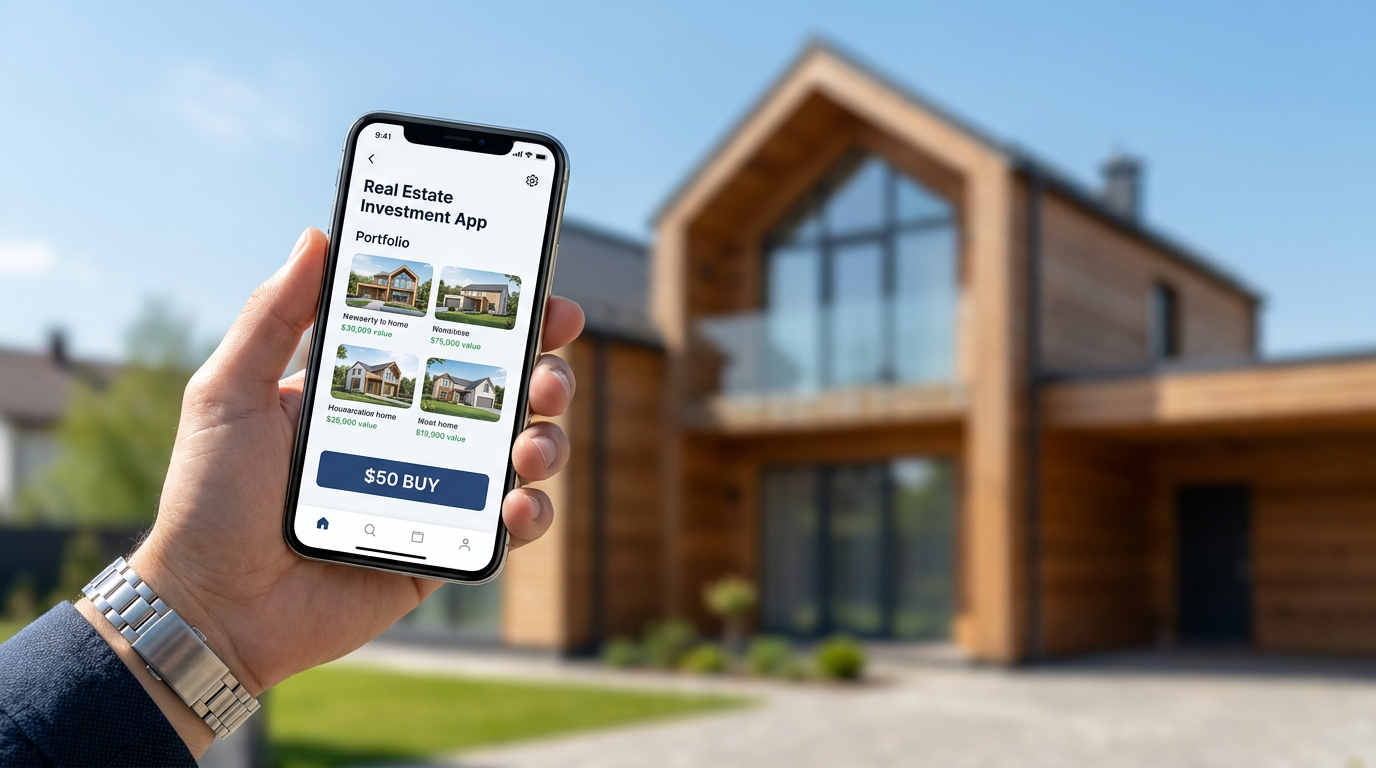
New platforms are allowing retail investors to buy shares of rental properties for as little as $50, transforming a historically exclusive asset class into an accessible, digital investment.
By Factlen Editorial Team

- Retail Investors
- Everyday individuals seeking access to real estate wealth without the traditional barriers.
- Blockchain & Fintech Innovators
- Technologists pushing to digitize and streamline the real estate market.
- Traditional Real Estate Purists
- Experienced landlords and investors who favor direct ownership and leverage.
- Financial Regulators
- Government bodies focused on market stability and investor protection.
What's not represented
- · Local housing advocates concerned about corporate ownership of single-family homes
Why this matters
By lowering the minimum investment from a massive mortgage down payment to as little as $50, fractional platforms are democratizing an asset class that has historically been the primary driver of generational wealth. This shift allows everyday investors to earn passive rental income and build diversified property portfolios without the headaches of traditional landlording.
Key points
- Fractional investing allows individuals to buy digital shares of specific rental properties for as little as $50.
- Investors earn returns through proportional dividend payouts from rental income and capital appreciation of the property.
- Blockchain tokenization is creating 24/7 secondary markets, bringing unprecedented liquidity to the traditionally illiquid real estate market.
- While the model lowers the barrier to entry, investors trade away direct control over the property and must pay platform management fees.
For generations, real estate has been the bedrock of wealth creation, but it has always come with a formidable bouncer at the door: the down payment. Traditional property investment requires tens of thousands of dollars in upfront capital, a pristine credit score, and the willingness to take on significant debt. This financial moat has historically kept the most lucrative asset class out of reach for the average retail investor.[1]
Beyond the financial barrier, direct ownership demands active labor. Landlords must screen tenants, repair leaking roofs at midnight, and navigate complex local zoning laws. This combination of high capital requirements and operational headaches has historically locked the majority of the public out of direct property investment, forcing them to rely solely on the stock market for wealth generation.[8]
In recent years, a structural shift has emerged to dismantle these barriers: fractional real estate investing. Rather than purchasing an entire building, investors can now buy digital shares of a specific property for as little as $10 to $100. This model transforms a physical, illiquid building into a highly accessible financial product.[2][4]
The mechanics behind this innovation are straightforward but legally robust. A fractional investment platform identifies a high-potential property—such as a single-family home in Texas or a vacation villa in Bali—and creates a legal entity, typically a Limited Liability Company (LLC) or a Special Purpose Vehicle (SPV), to hold the title. The property itself is never divided; the legal entity is.[3][6]

The platform then divides the ownership of that entity into thousands of shares. When an investor purchases these shares, they are buying a direct economic interest in that specific property, not an abstract, blended fund. This allows investors to choose exactly which neighborhoods and asset classes they want to back.[4]
This model generates returns through two primary channels. First, the property is rented out to tenants. The net rental income—calculated after maintenance, property taxes, and management fees are deducted—is distributed to the shareholders as proportional dividends, creating a steady stream of passive income.[3]
Second, investors benefit from capital appreciation. If the underlying property increases in value over time due to market conditions or renovations, the value of the fractional shares rises correspondingly. Investors capture this upside when the asset is eventually sold or when they trade their shares to another buyer.[4][8]
A major advantage of this approach is instant diversification. Instead of sinking $100,000 into a single home in one neighborhood, an investor can spread that same capital across fifty different properties in various geographic markets. This significantly reduces their exposure to local economic downturns or a single bad tenant.[7][8]

A major advantage of this approach is instant diversification.
The industry is now undergoing a second evolution through tokenization. By leveraging blockchain technology, platforms are converting these legal shares into digital tokens governed by smart contracts. This technological leap is fundamentally rewiring how real estate transactions settle.[5][7]
Tokenization strips away layers of traditional intermediaries, such as brokers, title companies, and escrow agents, reducing transaction costs and expediting the settlement process. According to industry projections, the tokenized fractional real estate market is expected to grow at a 21% compound annual growth rate, reaching nearly $19.4 billion by 2033.[3][5][7]
Perhaps the most significant problem tokenization solves is liquidity. Traditional real estate is notoriously illiquid; selling a house can take months and involves hefty agent commissions. Capital is effectively trapped within the walls of the property until a buyer is found and a mortgage is approved.[5][7]
In contrast, tokenized platforms operate 24/7 secondary markets. Investors can list their shares for sale and, assuming there is buyer demand, liquidate their positions in near real-time. This aligns real estate more closely with the fluid dynamics of the stock market, giving investors unprecedented flexibility.[2][3]

However, fractional investing is not without its drawbacks and risks. The most prominent trade-off is a complete lack of control. Investors have no say in how the property is managed, what color the walls are painted, or when the asset is ultimately sold. They are entirely passive participants.[8]
Furthermore, the returns are heavily dependent on the platform's competence and fee structure. Platforms charge sourcing fees, annual assets under management (AUM) fees, and property management fees. While these fees cover the cost of a hands-off experience, they compress the final yield delivered to the investor.[2][8]
There is also platform dependency risk. If the company managing the fractional marketplace goes bankrupt or faces regulatory action, the underlying LLCs and SPVs may face administrative chaos. While the physical property remains, the mechanism for distributing rent and facilitating trades could be severely disrupted.[8]
Regulators globally are racing to catch up with the technology. In the United States, platforms must navigate complex Securities and Exchange Commission (SEC) rules regarding the sale of unregistered securities, ensuring that retail investors are adequately protected from fraudulent offerings.[3]

Meanwhile, Europe is implementing the Markets in Crypto-Assets (MiCA) regulation to provide a clearer framework for tokenized assets. In India, the market regulator SEBI recently introduced a dedicated Small and Medium REITs (SM REITs) framework specifically designed to govern and legitimize fractional ownership platforms.[5][6]
Despite the regulatory hurdles and inherent risks, the fractional model represents a profound democratization of real estate. By lowering the barrier to entry from a mortgage down payment to the cost of a restaurant dinner, it allows a new generation to build wealth in an asset class that was previously out of reach.[1][5]
How we got here
2012
The JOBS Act is passed in the United States, legalizing real estate crowdfunding and opening the door for non-accredited investors.
2015
Early fractional platforms begin offering eREITs, allowing retail investors to buy into diversified real estate portfolios with low minimums.
2021
Blockchain-based platforms begin tokenizing individual rental properties, introducing near real-time secondary market trading.
2024
India's market regulator (SEBI) introduces the Small and Medium REITs framework to formally regulate fractional ownership platforms.
2026
The tokenized real estate market sees accelerated global adoption, driven by clear regulatory frameworks like Europe's MiCA.
Viewpoints in depth
Retail Investors
Everyday individuals seeking access to real estate wealth without the traditional barriers.
For retail investors, the primary appeal of fractional real estate is accessibility and passive income. By lowering the entry threshold to $50 or $100, these platforms allow individuals to participate in property appreciation and earn dividend yields without taking on a mortgage or dealing with tenant complaints. They value the ability to build a diversified portfolio of properties across different cities, mitigating the risk of a single local market downturn.
Blockchain & Fintech Innovators
Technologists pushing to digitize and streamline the real estate market.
This camp views traditional real estate as an antiquated, illiquid market burdened by rent-seeking middlemen like brokers, title companies, and escrow agents. By tokenizing property shares on a blockchain, they argue that transactions can settle in seconds rather than months. They emphasize that 24/7 secondary markets provide unprecedented liquidity, transforming real estate from a static physical asset into a dynamic, tradable financial instrument.
Traditional Real Estate Purists
Experienced landlords and investors who favor direct ownership and leverage.
Traditionalists warn that fractional investing strips away the two most powerful wealth-building tools in real estate: leverage and control. When buying a whole house, an investor can use a bank's money to multiply their returns. In fractional investing, returns are strictly unleveraged. Furthermore, purists caution that fractional investors are entirely at the mercy of the platform's management decisions and fee structures, which can significantly eat into the final yield.
Financial Regulators
Government bodies focused on market stability and investor protection.
Regulators acknowledge the democratizing potential of fractional ownership but are highly concerned about consumer protection. They focus on ensuring that digital shares are properly registered as securities and that platforms maintain transparent fee structures. Agencies like the SEC in the US and SEBI in India are actively drafting frameworks to ensure that if a platform goes bankrupt, the underlying property assets and investor capital remain legally protected.
What we don't know
- How fractional real estate platforms will perform during a severe, prolonged housing market crash, as the model has primarily existed during periods of price appreciation.
- Whether secondary markets for tokenized real estate will maintain enough buyer demand to guarantee true liquidity during economic downturns.
- How local municipalities might regulate or restrict fractional ownership platforms if they are perceived as contributing to housing shortages.
Key terms
- Fractional Ownership
- A model where multiple investors pool their money to buy shares of a single asset, sharing its income and expenses.
- Tokenization
- The process of converting ownership rights of an asset into digital tokens on a blockchain, allowing for secure and efficient trading.
- Special Purpose Vehicle (SPV)
- A subsidiary company created for a specific, narrow objective, such as holding the legal title to a single piece of real estate to isolate financial risk.
- Secondary Market
- A marketplace where investors can buy and sell previously issued shares or tokens among themselves, providing liquidity.
- Liquidity
- The ease with which an asset can be converted into cash quickly without significantly affecting its market price.
Frequently asked
Do I actually own the physical property?
No. You own shares in a legal entity, such as an LLC or SPV, which holds the title to the physical property. Your shares give you an economic interest in the asset's performance.
How do I make money from fractional real estate?
Investors earn money through two channels: proportional dividends from the net rental income generated by the property, and capital appreciation if the property's value increases over time.
Can I sell my fractional shares whenever I want?
It depends on the platform. Some require a lock-up period of several years, while tokenized platforms offer secondary markets where you can sell shares immediately, provided there is buyer demand.
Who handles the maintenance and tenants?
The fractional investing platform or a designated third-party property management company handles all operational tasks, including tenant screening, repairs, and rent collection.
Sources
Source coverage
8 outlets
4 viewpoints surfaced








[1]Factlen Editorial TeamTraditional Real Estate Purists
Synthesis by Factlen editorial team
Read on Factlen Editorial Team →[2]LoftyBlockchain & Fintech Innovators
Best Real Estate Investing Platforms of 2026
Read on Lofty →[3]BinaryxBlockchain & Fintech Innovators
Fractional Property Ownership: 2026 Guide
Read on Binaryx →[4]RealbricksRetail Investors
How Fractional Real Estate Investing Works
Read on Realbricks →[5]EYFinancial Regulators
The Advantages of Real Estate Tokenization
Read on EY →[6]Angel OneFinancial Regulators
What is Fractional Real Estate Investing?
Read on Angel One →[7]HW NovaBlockchain & Fintech Innovators
Advantages of investing in tokenized real estate
Read on HW Nova →[8]Catalyst CPRetail Investors
Pros and Cons of Investing in Fractional Real Estate
Read on Catalyst CP →

Every angle. Every day.
Get real estate stories with full source coverage and perspective breakdowns delivered to your inbox.