
How Content Credentials Work: The New Digital 'Nutrition Label' for Fact-Checking
A new open standard adopted by major tech and media companies embeds verifiable history into images and videos, allowing users to instantly check if content is authentic or AI-generated.
By Factlen Editorial Team

- Open-Web Advocates
- Argue that decentralized, open-source provenance standards are the only way to scale trust without relying on a single corporate gatekeeper.
- Media Literacy Researchers
- Focus on how these tools change human behavior, emphasizing that technology must be paired with public education to be effective.
- Privacy Defenders
- Warn that mandatory provenance could endanger whistleblowers and activists who rely on anonymity to share sensitive media safely.
- Commercial Tech Platforms
- Prioritize seamless user experience and scalable infrastructure, focusing on how to integrate these labels without slowing down content delivery.
What's not represented
- · Independent creators lacking access to enterprise-grade software tools
- · Users in regions with low digital literacy who may misinterpret the labels
Why this matters
As deepfakes and AI-generated media become indistinguishable from reality, this tool shifts the burden of proof from the viewer to the creator. It gives you a reliable, built-in way to verify the origin of what you see online before you share it, protecting you from digital manipulation.
Key points
- Content Credentials act as a digital 'nutrition label' for images and videos, showing their origin and edit history.
- The open-source standard uses cryptographic hashing to make the media's history tamper-evident.
- Studies show that visible provenance labels drastically reduce the likelihood of users sharing synthetic media.
- Major social media platforms and newsrooms are now natively integrating the 'CR' verification badge.
- While secure, the metadata can be stripped via screenshots, making public education on digital literacy essential.
The internet of 2026 is flooded with synthetic media, making the old adage "seeing is believing" largely obsolete. For years, fact-checkers and everyday users played an unwinnable game of whack-a-mole, trying to debunk AI-generated images and deepfakes after they had already gone viral. The burden of proof rested entirely on the consumer to figure out if a shocking photo or video was real.[6]
But a fundamental shift is underway in how we establish digital truth. Instead of trying to detect what is fake, the technology industry and major newsrooms have pivoted to proving what is real. This is the premise behind Content Credentials, an open-source standard that acts as a digital "nutrition label" for media, empowering users to verify facts at a glance.[1][6]
Built by the Coalition for Content Provenance and Authenticity (C2PA), the standard embeds cryptographic metadata into a file the moment it is created. Whether snapped by a smartphone camera, edited in Photoshop, or generated by an AI model, the file carries a secure, tamper-evident history of its origins and any subsequent alterations.[1][2]
The cryptographic mechanism at the heart of the standard ensures this history remains intact and verifiable. When an image is captured by a compliant device, the hardware generates a unique digital signature. Any subsequent alteration to the pixels—such as cropping, color correction, or AI manipulation—is recorded as a new, mathematically linked layer in the file's manifest.[1]

If a malicious actor attempts to alter the image without recording the change, the cryptographic hash breaks. When a user clicks the small "CR" (Content Credentials) pin on a supported platform, the system flags the broken chain, instantly indicating that the file's history has been tampered with or intentionally stripped.[2][6]
The ultimate test of any fact-checking tool is whether it changes human behavior, and evidence suggests provenance labels significantly alter user sharing habits. By introducing crucial "cognitive friction" before a user hits the retweet or share button, the labels force a moment of critical evaluation.[3]
The ultimate test of any fact-checking tool is whether it changes human behavior, and evidence suggests provenance labels significantly alter user sharing habits.
A comprehensive 2025 study published in the Journal of Online Trust and Safety tested users' reactions to labeled versus unlabeled synthetic media. The researchers found a 74% reduction in the likelihood of users sharing an image when it carried a verified "AI-Generated" provenance label, compared to a control group viewing the exact same image without the label.[3]
Furthermore, the presence of a "Verified Capture" label on authentic photojournalism increased user trust in the accompanying news article by over 40%. This indicates that readers are not just avoiding fakes; they are actively looking for, and rewarding, signals of authenticity in an increasingly synthetic web.[3][4]

While the technology is sound, platform integration has historically been the primary bottleneck. For years, metadata was hidden deep in file properties, accessible only to digital forensics experts. The C2PA standard brings this data to the surface, but it requires social media platforms to actively display the user interface elements.[4]
Throughout late 2025 and early 2026, major platforms began natively rendering Content Credentials. When an image with C2PA metadata is uploaded today, these platforms automatically display a small, clickable icon that reveals the file's ingredient list, making fact-checking a seamless part of the scrolling experience.[2][6]
Despite these advances, it is vital to understand the limitations of the evidence: the system is tamper-evident, but not tamper-proof. Content Credentials cannot prevent a user from taking a screenshot of an AI-generated image, a process that creates an entirely new file stripped of its original, protective metadata.[5]
Security researchers at the Stanford Internet Observatory emphasize that while the cryptographic chain is highly secure, this "analog hole" remains a vulnerability. If a user strips the metadata, the image simply appears as having "No Content Credentials," which platforms are increasingly treating as a signal for algorithmic demotion rather than outright removal.[5]

This dynamic creates a new paradigm for digital literacy: the absence of a credential becomes just as informative as its presence. Media literacy experts argue that training the public to instinctively ask "Where is the provenance data?" is the most effective long-term defense against misinformation.[4][5]
Ultimately, the widespread adoption of Content Credentials represents a rare, proactive victory in the fight against digital deception. By giving users the tools to verify the media they consume instantly, the standard empowers individuals to be their own fact-checkers, fostering a healthier, more transparent information ecosystem.[6]
How we got here
Late 2019
Adobe launches the Content Authenticity Initiative (CAI) to begin developing a framework for digital provenance.
Early 2021
The C2PA is formally established, bringing together tech giants and media organizations to create a unified open standard.
Mid 2024
Major AI developers, including OpenAI and Google, commit to attaching C2PA metadata to images generated by their models.
Early 2026
Leading social media platforms begin natively rendering the Content Credentials UI, bringing the tool to everyday users.
Viewpoints in depth
Open-Web Advocates
Argue that decentralized, open-source provenance standards are the only way to scale trust without relying on a single corporate gatekeeper.
Proponents of the open web emphasize that trust cannot be monopolized by a single tech giant. By building C2PA as an open-source standard, they argue that anyone—from a freelance journalist to a major newsroom—can cryptographically sign their work. This decentralized approach ensures that verification tools remain accessible and transparent, preventing a scenario where a single corporation dictates what is considered 'true' on the internet. They point to the rapid adoption by over 2,500 organizations as proof that collaborative, open standards can outpace proprietary solutions.
Media Literacy Researchers
Focus on how these tools change human behavior, emphasizing that technology must be paired with public education to be effective.
Researchers studying online behavior argue that the technical brilliance of cryptographic hashing is irrelevant if users don't understand what the labels mean. They highlight studies showing that while labels reduce the sharing of fakes, they can also create a 'false sense of security' if users assume unlabeled content is automatically authentic. This camp advocates for massive public education campaigns to accompany the technical rollout, stressing that the ultimate goal is to build 'cognitive friction'—training users to pause and evaluate the provenance of a file before reacting emotionally.
Privacy Defenders
Warn that mandatory provenance could endanger whistleblowers and activists who rely on anonymity to share sensitive media safely.
Privacy and human rights advocates raise concerns about the potential weaponization of digital provenance. If the internet moves toward a model where only cryptographically signed media is trusted or algorithmically promoted, anonymous whistleblowers and dissidents operating in authoritarian regimes could be marginalized. They argue that the standard must always remain opt-in, and that platforms must ensure that 'unverified' content is not automatically censored, preserving the internet's role as a safe haven for anonymous reporting.
What we don't know
- How quickly malicious actors will develop automated tools to strip metadata en masse at scale.
- Whether older, non-compliant hardware will inadvertently create a 'two-tiered' internet of trusted and untrusted content.
- How effectively the standard can be applied to live-streaming video, which presents significantly higher computational hurdles.
Key terms
- C2PA
- The Coalition for Content Provenance and Authenticity, an alliance of tech and media companies that created the open standard for digital media tracking.
- Cryptographic Hashing
- A mathematical algorithm that assigns a unique, secure digital signature to a file, which breaks if the file is secretly altered.
- Metadata
- Data embedded within a digital file that describes its properties, such as when it was created, what device was used, and what edits were made.
- Analog Hole
- A vulnerability where digital protections are bypassed by converting the media to an analog format or taking a screenshot, which strips the original metadata.
- Cognitive Friction
- A psychological concept where a user interface introduces a slight pause or hurdle, encouraging users to think critically before taking an action like sharing a post.
Frequently asked
Do I need to download an app to use Content Credentials?
No. The standard is being built directly into major web browsers, social media platforms, and camera apps, allowing you to click the 'CR' icon natively where the image is hosted.
What happens to all the old photos on the internet?
Older photos do not have this cryptographic metadata. Platforms will likely display them with a neutral 'No Content Credentials' status, distinguishing them from newly verified media.
Can AI companies fake the Content Credentials?
Because the standard relies on public-key cryptography, faking the credentials would require breaking the encryption of the issuing authority. However, malicious actors can strip the metadata entirely by taking a screenshot.
Does this cost money for creators?
The C2PA standard is open-source and free to implement. Major software providers like Adobe and camera manufacturers are including it as a free, built-in feature in their products.
Sources
Source coverage
6 outlets
4 viewpoints surfaced






[1]C2PA OfficialOpen-Web Advocates
Coalition for Content Provenance and Authenticity Technical Specifications
Read on C2PA Official →[2]MIT Technology ReviewOpen-Web Advocates
How the new 'nutrition label' for digital media actually works
Read on MIT Technology Review →[3]Journal of Online Trust and SafetyMedia Literacy Researchers
Cognitive Friction and Digital Provenance: The Impact of Media Labeling on User Sharing Behavior
Read on Journal of Online Trust and Safety →[4]Nieman LabMedia Literacy Researchers
Newsrooms are finally embracing digital provenance to rebuild reader trust
Read on Nieman Lab →[5]Stanford Internet ObservatoryPrivacy Defenders
The Analog Hole: Limitations in Cryptographic Media Provenance
Read on Stanford Internet Observatory →[6]Factlen Editorial TeamCommercial Tech Platforms
Synthesis by Factlen editorial team
Read on Factlen Editorial Team →

More in news politics
See all 154 stories →Media Consolidation
DOJ Approves $111 Billion Paramount-Warner Bros. Merger, Reshaping Media Landscape
9 sources

Tren de Aragua
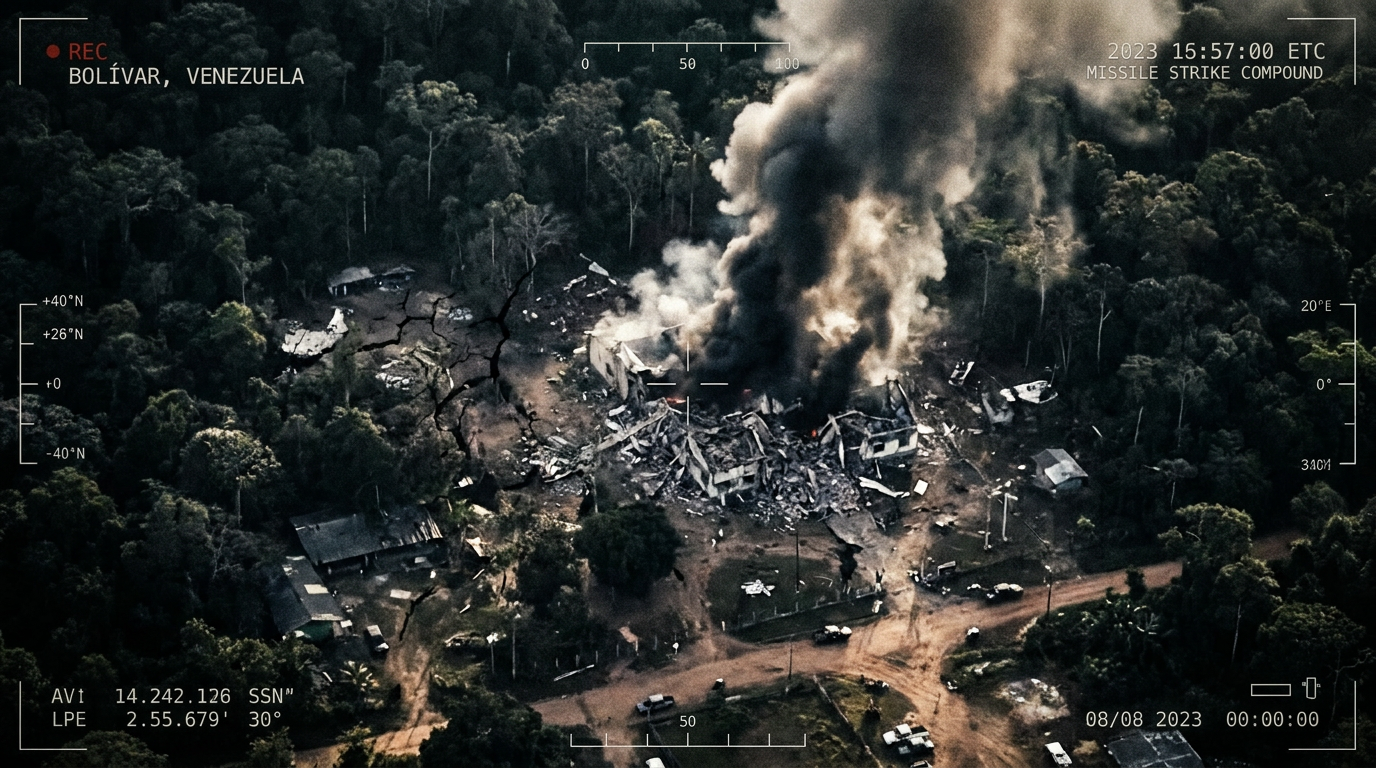
U.S. Military Strike in Venezuela Kills Tren de Aragua Leader Niño Guerrero
7 sources

Tren de Aragua
U.S. Military Strike in Venezuela Kills Tren de Aragua Leader Niño Guerrero
7 sources
Information Integrity
The 'Mind Vaccine': How Prebunking is Winning the War Against Misinformation
6 sources

Every angle. Every day.
Get news politics stories with full source coverage and perspective breakdowns delivered to your inbox.