
How AI and Neural Interfaces Are Rewiring Human Mobility
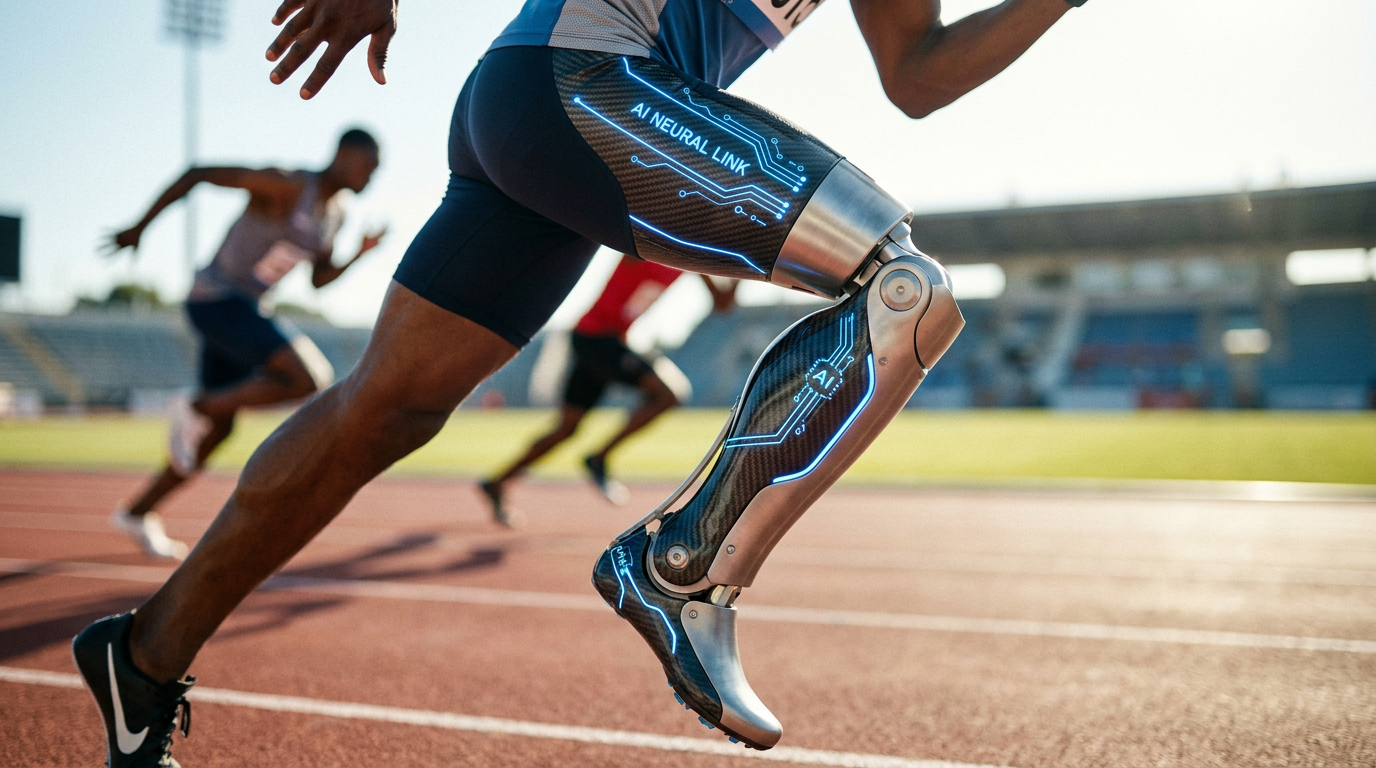
Breakthroughs in machine learning and tissue integration are closing the gap between mind and machine, transforming prosthetics from mechanical tools into intelligent extensions of the human body.
By Factlen Editorial Team
- Biomedical Researchers
- Focus on closing the neural loop and achieving true biomimetic movement through tissue integration.
- Commercial Robotics Developers
- Focus on scaling physical AI and bringing exoskeletons to industrial and consumer markets.
- Patient Advocates & Economists
- Highlight the widening accessibility gap and the need for insurance reform to cover these expensive devices.
What's not represented
- · Insurance Providers
- · Veterans Affairs Administrators
Why this matters
For decades, artificial limbs were lifeless mechanical tools that required immense physical effort to use. The integration of AI and direct neural interfaces is transforming prosthetics into true extensions of the human body, promising unprecedented mobility and independence for millions of amputees and individuals with motor impairments.
Key points
- MIT researchers have successfully integrated a bionic knee directly into human tissue, restoring natural gait and sensory feedback.
- AI algorithms are now capable of decoding complex brain signals in real-time, allowing users to control prosthetics with their thoughts.
- Wearable exoskeletons powered by 'Physical AI' are entering the commercial market, providing up to 84 pounds of lift support for industrial workers.
- Despite rapid technological advancements, the high cost of AI-powered bionics remains a significant barrier to widespread accessibility.
For decades, the fundamental bottleneck in the field of prosthetics was not mechanical, but communicative. A traditional artificial limb, no matter how beautifully engineered, is essentially a lifeless tool—a sophisticated peg that the human body must drag, swing, and manage through sheer physical effort and visual concentration. Amputees have historically had to rely on their eyes to see where their prosthetic foot is landing, compensating for the complete absence of physical sensation. But in 2026, the paradigm has definitively shifted from mechanical replacement to biological integration. The era of the passive prosthesis is ending, replaced by a new frontier where artificial intelligence and advanced surgical techniques bridge the gap between human intention and robotic execution, creating devices that truly feel like a part of the user's own body.
Driven by converging breakthroughs in machine learning, miniaturized robotics, and neuroscience, a new generation of AI-powered bionic limbs and wearable exoskeletons is fundamentally rewiring human mobility. These modern devices no longer just respond to physical momentum or gravity; they actively read the user's nervous system, predict their immediate intent, and adapt to their surrounding environment in real-time. Whether it is a bionic ankle adjusting its torque for a steep, rocky incline or a robotic hand applying the exact amount of pressure needed to hold a fragile egg, artificial intelligence is serving as the crucial translator. This intelligence transforms raw, chaotic biological signals into smooth, coordinated mechanical action, offering a level of autonomy and grace that was previously confined to the realm of science fiction.
The most profound leap in this space has occurred in the realm of neuroprosthetics, where researchers are successfully closing the loop between mind and machine. At the Massachusetts Institute of Technology, a pioneering team led by biophysicist Hugh Herr has developed a bionic knee that integrates directly with the user's muscle and bone tissue. This breakthrough fundamentally alters how the human brain perceives and interacts with the artificial limb. Instead of strapping a device onto the outside of the body, the MIT approach wires the robotics directly into the patient's existing biological infrastructure, allowing the nervous system to communicate with the titanium and carbon fiber as if it were flesh and bone.[1]
This tissue-integrated approach relies heavily on a novel surgical technique known as the Agonist-Antagonist Myoneural Interface, or AMI. During a traditional amputation, the natural pairs of muscles that stretch and contract to move a joint are permanently severed. This severs the nervous system's ability to sense where the limb is in space—a concept known as proprioception. The AMI surgery meticulously reconnects these opposing muscle pairs within the residual limb, preserving the vital sensory feedback loop. When the brain sends a signal to move the phantom limb, the reconnected muscles physically contract, generating electrical signals that the bionic limb's sensors can read, while simultaneously sending natural stretch sensations back up the spinal cord to the brain.[1]

When this advanced neural interface is combined with osseointegration—a process of anchoring a titanium rod directly into the bone rather than relying on a chafing, cumbersome, and often painful prosthetic socket—the clinical results are unprecedented. In a landmark clinical study published recently, patients with above-the-knee amputations who received this integrated bionic knee were able to navigate complex obstacles and climb stairs with a highly natural gait. More importantly, the participants reported a profound psychological shift: the bionic knee felt less like a heavy machine they were forced to carry, and significantly more like an organic extension of their own self, drastically reducing the cognitive load required just to walk across a room.[1]
But innovative hardware and surgical techniques are only half of the equation; the true engine driving this mobility revolution is artificial intelligence. Translating raw, chaotic nerve signals into smooth, reliable mechanical action requires immense computational power and sophisticated pattern recognition. At the University of Utah's NeuroRobotics Lab, researchers are utilizing advanced machine learning algorithms to decode the brain's native signaling patterns. By training AI models on thousands of hours of neural data, the system learns to recognize the specific electrical signatures associated with distinct movements, such as pointing a finger, rotating a wrist, or flexing a calf muscle, translating those thoughts into instantaneous digital commands.[2]
These machine learning algorithms act as a lightning-fast, real-time translator between human biology and robotic hardware. When a user simply thinks about moving their fingers or bending their knee, the AI decodes those neural spikes and instantly commands the prosthesis to execute the motion with near-zero latency. Crucially, the system also works in reverse. Sensors embedded in the bionic fingertips or the sole of the robotic foot detect pressure and texture, and the AI translates that physical data back into electrical impulses. These impulses are sent up the user's nerves, successfully simulating a genuine sense of touch and pressure, allowing users to feel the ground beneath them or the grasp of a loved one's hand.[2]
These machine learning algorithms act as a lightning-fast, real-time translator between human biology and robotic hardware.
The overwhelming success of these bidirectional neural interfaces has prompted swift regulatory action to get the technology into the hands of patients who need it most. Recognizing the transformative potential of the technology, the U.S. Food and Drug Administration has recently granted "Breakthrough Device Designation" to several direct neural interfaces. This specialized designation is reserved for medical devices that provide for more effective treatment or diagnosis of life-threatening or irreversibly debilitating diseases. By fast-tracking these AI-powered bionics through the complex approval process, regulators are helping to bring them out of isolated research laboratories and into everyday clinical use much faster than the traditional medical device timeline would allow.[2]
While neuroprosthetics primarily aim to restore lost function for amputees, the exact same underlying AI technology is now being deployed to augment able-bodied individuals through wearable exoskeletons. Once confined to the realm of heavy, tethered industrial prototypes and military research, exoskeletons have reached a critical commercialization juncture in 2026. Thanks to advancements in lightweight carbon fiber, high-density batteries, and edge computing, these wearable robots have become drastically lighter, smarter, and highly adaptive to the user's natural movements, opening up entirely new markets in both the industrial and consumer sectors.[5]

At the 2026 Consumer Electronics Show, robotics companies showcased a new era of what they are calling "Physical AI." German Bionic, a leader in the space, unveiled the Exia, a sleek, wearable robotic suit designed specifically for industrial workers in logistics, manufacturing, and healthcare. Rather than simply providing brute mechanical force that the user has to fight against, the Exia utilizes an onboard AI engine that has been trained on billions of real-world human motion data points. This allows the suit to understand exactly how a person naturally lifts, bends, and carries heavy loads in a dynamic work environment.[3]
This intelligent system delivers up to 84 pounds of dynamic lift support per movement, but it does so by predicting the worker's immediate intent and synchronizing perfectly with their natural biomechanics. If a worker bends down to pick up a heavy box, the AI anticipates the upward trajectory and engages the motors at the exact millisecond the lift begins. The result is a drastic reduction in spinal strain, joint wear, and overall fatigue, effectively transforming the exoskeleton from a clunky piece of machinery into a collaborative, intelligent second skin that protects the worker from long-term musculoskeletal injuries.[3]
The consumer market is also experiencing a rapid surge in exoskeleton adoption, driven by a desire for enhanced mobility and outdoor recreation. Lightweight, AI-driven exoskeletons weighing less than four pounds are now hitting the market, designed to be strapped on over regular clothing. These consumer devices are increasingly being rented by hikers and outdoor enthusiasts to conquer steep mountain trails or navigate challenging terrain. The onboard AI analyzes the terrain and the user's posture in real-time, providing targeted motorized assistance to the hips and knees that makes grueling, multi-hour climbs feel surprisingly effortless, democratizing access to the outdoors for older adults or those with mild mobility issues.[5]

In the realm of clinical rehabilitation, these smart exoskeletons are serving as active, data-driven therapy partners rather than just passive walking aids. Stroke survivors and patients recovering from severe spinal cord injuries are now using AI-augmented gait systems that create precise digital models of their movement patterns. As the patient attempts to walk on a treadmill, the exoskeleton provides "assist-as-needed" support, dynamically adjusting the level of motorized help in real-time. As the patient regains physical strength and their neural pathways begin to heal and rewire, the AI automatically dials back the assistance, forcing the patient's muscles to do more of the work and accelerating the overall recovery process.[4]
Despite the staggering pace of technological innovation, a significant and frustrating hurdle remains: widespread accessibility. As recent industry reports have highlighted, the cost of cutting-edge, AI-powered bionic limbs and medical-grade exoskeletons can easily reach hundreds of thousands of dollars per unit. For the vast majority of amputees globally, the reality of everyday prosthetic care is still defined by heavy, cumbersome, and entirely mechanical devices that are difficult to control and often painful to wear, leading to tragically high abandonment rates among patients who simply give up on using them.[7]
Healthcare economists and patient advocacy groups are increasingly warning that without a fundamental restructuring of insurance reimbursement models, these life-changing technologies will remain an exclusive luxury for the wealthy or the heavily crowdfunded. The challenge for the medical technology sector over the next decade is not just refining the machine learning algorithms or lightening the battery packs, but ensuring that the economics of bionics can scale. Manufacturers must find ways to reduce production costs, while policymakers must push for broader coverage that recognizes the long-term economic benefits of returning individuals to full, pain-free mobility.[6][7]

Ultimately, the breakthroughs of 2026 represent a profound philosophical shift in how society views disability, rehabilitation, and human limitation. By seamlessly merging artificial intelligence with human physiology, researchers and engineers are proving that the boundary between biology and technology is no longer a hard, impenetrable line. Instead, it has become a dynamic bridge—one that is allowing people to walk, work, feel, and live with unprecedented freedom. As these intelligent systems continue to learn and adapt, the future of human mobility looks less like a struggle against physical limitations, and more like a collaborative partnership with the machines we wear.[8]
How we got here
March 2024
The FDA grants Breakthrough Device Designation to direct neural interfaces, fast-tracking AI-powered bionics for clinical use.
July 2025
MIT researchers publish a landmark study demonstrating that a tissue-integrated bionic knee can restore natural gait and sensory feedback.
January 2026
German Bionic unveils the Exia at CES, introducing 'Physical AI' exoskeletons that learn from billions of human motion data points.
Mid-2026
Consumer and industrial exoskeletons reach a critical commercialization juncture, expanding rapidly beyond medical rehabilitation.
Viewpoints in depth
Biomedical Researchers
The shift from mechanical replacement to biological integration.
For decades, engineers treated prosthetics as a mechanical engineering problem: how to build a lighter, stronger hinge. Today's biomedical researchers argue that true mobility restoration requires a neuroscience approach. They emphasize that two-way communication—not just the brain commanding the limb, but the limb sending sensory feedback back to the brain—is the only way to reduce the cognitive load of walking and make the prosthesis feel like a true part of the body.
Commercial Robotics Developers
Scaling human augmentation through data-driven Physical AI.
Commercial developers view exoskeletons not just as hardware, but as software platforms that improve over time. By training their AI models on billions of real-world motion data points, they argue that exoskeletons will soon become as ubiquitous as smartphones. Their focus is on expanding the technology beyond medical rehabilitation into everyday industrial labor and consumer recreation, creating a future where physical augmentation is a standard tool for preventing injury and enhancing endurance.
Patient Advocates & Economists
The urgent need to bridge the accessibility and cost gap.
While celebrating the technological milestones, patient advocates and healthcare economists warn of a growing divide. They point out that a $100,000 AI-powered bionic limb is functionally useless to the average amputee if insurance providers refuse to cover it. This camp argues that the next major breakthrough needs to be in healthcare economics and manufacturing scalability, ensuring that these life-changing devices become the standard of care rather than a luxury reserved for a privileged few.
What we don't know
- How long the titanium osseointegration implants will remain stable in the bone over decades of heavy use.
- Whether major insurance providers will update reimbursement models to cover the high upfront costs of AI-powered neuroprosthetics.
- The long-term effects of relying on physical AI exoskeletons on natural human muscle retention and joint health.
Key terms
- Neuroprosthetics
- Medical devices that connect directly to the nervous system to restore or enhance motor and sensory functions.
- Osseointegration
- A surgical connection where a titanium implant is anchored directly into living bone, eliminating the need for a traditional prosthetic socket.
- Physical AI
- Artificial intelligence systems that operate directly in the physical world, such as exoskeletons that learn from and assist human movement in real-time.
- Agonist-Antagonist Myoneural Interface (AMI)
- A surgical technique that reconnects opposing muscle pairs during amputation to preserve the natural sensory feedback loop to the brain.
- Proprioception
- The nervous system's subconscious ability to sense the position, movement, and orientation of the body in space.
Frequently asked
How does an AI-powered bionic limb work?
Instead of relying purely on physical momentum, AI-powered limbs use machine learning algorithms to read electrical signals from the user's nervous system. The AI decodes these signals to predict the user's intended movement and instantly commands the robotic joints to execute the motion.
What is osseointegration in prosthetics?
Osseointegration is a surgical procedure where a titanium implant is anchored directly into the bone of the residual limb. This allows a prosthesis to attach securely without the need for a traditional, often uncomfortable, socket.
Are robotic exoskeletons available for everyday use?
Yes. As of 2026, lightweight, AI-driven consumer exoskeletons are entering the market. These devices are being used by hikers to reduce fatigue on steep trails and by industrial workers to prevent spinal strain when lifting heavy objects.
Can users actually feel what a bionic limb touches?
Advanced neuroprosthetics can simulate a sense of touch. Sensors in the robotic limb detect pressure and texture, and the AI translates this data into electrical impulses that are sent back up the user's nerves to the brain.
Sources
Source coverage
8 outlets
3 viewpoints surfaced







[1]MIT NewsBiomedical Researchers
A bionic knee integrated into tissue can restore natural movement
Read on MIT News →[2]University of UtahBiomedical Researchers
AI-powered bionic limbs come at too high a cost for many
Read on University of Utah →[3]German BionicCommercial Robotics Developers
AI to Wear: German Bionic Presents the Exia robotic Exoskeleton at CES 2026
Read on German Bionic →[4]Prosthetics & Robotics ShowBiomedical Researchers
Mind and Machine Unite in MIT's Bionic Knee
Read on Prosthetics & Robotics Show →[5]Robot MagazineCommercial Robotics Developers
Robotics in the Service of Mobility: A Quiet Revolution
Read on Robot Magazine →[6]Precedence ResearchPatient Advocates & Economists
Neuroprosthetics Market Size, Share, and Trends 2026
Read on Precedence Research →[7]Financial TimesPatient Advocates & Economists
AI-powered bionic limbs come at too high a cost for many
Read on Financial Times →[8]Factlen Editorial TeamPatient Advocates & Economists
Synthesis by Factlen editorial team
Read on Factlen Editorial Team →
Every angle. Every day.
Get ai stories with full source coverage and perspective breakdowns delivered to your inbox.