
How Homebuyers Are Bypassing 6.5% Rates With Assumable Mortgages and Buydowns
With the Federal Reserve signaling a prolonged fight against inflation, homebuyers are increasingly turning to structural workarounds like assumable loans and seller buydowns to secure lower effective interest rates.
By Factlen Editorial Team
- Prospective Homebuyers
- Focused on monthly affordability and bypassing elevated market rates.
- Property Sellers
- Focused on maximizing property marketability without slashing asking prices.
- Mortgage Servicers & Regulators
- Focused on the operational friction and regulatory compliance of alternative financing.
- Macroeconomic Analysts
- Focused on the broader economic environment and the Federal Reserve's inflation fight.
What's not represented
- · First-time homebuyers without cash reserves who are priced out of the equity gap.
- · Real estate agents navigating the complex marketing of assumable properties.
Why this matters
With standard mortgage rates stuck near 6.5%, understanding assumable loans and seller buydowns can be the difference between being priced out of the housing market and securing a monthly payment you can actually afford.
Key points
- The 30-year fixed mortgage rate remains elevated near 6.5% in mid-2026.
- Assumable mortgages allow buyers to inherit a seller's existing loan, often securing rates between 2.75% and 4%.
- Only government-backed loans, such as FHA and VA mortgages, are eligible for assumption.
- Buyers assuming a loan must cover the 'equity gap' between the purchase price and the remaining loan balance.
- Seller buydowns, like the 3-2-1 structure, offer temporary interest rate relief funded by seller concessions.
- Buyers must still qualify for buydown mortgages based on the full, un-discounted note rate.
The 2026 spring housing market has delivered a sobering reality check to prospective homebuyers: the era of universally cheap debt is not returning anytime soon. As of mid-June, the 30-year fixed-rate mortgage is hovering around 6.47%. With Federal Reserve Chair Kevin Warsh signaling a renewed commitment to getting inflation under control, the popular strategy of "dating the rate" in hopes of an imminent drop has largely evaporated. But rather than retreating from the market, a growing cohort of buyers is adapting. Instead of waiting for the macroeconomic weather to change, they are utilizing structural financing workarounds to bypass the headline interest rate entirely. By leveraging assumable mortgages and seller buydowns, buyers are engineering their own affordability and securing effective rates that are significantly lower than the national average.[1][2][5][7]
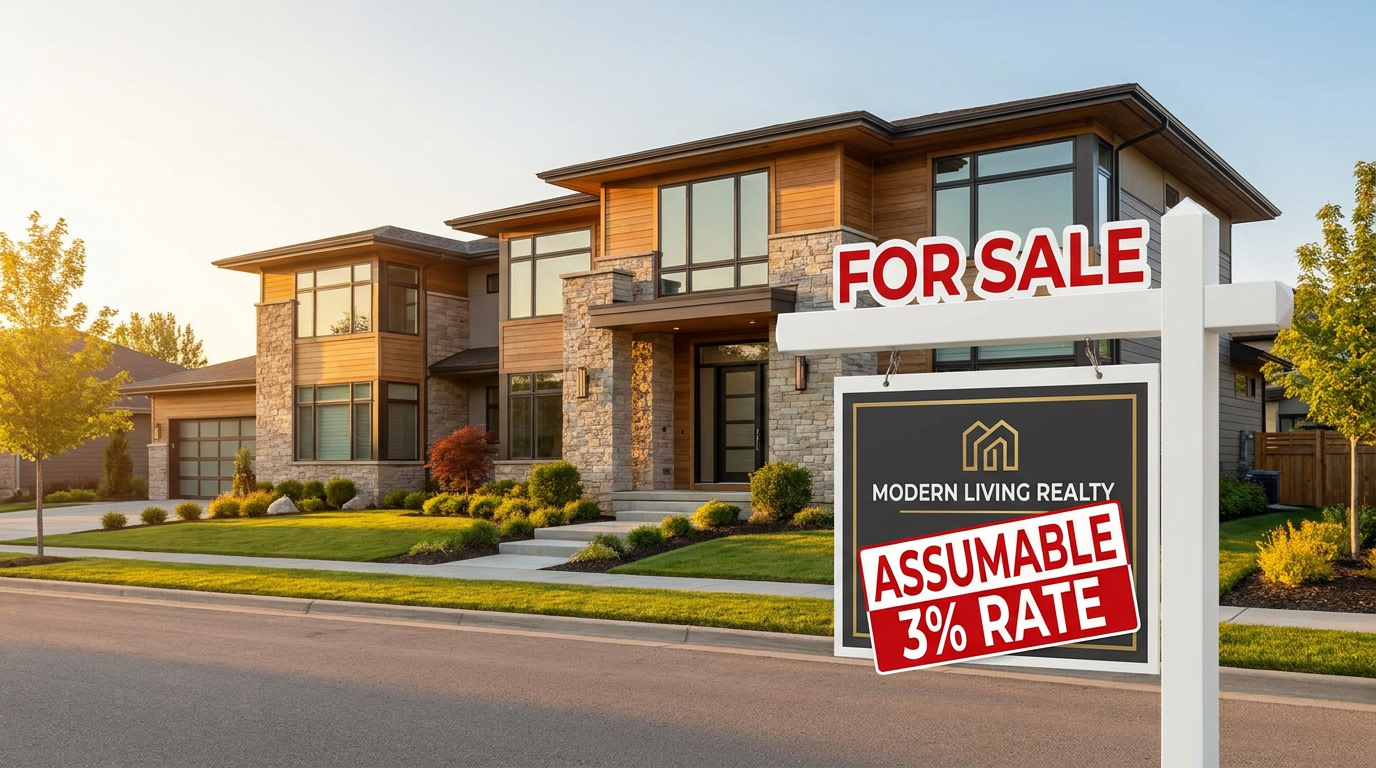
The most powerful—and often misunderstood—tool in this new environment is the assumable mortgage. While most buyers assume they must originate a brand-new loan at today's market rates, an assumable mortgage allows a qualified buyer to step directly into the seller's shoes. The mechanics are straightforward but highly impactful. When a buyer assumes a mortgage, they take over the seller's remaining loan balance, the exact repayment schedule, and, crucially, the original interest rate. Because millions of American homes were financed or refinanced between 2020 and 2022, a vast reservoir of existing mortgages carry interest rates between 2.75% and 4%. For a buyer facing a 6.5% market rate, inheriting a 3% rate can reduce their monthly principal and interest payment by hundreds or even thousands of dollars over the life of the loan.[3][7]

However, there is a significant catch: not all home loans are assumable. Conventional mortgages, which make up the vast majority of the U.S. housing market, typically contain a strict "due-on-sale" clause. This provision requires the loan to be paid off in full the moment the property changes hands, legally preventing the mortgage from being transferred to a new owner. The loans that are eligible for assumption are exclusively government-backed. Federal Housing Administration (FHA) loans, Veterans Affairs (VA) loans, and U.S. Department of Agriculture (USDA) loans generally allow for assumptions, provided the buyer meets the necessary qualifications.[3][6][7]
For FHA loans, the process is relatively open. The buyer does not need to be a first-time homeowner, but they must apply with the seller's mortgage servicer and meet standard FHA credit, income, and debt-to-income requirements. Once approved, the buyer takes over the loan and the seller is released from liability. VA loans present a unique opportunity with a specific caveat. Surprisingly, a buyer does not need to be a military veteran to assume a VA loan; civilian buyers can qualify if they meet the financial criteria. However, if a non-veteran assumes the loan, the original veteran seller's VA housing entitlement remains tied to that property until the assumed loan is fully paid off, which can complicate the seller's ability to purchase their next home using a VA loan.[4][6]
Once approved, the buyer takes over the loan and the seller is released from liability.
Even when a buyer finds an assumable government-backed loan, they must navigate the transaction's biggest hurdle: the equity gap. An assumption only covers the remaining balance of the seller's mortgage. If a home is selling for $500,000 and the assumable loan balance is only $350,000, the buyer is responsible for the $150,000 difference. Because taking out a second mortgage at current market rates can be expensive and complex to coordinate alongside an assumption, buyers typically need to cover this equity gap with cash. This dynamic means that while assumable mortgages offer incredible monthly savings, they are often only accessible to buyers with substantial liquid assets or proceeds from a previous home sale.[3][7]

For buyers who lack the cash to bridge an equity gap, or who are purchasing homes with conventional loans, a different mechanism has surged in popularity: the seller buydown. As housing inventory slowly increases, sellers are looking for ways to attract buyers without drastically slashing their asking prices. Instead of a $15,000 price reduction—which only marginally lowers a buyer's monthly payment—a seller can offer that same $15,000 as a concession at closing to fund a temporary interest rate buydown. The funds are placed in an escrow account and used to subsidize the buyer's monthly mortgage payments for the first few years of the loan.[5][7]
The most common structure is the "3-2-1 buydown." Under this arrangement, the buyer's effective interest rate is reduced by 3 percentage points in the first year, 2 points in the second year, and 1 point in the third year. If the baseline note rate is 6.5%, the buyer effectively pays 3.5% in year one, 4.5% in year two, and 5.5% in year three. By the fourth year, the subsidy is exhausted, and the buyer begins paying the full 6.5% note rate for the remainder of the 30-year term. This strategy provides immediate, substantial relief during the cash-strapped early years of homeownership, allowing buyers to ease into their full payment.[5][7]

Crucially, lenders require buyers to qualify for the mortgage based on the full, un-discounted note rate. This regulatory safeguard ensures that buyers have the income to afford the actual cost of the home once the temporary buydown period expires, preventing the kind of payment shock that characterized the 2008 housing crisis. If interest rates fall during the buydown period and the buyer decides to refinance, the unspent funds remaining in the buydown escrow account are not lost; they are typically applied as a principal reduction on the loan payoff. The rise of assumable mortgages and seller buydowns highlights a fundamental shift in how Americans are navigating the 2026 housing market. With macroeconomic relief delayed, buyers and sellers are treating the financing structure itself as a highly negotiable asset, proving that with the right knowledge, affordability can still be engineered.[1][5][7]
How we got here
2020–2022
Mortgage rates hit historic lows, allowing millions of homeowners to lock in rates between 2.75% and 4%.
2022–2024
The Federal Reserve aggressively raises interest rates to combat inflation, pushing standard mortgage rates above 7%.
2025
Rates stabilize in the mid-6% range, prompting a surge in creative financing structures like 3-2-1 buydowns.
June 2026
With the Fed signaling a continued fight against inflation, assumable mortgages and buydowns become essential tools for navigating a high-rate market.
Viewpoints in depth
Prospective Homebuyers
Focused on monthly affordability and bypassing elevated market rates.
For buyers, assumable mortgages represent a rare 'golden ticket' in a difficult market. By inheriting a 3% rate, they can dramatically increase their purchasing power and lower their monthly obligations. However, buyer advocacy groups note frustration with the steep cash requirements of the equity gap, which often restricts this strategy to those who already have significant liquid assets.
Property Sellers
Focused on maximizing property marketability without slashing asking prices.
Sellers are increasingly using financing terms as a marketing tool. Those holding FHA or VA loans advertise their low assumable rates as a premium feature, often commanding higher sale prices as a result. Meanwhile, sellers with conventional loans utilize 3-2-1 buydowns to attract rate-weary buyers, finding that offering a $15,000 financing concession is far more effective at closing a deal than a $15,000 price cut.
Mortgage Servicers
Focused on the operational friction and regulatory compliance of alternative financing.
While buyers and sellers love assumable loans, mortgage servicers highlight the operational challenges. Assumption requests are labor-intensive, yield low processing fees, and often take 60 to 90 days to close—significantly longer than standard originations. Servicers also emphasize that strict underwriting standards remain in place; buyers must fully qualify for both assumptions and buydowns to prevent future defaults.
What we don't know
- Whether the Federal Reserve will cut rates enough in late 2026 to make standard originations competitive with assumable loans again.
- How quickly mortgage servicers will adapt their operations to speed up the notoriously slow 60-to-90-day assumption approval process.
Key terms
- Assumable Mortgage
- A home loan that allows a buyer to take over the seller's existing mortgage, including its interest rate, repayment schedule, and remaining balance.
- Equity Gap
- The financial difference between a home's purchase price and the remaining balance of the assumable mortgage, which the buyer must cover with cash or secondary financing.
- Seller Buydown
- A financing arrangement where the seller pays a lump sum at closing to temporarily lower the buyer's mortgage interest rate for the first few years of the loan.
- Due-on-Sale Clause
- A standard provision in conventional mortgages requiring the loan to be paid in full when the property is sold, preventing the loan from being assumed by a new buyer.
- Note Rate
- The baseline, un-discounted interest rate stated on a mortgage contract, which a buyer pays after any temporary buydown periods expire.
Frequently asked
Can anyone assume a VA loan?
Yes, civilian buyers can assume a VA loan if they meet the lender's credit requirements. However, the original veteran seller's VA housing entitlement remains tied to the property until the loan is paid off.
Do I still have to qualify for an assumable mortgage?
Yes. The buyer must meet the original lender's credit, income, and debt-to-income requirements to be approved for the assumption.
What happens at the end of a 3-2-1 buydown?
In the fourth year, the buyer's interest rate returns to the original, un-discounted note rate for the remainder of the 30-year loan term.
Are conventional mortgages assumable?
Generally, no. Most conventional mortgages contain a 'due-on-sale' clause that requires the loan to be paid in full when the property is sold.
Sources
Source coverage
7 outlets
4 viewpoints surfaced







[1]MarketWatchMacroeconomic Analysts
Fed Chair Kevin Warsh wants to get inflation under control. That could be bad news for home buyers seeking lower mortgage rates.
Read on MarketWatch →[2]Freddie MacMacroeconomic Analysts
Primary Mortgage Market Survey: 30-Year Fixed-Rate Mortgage Averages 6.47%
Read on Freddie Mac →[3]Rocket MortgageProspective Homebuyers
How Does An Assumable Mortgage Work?
Read on Rocket Mortgage →[4]U.S. Department of Veterans AffairsMortgage Servicers & Regulators
VA Loan Assumption Guidelines and Entitlement
Read on U.S. Department of Veterans Affairs →[5]Mortgage News DailyProperty Sellers
Seller Concessions Pivot: The Rise of the 3-2-1 Buydown in 2026
Read on Mortgage News Daily →[6]U.S. Department of Housing and Urban DevelopmentMortgage Servicers & Regulators
FHA Assumability Requirements and Guidelines
Read on U.S. Department of Housing and Urban Development →[7]Factlen Editorial TeamProspective Homebuyers
Synthesis by Factlen editorial team
Read on Factlen Editorial Team →

Every angle. Every day.
Get finance stories with full source coverage and perspective breakdowns delivered to your inbox.