
Henley Royal Regatta 2026: Record Entries and New Trophies Reshape the Championship Picture
A record-breaking 862 crews from 21 nations are preparing for the 2026 Henley Royal Regatta, with the addition of three new women's events dramatically shifting the race for the hardware.
By Factlen Editorial Team
- US Collegiate & Junior Crews
- American programs view Henley as the ultimate proving ground to validate their domestic speed on an international stage.
- British Domestic Programs
- UK clubs and schools prioritize defending their home water and historic trophies against overseas challengers.
- Gender Parity Advocates
- Supporters of women's rowing celebrate the new trophies as a long-overdue structural victory that will incentivize global investment in female sculling.
What's not represented
- · Athletes eliminated in the qualifying time trials
Why this matters
With a record 862 entries and the addition of three new women's events, the 2026 Henley Royal Regatta represents a historic shift in global rowing parity. For the athletes involved, navigating the brutal qualifying rounds and the head-to-head bracket is the ultimate test of speed and psychological endurance on the sport's biggest stage.
Key points
- The 2026 Henley Royal Regatta has attracted a record 862 entries from 21 nations.
- Three new women's quadruple sculls events have been added to close the gender parity gap.
- US national champions Deerfield Academy and RowAmerica Rye will challenge top British schools.
- Reigning IRA champion University of Washington is sending two men's eights to compete.
- Nine reigning Olympic champions, including the Great Britain women's quad, are entered in the premier events.
- Weather delays have pushed some qualifying time trials to Saturday ahead of the official bracket draw.
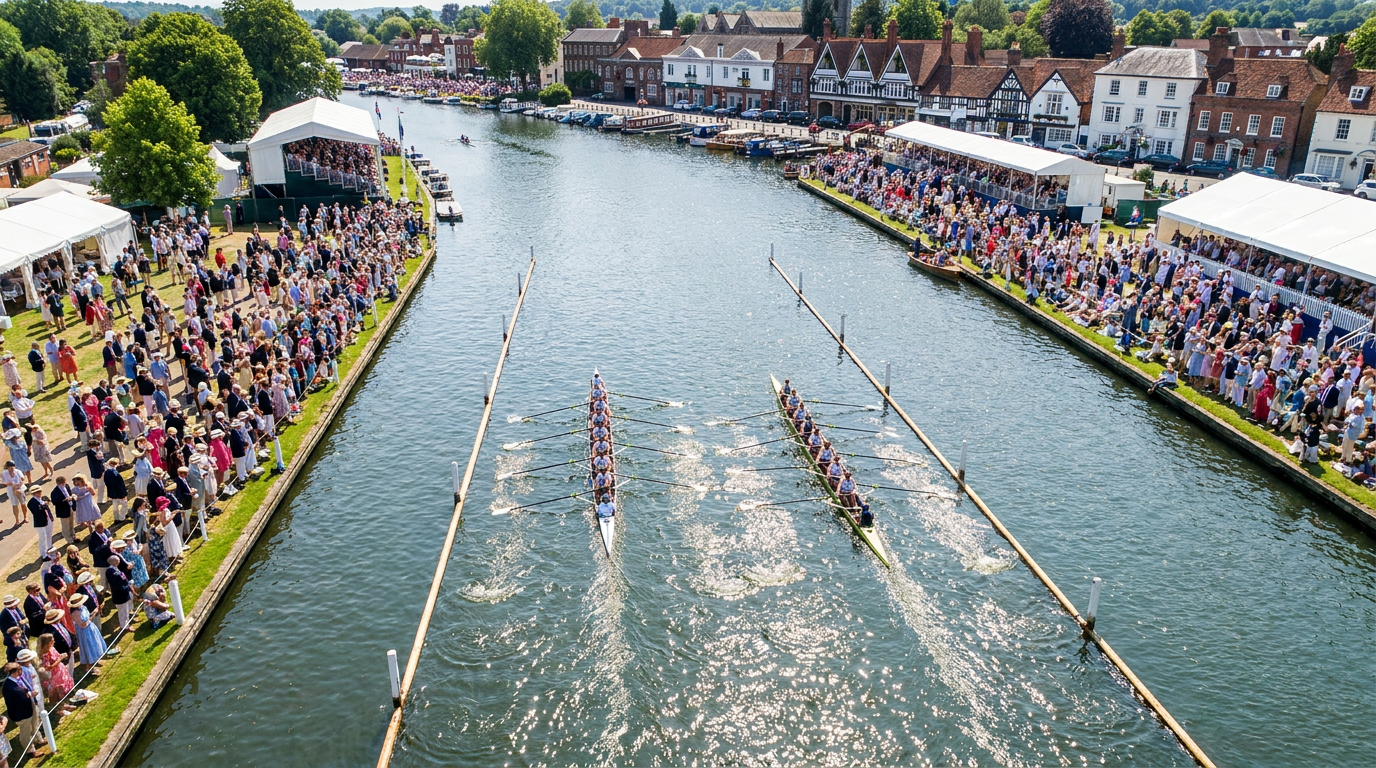
The championship picture for the 2026 Henley Royal Regatta is officially set, with a staggering 862 entries from 21 nations preparing to descend on the River Thames. As the global rowing community awaits the weekend's qualifying time trials and the official bracket draw, the stakes for the historic knockout tournament have never been higher. The sheer volume of entries has shattered previous records, forcing organizers to schedule grueling preliminary races just to thin the herd before Tuesday's opening heats. For the athletes involved, surviving the draw and securing a place on the iconic 2,112-meter course represents the culmination of a year's worth of training.[1][2][4]
The most significant structural shift in this year's championship landscape is the introduction of three new women's quadruple sculls events. The Princess of Wales Challenge Cup for intermediate crews, The Danesfield Challenge Cup for club programs, and The Queen Victoria Challenge Cup for students have been added to the racing slate, marking a final, decisive step toward gender parity for the 185-year-old regatta. The response from the rowing community has been overwhelming, with 35 boats entering the Danesfield Cup alone to fight for just 16 bracket spots. Organizers view the massive influx of female scullers as proof of pent-up demand and a validation of the regatta's modernization efforts.[1][3][4]
In the junior ranks, the race for the hardware is shaping up as a transatlantic heavyweight bout. Fresh off dominant victories at the USRowing Youth National Championships, American powerhouses are crossing the pond to test their speed against Britain's elite. Deerfield Academy's boys will contest The Princess Elizabeth Challenge Cup, while RowAmerica Rye's girls are taking aim at The Prince Philip Challenge Trophy. Both American crews will have to navigate a hostile environment and a deep field of domestic favorites, including UK schoolboy and schoolgirl titans like St Paul's School, Radley College, and Shiplake College.[1][2]

The collegiate brackets promise equally fierce competition, with the strongest American university contingent in recent memory looking to take trophies stateside. The University of Washington, the reigning Intercollegiate Rowing Association (IRA) national champions, are sending two formidable men's eights to contest the Ladies' Challenge Plate and the Temple Challenge Cup. Yale University's women will race in the Bridge Challenge Plate, while a highly anticipated composite crew featuring athletes from Cambridge and Harvard aims to disrupt the established order in the student eights.[1][2]
The collegiate brackets promise equally fierce competition, with the strongest American university contingent in recent memory looking to take trophies stateside.
While the club and student events provide the depth, the premier events will feature genuine rowing royalty, with nine reigning Olympic champions entered in the 2026 field. The Great Britain women's quad, featuring Paris gold medalists Lola Anderson, Imogen Grant, and Hannah Scott, will headline The Princess Grace Challenge Cup. Their presence guarantees that any international challengers will have to go through the absolute pinnacle of the sport to claim the trophy.[1][3]
In the individual sculling events, the championship picture is headlined by athletes looking to defend or reclaim their crowns. Great Britain's Lauren Henry returns to home water to defend her title in The Princess Royal Challenge Cup, carrying a formidable season record into the head-to-head format. On the men's side, German powerhouse Oliver Zeidler is seeking redemption in the Diamond Challenge Sculls. After a shock semifinal exit in last year's regatta, the Paris Olympic champion opened his 2026 season with eye-watering margins at the World Rowing Cups and arrives in Henley as the undisputed man to beat.[1][3]

The path to the finals, however, is currently at the mercy of the elements. Weather-related delays have forced organizers to adjust the schedule for the weekend's qualifying races, pushing some time trials into Saturday morning. The official draw, originally slated to take place in the town hall, has been moved to the boat tent area and will be livestreamed globally as crews wait to discover their first-round opponents. The tension in the boat tents is palpable, as a bad draw against a seeded favorite can end a crew's Henley campaign before it truly begins.[2][3]
Once the brackets are locked, the unique gladiatorial nature of Henley racing will take over. Unlike the six-lane, buoyed courses of the World Rowing circuit, Henley's two-lane, boom-lined course demands flawless steering and immense psychological resilience. With the roar of the Stewards' Enclosure looming in the final 500 meters, the 2026 regatta is primed to deliver a week of dramatic upsets, broken records, and historic firsts as the expanded field battles for the most coveted trophies in the sport.[4]
How we got here
March 1839
The Henley Royal Regatta is established on the River Thames.
2021
The Prince Philip Challenge Trophy and Wargrave Challenge Cup are introduced, expanding opportunities for women's eights.
June 15, 2026
Entries close for the 2026 regatta, locking in a record 862 boats.
June 26-27, 2026
Qualifying time trials and the official bracket draw establish the final racing field.
June 30, 2026
Head-to-head knockout racing begins on the 2,112-meter course.
Viewpoints in depth
US Collegiate & Junior Crews
American programs view Henley as the ultimate proving ground to validate their domestic speed on an international stage.
For programs like the University of Washington, Deerfield Academy, and RowAmerica Rye, crossing the Atlantic is a chance to validate their US national titles on the world's most famous course. American coaches and athletes approach the regatta aiming to disrupt British dominance, relying on the high-cadence, aggressive racing style that defines the US collegiate and youth circuits to shock domestic favorites in the early rounds.
British Domestic Programs
UK clubs and schools prioritize defending their home water and historic trophies against overseas challengers.
For historic British institutions like Leander Club, Thames Rowing Club, and St Paul's School, Henley is the absolute pinnacle of the domestic season. These programs tailor their entire year's training cycle around peaking for the 2,112-meter course. They view international challengers as invaders to be repelled, relying on their deep familiarity with the Thames' unique currents, wooden booms, and the psychological pressure of the enclosures to maintain their grip on the hardware.
Gender Parity Advocates
Supporters of women's rowing celebrate the new trophies as a long-overdue structural victory that will incentivize global investment in female sculling.
Advocates and female athletes see the introduction of the Princess of Wales, Danesfield, and Queen Victoria cups as a transformative moment for the sport. By offering intermediate, club, and student women the same quadruple sculls opportunities that men have historically enjoyed, the regatta is incentivizing clubs worldwide to invest more heavily in their women's sculling programs. The overwhelming entry numbers for these new events are viewed as immediate proof of pent-up demand.
What we don't know
- Which heavily favored crews might be eliminated early due to a difficult bracket draw.
- How the weather delays will impact the physical recovery of crews forced to race in the Saturday qualifiers.
Key terms
- Henley Royal Regatta
- A prestigious annual rowing event held on the River Thames, famous for its head-to-head knockout racing format.
- Quadruple Sculls
- A rowing boat propelled by four rowers, each using two oars (sculls).
- Eight
- A sweeping boat propelled by eight rowers, each using one oar, steered by a coxswain.
- Qualifying Races
- Time-trial events held before the main regatta to reduce an oversized entry field down to the final bracket size.
- The Draw
- The blind selection process that places qualified crews into the head-to-head racing bracket.
Frequently asked
How many crews are competing at Henley in 2026?
A record-breaking 862 crews from 21 different nations have entered the 2026 regatta.
What are the new women's events this year?
The regatta has added three women's quadruple sculls events: The Princess of Wales Challenge Cup, The Danesfield Challenge Cup, and The Queen Victoria Challenge Cup.
How does the racing format work?
Crews compete in a strict head-to-head knockout bracket over a 2,112-meter course, with the loser of each race eliminated from the tournament.
Are Olympic athletes allowed to compete?
Yes, the premier events regularly feature international squad members, and nine reigning Olympic champions are entered in the 2026 regatta.
Sources
Source coverage
4 outlets
3 viewpoints surfaced




[1]British RowingGender Parity Advocates
Henley Royal Regatta welcomes rowing royalty and a record entry in 2026
Read on British Rowing →[2]Rowing NewsUS Collegiate & Junior Crews
Henley Sees Another Record Entry
Read on Rowing News →[3]Hear The Boat SingGender Parity Advocates
Henley is coming, ready or not
Read on Hear The Boat Sing →[4]Henley Royal Regatta OfficialBritish Domestic Programs
2026 Entries Published
Read on Henley Royal Regatta Official →

More in sports
See all 27 stories →Standings
Great Britain Surges in Longines League of Nations Standings After Thrilling Rotterdam Victory
6 sources
Injury
Figure Skating Injury Report: Hendrickx Prioritizes Health in Retirement as Veterans Showcase the Power of Recovery
6 sources
Standings
Japan's Shimada and Nakata Top ISU Junior World Standings as 2026 Grand Prix Season Approaches
6 sources
Injury
Aleksander Aamodt Kilde Named to Norwegian National Team Following Grueling Injury Rehabilitation
6 sources

Every angle. Every day.
Get sports stories with full source coverage and perspective breakdowns delivered to your inbox.