
Fundamental 'Lineage Rule' Discovered for How Brain Cells Organize During Development
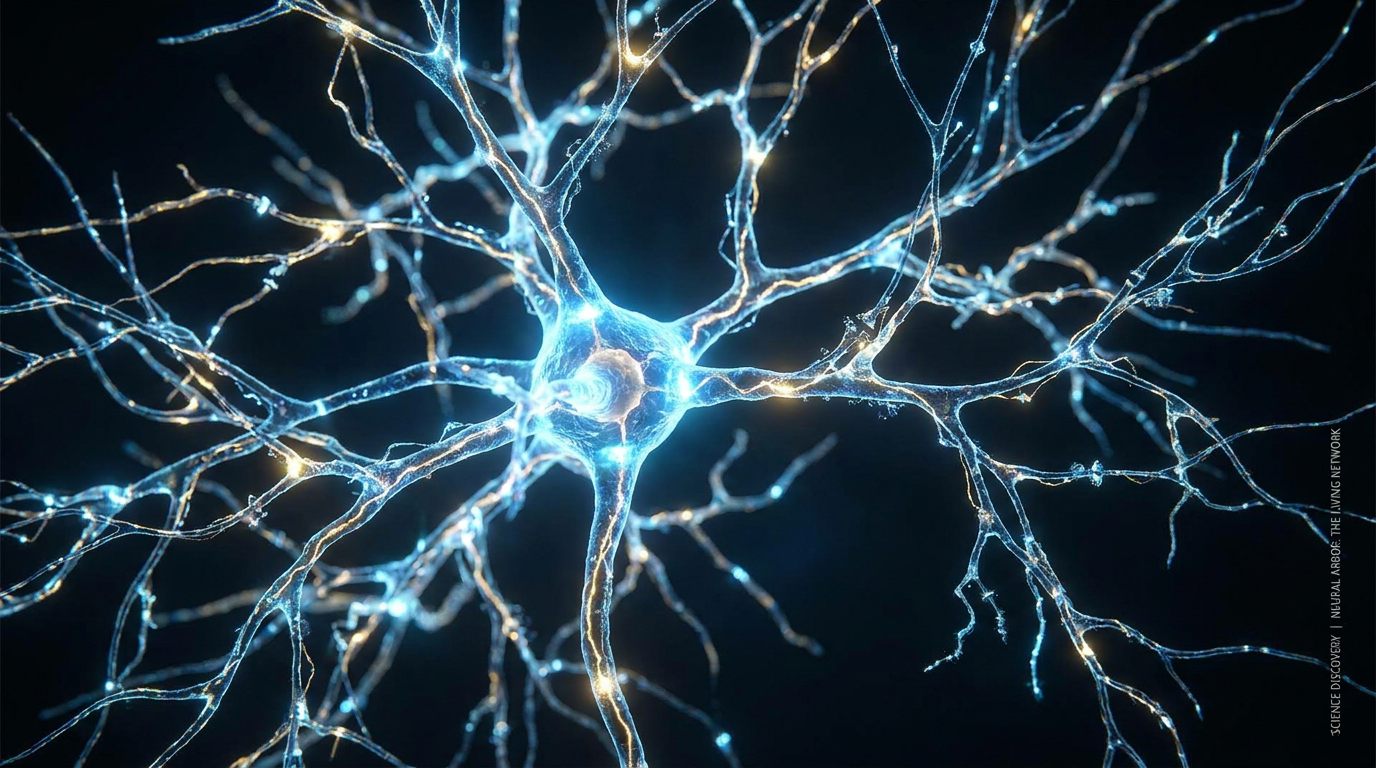
Neuroscientists have discovered that developing brain cells use their cellular family tree as an internal map, solving a decades-old mystery of how the brain scales to billions of neurons. This lineage-based organization complements chemical signaling and offers a new blueprint for self-organizing artificial intelligence.
By Factlen Editorial Team
- Developmental Biologists
- Focus on how the lineage rule solves the physical scaling limits of chemical diffusion.
- AI System Architects
- Focus on the potential for bottom-up, self-replicating artificial neural networks.
- Clinical Oncologists
- Focus on how tumors might hijack lineage-based mapping to coordinate malignant growth.
What's not represented
- · Evolutionary Biologists
- · Bioethicists
Why this matters
This discovery rewrites our fundamental understanding of how the brain builds itself, offering a new biological blueprint that could revolutionize how we design self-organizing artificial intelligence and treat developmental disorders.
Key points
- The human brain develops from a single cell into a 170-billion-cell organ without a central organizer.
- Chemical signals alone cannot guide this massive growth because they weaken over long distances.
- A new study reveals that brain cells use their lineage—their cellular family tree—as an internal positional map.
- Cells inherit stable genetic patterns called eigengenes, ensuring descendants stay in the correct biological neighborhood.
- The mechanism was proven across species, with identical patterns found in both mouse and zebrafish brains.
- The discovery provides a biological model for bottom-up self-organization in future AI systems.
The human brain begins its existence as a single, microscopic cell. Over the course of development, that solitary zygote multiplies and differentiates into an extraordinarily complex organ containing roughly 170 billion precisely organized cells. For decades, one of the most profound mysteries in developmental neuroscience has been how this vast, self-assembling network achieves such flawless architecture without a central blueprint or a biological "general" directing the troops. Every single neuron must solve two existential questions: where am I located, and what specific type of cell do I need to become? If a cell miscalculates its coordinates, the entire structural integrity of the brain is compromised.[3][6]
Historically, the scientific consensus relied heavily on chemical signaling to explain this phenomenon. Biologists understood that developing tissues secrete intercellular signaling molecules known as morphogens. These chemicals diffuse through the embryonic tissue, creating concentration gradients that act as a biological GPS. A cell reads the local concentration of various morphogens to determine its coordinates and, consequently, its developmental fate. This diffusion-based mechanism works exceptionally well in the earliest stages of embryonic growth, when the organism consists of a small, tightly packed cluster of cells communicating over microscopic distances.[2][6]
However, as the brain expands to its full volume, this chemical GPS encounters a fundamental physical limitation known as the "command gap." Morphogen gradients naturally degrade and weaken as they travel across expanding tissue. In a rapidly growing brain containing billions of migrating neurons, these chemical signals simply cannot travel far enough or maintain enough precision to guide cells deep within the developing cortex. The sheer scale of the vertebrate brain renders long-range chemical diffusion mathematically insufficient to explain the precise, multi-scale positional information required for complex neural architecture.[2][4]

To solve this scaling paradox, a team of neuroscientists from Cold Spring Harbor Laboratory, Harvard University, and ETH Zürich has proposed a groundbreaking new framework. Published in the journal Neuron, their research introduces a "lineage-based model of scalable positional information." The core thesis is elegantly simple: rather than relying exclusively on external chemical maps, brain cells inherit their spatial coordinates directly from their cellular ancestors. The brain organizes itself through a family tree, using cellular lineage as an internal, self-replicating map that scales perfectly as the organ grows.[1][2][3]
Stan Kerstjens, a postdoctoral researcher at Cold Spring Harbor Laboratory and lead author of the study, likens this biological process to the geographic spread of human populations over centuries. When human families expand across a continent, descendants naturally tend to settle in the same general region as their parents. Over generations, people who share a common ancestry end up forming large-scale geographic communities without needing a centralized government to tell them where to live. The researchers argue that an identical principle governs the developing brain: cells that descend from the same progenitor naturally remain in the same biological neighborhood.[3][7]
The evidence for this lineage rule centers on the discovery of "eigengenes"—highly stable co-expression patterns across thousands of individual genes. As the embryonic tissue grows and cells drift out of range of their original chemical signals, local groups of cells fracture into smaller subunits. Crucially, these subunits inherit the exact genetic expression states of their progenitor cells. By maintaining these inherited eigengene patterns, the fracturing subunits preserve their positional identity. This allows the brain to build massive, large-scale geographic structures without requiring any long-range communication between distant regions.[2][4]
The evidence for this lineage rule centers on the discovery of "eigengenes"—highly stable co-expression patterns across thousands of individual genes.
To rigorously test this theoretical model, the research team moved from mathematical computations to massive biological datasets. They analyzed brain-wide developmental gene expression in mouse models, tracking how both individual cells and larger cellular groups behaved as the brain expanded. The data confirmed the mathematical predictions: the principal eigengenes spanned multiple spatial scales and remained remarkably stable throughout the entire developmental timeline. The positional information was indeed being passed down through the cellular family tree, allowing the tissue to pattern itself from the bottom up.[2][5][6]

The researchers then sought to determine if this lineage rule was a universal feature of vertebrate brain development or merely a quirk of mammalian biology. They replicated their gene expression analysis in larval zebrafish—an organism with a vastly different brain size and evolutionary history than the mouse. The eigengene patterns and lineage-based organization were perfectly conserved across the species. This cross-species validation provides strong evidence that the lineage rule is a fundamental, evolutionarily ancient mechanism that allows nervous systems of any size to scale their positional information.[2][4][7]
Importantly, the lineage model does not discard the traditional understanding of chemical signaling; rather, it complements it. The evidence suggests a highly synergistic partnership between inherited cellular relationships and morphogen gradients. Lineage provides the fundamental, large-scale map—ensuring that a cell knows which general "neighborhood" or brain region it belongs to based on its ancestry. Once the cell is in the correct region, local chemical signals take over to provide the fine-tuning, guiding the cell to its exact final position and specific functional fate.[3][6]
While the biological evidence for the lineage rule is robust, transparent uncertainty remains regarding the exact intracellular mechanics. Scientists do not yet fully understand how a single cell "reads" its own inherited eigengene state to make real-time developmental decisions. Furthermore, while the model perfectly explains the spatial clustering of related cells, the precise molecular triggers that cause a progenitor cell's genetic state to fracture into distinct, stable subunits remain an active area of investigation. The transition from a theoretical model to a complete molecular pathway will require years of targeted genetic sequencing.[1][2]

Beyond developmental biology, this discovery is sending ripples through the artificial intelligence community. Current AI architectures are overwhelmingly top-down, relying on centralized programming and massive, externally applied data structures to organize information. The brain's lineage rule offers a proven biological blueprint for "bottom-up" self-organization. If computer scientists can design self-replicating AI models that pass positional and functional information through generations of algorithms—mimicking the cellular family tree—it could lead to vastly more efficient, scalable, and autonomous artificial neural networks.[3][4][5]
In the realm of clinical medicine, the lineage rule offers a powerful new lens for understanding neurodevelopmental disorders. Traditionally, conditions involving structural brain abnormalities were often viewed as failures of chemical signaling or environmental toxicity. The new framework suggests that many of these conditions may actually be "mapping errors" within the cellular family tree. If a progenitor cell misunderstands its lineage or fails to pass down the correct eigengene state, entire lineages of downstream cells will end up in the wrong biological neighborhood, fundamentally altering the brain's architecture.[1][4]
The implications also extend into oncology, where the principles of rapid, scalable tissue growth are tragically hijacked by disease. Tumors are, in essence, developing tissues that have lost their regulatory constraints. Kerstjens and his colleagues hypothesize that the same lineage-based mechanisms that organize the healthy brain might be utilized by cancer cells to coordinate tumor expansion. Understanding how malignant cells inherit and maintain positional information could open entirely new therapeutic avenues, allowing oncologists to disrupt the tumor's internal map and halt its structural organization.[3][7]

Ultimately, the discovery of the lineage rule answers one of the most profound questions in biology while highlighting the elegant efficiency of evolution. By utilizing the very act of cellular division to transmit spatial information, the vertebrate brain bypasses the physical limits of chemical diffusion. It is a masterclass in biological engineering: a system where the map is written into the descendants themselves, allowing a single microscopic cell to reliably and autonomously construct the most complex computational organ in the known universe.[1][2][3]
How we got here
Early 20th Century
Scientists establish that chemical signals (morphogens) guide early embryonic development.
Late 20th Century
The 'command gap' paradox emerges as researchers realize chemical diffusion cannot explain the massive scaling of vertebrate brains.
2023
Researchers at ETH Zürich and Harvard begin theoretical computations on lineage-based positional mapping.
March 2026
The lineage rule is formally published in the journal Neuron, backed by brain-wide gene expression data in mice and zebrafish.
Viewpoints in depth
Developmental Biologists
Focus on the evolutionary mechanics of tissue scaling and cellular mapping.
For developmental biologists, the lineage rule solves a decades-old paradox regarding morphogen gradients. While chemical diffusion is mathematically sound for small embryos, it fails to explain the massive scaling required for vertebrate brains. By proving that eigengenes provide a stable, inheritable coordinate system, biologists can now map how a single zygote autonomously constructs complex architecture without a central organizer.
AI System Architects
View the biological mechanism as a blueprint for next-generation neural networks.
Computer scientists see the lineage rule as a profound shift away from top-down programming. Current AI models require massive, centralized data structures to organize information. The biological discovery that complex systems can self-organize from the bottom up—by passing state information through generations of 'fracturing subunits'—provides a theoretical foundation for self-replicating algorithms that scale infinitely with minimal energy overhead.
Clinical Oncologists
Investigate how lineage-based mapping might be hijacked by malignant tissues.
Oncologists recognize that tumors are essentially developing tissues operating without regulatory brakes. If healthy brain cells use lineage to build large-scale geographic structures, cancer cells likely exploit the exact same mechanism to coordinate tumor expansion. Disrupting the inheritance of these positional 'eigengenes' could offer a novel therapeutic pathway to halt the structural organization of solid tumors.
What we don't know
- The exact intracellular mechanics of how a single cell 'reads' its own inherited eigengene state to make real-time decisions.
- The precise molecular triggers that cause a progenitor cell's genetic state to fracture into distinct, stable subunits.
- Whether this exact lineage-based mechanism is actively hijacked by solid tumors to coordinate their rapid expansion.
Key terms
- Morphogen gradient
- A concentration of chemical signals that diffuses through tissue, traditionally thought to be the primary way cells determine their location.
- Positional information
- The biological coordinates that tell a developing cell where it is located and what type of tissue it needs to become.
- Eigengene
- A stable, co-expressed pattern across thousands of genes that cells inherit to maintain their structural identity.
- Progenitor cell
- A biological 'ancestor' cell that divides and differentiates to create specific lineages of specialized cells.
Frequently asked
What is the lineage rule in brain development?
It is a newly discovered mechanism where brain cells inherit their physical location and identity from their 'parent' cells, allowing them to organize into complex structures based on their family tree.
Why aren't chemical signals enough to build a brain?
Chemical signals, or morphogen gradients, weaken as they travel across tissue. In a rapidly growing brain with billions of cells, these signals cannot travel far enough to provide accurate positional information.
What are eigengenes?
Eigengenes are highly stable patterns of genetic expression shared across thousands of genes. Cells inherit these patterns from their ancestors to maintain their positional identity as the brain grows.
How does this discovery impact artificial intelligence?
It provides a biological blueprint for 'bottom-up' self-organization. Future AI systems could be designed to pass information through generations of algorithms, making them more scalable and efficient.
Sources
Source coverage
7 outlets
3 viewpoints surfaced







[1]Factlen Editorial TeamClinical Oncologists
Synthesis by Factlen editorial team
Read on Factlen Editorial Team →[2]NeuronDevelopmental Biologists
A lineage-based model of scalable positional information in vertebrate brain development
Read on Neuron →[3]Cold Spring Harbor LaboratoryDevelopmental Biologists
The Secret Rule That Builds a Brain
Read on Cold Spring Harbor Laboratory →[4]Neuroscience NewsAI System Architects
Brain's Family Tree: A New Theory of Neural Self-Organization
Read on Neuroscience News →[5]SciTechDailyAI System Architects
The Secret Rule That Builds a Brain
Read on SciTechDaily →[6]ScienceDailyDevelopmental Biologists
Scientists discover how a single cell builds a brain with 170 billion cells
Read on ScienceDaily →[7]The Economic TimesClinical Oncologists
Scientists discover how a single cell builds a brain with 170 billion cells
Read on The Economic Times →
More in science
See all 5 stories →Crop Yields
Landmark Study Quantifies Climate-Driven Food Crisis: Global Crop Yields to Fall 4.4% Per Degree of Warming
6 sources

Particle Physics
Construction Begins on Electron-Ion Collider to Create First 3D Map of the Proton's Interior
6 sources
Deep-Sea Biology
Landmark Discovery Reveals Hidden Ecosystem of Worms and Bacteria Thriving Beneath Deep-Sea Hydrothermal Vents
8 sources
Every angle. Every day.
Get science stories with full source coverage and perspective breakdowns delivered to your inbox.