
FACT CHECK: State Audits and Think Tank Data Refute Claims of 'Rampant' Non-Citizen Voting
Comprehensive reviews of state voter rolls and decades of legal databases show that non-citizen voting remains vanishingly rare in U.S. elections. While administrative errors occasionally place non-citizens on registration lists, actual ballots cast by ineligible individuals occur at rates of less than 0.0001%.
By Factlen Editorial Team
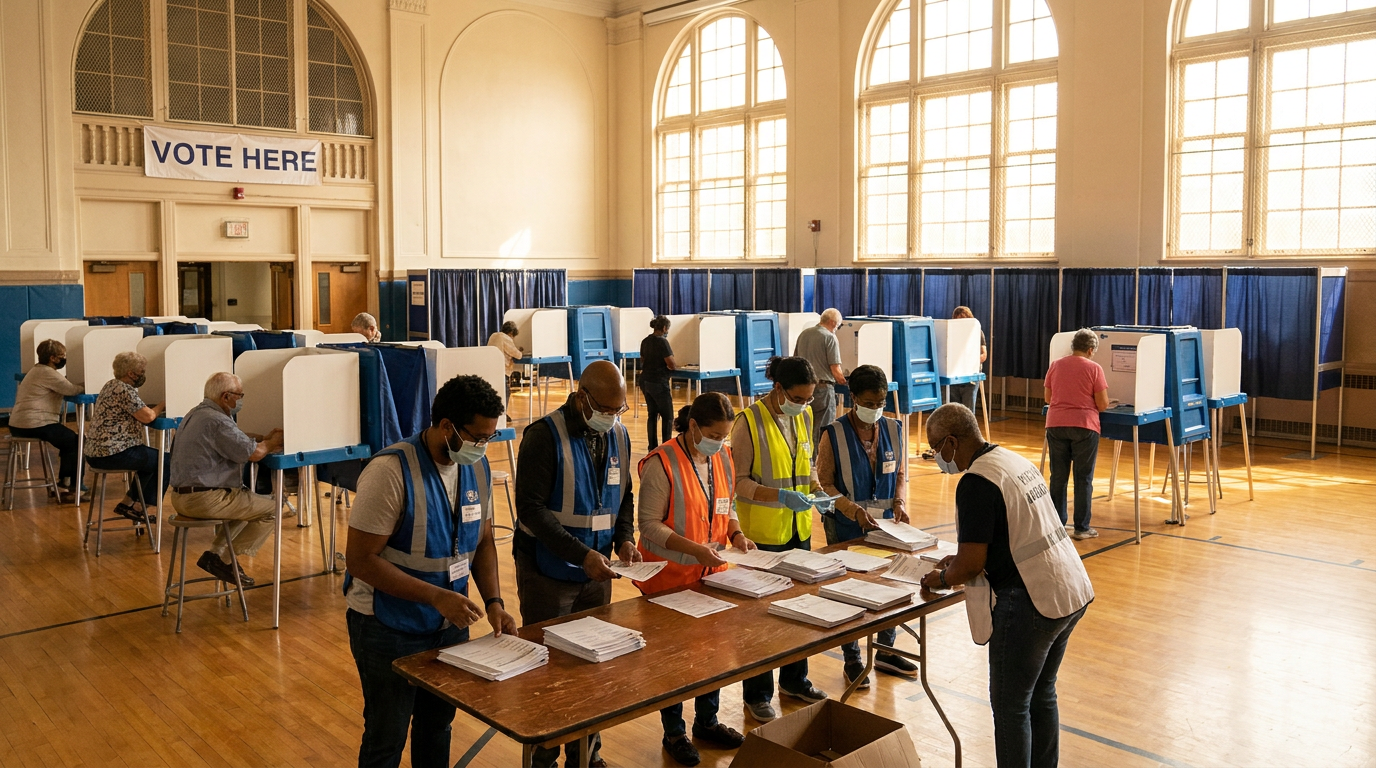
- Election Administrators
- Focus on the mechanics of list maintenance, the difficulty of maintaining perfect rolls, and the rarity of actual illegal votes.
- Election Integrity Advocates
- Emphasize that even a single illegal vote disenfranchises a legal voter, pushing for stricter proof-of-citizenship laws.
- Voting Rights Organizations
- Argue that aggressive purges targeting suspected non-citizens often accidentally remove eligible naturalized citizens.
What's not represented
- · Naturalized citizens who have been improperly purged from voter rolls
- · DMV administrative clerks who process the initial paperwork
Why this matters
Trust in the electoral system hinges on accurate data. Understanding the actual scale of non-citizen voting versus administrative list maintenance helps voters distinguish between genuine systemic vulnerabilities and political rhetoric.
Key points
- State audits consistently find that actual ballots cast by non-citizens are vanishingly rare.
- Conservative think tank databases show fewer than 100 documented cases over four decades.
- Non-citizens occasionally appear on voter rolls due to DMV administrative errors, not intentional fraud.
- Voting as a non-citizen triggers severe penalties, including immediate deportation and a permanent citizenship ban.
- Aggressive voter roll purges often mistakenly target eligible naturalized U.S. citizens.
Former President Donald Trump recently amplified claims that "rampant cheating" by non-citizens is compromising the integrity of U.S. elections, a narrative that has gained significant traction ahead of the 2026 midterms. This assertion suggests a coordinated, large-scale effort by undocumented immigrants and non-citizens to cast illegal ballots and sway federal outcomes.[1][2]
To evaluate this claim, Factlen compiled an evidence pack analyzing state-level voter roll audits, federal immigration databases, and historical fraud records maintained by conservative and non-partisan think tanks. The consensus across these primary data sources is clear: while administrative errors occasionally result in non-citizens being registered, actual votes cast by non-citizens are vanishingly rare.[7]
Evaluating the scale of non-citizen voting requires looking at the primary assertion that millions of ineligible individuals are actively voting. However, comprehensive audits by state election officials—often led by Republicans—tell a different story. In Georgia, a 2026 top-to-bottom audit of the state's 7 million registered voters found exactly zero non-citizens who had cast a ballot.[5]
Similarly, aggressive list-maintenance efforts in states like Ohio and Texas have identified small numbers of non-citizens on the voter rolls, but further investigation consistently reveals that the vast majority never attempted to vote. In Ohio's recent sweep of over 8 million voter records, officials flagged roughly 130 individuals as potential non-citizens, representing 0.0016% of the rolls.[2]
If non-citizen voting were rampant, it would leave a statistical footprint over time. The Heritage Foundation, a conservative think tank, maintains a comprehensive Election Fraud Database tracking proven instances of voter fraud across the United States over the past four decades.[4]

An analysis of the Heritage database reveals that out of billions of votes cast in federal, state, and local elections since the 1980s, there are fewer than 100 documented cases of non-citizens actually casting ballots. The database primarily highlights isolated incidents rather than systemic, coordinated cheating.[4][6]
Understanding how non-citizens occasionally end up on voter rolls requires looking at administrative workflows. The evidence points overwhelmingly to administrative glitches, particularly at the Department of Motor Vehicles (DMV). Under the National Voter Registration Act, individuals interacting with the DMV are often automatically prompted to register to vote.[3]
Understanding how non-citizens occasionally end up on voter rolls requires looking at administrative workflows.
Legal permanent residents (green card holders) and individuals on temporary visas can legally obtain driver's licenses. In some cases, DMV software errors or misunderstandings by clerks or applicants lead to these individuals being inadvertently added to the voter rolls, despite checking the "non-citizen" box on their paperwork.[3][7]
However, being on the roll is not the same as casting a ballot. Election administrators emphasize that the leap from accidental registration to intentional voter fraud is massive. Most non-citizens who discover they have been registered immediately request to be removed to avoid jeopardizing their immigration status.[1][5]

The lack of actual non-citizen voting is largely explained by the severe legal deterrents involved. Under federal law, it is a felony for a non-citizen to vote in a federal election. The risk-to-reward ratio for an individual to cast a single illegal ballot is astronomically poor.[3][6]
More importantly, any non-citizen caught voting or falsely claiming citizenship faces immediate deportation and a permanent bar from ever obtaining U.S. citizenship. Immigration attorneys and advocacy groups routinely warn non-citizens to avoid any interaction with the voting system, as the risk of deportation far outweighs any perceived benefit.[6]
Proponents of the widespread fraud narrative often point to a genuine administrative challenge: states lack a perfect, unified tool to catch non-citizens. There is no single, perfectly accurate national database of U.S. citizens that state election boards can easily cross-reference.[2][7]

States often attempt to use the federal Systematic Alien Verification for Entitlements (SAVE) database to verify citizenship. However, SAVE was designed to determine eligibility for government benefits, not to maintain voter rolls. It does not contain a comprehensive list of all U.S. citizens, and naturalized citizens are frequently flagged as non-citizens because the database has not been updated.[3][7]
This verification gap means that when states conduct aggressive purges using flawed data matching, they often inadvertently target eligible naturalized citizens. Recent lawsuits in several states have forced election officials to reinstate thousands of legally registered voters who were improperly flagged as non-citizens during aggressive list-maintenance sweeps.[1][3]
While there remains transparent uncertainty regarding the exact, down-to-the-single-digit number of non-citizens currently residing on voter rolls nationwide due to administrative lag, the available empirical evidence is definitive. The system's deterrents are highly effective, and the claim of "rampant" or election-altering non-citizen voting is fundamentally not supported by the data.[7]

How we got here
1993
Congress passes the National Voter Registration Act (Motor Voter), linking voter registration to DMV services.
1996
The Illegal Immigration Reform and Immigrant Responsibility Act explicitly makes non-citizen voting a deportable offense.
2024
Several states implement aggressive list-maintenance sweeps, resulting in lawsuits over the improper removal of naturalized citizens.
June 2026
Comprehensive state audits, including in Georgia, confirm zero instances of non-citizens casting ballots in recent cycles.
Viewpoints in depth
Election Administrators' view
Focuses on the practical realities of maintaining voter rolls and the effectiveness of current safeguards.
State and local election officials emphasize that maintaining perfectly clean voter rolls is an administrative impossibility due to the constant movement of people and the lack of a unified federal citizenship database. However, they argue that the system's safeguards work exactly as intended. When administrative errors at the DMV accidentally register a non-citizen, the individual rarely votes, and if they do, post-election audits and signature verification processes are designed to catch the anomaly. For administrators, the focus is on improving data-sharing between state agencies rather than treating clerical errors as evidence of coordinated fraud.
Election Integrity Advocates' view
Argues that any non-citizen registration represents a critical vulnerability that must be closed with stricter laws.
Advocates for stricter voting laws argue that the mere presence of non-citizens on voter rolls—even if placed there by accident—undermines public confidence in the electoral system. They contend that because the U.S. operates on an honor system for registration in many states, the true number of illegal votes may be higher than what audits catch. This camp pushes for legislation like the SAVE Act, which would require documentary proof of citizenship (such as a passport or birth certificate) at the time of registration, arguing that zero tolerance is the only acceptable standard for election security.
Voting Rights Organizations' view
Highlights the collateral damage of aggressive voter purges on eligible naturalized citizens.
Civil rights and voting advocacy groups argue that the narrative of 'rampant' non-citizen voting is often weaponized to justify aggressive voter roll purges. They point to data showing that when states use flawed federal databases like SAVE to hunt for non-citizens, the people most frequently flagged and removed are eligible, naturalized U.S. citizens whose updated status hasn't propagated through the system. From this perspective, the hyper-focus on a statistically non-existent problem of non-citizen voting results in the very real disenfranchisement of legal minority voters.
What we don't know
- The exact, single-digit number of non-citizens currently residing on voter rolls nationwide due to DMV administrative lag.
- How many eligible naturalized citizens will be improperly flagged in upcoming state-level list maintenance sweeps before the 2026 midterms.
Key terms
- Motor Voter Law
- The National Voter Registration Act of 1993, which requires state governments to offer voter registration opportunities to any eligible person who applies for or renews a driver's license.
- SAVE Database
- The Systematic Alien Verification for Entitlements program, a federal database designed to check immigration status for benefit eligibility, often misused by states for voter roll maintenance.
- List Maintenance
- The routine administrative process by which state and local election officials update voter registration records and remove ineligible voters.
- Naturalized Citizen
- An individual who was born an alien but has lawfully become a citizen of the United States under the U.S. Constitution and laws, granting them full voting rights.
Frequently asked
Is it legal for non-citizens to vote in U.S. federal elections?
No. Under federal law, it is a felony for a non-citizen to vote in any federal election, including races for President, Senate, and House.
How do non-citizens end up on voter registration rolls?
Most cases are the result of administrative errors at the Department of Motor Vehicles (DMV), where legal residents obtaining driver's licenses are accidentally registered by software glitches or clerical mistakes.
What happens if a non-citizen is caught voting?
They face federal felony charges, immediate deportation, and a permanent ban from ever obtaining U.S. citizenship.
Why don't states just check a federal citizenship database?
There is no comprehensive national database of U.S. citizens. States often use the SAVE database, which tracks immigration benefits but frequently flags naturalized citizens incorrectly.
Sources
Source coverage
7 outlets
3 viewpoints surfaced






[1]AP NewsElection Administrators
Fact Check: Noncitizen voting is already illegal and vanishingly rare
Read on AP News →[2]ReutersElection Administrators
State audits find no evidence of widespread noncitizen voting ahead of midterms
Read on Reuters →[3]Brennan Center for JusticeVoting Rights Organizations
Noncitizen Voting: The Missing Millions
Read on Brennan Center for Justice →[4]The Heritage FoundationElection Integrity Advocates
Election Fraud Database
Read on The Heritage Foundation →[5]Georgia Secretary of StateElection Administrators
2026 Comprehensive Audit of Voter Rolls Confirms Citizenship Requirements
Read on Georgia Secretary of State →[6]Cato InstituteVoting Rights Organizations
Noncitizens and Voting: A Review of the Evidence
Read on Cato Institute →[7]Factlen Editorial Team
Synthesis by Factlen editorial team
Read on Factlen Editorial Team →
More in news politics
See all 6 stories →New York Corruption
Former Top Aide to NYC Mayor Adams Charged with Bribery Amid Federal Raids on High-Ranking NYPD Officials
6 sources
AI Misinformation
FACT CHECK: Manipulated Audio Falsely Claims Vice President Vance Criticized Elon Musk
6 sources
Drug Policy
DEA Begins Formal Hearing on Rescheduling Marijuana to Schedule III
8 sources
Voter Trust
New Poll: Voter Confidence in Election Accuracy Plummets to Pre-2024 Levels Amid Integrity Rhetoric
8 sources
Every angle. Every day.
Get news politics stories with full source coverage and perspective breakdowns delivered to your inbox.