
World Cup 2026 Rosters Defined by Teenage Breakout Stars and Late Call-Ups
As the 48-team World Cup unfolds across North America, national team managers are trusting teenage prodigies and late injury replacements to make an immediate impact.
By Factlen Editorial Team
- National Team Managers
- Prioritizing tactical flexibility, high-ceiling talent, and late injury contingencies over pure seniority.
- Youth Talent Analysts
- Highlighting the unprecedented readiness of teenagers to dictate play at the highest international level.
- Domestic League Advocates
- Celebrating the inclusion of players who earned their spots through sheer club form and domestic breakouts.
What's not represented
- · Veteran Players Replaced by Youth
- · Club Managers Managing Player Fatigue
Why this matters
The decisions made on these 26-man rosters dictate the tactical ceiling of every nation competing in the 2026 World Cup. For fans, watching unknown teenagers and late replacements step up on the world's biggest stage offers a thrilling glimpse into the future of global football.
Key points
- The expanded 48-team 2026 World Cup has seen a surge in teenage breakout stars and surprise roster inclusions.
- USMNT manager Mauricio Pochettino rewarded Sebastian Berhalter's MLS form while trusting Gio Reyna's international pedigree.
- England drafted Chelsea defender Trevoh Chalobah as a late injury replacement for Tino Livramento.
- Mexico's 17-year-old Gilberto Mora and Spain's 19-year-old Pau Cubarsi are playing crucial tactical roles for their nations.
- Ivory Coast's Yan Diomande and Turkiye's Kenan Yildiz are translating their stellar European club form to the global stage.
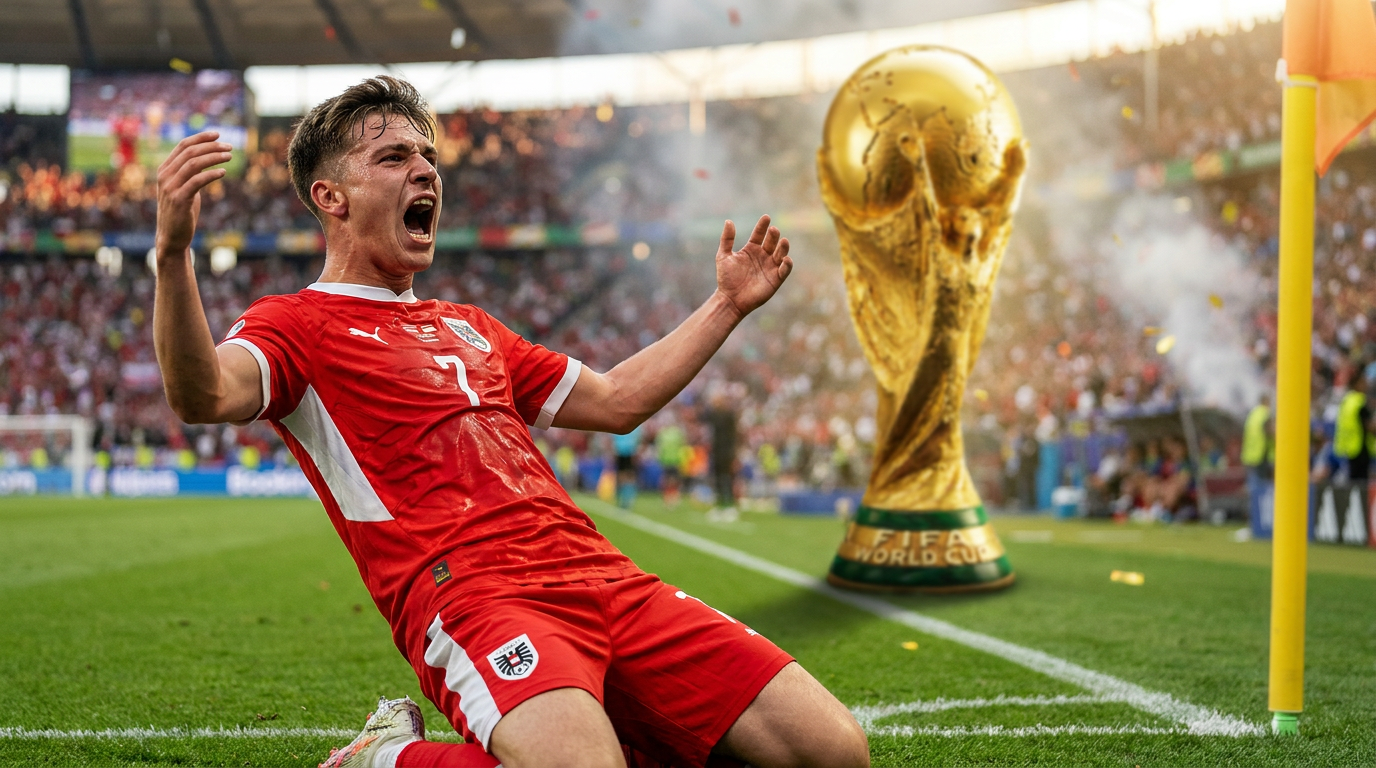
The 2026 FIFA World Cup has officially kicked off across North America, bringing the largest iteration of the tournament in history to the United States, Canada, and Mexico. With 48 teams competing for the ultimate prize, the expanded format has forced international managers to dig deeper into their talent pools than ever before. While the enduring presence of living legends like Lionel Messi and Cristiano Ronaldo continues to dominate the marquee, the true narrative of the group stages is being written by the rosters themselves. Across the board, national teams have embraced a fearless reliance on teenage prodigies, calculated tactical gambles, and late injury replacements. These squad dynamics are already shaping the early matches, proving that a single bold call-up can alter a nation's entire trajectory on the global stage.[4]
For the host nation, the United States Men's National Team roster reveal delivered a compelling mix of calculated risks and rewarding breakthroughs. Manager Mauricio Pochettino finalized his 26-man squad with a clear emphasis on balancing positional need with high-ceiling talent. The most debated inclusion was midfielder Gio Reyna. Despite struggling for consistent club minutes over the past two seasons, Reyna was selected on the strength of his undeniable creative upside and international pedigree. Pochettino publicly defended the decision, citing Reyna's exceptional performance in previous camps and emphasizing that the team needed to trust in players with high-level experience and game-changing ability to navigate the pressure of a home World Cup.[1]
If Reyna’s inclusion was a bet on inherent talent, Sebastian Berhalter’s selection was a direct reward for undeniable domestic form. The Vancouver Whitecaps midfielder forced his way onto the roster after a breakout Major League Soccer campaign, logging crucial goals and assists that made him impossible for the coaching staff to ignore. Berhalter’s rapid trajectory from a fringe prospect to a World Cup participant underscores Pochettino’s willingness to reward players who peak at the exact right moment. His presence adds vital depth and tactical flexibility to the American midfield, proving that consistent club performances can still punch a ticket to the biggest stage in sports.[1][2]

However, the unforgiving reality of a 26-man limit means that every surprise inclusion is inevitably mirrored by a painful omission. The most high-profile casualty of the USMNT selection process was Diego Luna. The Real Salt Lake star had been a prominent face in the build-up to the tournament, even featuring heavily in official kit unveilings and promotional campaigns alongside Christian Pulisic. Yet, when the final list was submitted, Luna and his 19-year-old teammate Zavier Gozo were left off. The decision served as a stark reminder to the fanbase that marketing visibility does not guarantee a roster spot, with the coaching staff prioritizing tactical fit over promotional momentum.[2]
While the American roster was settled weeks in advance, other nations have been forced to scramble in the final hours before kickoff. England’s meticulous preparations under Thomas Tuchel were abruptly jolted when Newcastle United full-back Tino Livramento suffered a calf injury during a training session at their Kansas City basecamp. With subsequent medical scans confirming that Livramento could play no further part in the tournament, Tuchel was forced to invoke FIFA regulations that allow participating teams to replace an injured outfield player up to 24 hours before their opening group fixture.[3][8]
While the American roster was settled weeks in advance, other nations have been forced to scramble in the final hours before kickoff.
The beneficiary of that sudden heartbreak was Chelsea defender Trevoh Chalobah. Drafted into the squad at the eleventh hour, Chalobah had to quickly arrange travel to join the Three Lions in the United States just days before their opening match against Croatia. His sudden elevation from the standby list to the main stage highlights the chaotic, unpredictable nature of World Cup rosters. A single training ground incident instantly resurrected Chalobah's summer dreams, providing England with crucial defensive cover and proving that players on the fringes must remain ready until the very last moment.[3][8]

Beyond the tactical reshuffles and injury replacements, the defining characteristic of the 2026 rosters is an unprecedented trust in youth. Nowhere is this more evident than in the co-host nation of Mexico, where 17-year-old Gilberto Mora has captured the imagination of the home crowds. Operating as an advanced playmaker for Club Tijuana, Mora was a shock inclusion by El Tri. Yet, his spatial awareness and ability to manipulate the ball between the lines have already seen him deployed as Mexico’s ultimate "chaos-sub," tasked with breaking down static defenses and injecting unpredictable energy into high-pressure moments.[4][5]
In Europe, traditional powerhouses are similarly handing the keys to teenagers, trusting them with immense tactical responsibilities. Spain’s intricate positional play relies heavily on its first phase of build-up, a crucial role that has been entrusted to 19-year-old Pau Cubarsi. The Barcelona center-back plays with the composure of a seasoned veteran, distributing the ball like an elite deep-lying playmaker. His ability to delay his passes, draw out opposing attackers, and open up passing lanes has made him a cornerstone of the Spanish defense, proving that modern managers value technical execution over raw seniority.[5]
The African continent is also showcasing its next generation of superstars, led by Ivory Coast’s dynamic 19-year-old winger Yan Diomande. Arriving in North America fresh off a spectacular season with RB Leipzig, Diomande scored 12 goals and provided eight assists to earn the prestigious Bundesliga Rookie of the Year award. Known for his blistering pace, strong dribbling, and fearless attacking mindset, Diomande’s inclusion was a no-brainer. He has quickly become one of the most feared attacking outlets in the tournament, drawing intense scouting interest from Europe's biggest clubs as he translates his club form to the international arena.[4][7]

For Turkiye, returning to the World Cup for the first time in 24 years, the hopes of a passionate nation rest largely on the shoulders of 21-year-old Juventus forward Kenan Yildiz. Having lifted the Coppa Italia earlier in the year, Yildiz represents the vanguard of a new Turkish golden generation. His selection was never in doubt, but his seamless transition from domestic success to international talisman illustrates a broader trend. Young players are no longer brought to the World Cup merely to gain experience; they are expected to mature instantly and carry their nations through the grueling group stages.[4]
Even among the tournament's dark horses, surprise roster picks are paying immediate dividends on the pitch. Sweden's Yasin Ayari has emerged as a breakout performer in Group F. Initially viewed as a rotational piece for manager Graham Potter, Ayari announced himself with a stunning two-goal display against Tunisia. His dynamic midfield presence has perfectly complemented the attacking power of Alexander Isak and Viktor Gyökeres. Ayari's rapid ascent has transformed Sweden from a solid European side into a genuine knockout-stage threat, validating Potter's decision to trust the emerging talent.[6]
Ultimately, the rosters of the 2026 World Cup reflect a shifting paradigm in international football. The expanded 48-team format has not diluted the quality of the competition; rather, it has provided a broader, more vibrant canvas for late bloomers, injury replacements, and fearless teenagers to make their mark. As the group stages continue to unfold across the continent, the teams that navigate this grueling tournament will likely be the ones whose surprise inclusions step out of the shadows, seize their unexpected opportunities, and write their own chapters in World Cup history.[4][7]
How we got here
May 2026
National teams submit their preliminary 55-man rosters to FIFA.
Late May 2026
USMNT manager Mauricio Pochettino finalizes his 26-man squad, including Gio Reyna and Sebastian Berhalter.
June 11, 2026
The 2026 FIFA World Cup officially kicks off across North America.
June 16, 2026
Trevoh Chalobah is called up to the England squad to replace the injured Tino Livramento.
June 20, 2026
Breakout stars like Sweden's Yasin Ayari begin making their mark in the group stages.
Viewpoints in depth
National Team Managers
Focuses on the difficult balance of selecting players based on raw talent versus club form.
Managers like Mauricio Pochettino have emphasized the need for experienced, high-ceiling players like Gio Reyna, even when their club minutes are lacking, to navigate the pressure of a World Cup. For national team coaches, the priority is often tactical flexibility and the ability to execute a specific game plan, which sometimes means leaving behind popular domestic players in favor of those who fit a precise system.
Youth Talent Analysts
Highlights the shifting demographics of international football and the readiness of teenagers.
Analysts note that players like Pau Cubarsi and Gilberto Mora are not just prospects, but finished products capable of dictating the tempo of World Cup matches. They argue that advanced technical education at the academy level has accelerated player readiness, allowing teenagers to step onto the global stage without the traditional adjustment period.
Domestic League Advocates
Points to consistent, high-level performances in domestic leagues as the ultimate metric for selection.
Advocates argue that players like Sebastian Berhalter and Yasin Ayari are proof that club form should be rewarded over legacy names. They maintain that momentum and match fitness are the most valuable assets a player can bring to a short summer tournament, making domestic breakouts essential to a successful World Cup run.
What we don't know
- Whether late additions like Trevoh Chalobah will be integrated into the starting XI or remain as depth options.
- How the immense pressure of the World Cup will affect the youngest breakout stars in the knockout stages.
- If the USMNT's gamble on Gio Reyna's fitness and form will pay off in crucial group stage matches.
Key terms
- Chaos-sub
- A tactical substitute brought into a match specifically to disrupt the opponent's defensive structure with unpredictable movement and energy.
- Positional play
- A tactical philosophy where players occupy specific zones on the pitch to create numerical advantages and passing triangles.
- First phase of build-up
- The initial stage of an attack, usually starting with the defenders or goalkeeper passing out from the back to bypass the opponent's first line of pressure.
Frequently asked
Who is the youngest player at the 2026 World Cup?
Mexico's 17-year-old midfielder Gilberto Mora is the youngest player, operating as an advanced playmaker for El Tri.
Why was Trevoh Chalobah called up late for England?
Chalobah was brought in as an injury replacement for Tino Livramento, who suffered a calf injury in training just days before the tournament.
Did Diego Luna make the USMNT World Cup roster?
No. Despite featuring heavily in promotional materials, the Real Salt Lake midfielder was left off Mauricio Pochettino's final 26-man squad.
Sources
Source coverage
8 outlets
3 viewpoints surfaced








[1]CBS SportsNational Team Managers
USMNT squad reveal: Mauricio Pochettino announces FIFA World Cup 2026 roster with Gio Reyna in, Diego Luna out
Read on CBS Sports →[2]Sports IllustratedDomestic League Advocates
Diego Luna misses out on the World Cup, according to reports
Read on Sports Illustrated →[3]England FootballNational Team Managers
Trevoh Chalobah replaces Tino Livramento in England squad
Read on England Football →[4]Al JazeeraYouth Talent Analysts
Who are the best young players to watch at FIFA World Cup 2026?
Read on Al Jazeera →[5]StriverYouth Talent Analysts
2026 FIFA World Cup Wonderkids: 10 Young Stars Ready to Shine on Football's Biggest Stage
Read on Striver →[6]beIN SPORTSDomestic League Advocates
How And Where To Watch: Sweden vs Netherlands
Read on beIN SPORTS →[7]GOALYouth Talent Analysts
Yan Diomande, Gilberto Mora and 10 potential breakout stars of the 2026 World Cup
Read on GOAL →[8]FOX SportsNational Team Managers
England Loses Livramento, Calls Up Chalobah
Read on FOX Sports →
More in sports
See all 9 stories →Standings
Nashville SC and Vancouver Whitecaps Set the Pace in 2026 MLS Standings
6 sources
WNBA Economics
The WNBA's 2026 Economic Leap: How the New CBA and Expansion Are Transforming Women's Basketball
6 sources
Franchise Valuations
How Women's Sports Franchises Reached Billion-Dollar Valuations in 2026
7 sources

Women's Soccer
NWSL Shatters Attendance and Contract Records as Historic 2026 Season Reaches Midpoint
7 sources

Every angle. Every day.
Get sports stories with full source coverage and perspective breakdowns delivered to your inbox.