
Weightlifting Injury Report: Talakhadze Resumes Training, Ibrahima Cleared, and Chanu Sidelined
As the 2026 IWF World Championships approach, super-heavyweight legend Lasha Talakhadze and 59kg contender Rebeka Ibrahima are making major returns from career-threatening injuries, while India's Mirabai Chanu continues to rehab a shoulder issue.
By Factlen Editorial Team
- Medical & Rehabilitation Specialists
- Argue that conservative loading and strict adherence to 3-6 month return protocols are essential to prevent re-injury in explosive sports.
- National Federations
- Focus on strategic peaking and load management, often holding star athletes out of continental events to ensure health for World Championships.
- Athletes & Competitors
- Driven by the psychological need to return to the platform, pushing through grueling rehab to reclaim their status and pursue medals.
What's not represented
- · Grassroots coaches managing youth injuries
- · Surgical specialists operating on elite lifters
Why this matters
Injuries in elite weightlifting often dictate the balance of power across weight classes. The successful return of dominant champions like Lasha Talakhadze and Rebeka Ibrahima fundamentally alters the medal projections for the 2026 World Championships in Ningbo.
Key points
- Super-heavyweight legend Lasha Talakhadze has resumed training after resting a chronic leg injury post-Paris 2024.
- Latvia's Rebeka Ibrahima is back to lifting after undergoing double meniscus surgery in late 2025.
- Colombian 71kg lifter Sebastian Olivares is successfully rehabbing a severe elbow dislocation sustained at the 2025 World Championships.
- India's Mirabai Chanu missed the 2026 Asian Championships to conservatively manage a shoulder injury.
- Italy's Giulia Imperio proved elite comebacks are possible by winning European gold after a two-year surgical hiatus.
The road to the 2026 International Weightlifting Federation (IWF) World Championships in Ningbo, China, is currently being paved in the rehabilitation room rather than on the competition platform. Across the globe, some of the sport's most dominant and recognizable figures are battling back from career-threatening joint and tendon injuries, reshaping the competitive landscape for the remainder of the Olympic cycle. As the sport moves further away from the grueling qualification gauntlet of the previous quadrennial, elite athletes are finally taking the time to undergo necessary surgical interventions, correct chronic imbalances, and rebuild their foundational strength.[4]
The most seismic shift in the weightlifting world comes from the super-heavyweight division. Georgia’s Lasha Talakhadze, widely considered the greatest weightlifter in history, has officially resumed training after a soft retirement following the 2024 Paris Olympics. Talakhadze had spent the previous two years battling a chronic leg injury that severely limited his training volume, requiring nine full months of complete rest just to eke out a narrow three-kilogram victory in Paris. Many in the sport assumed the Georgian giant had permanently walked away from the barbell to focus on his political career, leaving the super-heavyweight crown up for grabs.[1]
Now, that hiatus appears to have worked exactly as intended. In early 2026, Team Georgia’s sports doctor, Giorgi Tchintcharauli, released footage of Talakhadze back in the training hall, lacing up his lifting shoes and warming up with a simple, ominous declaration: "The King is back." Tchintcharauli confirmed to international media that Talakhadze is fully rested, completely pain-free, and targeting a definitive return to international competition. While his ultimate goal remains a historic fourth Olympic gold medal at the 2028 Los Angeles Games, Talakhadze is already laying the groundwork for a potential appearance at the upcoming World Championships.[1]

While Talakhadze recovers from years of cumulative wear and tear, other elite athletes are returning from acute, traumatic surgical reconstructions. In the women's 59kg class, Latvia's Rebeka Ibrahima is executing a miraculous comeback after suffering blown-out menisci in both of her knees in late 2025. Ibrahima, a former European champion who had just returned to the sport after starting a family, saw her initial comeback derailed when the cartilage in her knees essentially gave out under the immense pressure of heavy squatting.[2]
Unwilling to let the injury end her career, Ibrahima underwent back-to-back surgeries in August and October of 2025, utilizing specialized bone anchors to reattach the damaged tissue directly to the bone. Following months of isolated, low-impact strengthening exercises, she was finally cleared to resume dynamic barbell work in early 2026. "I finally feel normal again," Ibrahima noted in a May interview, emphasizing that her current programming focuses heavily on deep core musculature and physical therapy to protect her reconstructed knees as she prepares for the Ningbo World Championships.[2]
Following months of isolated, low-impact strengthening exercises, she was finally cleared to resume dynamic barbell work in early 2026.
A similarly grueling path is being walked by Colombian 71kg lifter Sebastian Olivares. Heading into the 2025 World Championships, Olivares was considered a heavy medal favorite, but he suffered a grievous left elbow dislocation during a 149kg snatch attempt that shocked the arena. Following immediate surgical intervention to repair the joint and intensive daily physiotherapy, Olivares is back to loading the barbell. Rather than rushing his timeline, he and his coaching staff are prioritizing a methodical, pain-free recovery, targeting the 2026 IWF World Cup as his official return to the international stage.[5]

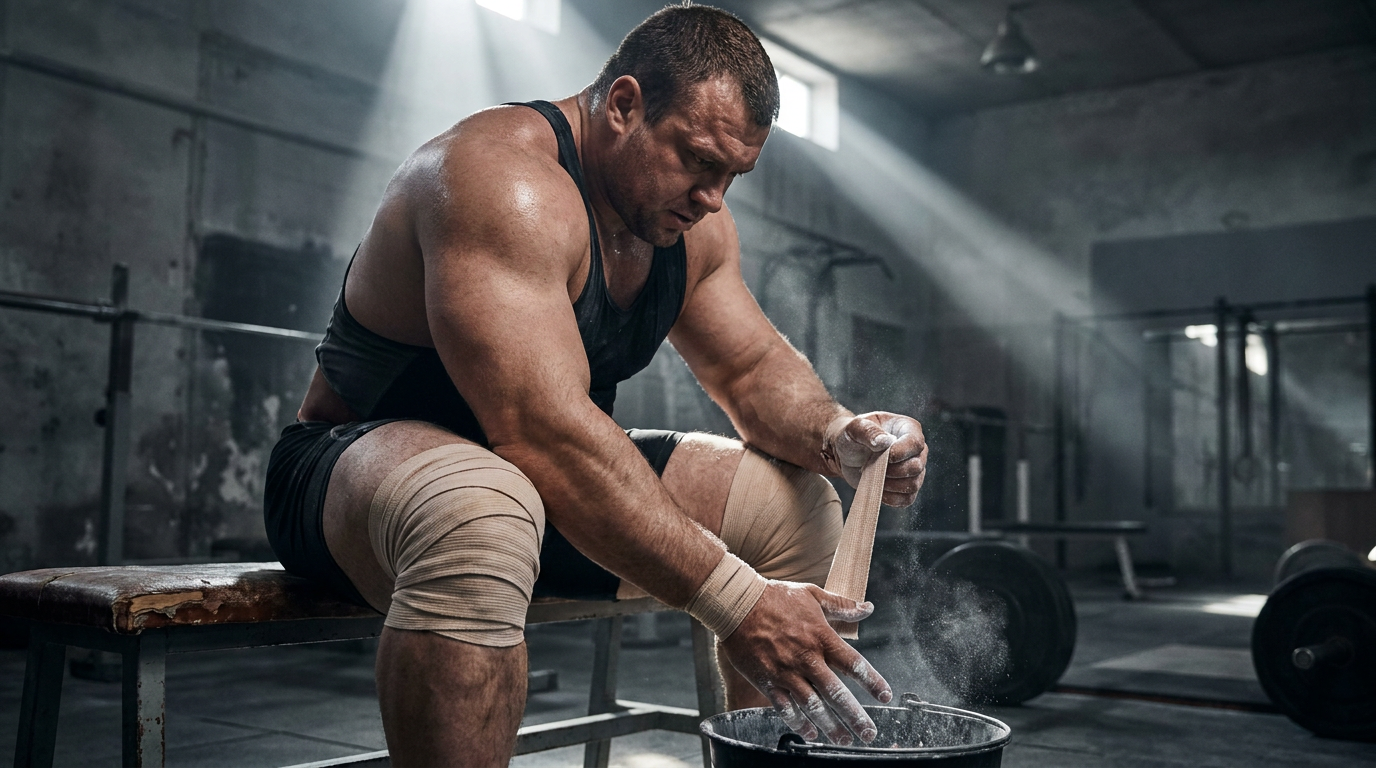
The underlying mechanics of Olympic weightlifting—specifically the explosive, high-velocity transitions required in the snatch and the clean and jerk—place extraordinary demands on the patellofemoral (knee) joints, the lumbar spine, and the shoulder capsules. Sports medicine specialists note that regaining pre-injury strength after a major joint trauma typically requires three to six months of highly specialized return-to-sport protocols. Athletes must first regain isometric stability, then slowly reintroduce the kinetic shock of catching heavy weights in a deep squat position, a process that tests both physical healing and psychological resilience.[6][9]
The psychological hurdle of returning to the platform after a catastrophic injury can be just as daunting as the physical rehabilitation. However, recent competition results prove that elite lifters can indeed reclaim their peak form. Italy’s Giulia Imperio (-48kg) provided a masterclass in comeback execution in April 2026, capturing gold at the European Championships following a two-year hiatus and a major surgery. Similarly, Iranian super-heavyweight Alireza Yousefi recently claimed silver at the Asian Championships in Gandhinagar after nearly two years away from the sport due to a severe knee injury, proving that the human body can bounce back to world-record levels.[7][8]

Recognizing the immense physical toll of the sport, not all national federations are rushing their athletes back to the platform. India’s Mirabai Chanu, a dominant global force and Olympic medalist in the 49kg class, was notably absent from the May 2026 Asian Championships. Chanu is currently rehabilitating a lingering shoulder injury sustained earlier in the year, and despite the continental championships being held on home soil in Gujarat, her medical team refused to clear her for heavy competition.[3]
Rather than risk aggravating the shoulder joint ahead of a packed late-2026 schedule that includes the Commonwealth Games and the Asian Games, the Indian weightlifting federation opted for strict, conservative management. They are keeping their star lifter sidelined from maximum-effort lifts until she reaches 100 percent capacity, a strategic move designed to extend her career longevity. As the IWF finalizes preparations for the Ningbo World Championships this November, the entry lists will be heavily dictated by these medical clearances. For athletes like Talakhadze, Ibrahima, and Olivares, the hardest and most important lifts of the year are already happening far away from the competition lights—in the quiet, agonizing repetitions of physical therapy.[3][4]
How we got here
Aug & Oct 2025
Rebeka Ibrahima undergoes double meniscus surgery using bone anchors to repair severe knee damage.
Nov 2025
Sebastian Olivares suffers a severe elbow dislocation during the World Championships, requiring immediate surgical intervention.
Feb 2026
Super-heavyweight champion Lasha Talakhadze officially resumes training after a prolonged post-Olympic rest period.
April 2026
Giulia Imperio captures European Championship gold, completing a successful two-year injury comeback.
May 2026
Mirabai Chanu is officially sidelined from the Asian Championships to rehab a lingering shoulder injury.
Viewpoints in depth
Medical & Rehabilitation Consensus
Sports medicine professionals emphasize conservative, phased return protocols for joint injuries.
Because Olympic weightlifting relies on explosive force generation, the joints—particularly the knees, shoulders, and elbows—absorb massive kinetic shock. Medical specialists warn that rushing back from meniscus or tendon repairs drastically increases the risk of catastrophic re-injury. The consensus protocol requires months of isolated isometric work and deep core stabilization before an athlete is cleared to perform dynamic barbell movements. For athletes like Rebeka Ibrahima, this means retraining the body's foundational mechanics before ever attempting a heavy clean and jerk.
National Federation Strategy
Governing bodies prioritize long-term Olympic cycles over immediate continental medals.
For national weightlifting federations, elite athletes are vital investments. When a star lifter like India's Mirabai Chanu suffers a shoulder impingement, the federation's calculus shifts immediately to risk management. By holding Chanu out of the Asian Championships—even when hosted on home soil in Gandhinagar—Team India ensures she has the necessary recovery runway for the Commonwealth Games and the World Championships. This strategic load management is becoming increasingly common as the sport's qualification windows grow more grueling.
What we don't know
- It remains unclear if Lasha Talakhadze will be ready to compete at the 2026 World Championships in Ningbo, or if he will wait until 2027 to return to the platform.
- The exact timeline for Mirabai Chanu's return to heavy lifting has not been publicly confirmed by the Indian weightlifting federation.
Key terms
- Meniscus
- A C-shaped piece of tough, rubbery cartilage that acts as a shock absorber between the shinbone and the thighbone, heavily stressed during deep squats.
- Clean and Jerk
- A two-part weightlifting movement where the barbell is first lifted to the shoulders, then thrust overhead, placing immense load on the knees and elbows.
- Snatch
- A continuous, explosive lift that takes the barbell from the floor to an overhead locked-out position in a single motion, requiring extreme shoulder mobility.
- Bone Anchors
- Small surgical implants used to reattach torn tendons or ligaments directly to the bone during joint reconstruction.
Frequently asked
Is Lasha Talakhadze competing in 2026?
Talakhadze has resumed training as of early 2026. While his ultimate goal is the 2028 Olympics, he is targeting a return to international competition, potentially at the 2026 World Championships.
Why did Mirabai Chanu miss the Asian Championships?
Chanu was sidelined to rehabilitate a shoulder injury. Her federation opted for conservative management to ensure she is fully healthy for the upcoming Commonwealth Games.
How long does it take to recover from a weightlifting joint injury?
Depending on the severity, athletes typically require three to six months of specialized rehabilitation just to regain pre-injury strength, followed by months of technique rebuilding.
Sources
Source coverage
9 outlets
3 viewpoints surfaced







[1]Weightlifting HouseAthletes & Competitors
Exclusive: Lasha Talakhadze Comeback Interview
Read on Weightlifting House →Rebeka Ibrahima on Double Knee Surgery and Her 2026 Return
Read on Weightlifting House →[3]Olympics.comNational Federations
Mirabai Chanu to miss Asian Weightlifting Championships 2026 in Gandhinagar
Read on Olympics.com →[4]International Weightlifting FederationNational Federations
IWF delegation concludes successful visit to Ningbo (CHN)
Read on International Weightlifting Federation →Sebastian Olivares Discusses Elbow Surgery and 2026 Comeback
Read on Weightlifting House →[6]SimplMobilityMedical & Rehabilitation Specialists
Why Weightlifting Requires Specialized Return Protocols
Read on SimplMobility →[7]WLHOUSE TVAthletes & Competitors
Giulia Imperio's Dramatic Return at the 2026 European Championships
Read on WLHOUSE TV →[8]Tasnim News AgencyAthletes & Competitors
Alireza Yousefi Claims Silver at Asian Championships After Two-Year Injury Absence
Read on Tasnim News Agency →[9]OriGymMedical & Rehabilitation Specialists
Common Weightlifting Injuries & How to Prevent Them
Read on OriGym →
More in sports
See all 30 stories →Standings
Gold Coast and North Melbourne Cling to Inaugural Wildcard Spots as AFL Finals Race Intensifies
6 sources
Injury
Pro Lacrosse Injury Report: Charlotte North's Achilles Tear Shakes Up WLL and Team USA
6 sources
Standings
PLL Playoff Race: Elite Goaltending Keeps Archers and Waterdogs in the Hunt as Midseason Approaches
7 sources
Injury
World Snooker Tour Injury Report: Tom Ford and Mark Williams Headline Summer Recoveries
8 sources
Every angle. Every day.
Get sports stories with full source coverage and perspective breakdowns delivered to your inbox.