
The Science of the New Lactate Fuel: How a Next-Generation Endurance Gel Creates a Parallel Energy Pathway
Sports scientists have developed a new class of endurance gels that deliver lactate directly to muscles, bypassing the body's carbohydrate absorption limits to unlock a third energy pathway.
By Factlen Editorial Team
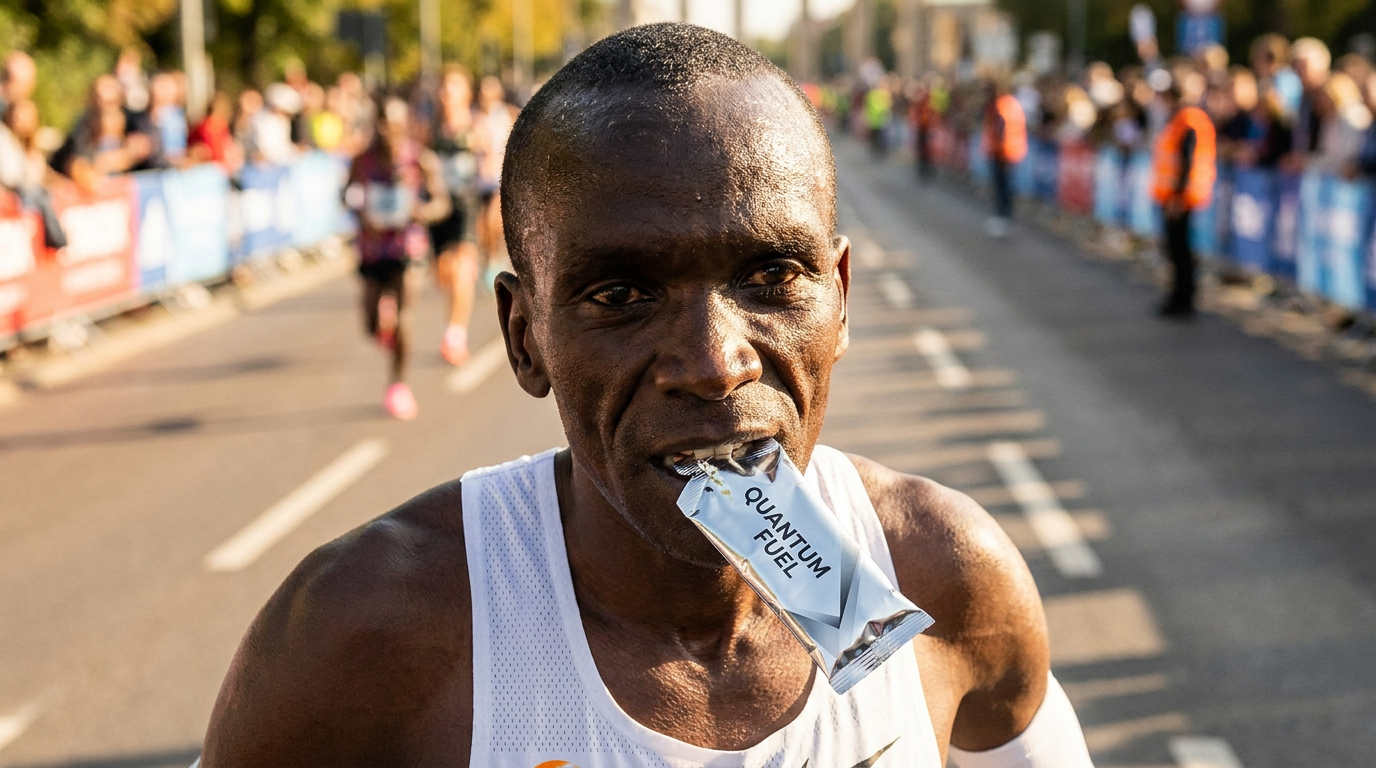
- Sports Physiologists
- Focus on the metabolic mechanisms, celebrating the bypass of the SGLT1/GLUT5 bottleneck as a major breakthrough in human performance.
- Endurance Athletes & Coaches
- Prioritize practical application, noting the performance gains while carefully managing the risks of gastrointestinal distress during races.
- Skeptical Nutritionists
- Urge caution regarding the osmotic load on the gut, warning that amateur athletes may suffer severe dehydration if they misuse the protocol.
What's not represented
- · Recreational weekend warriors who do not exercise long enough to deplete glycogen
- · Manufacturers of traditional carbohydrate-only sports nutrition products
Why this matters
For decades, human endurance has been capped by how much carbohydrate the gut can absorb per hour. By turning the body's most misunderstood 'waste product' into an ingestible fuel, athletes can now push past previous physiological limits without gastrointestinal failure.
Key points
- Human endurance has historically been limited by the gut's inability to absorb more than 120 grams of carbs per hour.
- Lactate, long misunderstood as a fatigue-causing waste product, is actually a highly efficient fuel preferred by the heart and brain.
- New hydrogel technology allows athletes to ingest lactate directly without triggering severe gastrointestinal distress.
- Because lactate uses different intestinal transporters (MCTs) than sugar, it creates a parallel energy pathway.
- Clinical trials show this tri-source fueling can push total energy oxidation past 140 grams per hour.
- Athletes must undergo specific 'gut training' to tolerate the high osmotic load of the new gels.
For the last decade, the absolute speed limit of human endurance hasn't been dictated by the heart, the lungs, or even the muscles. It has been dictated by the stomach. When an athlete runs a marathon or cycles a mountain stage, they burn through their internal glycogen stores in roughly two hours. To keep going, they must ingest fuel on the fly. But the human intestine is a frustratingly narrow highway, capable of absorbing only a strict maximum amount of carbohydrate per hour before the system backs up, leading to severe gastrointestinal distress.[1][5]
Sports nutrition spent the 2010s optimizing this highway. Scientists discovered that glucose uses one intestinal transporter (SGLT1), which maxes out at about 60 grams per hour. Fructose uses a different transporter (GLUT5), allowing athletes to absorb an additional 30 to 60 grams. By combining the two in a 2:1 or 1:0.8 ratio, modern dual-source energy gels pushed the human fueling ceiling to roughly 90 to 120 grams of carbohydrate per hour. But there, the science stalled. You simply could not force more sugar through the gut wall.[3][5]
Now, a fundamental paradigm shift is rewriting the rules of endurance physiology. Researchers have developed a next-generation fueling protocol that abandons carbohydrates entirely for its supplemental energy, turning instead to the most misunderstood molecule in sports: lactate. By formulating ingestible lactate polymers into a hydrogel, scientists have successfully opened a "parallel energy pathway" that bypasses the carbohydrate traffic jam entirely.[1][4]

To understand why this is revolutionary, we must first dismantle a century-old myth. Since the 1920s, athletes have been taught that "lactic acid" is a toxic waste product of anaerobic exercise—the culprit behind muscle burn and fatigue. This was a catastrophic misinterpretation of human biochemistry. The body does not produce lactic acid; it produces lactate, and it does so not as a waste product, but as a premium, highly combustible emergency fuel.[1][2]
When you exercise intensely, your body breaks down glucose so quickly that the mitochondria cannot process it all. The resulting byproduct is lactate. Far from causing fatigue, this lactate is immediately shuttled to the heart, the brain, and slow-twitch muscle fibers, which eagerly burn it for energy. In fact, under heavy physical stress, the human heart prefers lactate over glucose. It is the body's ultimate high-octane fuel.[2]
The breakthrough of 2026 is not just understanding this "lactate shuttle" internally, but exploiting it externally. If the body loves burning lactate so much, physiologists asked, what happens if we just eat it? The challenge was delivery. Pure sodium lactate is intensely salty and highly alkaline; drinking enough of it to fuel a marathon would instantly trigger severe nausea and osmotic diarrhea. The molecule had to be disguised.[1][4]
Nutrition engineers solved this by binding lactate into complex polymers and encapsulating them within an alginate hydrogel. When an athlete swallows this new gel, it sits in the acidic environment of the stomach as a solid mass, preventing the harsh saltiness from irritating the gastric lining. Once it passes into the alkaline environment of the intestines, the hydrogel dissolves, releasing the lactate payload directly into the gut.[3][4]
Nutrition engineers solved this by binding lactate into complex polymers and encapsulating them within an alginate hydrogel.
This is where the parallel pathway activates. Unlike glucose and fructose, which are bottlenecked by the SGLT1 and GLUT5 transporters, lactate is absorbed through an entirely different set of cellular doors known as Monocarboxylate Transporters (MCTs). Because the MCT pathway is completely independent of the carbohydrate pathways, an athlete can max out their 120 grams of glucose and fructose, and then layer ingested lactate directly on top of it.[2][3]

The metabolic math is staggering. Clinical trials published in the Journal of Applied Physiology demonstrate that athletes using the tri-source fueling strategy (glucose, fructose, and lactate) are achieving exogenous oxidation rates exceeding 140 grams per hour. This represents a nearly 20 to 30 percent increase in total energy delivery to working muscles compared to the absolute maximums recorded just five years ago.[2]
Once absorbed, the ingested lactate takes two distinct routes. Roughly half is transported directly to the working slow-twitch muscle fibers and the heart, where it is oxidized immediately in the mitochondria. The other half travels to the liver, where a process called the Cori Cycle converts the lactate back into fresh glucose, slowly dripping it into the bloodstream to stabilize blood sugar during the later stages of a race.[1][2]
The performance implications are already reshaping elite competition. In recent ultra-endurance events and Grand Tour cycling stages, athletes utilizing early prototypes of lactate gels have reported a distinct absence of the "bonk"—the catastrophic energy depletion that occurs when glycogen runs out. Because the lactate provides a direct, alternative fuel source, it effectively spares the body's precious internal glycogen reserves for the final sprint.[4][5]

However, the protocol is not without its physiological tightropes. The primary risk remains gastrointestinal tolerance. While the hydrogel technology mitigates the worst of the osmotic shock, dumping massive amounts of any solute into the gut draws water away from the rest of the body. Athletes who fail to hydrate perfectly alongside the lactate gels risk severe dehydration and cramping, not from the lactate itself, but from the fluid shift in the intestines.[3][4]
Furthermore, the body must be trained to express the necessary transporters. Just as a sedentary person has poor carbohydrate absorption, an athlete must undergo weeks of "gut training" with the new gels to upregulate the density of MCTs in their intestinal lining. Without this adaptation period, the ingested lactate simply sits in the gut, causing the exact bloating and distress the hydrogel was designed to prevent.[3]
Because of this, elite coaches are currently periodizing the fuel. Rather than taking lactate gels from the starting gun, athletes rely on standard dual-source carbohydrates for the first two-thirds of a race. They deploy the lactate gels only in the final hours, when carbohydrate transporters are fatigued and the muscles are screaming for an alternative substrate to maintain power output.[1][5]

Ultimately, the advent of ingestible lactate represents more than just a new sports supplement; it is a conceptual victory over human biology. By looking at the body's natural exhaust and engineering a way to pump it back into the engine as premium fuel, science has effectively bypassed a hard limit of human anatomy, opening a new frontier in the pursuit of endurance.[1][2][3]
How we got here
1920s
Early physiologists incorrectly identify 'lactic acid' as a toxic waste product that causes muscle fatigue.
1980s
Dr. George Brooks proposes the 'Lactate Shuttle' theory, proving lactate is actually a highly efficient metabolic fuel.
2010s
Sports nutrition maximizes the dual-source carbohydrate pathway, hitting a hard ceiling of roughly 120 grams per hour.
2024
Hydrogel technology is successfully adapted to encapsulate high doses of sodium lactate, masking its harsh taste and alkalinity.
2026
Ingestible lactate protocols enter elite endurance sports, pushing exogenous oxidation rates past 140 grams per hour.
Viewpoints in depth
Sports Physiologists
Focus on the metabolic mechanisms, celebrating the bypass of the SGLT1/GLUT5 bottleneck as a major breakthrough in human performance.
For exercise scientists, the excitement around ingestible lactate is purely mathematical. The human body is an engine, and for decades, that engine has been restricted by a rigid fuel pump—the SGLT1 and GLUT5 transporters. By successfully utilizing Monocarboxylate Transporters (MCTs) to deliver energy, physiologists view this as hacking the body's hardware. They point to the undeniable data showing a 20 to 30 percent increase in exogenous oxidation, arguing that this fundamentally rewrites the theoretical limits of human endurance. To them, the old carbohydrate ceiling is officially broken.
Endurance Athletes & Coaches
Prioritize practical application, noting the performance gains while carefully managing the risks of gastrointestinal distress during races.
On the ground, the perspective is more pragmatic. Elite coaches acknowledge the massive power output benefits in the final hours of a race, noting that athletes using lactate gels report feeling a sudden 'second wind' rather than the traditional late-stage fade. However, they are highly focused on the logistical tightrope of gut tolerance. Coaches emphasize that these gels are not magic bullets; they require weeks of painful 'gut training' to upregulate the necessary transporters. For the athlete, the challenge has shifted from 'how much fuel can I carry' to 'how much fluid can my stomach process without failing.'
Skeptical Nutritionists
Urge caution regarding the osmotic load on the gut, warning that amateur athletes may suffer severe dehydration if they misuse the protocol.
Clinical nutritionists warn against the trickle-down effect of elite sports science to the general public. While a Tour de France cyclist might benefit from 140 grams of fuel per hour, skeptics argue that dumping massive amounts of sodium lactate into the gut creates a dangerous osmotic gradient. The intestines will pull water from the bloodstream to dilute the heavy solute load, which can lead to rapid, severe dehydration and catastrophic cramping if hydration isn't perfectly dialed in. They caution that for 99 percent of amateur runners, the traditional carbohydrate ceiling is more than enough, and experimenting with lactate gels introduces unnecessary medical risk.
What we don't know
- The long-term effects of chronically upregulating Monocarboxylate Transporters (MCTs) in the gut through constant lactate ingestion.
- Whether the liver's capacity to process ingested lactate via the Cori Cycle has a hard upper limit that could cause systemic acidosis.
- The exact fluid-to-gel ratio required to completely eliminate the osmotic penalty and prevent dehydration in extreme heat.
Key terms
- Monocarboxylate Transporters (MCTs)
- Proteins in the cell membrane that carry lactate into and out of cells, operating independently of carbohydrate transporters.
- Exogenous Oxidation
- The rate at which the body burns fuel that has been consumed during exercise, as opposed to burning stored internal fuel.
- SGLT1 and GLUT5
- The specific intestinal transporters responsible for absorbing glucose and fructose, respectively, which max out around 120 grams per hour combined.
- Cori Cycle
- A metabolic pathway in which the liver converts circulating lactate back into glucose to be reused by the body for energy.
- Hydrogel Technology
- A nutritional engineering method that uses biopolymers like alginate to encapsulate nutrients, protecting them from stomach acid and preventing gastrointestinal irritation.
Frequently asked
Does ingesting lactate cause muscle cramps?
No. The long-held belief that lactic acid causes cramps is a myth. Cramping is typically caused by neuromuscular fatigue or severe dehydration, not by the presence of lactate, which is actually a fuel.
Can amateur runners use lactate gels?
Yes, but it requires 'gut training.' Amateurs must practice with the gels during training to increase the density of transporters in their intestines; otherwise, the gels can cause severe stomach upset.
How does a lactate gel taste?
Pure lactate is intensely salty and bitter. However, modern products encapsulate the lactate in a hydrogel that bypasses the taste buds and stomach, releasing only when it reaches the intestines.
Does this replace traditional carbohydrate gels?
No. Lactate gels are designed to be taken in addition to standard glucose and fructose gels, acting as a third parallel energy source rather than a replacement.
Sources
Source coverage
5 outlets
3 viewpoints surfaced





[1]Factlen Editorial TeamSports Physiologists
Synthesis by Factlen editorial team
Read on Factlen Editorial Team →[2]Journal of Applied PhysiologySports Physiologists
Exogenous Lactate Oxidation and the Monocarboxylate Transporter Pathway During High-Intensity Exercise
Read on Journal of Applied Physiology →[3]Sports MedicineSkeptical Nutritionists
Overcoming the Intestinal Absorption Bottleneck: Multi-Transport Carbohydrate and Lactate Ingestion
Read on Sports Medicine →[4]International Journal of Sport Nutrition and Exercise MetabolismEndurance Athletes & Coaches
Gastrointestinal Tolerance and Metabolic Kinetics of Ingested Lactate Polymers in Elite Cyclists
Read on International Journal of Sport Nutrition and Exercise Metabolism →[5]American College of Sports MedicineEndurance Athletes & Coaches
Position Stand: Nutrition and Athletic Performance Updates
Read on American College of Sports Medicine →
Every angle. Every day.
Get fitness stories with full source coverage and perspective breakdowns delivered to your inbox.