
The Electrification Mandate: How New Building Codes and Federal HVAC Rules Are Reshaping the American Home
A convergence of federal refrigerant bans, state building codes, and billions in point-of-sale rebates is making 2026 the tipping point for home electrification. Heat pumps and low-emissions technology are becoming the new standard for American heating and cooling.
By Factlen Editorial Team
- Policy & Decarbonization Advocates
- State and federal agencies view electrification as the most effective lever for reducing residential greenhouse gas emissions.
- HVAC Industry & Contractors
- Contractors are navigating a massive logistical pivot to comply with new chemical safety standards and complex local codes.
- Real Estate & Facilities Management
- Property owners are balancing the long-term operational savings of heat pumps against the immediate capital costs of retrofitting.
What's not represented
- · Electrical Grid Operators
- · Renters in Older Buildings
Why this matters
The HVAC systems installed today will dictate home energy bills and indoor air quality for the next two decades. Understanding the new 2026 regulations and available rebates ensures homeowners don't overpay for obsolete technology or miss out on up to $14,000 in federal incentives.
Key points
- Starting January 1, 2026, federal EPA rules prohibit the installation of new residential HVAC systems that use high-GWP refrigerants like R-410A.
- California's 2025 Title 24 building code establishes electric heat pumps as the prescriptive baseline for new homes, effectively phasing out gas furnaces.
- The HVAC industry is transitioning to A2L refrigerants, which offer better efficiency and lower emissions but require new safety protocols and equipment.
- The federally funded HEEHR program is rolling out state-by-state in 2026, offering up to $8,000 in point-of-sale rebates for heat pump installations.
- Home electrification often requires electrical panel upgrades, which are supported by up to $4,000 in dedicated IRA rebates.
The American home is undergoing a quiet but profound mechanical transformation in 2026. For decades, residential heating and cooling relied on a predictable formula: a gas furnace in the basement and an air conditioner outside, pumping synthetic refrigerants that were highly effective but environmentally damaging. That era is officially ending. A convergence of sweeping federal environmental regulations, aggressive new state building codes, and the rollout of billions of dollars in consumer rebates has made 2026 the tipping point for home electrification. The transition is fundamentally rewriting how homes are built, how contractors operate, and how homeowners manage their energy bills.[1][6][7]
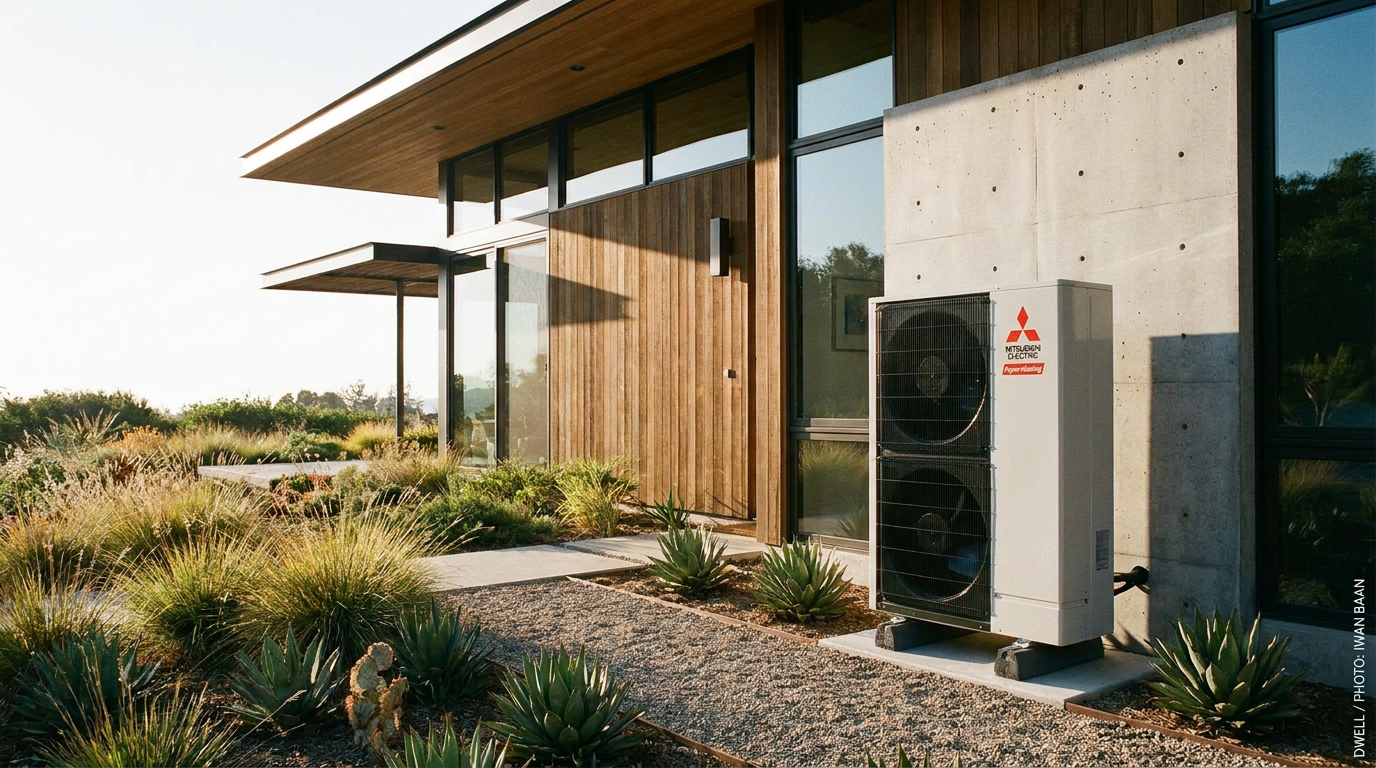
At the center of this shift is the electric heat pump, a technology that has evolved from a niche solution for mild climates into the undisputed future of residential climate control. Unlike traditional furnaces that burn fossil fuels to generate heat, heat pumps use electricity to move heat from one place to another. In the summer, they act exactly like a standard air conditioner, extracting heat from inside the home and venting it outdoors. In the winter, the cycle reverses. Advanced compressors extract ambient thermal energy from the outside air—even in freezing temperatures—and pump it indoors. Because moving heat requires significantly less energy than creating it, modern heat pumps can be up to three times more efficient than the highest-rated gas furnaces.[1][5]
The push toward heat pumps is being heavily accelerated by state-level building codes, most notably in California. On January 1, 2026, the state's 2025 Title 24 Building Energy Efficiency Standards took effect, establishing heat pumps as the "prescriptive baseline" for space and water heating in new single-family and low-rise multifamily homes. While the code does not outright ban natural gas, it places a heavy thumb on the scale. Builders who choose to install gas furnaces must offset the energy penalty by adding expensive efficiency upgrades elsewhere, such as thicker insulation, better windows, or larger solar arrays. In practice, the math makes gas the more expensive route, prompting the construction industry to default to all-electric systems.[1][3][5]
California's code updates also mandate "electric-ready" infrastructure for commercial kitchens and multifamily buildings, requiring pre-wired conduit and panel capacity to ensure future appliance swaps are seamless. The California Energy Commission estimates these new standards will drive 500,000 heat pump installations over the next three years, saving consumers $4.8 billion in energy costs over the life of the code while drastically reducing greenhouse gas emissions. And California is not acting alone. Oregon has effectively made heat pumps the default for new homes by requiring builders who install air conditioning to use dual-purpose heat pumps. Meanwhile, Colorado is pushing local jurisdictions to adopt low-carbon building codes by July 2026, and New York City has implemented stringent new energy conservation codes.[1][2][3]

Parallel to the electrification push is a massive, federally mandated shift in the chemical lifeblood of HVAC systems. Under the American Innovation and Manufacturing (AIM) Act, the Environmental Protection Agency is phasing down hydrofluorocarbons (HFCs)—the refrigerants that have powered air conditioners for decades. The most common residential refrigerant, R-410A, has a Global Warming Potential (GWP) of over 2,000, meaning it traps heat in the atmosphere at more than 2,000 times the rate of carbon dioxide. The EPA's Technology Transitions Rule set a strict GWP limit of 700 for new residential and light commercial systems. While manufacturing of the old systems ceased in 2025, January 1, 2026, marked the final deadline: the installation of new systems exceeding the 700 GWP limit is now federally prohibited.[6]
To meet this mandate, the HVAC industry has transitioned to a new class of chemicals known as A2L refrigerants, primarily R-454B and R-32. These alternatives boast a significantly lower environmental impact and actually offer better heat transfer properties, which can improve a system's overall efficiency by up to 10 percent. However, the A2L classification comes with a critical caveat: they are deemed "mildly flammable." While they are nowhere near as combustible as propane, they require entirely new equipment designs. Modern A2L systems feature built-in leak detection sensors, automatic safety shutdown mechanisms, and specialized ventilation protocols to mitigate any risk of ignition.[6]
To meet this mandate, the HVAC industry has transitioned to a new class of chemicals known as A2L refrigerants, primarily R-454B and R-32.
This chemical transition means that homeowners facing a broken air conditioner in 2026 can no longer simply swap out an old R-410A condenser and keep their existing indoor coil. The new A2L refrigerants operate at different pressures and require compatible, safety-rated components across the entire system. Consequently, what used to be a partial repair often necessitates a full system replacement. For the HVAC contracting industry, this has triggered a massive logistical pivot. Technicians must undergo specialized training to handle A2Ls, and companies are required to invest in spark-resistant recovery machines, vacuum pumps, and leak detectors to comply with the new safety standards.[6]

The combined forces of new building codes, advanced heat pump technology, and A2L safety features mean that modern HVAC systems are more efficient and environmentally friendly than ever before. However, they also come with a higher upfront price tag. To bridge this financial gap and encourage homeowners to voluntarily abandon fossil fuels, the federal government is deploying the largest consumer energy incentive program in U.S. history. Funded by the 2022 Inflation Reduction Act (IRA), the High-Efficiency Electric Home Rebate (HEEHR) program and the HOMES rebate program are moving from the planning phase into active, state-administered rollout throughout 2026.[4][7]
Unlike traditional tax credits, which require homeowners to float the cost until tax season, the IRA programs are designed as point-of-sale rebates. This means the discount is applied directly to the invoice by a certified contractor, instantly lowering the barrier to entry. Income-qualified households can receive up to $14,000 in total electrification rebates. The marquee incentive is a maximum $8,000 rebate for the installation of a high-efficiency heat pump for space heating and cooling. Additional rebates include up to $4,000 for upgrading an electrical panel to handle the increased load, $2,500 for electrical wiring improvements, and $1,750 for a heat pump water heater.[4][7]
Because the federal funds are distributed to and managed by individual state energy offices, the availability and specific rules of the rebates vary widely depending on geography. States are responsible for verifying income eligibility—typically targeting households making less than 150 percent of the area median income—and managing the finite pool of federal dollars. In states that launched their programs early, demand has been overwhelming. California's initial phase of single-family HEEHRA rebates was fully reserved by early 2026, prompting waitlists and a scramble for additional funding allocations. Industry experts urge homeowners to act quickly and verify their state's program status before committing to a project.[3][7]

The electrification mandate extends beyond just the machinery; it is fundamentally reshaping the electrical nervous system of the American home. Replacing a gas furnace, a gas water heater, and a gas stove with electric equivalents dramatically increases a home's total electrical load. Many older homes, equipped with 100-amp electrical panels, simply cannot support the simultaneous draw of a heat pump, an induction range, and a Level 2 electric vehicle charger. This bottleneck is why the IRA specifically carved out the $4,000 rebate for electrical panel upgrades, recognizing that the grid edge must be modernized before the appliances can be swapped.[4][7]
To manage this increased demand without overwhelming the broader electrical grid, the new building codes heavily emphasize smart technology and peak-load management. California's Title 24, for instance, expands requirements for battery storage and solar photovoltaics, encouraging homes to generate and store their own power rather than pulling from the grid during high-demand evening hours. Modern heat pumps and electric water heaters are increasingly equipped with demand-response capabilities, allowing them to subtly adjust their operation during grid emergencies without sacrificing occupant comfort.[1][3]

The transition is not without friction. Supply chain adjustments for the new A2L equipment, the learning curve for local permitting offices, and the sheer volume of contractor training required have created temporary bottlenecks in some markets. Furthermore, the patchwork nature of state-administered rebates means that access to financial assistance is uneven across the country. Yet, the trajectory is irreversible. The regulatory frameworks established in 2026 have effectively locked in the phase-out of high-emission refrigerants and combustion heating in new construction.[5][6][7]
Ultimately, the electrification mandate represents a generational upgrade to the American housing stock. By moving combustion out of the basement and replacing it with highly efficient, digitally controlled heat pumps, homes are becoming safer, cleaner, and more resilient. The elimination of indoor gas combustion significantly improves indoor air quality, reducing the risk of respiratory issues associated with nitrogen dioxide emissions. While the mechanical transition of 2026 requires an adjustment period for builders, contractors, and homeowners alike, it lays the permanent groundwork for a decarbonized, energy-independent future.[1][3]
How we got here
August 2022
The Inflation Reduction Act is signed, allocating billions for state-administered home electrification rebates.
January 2025
The EPA bans the manufacturing of new residential HVAC systems using high-GWP refrigerants like R-410A.
January 2026
The EPA bans the installation of remaining high-GWP HVAC inventory; all new installations must use low-GWP alternatives.
January 2026
California's 2025 Title 24 building code takes effect, making heat pumps the baseline for new homes.
July 2026
Colorado requires local jurisdictions to adopt the state Model Low Energy and Carbon Code.
Viewpoints in depth
Policy & Decarbonization Advocates
State and federal agencies view electrification as the most effective lever for reducing residential greenhouse gas emissions.
For environmental regulators and energy commissions, the 2026 building codes and refrigerant bans are long-overdue corrections to the American housing sector's carbon footprint. They argue that because the electrical grid is steadily becoming greener through wind and solar adoption, shifting homes from fossil fuels to electricity guarantees that the housing stock will automatically decarbonize over time. Furthermore, they emphasize the immediate public health benefits of removing indoor combustion, which eliminates nitrogen dioxide and carbon monoxide risks from living spaces.
HVAC Industry & Contractors
Contractors are navigating a massive logistical pivot to comply with new chemical safety standards and complex local codes.
The transition to A2L refrigerants and heat pump dominance has placed a heavy burden on the HVAC supply chain and labor force. Contractors point out that the 'mildly flammable' nature of the new refrigerants requires entirely new, spark-resistant toolsets, specialized technician training, and stricter transportation protocols. While they acknowledge the efficiency gains of the new systems, industry voices warn that the rapid pace of regulatory change—combined with the patchwork rollout of state rebates—has created temporary bottlenecks in equipment availability and permitting delays at local building departments.
Real Estate & Facilities Management
Property owners are balancing the long-term operational savings of heat pumps against the immediate capital costs of retrofitting.
For facilities managers and residential builders, the 2026 codes fundamentally alter project economics. While the long-term energy savings of heat pumps are well-documented, the upfront costs of installing electric-ready infrastructure, upgrading electrical panels, and purchasing A2L-compliant equipment are significant. Real estate professionals argue that the success of the electrification mandate hinges entirely on the smooth execution of the IRA rebate programs. Without point-of-sale financial assistance, they caution that the higher capital costs could slow down renovation rates or price out lower-income homeowners from upgrading their systems.
What we don't know
- How quickly individual states will deplete their allocated federal IRA rebate funds, as early-adopter states have already seen overwhelming demand.
- Whether the electrical grid in older, densely populated neighborhoods can handle the localized surge in demand as entire blocks switch to heat pumps and EV chargers.
- How the secondary market for repairing older R-410A systems will evolve as the supply of legacy refrigerants dwindles and prices rise.
Key terms
- Heat Pump
- An electric device that provides both heating and cooling by moving heat indoors in the winter and outdoors in the summer, rather than burning fuel to create heat.
- Global Warming Potential (GWP)
- A metric used to measure how much heat a greenhouse gas traps in the atmosphere compared to carbon dioxide.
- A2L Refrigerant
- A new class of refrigerants required in new HVAC systems starting in 2026, characterized by low environmental impact and mild flammability.
- Prescriptive Baseline
- A building code standard that sets a default technology (like a heat pump) that builders must use to easily pass inspection, though alternatives are allowed if they meet strict efficiency offsets.
- Point-of-Sale Rebate
- A discount applied directly to the invoice at the time of purchase, reducing the upfront cost, as opposed to a tax credit claimed months later.
Frequently asked
Do I have to replace my current gas furnace or AC unit?
No. The new federal rules and state building codes apply to new construction and the installation of new replacement systems. You can continue to use and repair your existing equipment.
What makes A2L refrigerants different from older ones?
A2L refrigerants have a significantly lower Global Warming Potential (GWP) than older refrigerants like R-410A. They are classified as "mildly flammable," which requires new safety sensors in the equipment, but they are entirely safe for home use when installed correctly.
How do I get the $8,000 heat pump rebate?
The High-Efficiency Electric Home Rebate (HEEHR) is administered by individual state energy offices and is income-dependent. It is applied as a point-of-sale discount by certified contractors, rather than a tax credit claimed at the end of the year.
Are heat pumps effective in very cold climates?
Yes. Modern cold-climate heat pumps can efficiently extract heat from the air even when temperatures drop well below freezing, though some homes in extreme climates may still utilize a backup heat source.
Sources
Source coverage
7 outlets
3 viewpoints surfaced







[1]Facilities DiveReal Estate & Facilities Management
California energy code updates to drive 500K heat pump installations
Read on Facilities Dive →[2]SmartBriefPolicy & Decarbonization Advocates
Oregon pushes electrification through building code policy
Read on SmartBrief →[3]California Energy CommissionPolicy & Decarbonization Advocates
2025 Building Energy Efficiency Standards
Read on California Energy Commission →[4]U.S. Department of EnergyPolicy & Decarbonization Advocates
High-Efficiency Electric Home Rebate Program
Read on U.S. Department of Energy →[5]Service MagazineHVAC Industry & Contractors
Title 24 and the 2026 Refrigerant Transition
Read on Service Magazine →[6]BrightlyHVAC Industry & Contractors
A2L Refrigerants: What you need to know for 2026
Read on Brightly →[7]Davis Modern Heating & CoolingHVAC Industry & Contractors
Why 2026 Is a Crucial Year for HVAC Rebates
Read on Davis Modern Heating & Cooling →


Every angle. Every day.
Get lifestyle stories with full source coverage and perspective breakdowns delivered to your inbox.