
The Evidence on Graduate Loans: How a Federal Court Just Paused the New $100,000 Cap for Professional Students
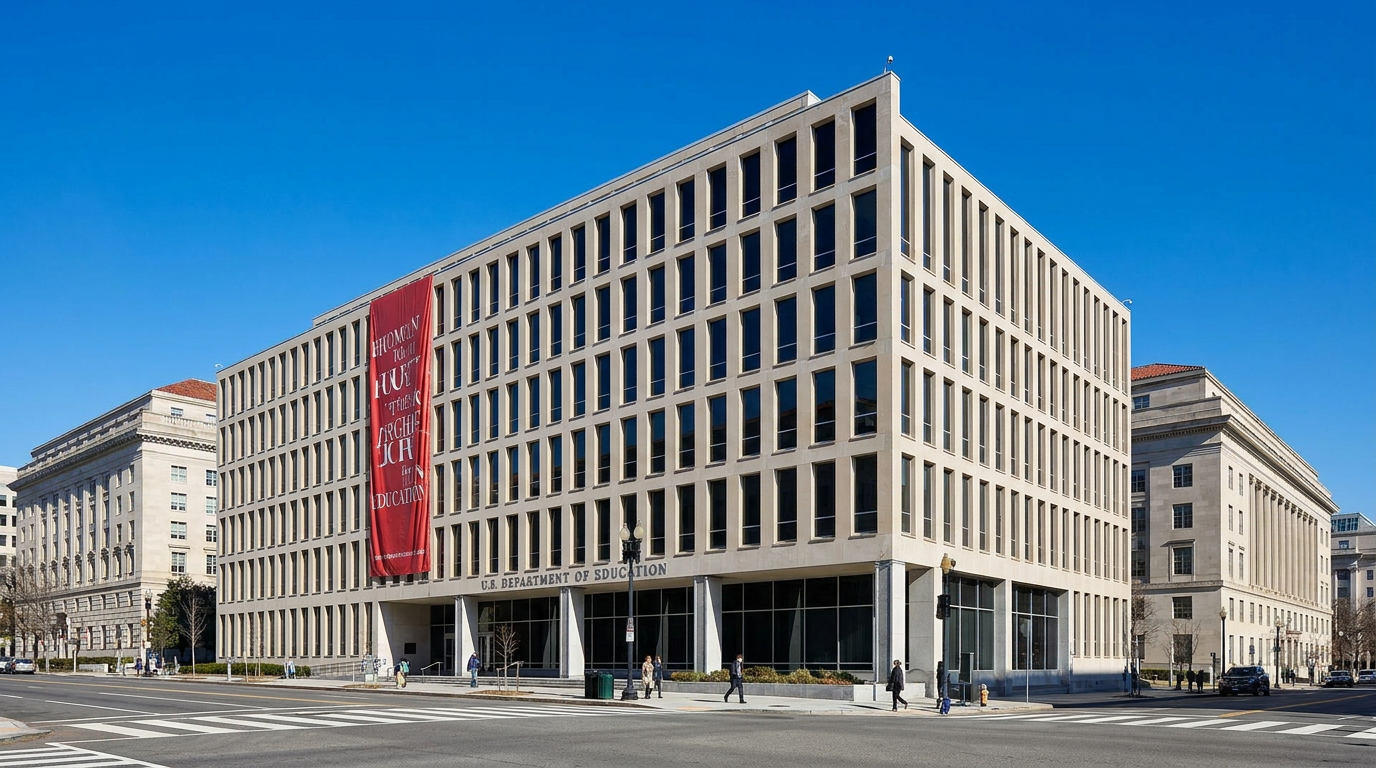
A federal judge has temporarily blocked a Department of Education rule that would have capped federal borrowing for graduate and advanced vocational students at $100,000, preserving access to unlimited Grad PLUS loans for the upcoming academic year.
By Factlen Editorial Team

- Professional Education Advocates
- Argue that capping federal loans restricts access to high-cost, high-reward fields like medicine and law, disproportionately harming low-income students who cannot secure private credit.
- Fiscal Policy Reformers
- Contend that unlimited federal lending incentivizes universities to continuously raise tuition for master's and professional programs, leaving taxpayers to absorb the defaults.
- Legal Analysts
- Focus on the statutory boundaries of executive power, arguing that only Congress has the authority to alter the borrowing limits established in the Higher Education Act.
What's not represented
- · Undergraduate students whose aid programs compete for federal funding
- · Private student loan lenders who stood to gain market share if the cap was enforced
Why this matters
For hundreds of thousands of students entering medical, law, and advanced vocational programs this fall, this ruling prevents a sudden, massive funding shortfall. It also sets up a high-stakes legal battle over whether the government can unilaterally rein in the $1.2 trillion graduate student debt market.
Key points
- A federal judge issued a preliminary injunction blocking a new $100,000 cap on federal graduate student borrowing.
- The ruling ensures students entering medical, law, and advanced vocational programs this fall can still borrow up to the full cost of attendance.
- Plaintiffs successfully argued that the Department of Education overstepped its authority, as Congress established the uncapped Grad PLUS program in 2006.
- Critics of the injunction warn that unlimited federal lending allows universities to continuously raise tuition without consequence.
- The Department of Education is expected to appeal the decision, leaving the long-term future of graduate borrowing limits uncertain.
Just weeks before fall tuition bills come due, a federal judge in Washington, D.C., has hit the brakes on one of the most sweeping changes to higher education finance in two decades. The court issued a preliminary injunction blocking the Department of Education's new rule that would have capped federal borrowing for graduate and professional students at $100,000.[1][2]
The ruling provides immediate relief to hundreds of thousands of students enrolled in medical, dental, law, and advanced vocational programs, where the total cost of attendance frequently exceeds the proposed six-figure limit. Without the injunction, many students faced the prospect of turning to high-interest private loans or dropping out entirely.[2][6]
To understand the stakes of this legal battle, one must look at the mechanics of the Grad PLUS loan program. Established by Congress in 2006, the program allows graduate and professional students to borrow up to the full "cost of attendance"—a figure determined by the universities themselves, which includes tuition, fees, room, board, and living expenses.[4][6]
Unlike undergraduate federal loans, which have strict aggregate limits, Grad PLUS has operated essentially without a ceiling. This unlimited tap of federal credit has fundamentally reshaped the economics of advanced education. According to the Brookings Institution, graduate students make up just 21 percent of all higher education borrowers but now account for roughly 50 percent of all federal student loan debt.[4]

Alarmed by ballooning balances and the proliferation of high-cost, low-return master's programs, the Department of Education finalized a rule earlier this year imposing a hard $100,000 lifetime cap on federal graduate borrowing. The policy was designed to force universities to lower tuition and curb the creation of expensive credential programs that leave students trapped in unpayable debt.[1][4]
However, the cap immediately drew fierce opposition from a broad coalition of professional associations, medical schools, and advanced vocational training centers. They argued that a blunt $100,000 limit fails to distinguish between a predatory online master's degree and a rigorous medical or dental program, where average debt routinely surpasses $200,000 but is followed by high earning potential.[2][5]
However, the cap immediately drew fierce opposition from a broad coalition of professional associations, medical schools, and advanced vocational training centers.
In May, a consortium led by the Association of Professional Schools sued the Department of Education, seeking to halt the rule. Their central legal argument was not about the economics of debt, but about statutory authority. They contended that the Higher Education Act explicitly allows graduate students to borrow up to the cost of attendance, and that the executive branch cannot unilaterally rewrite that statute to impose a numerical cap.[3][6]
The U.S. District Court agreed, at least for now. In a 42-page opinion, the judge ruled that the plaintiffs are likely to succeed on the merits of their claim that the Department overstepped its authority under the Administrative Procedure Act. The court noted that only Congress has the power to fundamentally alter the borrowing limits established in the 2006 legislation.[1][3]
The Association of American Medical Colleges (AAMC), which filed an amicus brief in the case, praised the injunction. The organization presented evidence that capping federal loans would have a devastating impact on diversity in high-skill professions. Because private lenders require strong credit histories and often co-signers, low-income and first-generation students would be effectively locked out of the most expensive—and most lucrative—fields.[5]
Conversely, fiscal policy experts warn that the injunction allows a broken system to continue unchecked. Economists have long debated the "Bennett Hypothesis"—the theory that unlimited federal financial aid incentivizes universities to continuously raise tuition, knowing the government will cover the bill. By pausing the cap, critics argue, the court has removed the only immediate mechanism to force price discipline on higher education institutions.[4][6]

The data on graduate debt is stark. While undergraduate borrowing has actually declined in real terms over the past decade, graduate borrowing has skyrocketed. The unlimited nature of Grad PLUS has allowed universities to use master's and professional programs as cash cows to subsidize other campus operations, passing the financial risk entirely to students and taxpayers.[4]
The Department of Education has signaled its intention to appeal the preliminary injunction, setting the stage for a protracted legal fight in the appellate courts. In the meantime, financial aid offices across the country are scrambling to update their systems, reassuring incoming students that their original, uncapped financial aid packages will be honored for the 2026-2027 academic year.[1][2]

For students navigating this uncertainty, the immediate takeaway is stability. Those entering advanced vocational programs, law school, or medical school this fall will not face a sudden funding cliff. However, financial advisors are urging students to borrow conservatively, as the long-term future of the Grad PLUS program remains highly precarious.[2][6]
Ultimately, the battle over the $100,000 cap highlights a deeper structural flaw in American higher education. The system currently relies on unlimited debt to finance advanced training, creating a tension between expanding access for marginalized students and protecting taxpayers from runaway tuition inflation. Until Congress intervenes to rewrite the underlying statutes, that tension will continue to be litigated in the courts.[3][6]

How we got here
2006
Congress establishes the Grad PLUS loan program, allowing graduate students to borrow up to the full cost of attendance.
Early 2026
The Department of Education finalizes a rule imposing a $100,000 lifetime cap on federal graduate borrowing to curb tuition inflation.
May 2026
A coalition of professional schools and associations sues the federal government, arguing the cap exceeds executive authority.
June 2026
A federal judge issues a preliminary injunction, pausing the cap just weeks before fall tuition bills are due.
Viewpoints in depth
Professional Education Advocates
Argue that borrowing caps would devastate diversity in high-skill professions.
Medical schools, law schools, and advanced vocational training centers argue that a blunt $100,000 cap fails to account for the necessary costs of rigorous professional training. Because the average medical student graduates with over $200,000 in debt, a federal cap would force students to turn to the private loan market. Private lenders require strong credit histories and co-signers, which would effectively lock low-income and first-generation students out of these lucrative fields, reserving advanced professions only for the independently wealthy.
Fiscal Policy Reformers
Contend that unlimited federal loans are the primary driver of graduate tuition inflation.
Economists and policy reformers point to the data: since the creation of the Grad PLUS program in 2006, graduate tuition has skyrocketed. They argue that universities treat master's and professional programs as revenue generators, raising prices aggressively because they know the federal government will issue unlimited loans to cover the cost. From this perspective, capping loans is the only way to force universities to lower prices and stop saddling students with debt that many will never be able to repay.
Legal Analysts
Focus on the separation of powers and statutory authority.
For legal observers, the merits of the loan cap are secondary to the question of who has the power to enact it. The Higher Education Act explicitly states that eligible graduate students may borrow up to the cost of attendance. Legal analysts argue that the executive branch cannot use the rulemaking process to rewrite a statute passed by Congress. The court's injunction reflects this view, signaling that if the government wants to rein in graduate debt, lawmakers on Capitol Hill must pass new legislation to do so.
What we don't know
- Whether an appellate court will overturn the preliminary injunction before the spring semester.
- How universities might adjust tuition pricing if the $100,000 cap is eventually upheld.
- If Congress will intervene to pass legislation formally restructuring the Grad PLUS program.
Key terms
- Grad PLUS Loan
- A federal student loan available to graduate and professional students that allows them to borrow up to the full cost of attendance, minus any other financial aid received.
- Cost of Attendance (COA)
- The total estimated cost for a student to attend a specific university for one academic year, including tuition, fees, housing, food, and personal expenses.
- Preliminary Injunction
- A temporary court order that stops a party from taking a specific action—in this case, enforcing the loan cap—until a final legal decision is made in the case.
- Administrative Procedure Act (APA)
- A federal law that governs the process by which federal agencies develop and issue regulations, requiring them to operate within the authority granted by Congress.
- Bennett Hypothesis
- An economic theory suggesting that increases in federal financial aid allow colleges and universities to raise tuition prices, absorbing the government subsidies.
Frequently asked
What does this ruling mean for my fall 2026 tuition?
Because of the injunction, the $100,000 cap will not go into effect for the upcoming academic year. Students can continue to borrow up to the full cost of attendance through the Grad PLUS program.
Does this affect undergraduate student loans?
No. This ruling and the proposed cap only apply to graduate and professional students using the Grad PLUS loan program. Undergraduate federal loans already have strict statutory borrowing limits.
Could the cap be reinstated later?
Yes. The current ruling is a preliminary injunction, meaning the policy is paused while the lawsuit proceeds. The Department of Education is expected to appeal, and the final outcome will depend on higher courts.
Why did the government want to cap these loans?
Policymakers aimed to curb tuition inflation and prevent students from taking on massive debt for low-return master's programs, noting that graduate students now hold half of all federal student loan debt.
Sources
Source coverage
6 outlets
3 viewpoints surfaced






[1]ReutersLegal Analysts
U.S. court blocks Education Department's new limit on graduate student borrowing
Read on Reuters →[2]The Chronicle of Higher EducationProfessional Education Advocates
Federal Judge Halts $100,000 Grad Loan Cap Ahead of Fall Semester
Read on The Chronicle of Higher Education →[3]U.S. District Court for the District of ColumbiaLegal Analysts
Order Granting Preliminary Injunction: Association of Professional Schools v. Department of Education
Read on U.S. District Court for the District of Columbia →[4]Brookings InstitutionFiscal Policy Reformers
The Economics of Graduate Student Debt and the Impact of Borrowing Caps
Read on Brookings Institution →[5]Association of American Medical CollegesProfessional Education Advocates
Amicus Brief on the Impact of Loan Limits on Professional Diversity
Read on Association of American Medical Colleges →[6]Factlen Editorial Team
Synthesis by Factlen editorial team
Read on Factlen Editorial Team →
Every angle. Every day.
Get education stories with full source coverage and perspective breakdowns delivered to your inbox.