
The New Multipolarity: Inside China's Global Governance Initiative and the Shift Away from the Post-War Order
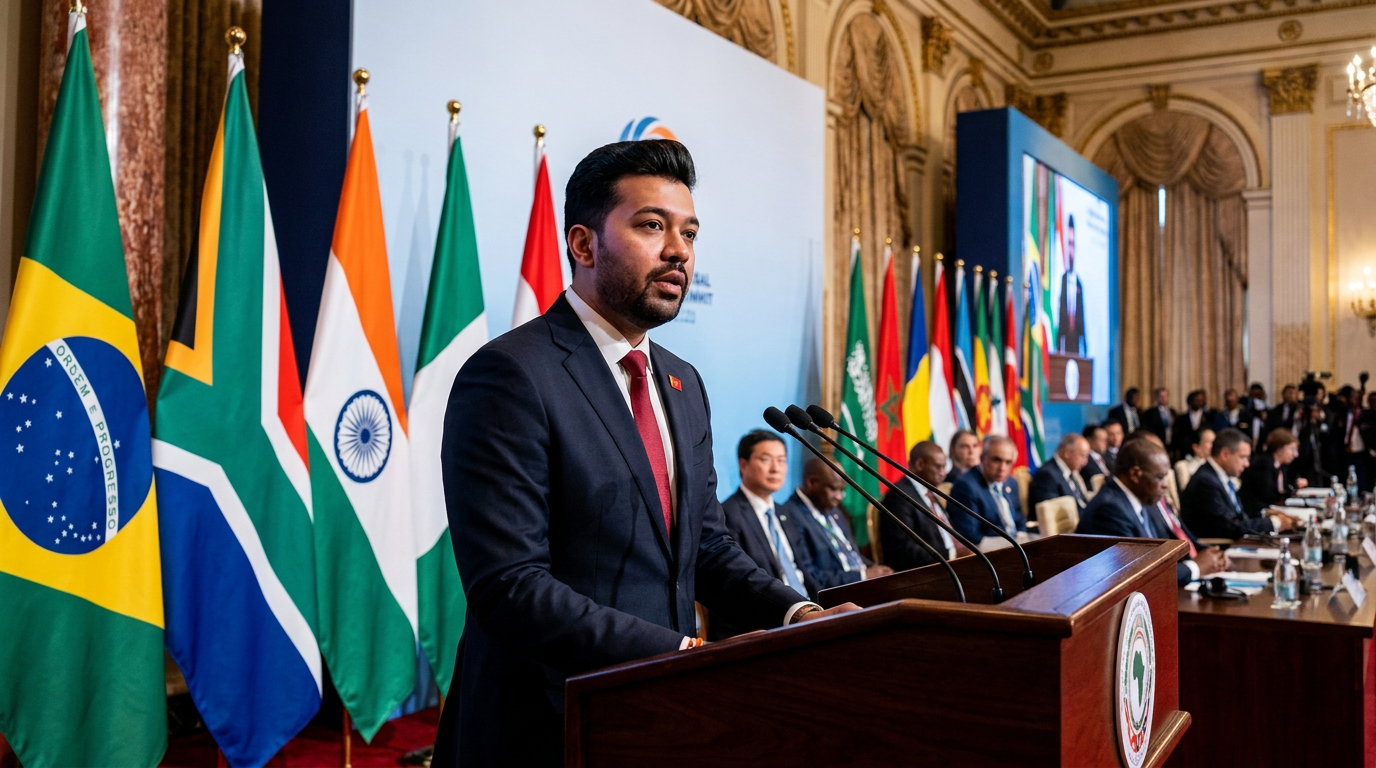
China has formalized its blueprint for a multipolar world order, proposing a UN-centered governance system that prioritizes state sovereignty over Western-led alliances. The initiative has drawn massive support from the Global South while sparking deep skepticism in Western capitals.
By Factlen Editorial Team
- Chinese State Planners
- Argue the GGI democratizes a global system that currently favors a small bloc of Western nations.
- Global South Advocates
- View the multipolar framework as a way to gain leverage and alternative avenues for development.
- Western Strategic Analysts
- Warn the initiative is a calculated effort to dismantle human rights norms and protect autocracy.
- Independent Analysts
- Provide objective synthesis of the geopolitical shift without endorsing a specific bloc.
What's not represented
- · Dissident and human rights organizations within authoritarian states
- · Small island nations reliant on Western security guarantees
Why this matters
China's Global Governance Initiative represents the most organized and well-funded effort to date to rewrite the rules of how countries interact, trade, and resolve conflicts. If successful, it will shift the center of global decision-making away from Western capitals and fundamentally alter how international law, human rights, and global security are enforced.
Key points
- China's State Council released a white paper detailing the Global Governance Initiative (GGI), a blueprint for a multipolar world order.
- The GGI serves as an umbrella framework for China's previous development, security, and civilization initiatives.
- The initiative champions the United Nations General Assembly over Western-led blocs like the G7, appealing heavily to the Global South.
- Western analysts warn the framework's emphasis on absolute state sovereignty is designed to shield autocracies from human rights scrutiny.
- Over 160 countries and international organizations have expressed support for the initiative, highlighting widespread frustration with post-1945 institutions.
In June 2026, China's State Council Information Office released a comprehensive white paper titled "More Just and Equitable Global Governance." The document formalized the Global Governance Initiative (GGI), Beijing's most ambitious blueprint yet for reshaping the international system.[5]
Arriving in the wake of the United Nations' 80th anniversary, the initiative marks a definitive shift in Chinese foreign policy. After decades of operating within the post-1945 architecture, Beijing is now actively proposing an alternative model to the Western-led international order.[2][8]
The core thesis of the white paper is that the current global order, designed when a few Western powers held the vast majority of the world's wealth, is fundamentally mismatched to a multipolar era. Chinese officials argue that the Global South, which now holds the demographic and economic majority, remains structurally marginalized in global decision-making.[1][6]
The GGI is not an isolated policy proposal. It serves as the capstone to a multi-year diplomatic rollout, acting as the structural umbrella for three previous frameworks: the Global Development Initiative (2021), the Global Security Initiative (2022), and the Global Civilization Initiative (2023).[3][4]

Together, these four pillars represent a systematic alternative to the US-led "rules-based international order." Where the Western model emphasizes universal values, democratic governance, and conditional alliances, the Chinese model prioritizes absolute state sovereignty and strict non-interference in domestic affairs.[2][3]
The GGI is built upon five core principles: sovereign equality, the international rule of law, multilateralism, a people-centered approach, and real actions. These tenets are designed to appeal broadly to developing nations that feel alienated by Western diplomatic pressure and economic sanctions.[4][5]
A central mechanism of the initiative is what Beijing terms "true multilateralism." This concept explicitly contrasts with what Chinese diplomats call "small yard, high fence" diplomacy—a direct critique of exclusive Western groupings like the G7, NATO, and AUKUS, which Beijing views as engines of hegemony.[3][8]
Contrary to fears in some Western capitals that China intends to dismantle the United Nations, the GGI aggressively champions the UN as the sole legitimate venue for global governance. By empowering the UN General Assembly, where developing nations hold a numerical advantage, China seeks to dilute Western institutional dominance.[1][7]
By empowering the UN General Assembly, where developing nations hold a numerical advantage, China seeks to dilute Western institutional dominance.
The economic dimension of the initiative capitalizes on deep-seated frustrations regarding the Bretton Woods institutions. Many nations in the Global South argue that the International Monetary Fund and the World Bank remain heavily weighted toward US and European voting power, failing to reflect modern economic realities.[6]

Through institutions like the Asian Infrastructure Investment Bank (AIIB) and the Belt and Road Initiative, Beijing has already laid the material groundwork for this new governance model. These entities have approved billions in infrastructure projects without the political or economic reform conditions typically attached to Western aid.[2][5]
The diplomatic reception to the GGI has been substantial. According to Chinese state media and official releases, the initiative has rapidly garnered support from nearly 160 countries and international organizations, with over 60 nations joining a dedicated "Group of Friends of Global Governance."[4][5]
For many African, Latin American, and Asian states, the GGI offers a pragmatic diversification of partnerships. It allows them to secure vital infrastructure funding and security cooperation without being subjected to lectures on their domestic political arrangements or human rights records.[6][7]

However, strategic analysts in the United States and Europe view the GGI with profound skepticism. They interpret the initiative's heavy emphasis on "sovereign equality" as a calculated shield for authoritarianism and a deliberate effort to dismantle international human rights enforcement.[2][3]
Think tanks analyzing the white paper note that China is not offering a "Marshall Plan 2.0" underwritten by massive new financial transfers. Instead, Beijing is projecting normative power—redefining the vocabulary of international relations to make the global environment safer for autocracies.[1]
The challenge of implementing the GGI remains significant. While its principles are broadly appealing to developing nations, translating them into a functional governance system is difficult. A purely consensus-based, multipolar world risks institutional paralysis when competing national interests collide without a dominant power to enforce the rules.[6]

The security implications are equally complex. The GGI's integration with the Global Security Initiative promotes "indivisible security," a concept that rejects military alliances. Western analysts argue this framework implicitly legitimizes regional spheres of influence, complicating international responses to territorial conflicts.[3]
The initiative also extends into emerging technological frontiers. The GGI proposes state-centric governance models for artificial intelligence, cyberspace, and outer space, directly challenging the multi-stakeholder and open-internet models preferred by Western democracies.[3][5]
As the global system continues to fragment, China's transition from a participant in the international order to an active architect of a new one is complete. The ultimate success of the Global Governance Initiative will depend not on Beijing's declarations, but on whether the Global South finds this multipolar vision more effective than the system it seeks to replace.[2][8]
How we got here
Sept 2021
Xi Jinping introduces the Global Development Initiative (GDI) at the UN General Assembly.
April 2022
China launches the Global Security Initiative (GSI) at the Boao Forum for Asia.
March 2023
The Global Civilization Initiative (GCI) is unveiled, promoting cultural pluralism.
Sept 2025
The Global Governance Initiative (GGI) is introduced at the SCO Plus summit, serving as the umbrella framework.
June 2026
China's State Council releases a comprehensive white paper detailing the GGI's implementation and core principles.
Viewpoints in depth
Chinese State Planners
The GGI is a necessary democratization of a global system that currently favors a small bloc of Western nations.
For Beijing, the post-1945 order is fundamentally mismatched to modern demographic and economic realities. Chinese officials argue that 'true multilateralism' must be centered on the United Nations rather than exclusive alliances like the G7 or NATO. By emphasizing absolute state sovereignty and non-interference, they present the GGI as a fairer framework that respects diverse developmental paths without imposing conditional political values.
Global South Advocates
A multipolar framework offers developing nations more leverage and alternative avenues for development.
Many nations across Africa, Latin America, and Asia view the current Bretton Woods institutions as structurally biased. For these countries, the GGI is less about endorsing Chinese hegemony and more about expanding their own strategic autonomy. The initiative's focus on 'developmental governance' resonates with states that prioritize economic growth and stability over Western-prescribed democratic reforms, offering them a seat at the table in reshaping global rules.
Western Strategic Analysts
The initiative is a calculated effort to dismantle universal human rights and make the international order safe for autocracy.
Western think tanks and policymakers interpret the GGI's heavy emphasis on 'sovereign equality' as a shield against international scrutiny. By redefining global governance around state rights rather than individual rights, they argue Beijing is attempting to hollow out the normative core of the UN Charter. Analysts warn that a purely multipolar, consensus-driven system could lead to institutional paralysis and the normalization of regional spheres of influence.
What we don't know
- How a purely consensus-based, multipolar governance system will resolve conflicts when major powers have directly competing interests.
- Whether the Global South will fully adopt China's technological and security standards, or simply use the GGI as leverage against the West.
- How existing Western-led institutions like the IMF and World Bank will adapt to the growing influence of alternative Chinese financing.
Key terms
- Global Governance Initiative (GGI)
- China's comprehensive framework proposing a multipolar international system centered on state sovereignty and the United Nations.
- Multipolarity
- An international system where power and influence are distributed among multiple states rather than dominated by one or two superpowers.
- Rules-Based International Order
- The post-WWII framework of institutions, laws, and norms largely established and led by the United States and its Western allies.
- Global South
- A collective term for developing and emerging economies, primarily in Africa, Asia, and Latin America, which China seeks to champion in global forums.
- Global Security Initiative (GSI)
- China's 2022 framework emphasizing 'indivisible security' and opposing unilateral sanctions and exclusive military alliances.
Frequently asked
Is China trying to replace the United Nations?
No. China's initiative explicitly positions the UN at the absolute center of global governance, aiming to empower the General Assembly over Western-led blocs like the G7.
How does the GGI differ from the current international order?
The GGI heavily prioritizes absolute state sovereignty and non-interference, contrasting with the Western order's emphasis on universal human rights and democratic governance.
What are the other Chinese global initiatives?
The GGI acts as an umbrella for three earlier frameworks: the Global Development Initiative (2021), Global Security Initiative (2022), and Global Civilization Initiative (2023).
Why is the Global South receptive to this?
Many developing nations feel underrepresented in post-WWII institutions like the IMF and World Bank, and welcome a multipolar system that offers alternative financing and diplomatic support without political conditions.
Sources
Source coverage
8 outlets
4 viewpoints surfaced








[1]Chatham HouseWestern Strategic Analysts
China's new white paper on global governance highlights its balancing act
Read on Chatham House →[2]Council on Foreign RelationsWestern Strategic Analysts
China's Approach to Global Governance
Read on Council on Foreign Relations →[3]Swedish Institute of International AffairsWestern Strategic Analysts
Understanding China's Global Governance Initiative
Read on Swedish Institute of International Affairs →[4]China DailyChinese State Planners
Framework advances multilateralism amid mounting challenges, experts say
Read on China Daily →[5]State Council Information OfficeChinese State Planners
China releases white paper on global governance
Read on State Council Information Office →[6]Inclusive Society InstituteGlobal South Advocates
The Global Governance Initiative in context
Read on Inclusive Society Institute →[7]CounterPunchGlobal South Advocates
China's Global Governance Initiative and the UN Charter
Read on CounterPunch →[8]Factlen Editorial TeamIndependent Analysts
Synthesis by Factlen editorial team
Read on Factlen Editorial Team →
Every angle. Every day.
Get meta stories with full source coverage and perspective breakdowns delivered to your inbox.