
Mombasa's Coastal Tourism Boom Triggers Sewage Crisis Ahead of 2026 Ocean Conference
A 14.6 percent surge in coastal tourism has overwhelmed Mombasa's 1930s-era infrastructure, prompting urgent infrastructure investments and a global push for 'sewage diplomacy' at the UN Ocean Conference.
By Factlen Editorial Team
- Government & Infrastructure Planners
- Focus on the logistical and financial hurdles of upgrading 1930s infrastructure for a modern metropolis.
- Local Residents & Conservationists
- Argue that raw sewage is a direct violation of human rights and demand immediate transparency and infrastructure fixes.
- International Marine Advocates
- Frame local wastewater management as a critical transboundary issue that directly impacts global ocean health.
- Blue Economy & Tourism Sector
- View high-density coastal development as essential for economic growth, while acknowledging the need for sustainable practices.
What's not represented
- · Small-scale artisanal fishers
- · Local hospitality workers
Why this matters
As coastal tourism accelerates globally, destinations are struggling to balance economic growth with environmental preservation. How Mombasa solves its infrastructure deficit will serve as a blueprint for other emerging blue economies facing similar growing pains.
Key points
- Mombasa's 14.6 percent surge in coastal tourism has overwhelmed the city's 1930s-era sewer infrastructure.
- High-rise developments are increasingly bypassing overloaded sewer mains, illegally connecting wastewater outflows to ocean-bound stormwater drains.
- The 11th Our Ocean Conference has placed a global spotlight on the crisis, driving a push for international 'sewage diplomacy.'
- Fixing the city's subterranean network to accommodate its 1.9 million residents will require an estimated $251 million in capital investment.
As 5,000 international delegates converge on Mombasa for the 11th Our Ocean Conference in June 2026, the coastal city is grappling with a paradox that threatens its primary economic engine. A recent 14.6 percent surge in coastal tourism has collided with decades of underfunded municipal infrastructure, triggering a severe sanitation crisis. In historic districts and along pristine beachfronts, the sheer volume of visitors and rapid urban development have overwhelmed the city's capacity to process waste. The result is a highly visible environmental challenge, with raw sewage occasionally flooding narrow streets and flowing untreated into the Indian Ocean, directly contradicting the marine conservation goals being negotiated in the conference halls just miles away.[4][5]
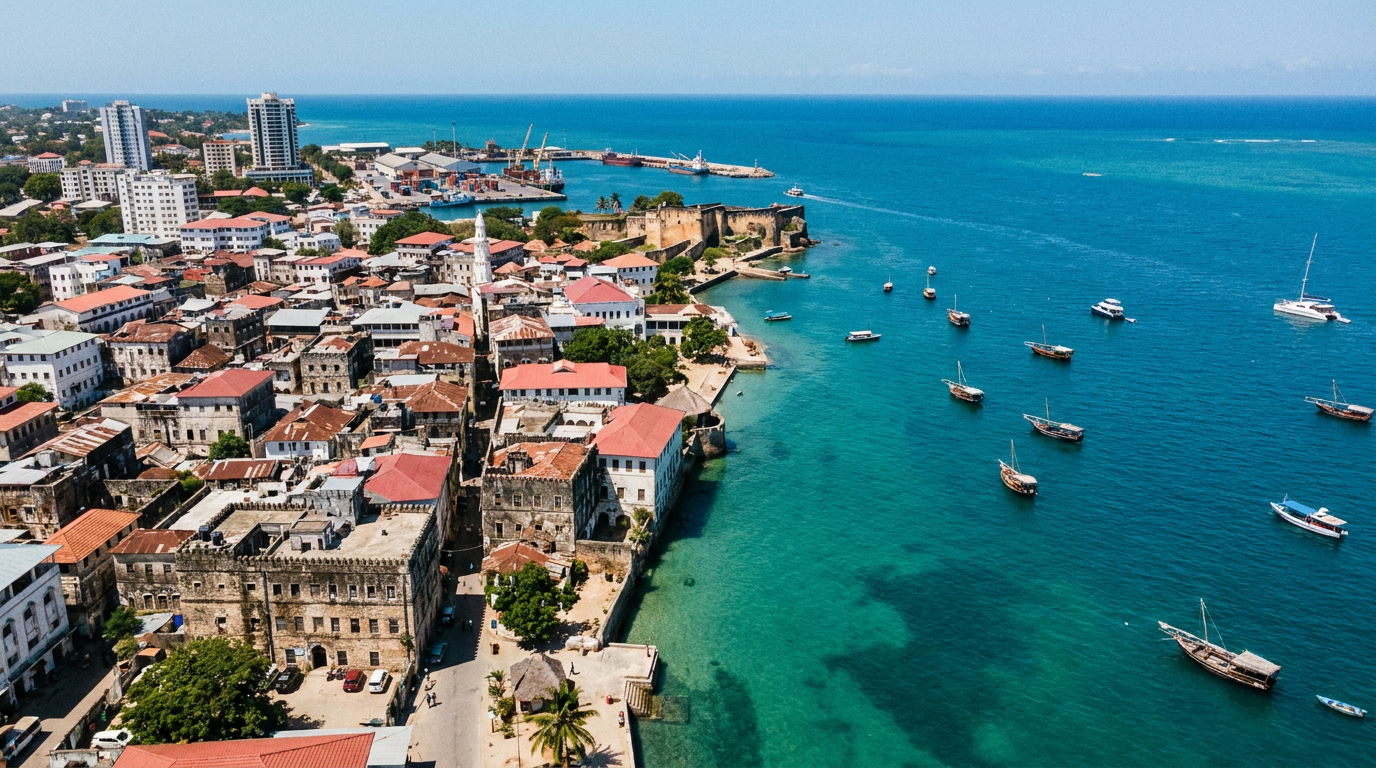
The crisis is most acute in densely populated heritage areas like Old Town and Mvita, where the juxtaposition of UNESCO-recognized architecture and failing public utilities has reached a breaking point. Residents and local human rights organizations have begun drafting formal petitions to the county government, citing unbearable living conditions and severe public health risks. The daily reality for many locals involves navigating streets compromised by effluent, a situation that has forced some small businesses to close and raised fears of waterborne diseases. For a city that relies heavily on its reputation as a premier international beach destination, the visible degradation of its urban core presents an existential threat to the local economy.[1]
Understanding the mechanics of this crisis requires looking back nearly a century. Mombasa’s core reticulated sewer system, including the Kizingo and Kipevu wastewater treatment plants, was largely designed and installed between the 1930s and the early 1960s. At that time, the infrastructure was engineered to serve a colonial-era population of roughly 30,000 people. Today, the city is home to more than 1.9 million residents, a number that swells significantly during peak tourist seasons. The subterranean pipes and treatment facilities have seen minimal expansion over the decades, leaving them fundamentally incapable of handling the hydraulic load generated by a modern, sprawling metropolis.[1][7]

The engineering failure is compounded by a specific, widespread practice known as stormwater misconnection. As developers rush to build high-rise hotels and luxury residential blocks along the coastline to accommodate the tourism boom, many find that the municipal sewer mains are either non-existent in their area or already operating over capacity. Rather than investing in expensive on-site treatment systems, some properties illegally connect their wastewater outflows directly into the city’s stormwater drainage channels. Because these channels are designed only to carry rainwater directly to the sea to prevent flooding, the misconnections effectively turn them into open sewers that empty raw effluent straight into the Indian Ocean.[1]
Even the wastewater that successfully enters the formal sewer network faces significant hurdles before it can be safely discharged. The city's primary treatment plants have suffered from years of deferred maintenance and operational challenges. Across the country, the statistics reflect a systemic shortfall in sanitation infrastructure. According to the recent 'Back to Blue' report, an ocean health initiative launched by Economist Impact, only about 11 percent of the wastewater generated in Kenya undergoes adequate treatment. The remaining 89 percent is either lost to leaks, sits in unmanaged septic tanks, or is discharged directly into the environment, carrying a heavy load of pollutants.[3][7]
When untreated effluent enters the marine ecosystem, the biological consequences are immediate and devastating. Raw sewage carries a massive Biological Oxygen Demand (BOD), meaning that as the organic matter decomposes, it rapidly strips dissolved oxygen from the surrounding water. This process suffocates marine life and degrades the delicate coral reefs that protect the shoreline and attract scuba divers from around the world. Furthermore, the influx of nutrient-rich waste triggers harmful algal blooms, which can turn crystal-clear tourist beaches into murky, toxic environments that are unsafe for swimming or fishing.[3]
When untreated effluent enters the marine ecosystem, the biological consequences are immediate and devastating.
The financial toll of this environmental degradation is staggering. Poor wastewater management costs the Kenyan economy an estimated $93 million every year, a figure that researchers believe significantly understates the true toll due to data constraints. These losses are driven by degraded artisanal fisheries, increased public health burdens, and the slow erosion of the coastal tourism brand. For a region where the blue economy and hospitality sector supply a massive portion of local employment and national revenue, polluting the primary attraction is a mathematically unsustainable trajectory.[3]

The arrival of the Our Ocean Conference has placed an uncomfortable but necessary global spotlight on Mombasa's infrastructure deficit. International delegates, marine scientists, and civil society groups are using the event to highlight the disconnect between high-level biodiversity pledges and ground-level realities. Organizations like Greenpeace Africa have staged large-scale sand art installations at popular sites like Pirates Beach, urging attendees to confront the sewage issue directly. This activism has successfully forced local sanitation out of the shadows, making it a central talking point in negotiations about the future of Africa's coastal economies.[6]
In response to these pressures, the 2026 conference is championing a concept known as 'sewage diplomacy.' This framework attempts to reframe municipal wastewater management—traditionally viewed as a hyper-local administrative headache—as a critical, transboundary ocean health priority. By linking local sanitation failures to global climate and biodiversity goals, international marine advocates hope to unlock new streams of climate finance. The goal is to attract foreign investment and multilateral grants that can fund the massive infrastructure upgrades required to protect the shared heritage of the Indian Ocean.[4][5]
On the ground, local leaders are scrambling to implement immediate interventions. Mombasa Governor Abdulswamad Nassir has launched a targeted crackdown on illegal stormwater connections, directing county engineers and the Kenya National Highways Authority to inspect drainage channels and force property owners to regularize their waste disposal. Additionally, the county government recently secured a $3 million investment specifically earmarked for seaward treatment facilities. These new installations are designed to intercept and treat effluent at the outfall points before it can contaminate the nearshore marine environment.[1]
At the national level, the Kenyan government is leaning on multilateral partnerships to accelerate urban sanitation upgrades. Backed by the African Development Bank, the state is pushing forward with the Kenya Towns Sustainable Water Supply and Sanitation Programme. Principal Secretary for Water and Sanitation Julius Korir recently noted that overall implementation of these broad urban upgrades has reached 95.6 percent. While much of this progress has been concentrated in inland cities and the Nairobi basin, the framework provides a blueprint for how large-scale capital can be deployed to modernize failing municipal networks.[2]

However, the long-term sustainability of these systems hinges on solving a deeply entrenched funding gap. Kenya currently lacks a universal, dedicated sewer tariff that reflects the true operational cost of wastewater treatment. In 2013, the Water Services Regulatory Board recommended introducing a 5 percent sewerage levy on all water bills to fund ongoing maintenance and expansion. More than a decade later, that recommendation remains largely unimplemented, leaving municipal water companies without the recurring revenue necessary to keep complex treatment plants running efficiently.[3]
Engineering a permanent, comprehensive fix for Mombasa’s unique topography—an island surrounded by deep creeks and the open ocean—will require astronomical capital. Consultancy reports commissioned by the national government estimate that building a modern wastewater management scheme capable of serving the city's projected population through the year 2040 will cost at least $251 million. Securing this level of funding will require a coordinated effort between the national treasury, private sector investors, and international climate funds dedicated to preserving the blue economy.[7]
As the delegates depart the Our Ocean Conference, the consensus is shifting from voluntary beach cleanups to hard infrastructure mandates. The coastal tourism boom that Mombasa is currently enjoying can only be sustained if a significant portion of the revenue it generates is aggressively reinvested into the subterranean systems that keep the city livable. For destinations across the global south facing similar pressures, Mombasa serves as a real-time case study in the urgent need to balance rapid economic development with the unglamorous, essential work of modernizing urban sanitation.[4][5]
How we got here
1930s–1960s
Mombasa's core reticulated sewer system and treatment plants are constructed for a small colonial-era population.
2013
The Water Services Regulatory Board recommends a 5 percent sewerage levy to fund maintenance, which stalls for over a decade.
March 2025
The 'Back to Blue' report reveals that only 11 percent of Kenya's wastewater undergoes adequate treatment.
January 2026
Residents in Mombasa's Old Town and Mvita begin drafting petitions over raw sewage flooding streets amid a tourism boom.
June 2026
Mombasa hosts the 11th Our Ocean Conference, bringing 5,000 delegates and placing a global spotlight on coastal wastewater management.
Viewpoints in depth
Local Residents & Conservationists
Argue that raw sewage is a direct violation of human rights and demand immediate transparency and infrastructure fixes.
For communities living in historic districts like Old Town, the infrastructure deficit is not an abstract engineering problem—it is a daily health hazard. Conservationists and local human rights groups argue that the county government has prioritized rapid tourism development and tax collection over basic livability. They are demanding that future high-rise approvals be halted until the subterranean sewer network is modernized, arguing that a healthy environment is a fundamental constitutional right.
Government & Infrastructure Planners
Focus on the logistical and financial hurdles of upgrading 1930s infrastructure for a modern metropolis.
County and national officials emphasize that they inherited a fundamentally inadequate colonial-era system that was never designed for a population of 1.9 million. They point to recent crackdowns on illegal connections and new investments, like the $3 million seaward treatment initiative, as proof of progress. However, they argue that without a dedicated sewerage tariff to ensure cost recovery, municipalities will always struggle to maintain complex treatment plants, necessitating patience and public-private partnerships.
International Marine Advocates
Frame local wastewater management as a critical transboundary issue that directly impacts global ocean health.
Marine scientists and international NGOs view Mombasa's crisis as a microcosm of a global threat to the blue economy. They argue that local sanitation can no longer be treated as a purely municipal issue, as untreated effluent destroys shared coral reefs and fisheries. By championing 'sewage diplomacy,' these advocates are pushing to unlock international climate finance, arguing that funding a city's sewer system is just as vital to ocean conservation as banning plastic straws or establishing marine protected areas.
What we don't know
- Whether the proposed 5 percent sewerage levy will finally be implemented to fund ongoing maintenance.
- How quickly the newly secured $3 million seaward treatment investment can be brought online to intercept effluent.
- If international climate finance pledged at the Our Ocean Conference will successfully translate into local infrastructure grants.
Key terms
- Biological Oxygen Demand (BOD)
- A measure of the amount of oxygen required by microorganisms to decompose organic matter in wastewater, which can suffocate marine life if too high.
- Stormwater Misconnection
- The illegal routing of a building's sewage pipes into municipal drains designed exclusively to carry rainwater to the sea.
- Sewage Diplomacy
- The international effort to frame local wastewater management as a global ocean health issue to attract multilateral climate funding.
- Blue Economy
- The sustainable use of ocean resources for economic growth, improved livelihoods, and jobs, while preserving the health of marine ecosystems.
Frequently asked
Why is Mombasa experiencing a sewage crisis?
The city's core sewer infrastructure was built in the 1930s for a population of 30,000. Today, it struggles to serve 1.9 million residents plus a surging influx of coastal tourists.
What is a stormwater misconnection?
It occurs when developers illegally connect a building's wastewater pipes to municipal drainage channels meant only for rainwater, sending raw sewage directly into the ocean.
What is being done to fix the pollution?
The county government is cracking down on illegal connections and deploying a new $3 million investment for seaward treatment facilities to intercept effluent.
What is 'sewage diplomacy'?
A framework that treats local wastewater management as a transboundary ocean health priority, aiming to unlock international climate finance for municipal infrastructure.
Sources
Source coverage
7 outlets
4 viewpoints surfaced







[1]Eastleigh VoiceLocal Residents & Conservationists
Mombasa leaders demand urgent fix to Mvita sewer crisis as raw sewage floods homes
Read on Eastleigh Voice →[2]People DailyGovernment & Infrastructure Planners
Govt moves to address sewage menace in new plan
Read on People Daily →[3]Ethical Business AfricaInternational Marine Advocates
Liquid liabilities: Kenya's wastewater crisis and the slow price of inaction
Read on Ethical Business Africa →[4]Earth ChangersInternational Marine Advocates
Sustainable Tourism in 2026: The Year of Implementation
Read on Earth Changers →[5]The Blue NewsBlue Economy & Tourism Sector
5,000 Delegates Converge in Mombasa, Kenya for 11th Our Ocean Conference 2026
Read on The Blue News →[6]Greenpeace AfricaLocal Residents & Conservationists
Welcome to the Ocean Conference in Mombasa, Kenya. Please ignore the sewage.
Read on Greenpeace Africa →[7]National Institutes of HealthGovernment & Infrastructure Planners
Water and sanitation backlogs in the coastal city of Mombasa
Read on National Institutes of Health →
Every angle. Every day.
Get travel stories with full source coverage and perspective breakdowns delivered to your inbox.