
The Science of 'Serve and Return': How Everyday Moments Build a Child's Brain
The most powerful tool for early childhood brain development requires no money or special toys—just simple, back-and-forth interactions.
By Factlen Editorial Team
- Early Childhood Researchers
- Focus on the biological mechanisms of brain architecture, emphasizing how interactions physically wire neural pathways.
- Child Psychologists
- Highlight the emotional benefits of serve and return, particularly its role in co-regulation and buffering toxic stress.
- Parents & Caregivers
- Value the practical application of the science, finding relief in the fact that everyday moments matter more than expensive toys or perfect parenting.
What's not represented
- · Educators in high-ratio daycare settings who struggle to provide one-on-one interactions
- · Parents working multiple jobs with limited time and energy for extended play
Why this matters
Understanding 'serve and return' relieves the immense pressure on parents to buy expensive educational toys, proving that simple, everyday attention is the most scientifically backed way to ensure a child's cognitive and emotional success.
Key points
- Serve and return interactions are the most scientifically proven way to build a young child's brain architecture.
- The process involves noticing a child's cues (the serve) and responding with attention, words, or affection (the return).
- These interactions form up to one million new neural connections every second during the first three years of life.
- Serve and return acts as a biological buffer, protecting the developing brain from the harmful effects of toxic stress.
- Parents do not need to be perfect; responding to a child's cues roughly half the time is enough to foster secure attachment.
Modern parenting is often flooded with intense pressure and marketing. From electronic learning toys to flashcards designed for infants, the prevailing cultural message frequently suggests that building a child's brain requires expensive tools, structured curricula, and constant, exhausting entertainment.[7]
But developmental science tells a vastly different, and much more reassuring, story. The most powerful mechanism for shaping a young child's brain architecture does not cost a dime, requires no batteries, and happens naturally in micro-moments throughout the day.[1][7]
Researchers at Harvard University's Center on the Developing Child coined a specific term for this foundational mechanism: 'serve and return.' It describes the responsive, back-and-forth interactions between a young child and a caring adult that literally shape the physical structure of the developing brain.[1]
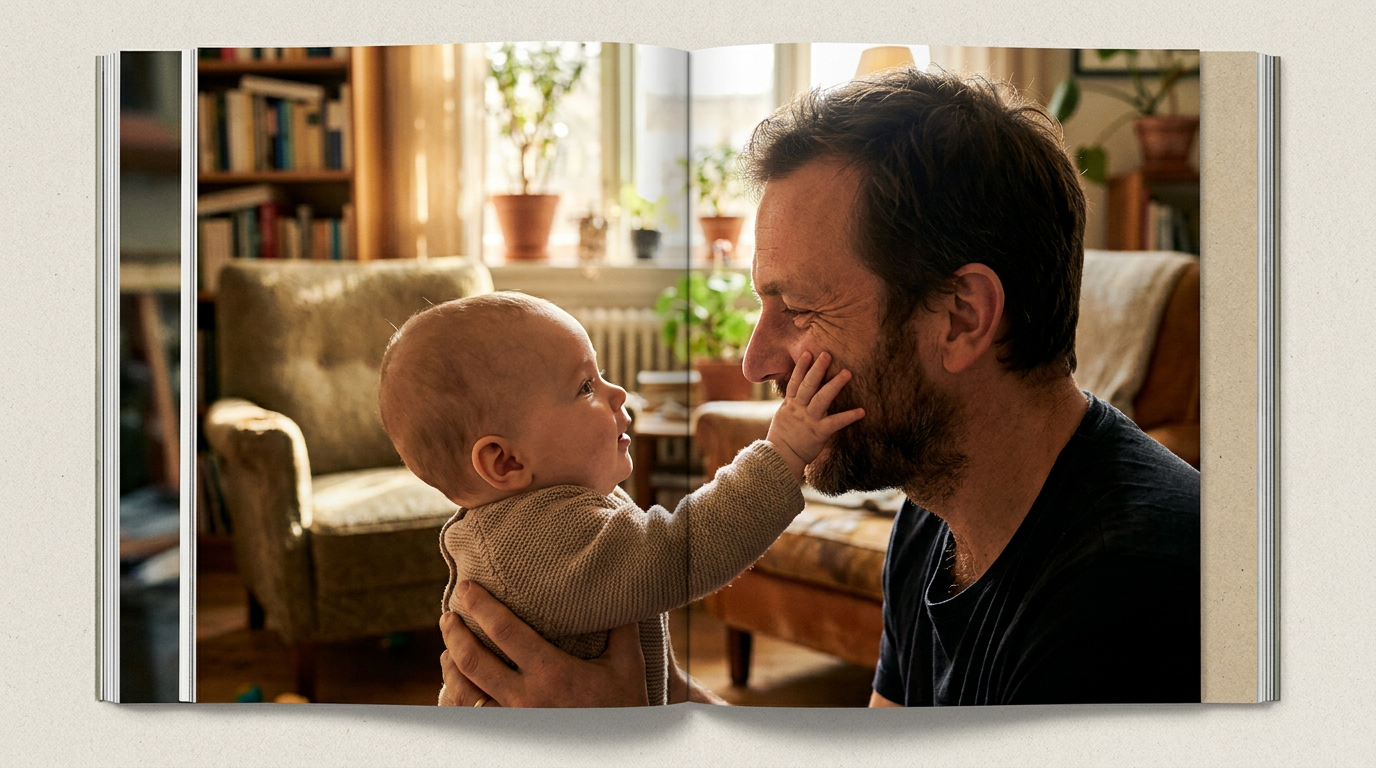
The concept uses the familiar metaphor of a tennis match or a ping-pong rally. A baby or toddler 'serves' by making a sound, pointing, changing their facial expression, or simply gazing intently at something. The adult 'returns' the serve by responding with eye contact, words, a smile, or a comforting hug.[1][4]

Beneath these seemingly simple and playful exchanges, profound biological construction is taking place. In the first three years of life, a child's brain develops faster than it ever will again, forming up to one million new neural connections every single second.[6]
Experience is the fundamental language of the developing brain. When an adult responds to a child's serve, the brain actively strengthens the specific neural pathways that were just used, laying a concrete, permanent foundation for future learning, language acquisition, and complex problem-solving.[4]
To help caregivers put this science into everyday practice, Harvard researchers outlined a five-step framework. The first step is simply to notice the serve and share the child's focus of attention. This requires paying attention to small cues—a squirm, a babble, or a pointed finger—and recognizing them as genuine attempts to communicate.[1]
To help caregivers put this science into everyday practice, Harvard researchers outlined a five-step framework.
The second step is to return the serve by supporting and encouraging. This could mean picking up the object the child is pointing to, smiling and nodding, or offering a comforting embrace. This validates the child's curiosity and lets them know their thoughts and feelings are seen and understood.[1][2]

Step three involves giving it a name. When an adult names what a child is seeing, doing, or feeling, it builds crucial language connections in the brain long before the child can actually speak or understand the specific words being used.[1]
The fourth step is often the hardest for busy, fast-paced adults: take turns and wait. After returning a serve, the adult must pause to give the child time to respond. Children process information much more slowly than adults, and this waiting period allows them to form their own ideas and keeps the rally going.[1][5]
Finally, step five is practicing endings and beginnings. Children will naturally signal when they are done with an activity—by looking away, fussing, or walking off. Letting the child take the lead supports their growing independence and prevents stressful overstimulation.[1]
Beyond cognitive development, serve and return is a cornerstone of lifelong emotional health. When an adult and infant engage in a mutually responsive rally, they are actively co-regulating. During these moments, they often begin to share heart rates, breathing patterns, and hormonal responses.[3]

This co-regulation acts as a powerful, biological buffer against stress. Consistent serve and return interactions deter the body's toxic stress response, preventing a flood of cortisol that can otherwise be harmful to the delicate architecture of a developing brain.[1][3]
When trust is occasionally ruptured or a child experiences adversity, these warm, consistent responses are exactly what help rebuild connection and restore a sense of safety, proving that the brain remains adaptable and resilient.[2]
For parents, the concept of constant engagement can sound exhausting, especially in an era of digital distraction. However, developmental experts emphasize that perfection is absolutely not the goal. Research suggests that caregivers only need to be attuned and responsive about 50 percent of the time to help a baby develop a secure attachment base.[5]

Missing a cue because you are cooking dinner, answering a text message, or simply feeling tired will not derail a child's development. The resilience of the human brain means that it is the overall, long-term pattern of warm, responsive caregiving that matters, not absolute perfection in every single moment.[5][7]
Viewpoints in depth
Early Childhood Researchers
Focus on the biological mechanisms of brain architecture and cognitive development.
For developmental neuroscientists, serve and return is fundamentally a story of biology and structural engineering. Researchers emphasize that the brain is not fully formed at birth; rather, it is built over time, from the bottom up. Every time a caregiver returns a child's serve, electrical signals travel across synapses, strengthening the specific circuits used for language, motor skills, and executive function. From this perspective, the sheer volume of these interactions in the first 1,000 days of life is the most critical factor in determining a child's lifelong cognitive capacity.
Child Psychologists
Highlight the emotional benefits of serve and return, particularly its role in co-regulation.
Psychologists and attachment specialists view serve and return primarily through the lens of emotional safety and stress regulation. When a child's serves are consistently ignored, the brain perceives a threat, triggering a flood of stress hormones like cortisol. Over time, this 'toxic stress' can impair development. Conversely, responsive interactions allow the adult and child to co-regulate, syncing their nervous systems. This camp emphasizes that serve and return is less about creating a 'smart' baby and more about creating a resilient, emotionally secure human being who knows how to form healthy relationships.
Parents & Caregivers
Value the practical application of the science and the relief from modern parenting pressures.
For those on the front lines of raising children, the science of serve and return is often received as a massive relief. In a culture that aggressively markets expensive developmental toys and pushes parents to constantly entertain their children, the realization that a simple game of peek-a-boo or narrating a grocery trip is scientifically superior is highly empowering. Furthermore, this camp heavily values the '50 percent rule'—the research-backed reassurance that caregivers do not need to be perfectly attuned at all times, allowing parents to forgive themselves for moments of distraction or exhaustion.
What we don't know
- The exact long-term neurological impact of modern digital distractions (like smartphones) frequently interrupting serve and return rallies.
- Precisely how different cultural variations in caregiving styles alter the specific neural pathways built during serve and return.
Key terms
- Serve and Return
- The back-and-forth, responsive interactions between a child and caregiver that help build and strengthen neural connections in the brain.
- Neural Connections
- The microscopic links between brain cells that allow information to be processed, forming the basis of all learning, memory, and behavior.
- Co-regulation
- The process by which a caregiver helps a child manage their emotions and physiological responses, often by sharing a calm state.
- Toxic Stress
- Prolonged activation of the body's stress response systems in the absence of protective relationships, which can harm brain development.
- Secure Attachment
- A strong, trusting emotional bond between a child and caregiver that makes the child feel safe enough to explore the world.
Frequently asked
Do I need to play with my baby constantly for them to develop?
No. Research shows that caregivers only need to be attuned and responsive about 50 percent of the time to build a secure attachment base. Missing cues occasionally is completely normal and harmless.
What counts as a 'serve' from a young child?
A serve can be any attempt to communicate or show interest. This includes making eye contact, babbling, pointing, changing facial expressions, or crying.
Can older children still benefit from serve and return?
Yes. While the first three years are the most rapid period of brain growth, back-and-forth interactions continue to build social skills, emotional regulation, and complex cognitive abilities throughout childhood.
Do I need special toys to practice serve and return?
Not at all. Serve and return requires zero equipment. It is entirely based on your attention, eye contact, voice, and physical presence during everyday routines.
Sources
Source coverage
7 outlets
3 viewpoints surfaced







[1]Harvard Center on the Developing ChildEarly Childhood Researchers
Serve and Return
Read on Harvard Center on the Developing Child →[2]Zero to ThreeChild Psychologists
The Importance of Responsive Parenting: Building Strong Emotional Bonds From Birth
Read on Zero to Three →[3]The Education HubChild Psychologists
An introduction to serve and return in early childhood education
Read on The Education Hub →[4]First 5 NevadaParents & Caregivers
How Serve and Return Builds the Brain
Read on First 5 Nevada →[5]The Kids Research Institute AustraliaParents & Caregivers
Serve and return to build your baby's brain
Read on The Kids Research Institute Australia →[6]Learning Through PlayEarly Childhood Researchers
Playful parenting is a two-way street
Read on Learning Through Play →[7]Factlen Editorial TeamParents & Caregivers
Synthesis by Factlen editorial team
Read on Factlen Editorial Team →



Every angle. Every day.
Get lifestyle stories with full source coverage and perspective breakdowns delivered to your inbox.