
The Science of Natural GLP-1: How Dietary Fiber and the Microbiome Regulate Metabolism
Before pharmaceutical weight-loss drugs existed, human biology evolved its own system for producing GLP-1. Emerging 2026 research maps exactly how resistant starch and gut bacteria trigger this powerful metabolic hormone naturally.
By Factlen Editorial Team
- Nutritional Scientists
- Emphasize dietary fiber and microbiome fermentation as the foundational, evolutionary mechanism for metabolic health.
- Clinical Pharmacologists
- Highlight the unmatched efficacy and sustained receptor activation of synthetic GLP-1 drugs for treating clinical obesity.
- Integrative Dietitians
- Advocate for combining both approaches, using targeted fibers to mitigate drug side effects and prevent weight regain.
What's not represented
- · Patients experiencing severe gastrointestinal side effects from synthetic GLP-1 medications
- · Agricultural producers of high-resistant-starch crops
Why this matters
Understanding how your body naturally produces GLP-1 empowers you to improve your metabolic health, regulate your appetite, and stabilize your blood sugar using everyday foods, rather than relying solely on expensive pharmaceuticals.
Key points
- The human body naturally produces the metabolic hormone GLP-1 in the lower digestive tract.
- Resistant starch and prebiotic fibers survive early digestion to reach the colon intact.
- Gut bacteria ferment these fibers into short-chain fatty acids (SCFAs).
- SCFAs bind to specialized receptors on L-cells, triggering the release of natural GLP-1.
- While synthetic GLP-1 drugs cause rapid weight loss, they often lead to gastrointestinal side effects and weight regain upon discontinuation.
- Clinical experts now recommend combining dietary fiber protocols with pharmaceutical treatments for sustainable metabolic health.
The world is currently captivated by the unprecedented weight-loss and metabolic benefits of GLP-1 receptor agonists—the active pharmaceutical compounds powering blockbuster drugs like Ozempic, Wegovy, and Mounjaro. These medications have fundamentally transformed the landscape of obesity and diabetes treatment by artificially mimicking a naturally occurring hormone that signals profound fullness to the brain, slows the emptying of the stomach, and tightly regulates blood sugar levels. For millions of patients, these weekly injections have provided a life-changing intervention where traditional diet and exercise protocols previously failed.
But long before pharmaceutical companies successfully synthesized these complex molecules in sterile laboratories, human biology had already evolved its own highly sophisticated, built-in manufacturing plant for GLP-1. This endogenous hormone factory is located deep within the distal gut, and its primary fuel source is not a costly prescription pad, but rather specific types of dietary fiber. As public fascination with metabolic health reaches a fever pitch, nutritional science is shining a spotlight on how we can activate this ancestral system to support our metabolism naturally.
As the science of the gut microbiome rapidly advances in 2026, researchers are mapping exactly how specific, everyday foods trigger the body's natural release of Glucagon-like peptide-1 (GLP-1). The underlying mechanism reveals a profound and intricate symbiotic relationship between the fibrous foods we consume, the trillions of bacteria residing in our digestive tract, and the hormonal signals that govern our daily metabolism. Understanding this pathway empowers individuals to leverage their diet not just for basic nutrition, but as a targeted tool for hormonal regulation.[6]
The biological process begins with enteroendocrine L-cells, which are specialized nutrient sensors lining the mucosal walls of the ileum and the colon. These remarkable cells act as the body's frontline metabolic watchtowers. When properly stimulated, they secrete endogenous GLP-1 directly into the bloodstream. Once in circulation, the hormone acts as a systemic messenger: it prompts the pancreas to release insulin in response to meals, physically slows the motility of the gastrointestinal tract, and communicates directly with the brain's appetite centers to confirm that the body is adequately nourished and satisfied.

However, there is a geographical challenge inherent in this biological design. Because L-cells are heavily concentrated in the lower gastrointestinal tract, they are not directly triggered by the immediate digestion of simple carbohydrates, refined sugars, or easily absorbed proteins higher up in the stomach and upper intestine. To successfully reach and activate these deep-gut sensors, food components must be robust enough to survive the highly acidic environment of the stomach and evade the rapid enzymatic breakdown that occurs in the small intestine.
This is precisely where resistant starch and fermentable prebiotic fibers enter the metabolic equation. Unlike easily digestible carbohydrates that rapidly spike blood sugar and are quickly absorbed into the bloodstream, resistant starch lives up to its name by literally resisting the standard human digestive process. It travels completely intact through the upper digestive system, bypassing early absorption and arriving in the dark, oxygen-deprived environment of the colon essentially untouched. Here, it transitions from being a simple carbohydrate into a vital ecological fuel source, ready to serve a completely different biological purpose.
Once it safely arrives in the large intestine, this resistant starch encounters a dense, bustling ecosystem composed of trillions of microbes. For specific strains of highly beneficial gut bacteria—such as Akkermansia muciniphila, Faecalibacterium prausnitzii, and various Bifidobacterium species—this undigested dietary fiber represents a primary and preferred food source. The presence of these complex carbohydrates allows these microbial populations to thrive, multiply, and outcompete less desirable, inflammatory strains of bacteria that prefer environments rich in refined sugars and saturated fats.
As these beneficial microbes feast on the incoming fiber, they initiate a vigorous process of anaerobic fermentation. The metabolic byproducts of this microscopic banquet are powerful, health-promoting signaling molecules known collectively as short-chain fatty acids (SCFAs). The most prominent and extensively studied of these SCFAs are butyrate, propionate, and acetate. Rather than simply being inert waste products of bacterial digestion, these short-chain fatty acids serve as critical communication bridges between the microbiome and the human host's endocrine system, actively modulating inflammation, immune function, and energy homeostasis.[2]
Crucially, these short-chain fatty acids are the specific biological keys required to unlock the body's natural GLP-1 production. As SCFAs pool in the colon, they bind to specialized receptors—specifically known in the scientific literature as Free Fatty Acid Receptor 2 (FFAR2) and Free Fatty Acid Receptor 3 (FFAR3)—which are located directly on the surface of the enteroendocrine L-cells. This precise chemical binding action is the direct, mechanical trigger that causes the L-cells to release their stored GLP-1 into the body, initiating the cascade of metabolic benefits.[2]
Crucially, these short-chain fatty acids are the specific biological keys required to unlock the body's natural GLP-1 production.
A landmark May 2026 review published in the journal Advances in Nutrition by researchers at Maastricht University and KU Leuven detailed this exact convergence of mechanisms. The comprehensive review highlighted that while pharmaceutical GLP-1 drugs and dietary fibers both successfully engage the gut-brain axis to regulate appetite and metabolism, they achieve these outcomes through entirely different biological pathways. The researchers mapped out how these two approaches overlap in their end goals, but diverge significantly in their physiological execution and broader impacts on human health.[1]
The pharmaceutical approach to GLP-1 relies heavily on biochemical brute force and artificial longevity. Native GLP-1 produced naturally by the human body has an incredibly short half-life of only two to three minutes before it is rapidly broken down by endogenous enzymes. In stark contrast, synthetic receptor agonists like semaglutide are specifically engineered to resist this natural degradation, boasting an extended half-life of approximately one week. This pharmaceutical modification allows for sustained, continuous receptor activation, which ultimately drives the dramatic and rapid weight loss observed in clinical trials.[1]

However, this intense pharmaceutical activation comes with significant, well-documented trade-offs. The Advances in Nutrition review noted that the unnatural, sustained activation from GLP-1 drugs frequently causes severe gastrointestinal distress, including pervasive nausea, vomiting, and chronic constipation. These adverse effects are so pronounced that more than half of patients ultimately discontinue the treatment within their first year. Furthermore, the clinical data shows that when the medication is stopped and the artificial signaling ceases, patients almost universally experience rapid and substantial weight regain, highlighting the drugs' limitations as a permanent cure.[1]
In contrast, natural GLP-1 stimulation achieved via dietary fiber offers a more modest, yet highly sustainable and holistic alternative. While the immediate weight-loss effects of eating fiber are undeniably less dramatic and slower to materialize than those of synthetic weekly injections, the microbial fermentation process delivers a suite of broad systemic benefits that isolated pharmaceuticals simply cannot replicate. This natural pathway respects the body's intrinsic feedback loops, providing pulsatile hormone release that aligns with actual nutrient intake rather than forcing a constant state of artificial fullness.[6]
"Fibers deliver broad benefits because they strengthen gut barrier function, enrich short-chain fatty acids, and recalibrate immunity toward an anti-inflammatory state," the review authors noted in their 2026 publication. By consistently feeding the microbiome, resistant starch not only triggers the desired GLP-1 release but simultaneously fortifies the delicate intestinal lining. This fortification is crucial for preventing intestinal permeability—often referred to as 'leaky gut'—which stops inflammatory compounds and endotoxins from escaping the digestive tract and entering the systemic bloodstream.[1]

Despite these profound evolutionary benefits, nutritional scientists emphasize that the vast majority of modern, Westernized diets are severely deficient in the specific complex fibers required to run this metabolic system effectively. Research led by Dr. Mindy Patterson at Texas Woman's University indicates that the average American consumes only about four grams of resistant starch per day. This intake level falls drastically short of the 15 to 30 grams daily that researchers suggest is required to achieve meaningful, measurable improvements in metabolic function and overall gut health.[4]
Closing this substantial 'fiber gap' requires intentional, informed dietary choices, as resistant starch behaves differently than standard roughage. It is naturally abundant in specific plant foods, but the methods used to prepare these foods matter immensely. For example, the simple act of cooking and then deliberately cooling starchy foods—such as white potatoes, white rice, and pasta—fundamentally alters their chemical structure. This cooling process, known as retrogradation, significantly increases their resistant starch content, transforming a simple carb into a powerful prebiotic fuel.[4]
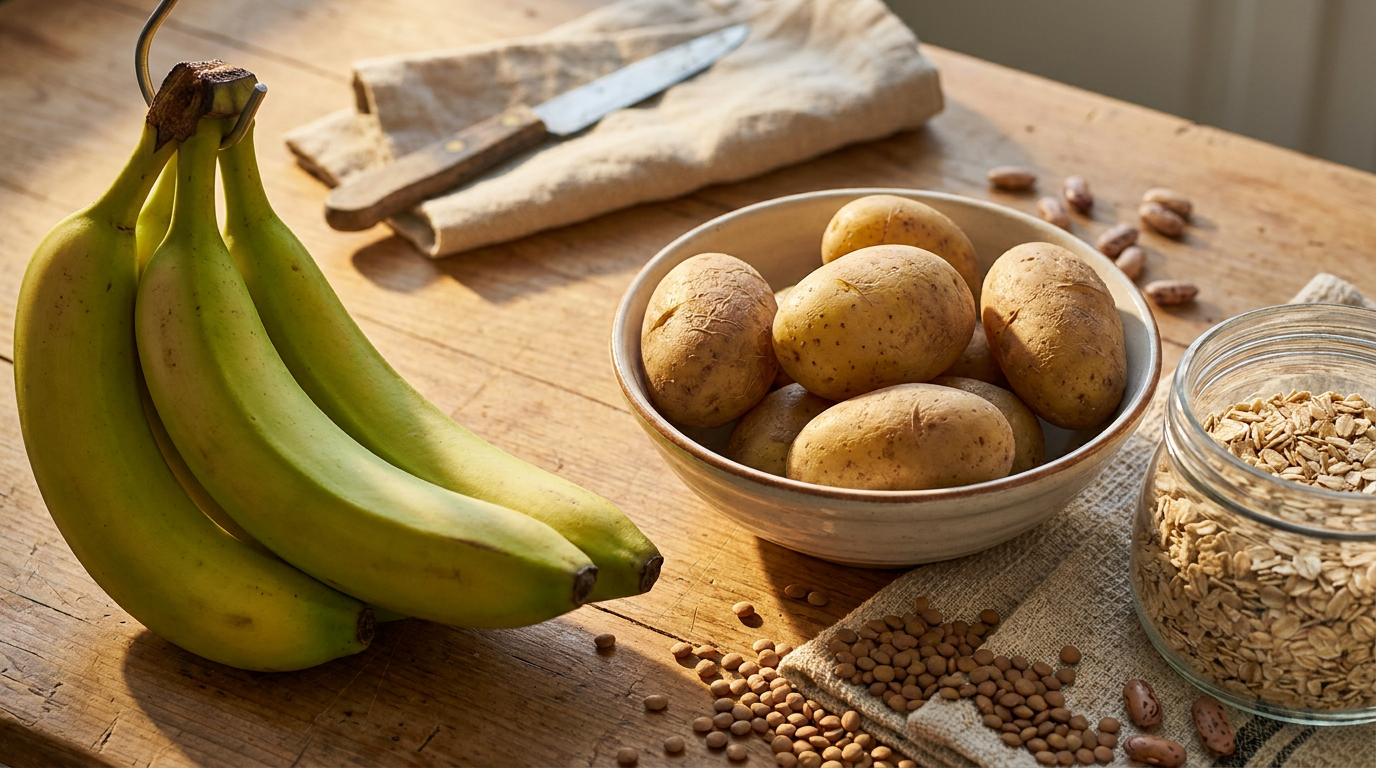
Beyond cooled starches, other potent, naturally occurring sources include green, underripe bananas, raw rolled oats, various legumes like lentils and chickpeas, and specific intact whole grains like pearl barley. Additionally, other forms of prebiotic fibers, such as inulin (commonly found in chicory root, garlic, onions, and Jerusalem artichokes) and arabinoxylan-oligosaccharides (found in the fibrous bran of wheat and rye), also serve as excellent, highly fermentable fuel for the SCFA-producing bacteria that ultimately drive the body's endogenous GLP-1 production factory. Diversifying these sources ensures a resilient and highly active microbiome.[4]

Rather than viewing dietary fiber and pharmaceutical GLP-1 medications as competing or mutually exclusive strategies, clinical experts in 2026 are increasingly advocating for a unified, complementary approach to metabolic health. Dr. Paul de Vos, a professor of sustainable foods and health at Maastricht University and co-author of the recent review, suggests that targeted dietary fibers could play a vital, foundational role in improving long-term treatment success for individuals currently utilizing prescription weight-loss medications, helping to bridge the gap between medical intervention and sustainable lifestyle modification.[5]
For patients actively experiencing drug-induced gastrointestinal side effects, specific, minimally fermentable fibers like psyllium husk can provide immediate relief from constipation while simultaneously supporting the underlying microbiome architecture. More importantly, establishing a robust, fiber-rich dietary pattern during the course of pharmacological treatment may help maintain the gut's natural capacity for GLP-1 production. Researchers hypothesize that this dietary foundation could be the key to mitigating the severe, rapid weight regain that so often plagues patients immediately following the discontinuation of their medication.[1][3]
Ultimately, the emerging science of natural GLP-1 stimulation serves as a profound and empowering reminder of the human body's elegant evolutionary design. By understanding the intricate chemical dialogue that occurs between the fibrous food we eat, the trillions of microbes we host, and the metabolic hormones we produce, individuals can actively participate in their own metabolic regulation. It proves that while modern pharmacology offers powerful tools, some of the most advanced and sustainable health interventions are still cultivated naturally within the gut.[6]
How we got here
2012
Early studies identify short-chain fatty acids as direct triggers for GLP-1 secretion via L-cell receptors.
2021
The FDA approves semaglutide (Wegovy) for chronic weight management, sparking a global surge in GLP-1 awareness.
2025
Research in Nature Metabolism maps the precise gut-brain signaling pathways linking microbial fiber fermentation to metabolic regulation.
May 2026
A major review in Advances in Nutrition formally proposes integrating dietary fiber protocols with pharmaceutical GLP-1 treatments.
Viewpoints in depth
Nutritional Scientists
Emphasize dietary fiber and microbiome fermentation as the foundational, evolutionary mechanism for metabolic health.
Nutritional researchers argue that the modern obesity epidemic is largely driven by the eradication of complex fibers from the Western diet. They point out that the body's GLP-1 production system evolved to run on resistant starch and prebiotic fibers. By starving the microbiome of these essential inputs, the natural hormonal feedback loop that regulates appetite and blood sugar has been broken. They advocate for closing the 'fiber gap' as the primary, foundational intervention for metabolic dysfunction, noting that fiber also fortifies the gut barrier and reduces systemic inflammation in ways that isolated pharmaceuticals cannot.
Clinical Pharmacologists
Highlight the unmatched efficacy and sustained receptor activation of synthetic GLP-1 drugs for treating clinical obesity.
Medical professionals focused on obesity treatment acknowledge the role of the microbiome, but stress that dietary interventions alone are often insufficient for patients with severe, chronic metabolic disease. They emphasize that synthetic GLP-1 receptor agonists are engineered to resist enzymatic breakdown, allowing them to remain active in the body for a week rather than a few minutes. This sustained receptor activation provides a level of appetite suppression and weight loss that simply cannot be replicated by eating resistant starch, making the drugs an indispensable tool for high-risk patients.
Integrative Dietitians
Advocate for combining both approaches, using targeted fibers to mitigate drug side effects and prevent weight regain.
Dietitians working at the intersection of pharmacology and nutrition argue against an 'either-or' mentality. They observe that patients on synthetic GLP-1 medications frequently suffer from severe constipation and a degraded gut microbiome due to drastically reduced food intake. By strategically introducing specific prebiotic fibers—like psyllium or resistant starch—practitioners can alleviate these gastrointestinal side effects. Furthermore, they hypothesize that maintaining a robust, fiber-fed microbiome during pharmaceutical treatment is the key to preserving the body's natural GLP-1 capacity, which may prevent the rapid weight regain that typically occurs when patients stop taking the drugs.
What we don't know
- The exact optimal dosage and specific blend of fibers required to maximize natural GLP-1 production in different individuals.
- Whether long-term use of synthetic GLP-1 drugs permanently alters the gut microbiome's ability to produce the hormone naturally.
Key terms
- GLP-1 (Glucagon-like peptide-1)
- A hormone produced in the gut that regulates blood sugar, slows digestion, and signals fullness to the brain.
- Enteroendocrine L-cells
- Specialized sensor cells lining the lower digestive tract that secrete hormones, including GLP-1, in response to nutrients.
- Resistant Starch
- A type of carbohydrate that bypasses digestion in the stomach and small intestine, serving as food for microbes in the colon.
- Short-Chain Fatty Acids (SCFAs)
- Metabolic signaling molecules, such as butyrate and propionate, created when gut bacteria ferment dietary fiber.
- Gut Microbiome
- The vast ecosystem of trillions of bacteria, viruses, and fungi living in the human digestive tract.
Frequently asked
What exactly is resistant starch?
Resistant starch is a type of carbohydrate that resists digestion in the stomach and small intestine. It travels intact to the colon, where it serves as a primary food source for beneficial gut bacteria.
How does fiber trigger GLP-1 production?
When gut bacteria ferment dietary fiber, they produce short-chain fatty acids (SCFAs). These SCFAs bind to specific receptors on L-cells in the lower gut, prompting those cells to release GLP-1 into the bloodstream.
Why do I need to cool cooked potatoes or rice?
Cooking and then cooling starchy foods alters their chemical structure through a process called retrogradation. This significantly increases their resistant starch content, making them much more effective at feeding the microbiome.
Can eating fiber replace GLP-1 weight-loss drugs?
While fiber naturally stimulates GLP-1 and improves metabolic health, its weight-loss effects are much more modest than synthetic drugs, which are engineered to remain active in the body for far longer. However, fiber is increasingly recommended alongside these medications to mitigate side effects and prevent weight regain.
Sources
Source coverage
6 outlets
3 viewpoints surfaced






[1]Advances in NutritionNutritional Scientists
Dietary Fiber and GLP-1 Receptor Agonists in Obesity Management: Converging Mechanisms, Interactions, and Strategies for Durable Weight Control
Read on Advances in Nutrition →[2]Nature MetabolismClinical Pharmacologists
Microbial short-chain fatty acids regulate systemic metabolic function via gut-brain signaling
Read on Nature Metabolism →[3]NutrientsClinical Pharmacologists
Impact of GLP-1 Receptor Agonists on Gut Microbiota Composition and Diversity: A Systematic Review
Read on Nutrients →[4]Texas Woman's UniversityNutritional Scientists
The Gut-Health Magic of Resistant Starch
Read on Texas Woman's University →[5]NutraIngredientsIntegrative Dietitians
Dietary fibers and GLP-1 drugs should be viewed as complementary strategies, review concludes
Read on NutraIngredients →[6]Factlen Editorial TeamIntegrative Dietitians
Synthesis by Factlen editorial team
Read on Factlen Editorial Team →

More in health
See all 8 stories →Paternal Neuroscience
How Fatherhood Physically Rewires the Male Brain
5 sources

Paternal Neuroscience
The Paternal Brain: How Fatherhood Structurally Rewires Men's Minds
6 sources

Paternal Neuroscience
How Fatherhood Rewires the Male Brain: The Science of Paternal Neuroplasticity
6 sources

Paternal Brain
How Fatherhood Physically Rewires the Male Brain
6 sources

Every angle. Every day.
Get health stories with full source coverage and perspective breakdowns delivered to your inbox.