
Major National Parks Roll Back Timed-Entry Reservations for Summer 2026
The National Park Service is eliminating advance vehicle reservations at Yosemite, Arches, Glacier, and Mount Rainier, pivoting instead to live traffic management.
By Factlen Editorial Team
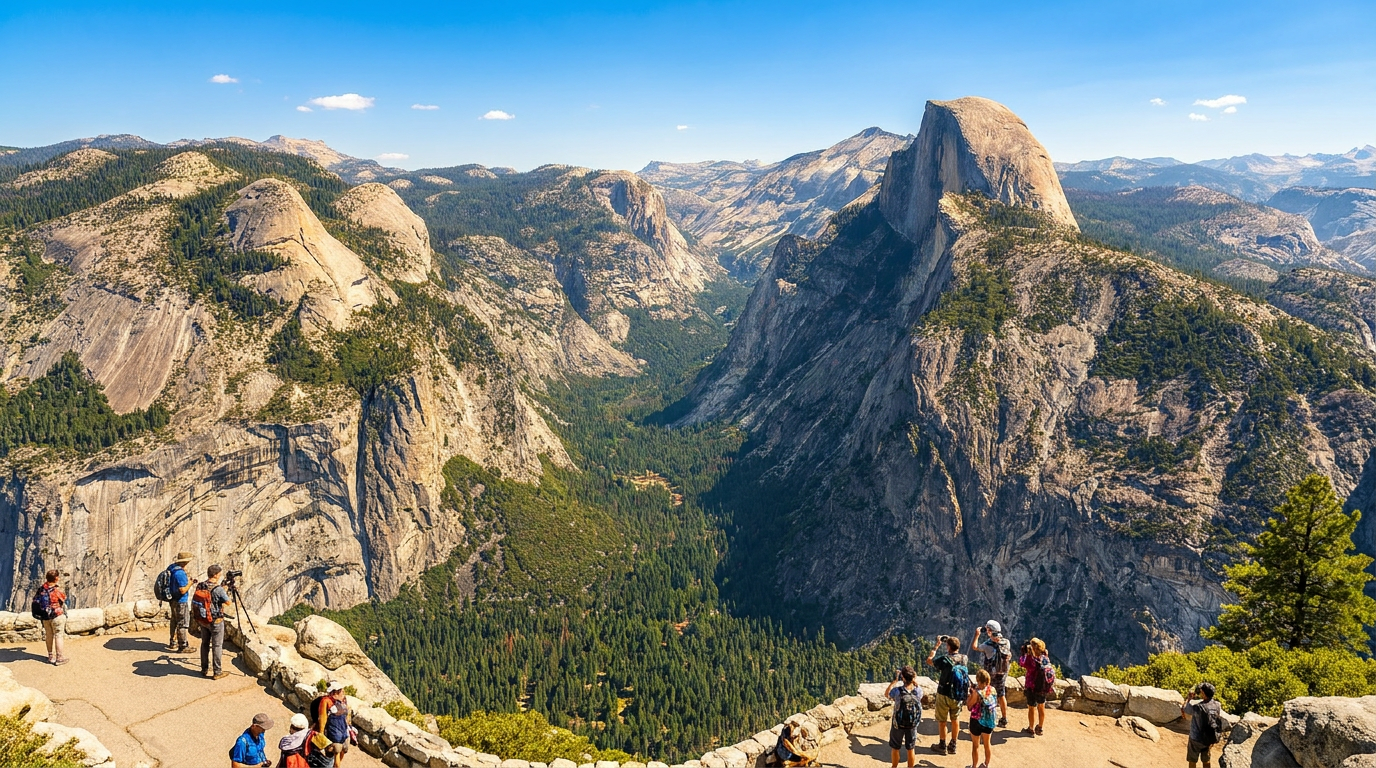
- Spontaneous Access Advocates
- Argue that strict reservation systems lock out casual travelers and contradict the core mission of public lands.
- Conservationists & Park Staff
- Warn that removing entry caps will lead to severe overcrowding, resource damage, and degraded visitor experiences.
- Strategic Travel Planners
- Focus on the tactical shift from advance digital booking to on-the-ground flexibility and early-morning arrivals.
What's not represented
- · International tourists navigating changing rules
- · Local residents who use the parks for daily recreation
Why this matters
Travelers planning summer 2026 trips no longer have to wake up months in advance to battle for a timed-entry slot at several major parks. While the rollback restores spontaneous access, it requires visitors to plan for live traffic management, potential parking limits, and early-morning arrivals to avoid peak congestion.
Key points
- Yosemite, Arches, Glacier, and Mount Rainier are eliminating advance vehicle reservations for summer 2026.
- The National Park Service is pivoting to live traffic management, which may include temporary gate closures and parking limits.
- Rocky Mountain National Park is keeping its timed-entry system, requiring permits via Recreation.gov.
- Conservationists warn the rollback could lead to severe gridlock and resource damage during peak hours.
- Travel experts advise arriving before 7 a.m., using regional shuttles, or visiting after dark to avoid crowds.
For the past few years, planning a summer road trip to America's most iconic landscapes required the precision of a concert ticket drop. Travelers had to log onto Recreation.gov months in advance, hoping to secure a timed-entry vehicle permit just to drive through the gates of highly sought-after destinations like Yosemite or Arches.[3][4]
For the summer of 2026, that digital barrier is largely vanishing. The National Park Service (NPS) has announced a sweeping rollback of advance reservation requirements at several marquee destinations, officially dropping the timed-entry systems at Yosemite, Arches, Glacier, and Mount Rainier National Parks.[1][3]
The policy shift represents a fundamental change in how the federal government manages public lands, pivoting away from strict daily quotas and toward spontaneous access. Acting Assistant Secretary for Fish, Wildlife and Parks Kevin Lilly framed the move as a return to the core mission of the parks, stating that the priority is keeping them "open and accessible" to the American people.[1][5]

But the end of timed entry does not mean the end of crowd control. Instead of stopping vehicles online months in advance, park rangers will now rely on "live traffic management" at the physical gates.[1][6]
In practice, this means that when parking lots at popular trailheads fill up, rangers will implement temporary vehicle diversions, physically turning cars away or holding them at intersections until space clears. Glacier National Park, for example, is piloting strict parking limits at the highly sought-after Logan Pass to force vehicle turnover.[1][7]
The reservation systems were originally born out of necessity. Between 2011 and 2021, visitation to Arches National Park alone surged by 73 percent. When the pandemic pushed millions of Americans outdoors, the parks experienced unprecedented gridlock, culminating in a record-breaking 331.9 million total NPS visitors in 2024.[1][4][5]

To combat the surge, parks like Yosemite and Muir Woods implemented timed entry, which successfully flattened the midday spike in arrivals and guaranteed ticket holders a relatively smooth experience. However, the systems drew intense criticism from gateway communities, who argued that the rigid rules hurt local businesses and locked out casual road-trippers who didn't know they needed a permit.[1][2][4]
At Glacier National Park, the reservation system for the famous Going-to-the-Sun Road even created an unintended safety hazard. Because permits were only required during peak daytime hours, thousands of visitors began driving the treacherous mountain pass in the dark before 6 a.m. to bypass the checkpoint.[2]
At Glacier National Park, the reservation system for the famous Going-to-the-Sun Road even created an unintended safety hazard.
While the rollback is being celebrated by spontaneous travelers, conservationists and park staff are bracing for a difficult summer. With the NPS facing recent staffing reductions, union representatives and public lands advocates warn that a return to open gates could trigger severe overcrowding, resource damage, and hours-long traffic jams.[2][4]
Visitors to Yosemite in 2023—a year when the park temporarily paused its reservation system—reported spending over two hours idling in lines of cars just to reach the valley floor, alongside overflowing trash cans and dangerous trail conditions.[4]

To avoid a repeat of that pandemonium, park officials are urging visitors to fundamentally alter their daily schedules. At Arches, which is a certified International Dark Sky Park, rangers are encouraging visitors to arrive after nightfall to stargaze, entirely sidestepping the midday crush at Delicate Arch.[5][6]
At Yosemite, the NPS is heavily promoting the YARTS regional bus system. Because the shuttle uses an employee-only lane at the entrance gates, riders can bypass the miles-long line of private vehicles and avoid the inevitable battle for a parking space in Yosemite Valley.[7]
Not every park is abandoning the permit model. Rocky Mountain National Park in Colorado is keeping its structured timed-entry system intact from late May through mid-October 2026.[1][6]

Rocky Mountain operates a two-tiered system. A standard permit grants access to most of the park, while a premium "Timed Entry plus Bear Lake Road" permit is required to enter the park's most popular hiking corridor between 5 a.m. and 6 p.m.[6][8]
These reservations are released in monthly rolling batches on Recreation.gov for a $2 processing fee, with a final batch of next-day permits dropping at 7 p.m. Mountain time each evening—a crucial lifeline for last-minute planners.[6][8]
Ultimately, the 2026 season shifts the burden of planning from the digital realm to the physical one. Travelers no longer need to win a ticketing lottery months in advance, but they will need to set their alarms earlier, embrace shuttle buses, and remain flexible when the "lot full" signs inevitably light up.[3][5]
How we got here
2018
Muir Woods National Monument becomes the first NPS unit to require vehicle reservations to quell crowds.
2020–2022
The pandemic drives a surge in outdoor recreation, prompting major parks like Yosemite and Rocky Mountain to adopt timed entry.
2024
The National Park System records an all-time high of 331.9 million recreation visits.
February 2026
The Department of the Interior announces the rollback of timed entry at Yosemite, Arches, and Glacier for the summer season.
May 2026
Rocky Mountain National Park resumes its structured timed-entry system for the core summer months.
Viewpoints in depth
Spontaneous Access Advocates
The view that public lands should be open to all without requiring months of digital planning.
Gateway community business owners and spontaneous travelers have long argued that strict reservation systems contradict the core mission of the National Park Service. They point out that requiring digital permits months in advance disproportionately locks out casual road-trippers, lower-income families, and those who lack the flexibility to plan their summer schedules in the winter. By removing the digital gates, advocates argue the NPS is restoring equitable access to America's most iconic landscapes.
Conservationists & Park Staff
The view that removing entry caps will inevitably lead to severe resource damage and gridlock.
For park rangers and environmental advocates, the rollback is a cause for deep concern. They point to the 331.9 million visitors the system hosted in 2024 and warn that without hard daily caps, parks will return to the 'pandemonium' seen in previous unmanaged years. Staffing reductions compound the issue; critics argue that relying on 'live traffic management' simply shifts the stress from a website to the physical entrance gates, resulting in miles-long idling lines, overflowing facilities, and visitors trampling fragile ecosystems when parking lots fill up.
Strategic Travel Planners
The view that the burden of crowd control has shifted from advance booking to on-the-ground tactics.
Travel analysts emphasize that the end of timed entry does not mean the end of crowds—it just changes how visitors must navigate them. Instead of battling a website at 8 a.m. in February, travelers must now battle traffic at 6 a.m. in July. Planners advise that a successful 2026 park trip requires embracing alternative transit like the YARTS shuttle, shifting hikes to the extreme edges of the day, and maintaining strict flexibility when rangers inevitably close off popular corridors due to congestion.
What we don't know
- How frequently parks will need to implement temporary vehicle diversions during peak summer weekends.
- Whether the rollback will be made permanent for 2027 or if it is a one-year trial.
- How the reduced NPS staffing levels will handle the expected surge in spontaneous arrivals.
Key terms
- Timed-Entry Reservation
- A system requiring visitors to book a specific time window in advance to drive a vehicle into a park, used to prevent overcrowding.
- Live Traffic Management
- On-the-ground crowd control tactics, such as temporarily closing entrance gates or diverting cars away from full parking lots until space clears.
- Recreation.gov
- The centralized federal portal where visitors must book camping spots and remaining timed-entry permits for public lands.
- Dark Sky Park
- A designation given to parks with exceptionally low light pollution, making them ideal for nighttime stargazing and after-hours visits.
Frequently asked
Do I need a reservation for Yosemite in 2026?
No. Yosemite has eliminated its advance vehicle reservation requirement for 2026, including for the peak summer months and the February Firefall event.
How will parks manage crowds without timed entry?
Parks will use 'live traffic management.' This includes temporary vehicle diversions, strict parking time limits at popular trailheads, and deploying extra staff to direct traffic when lots fill up.
Which major national park still requires a reservation?
Rocky Mountain National Park is keeping its timed-entry system from late May through mid-October 2026, requiring permits booked through Recreation.gov.
What is the best way to avoid traffic at the newly open parks?
Park officials recommend arriving before 7 a.m. or after 4 p.m., utilizing regional shuttle buses like Yosemite's YARTS, or visiting certified Dark Sky parks like Arches after nightfall.
Sources
Source coverage
8 outlets
3 viewpoints surfaced








[1]National Park ServiceSpontaneous Access Advocates
National Park Service Expands Access for Summer 2026 While Maintaining Safety at High-Visitation Parks
Read on National Park Service →[2]Outside OnlineConservationists & Park Staff
3 of America's Busiest National Parks Just Did Away with Reservations. Here's What You Should Know.
Read on Outside Online →[3]The Points GuyStrategic Travel Planners
4 popular national parks are dropping reservation requirements this summer
Read on The Points Guy →[4]The Washington PostConservationists & Park Staff
Visitors should brace for longer lines and gridlock now that several major parks are rolling back their reservation systems
Read on The Washington Post →[5]IslandsSpontaneous Access Advocates
3 Of America's Most Crowded National Parks Have Done Away With Reservations In 2026 (And It's Chaotic)
Read on Islands →[6]Deep ArrivalStrategic Travel Planners
Which National Parks Require Timed Entry in 2026?
Read on Deep Arrival →[7]National Park EscapesStrategic Travel Planners
National Park Reservations: What You Need to Know for 2026
Read on National Park Escapes →[8]Visit Estes ParkStrategic Travel Planners
Do You Need a Timed-Entry Reservation for Rocky Mountain National Park?
Read on Visit Estes Park →
Every angle. Every day.
Get travel stories with full source coverage and perspective breakdowns delivered to your inbox.