
The Race to LA 2028: Weightlifting's Olympic Qualification Standings Officially Open in July
The two-year Olympic Qualification Ranking (OQR) period begins on July 27, kicking off a grueling global points race across five mandatory events to secure a spot in Los Angeles.
By Factlen Editorial Team
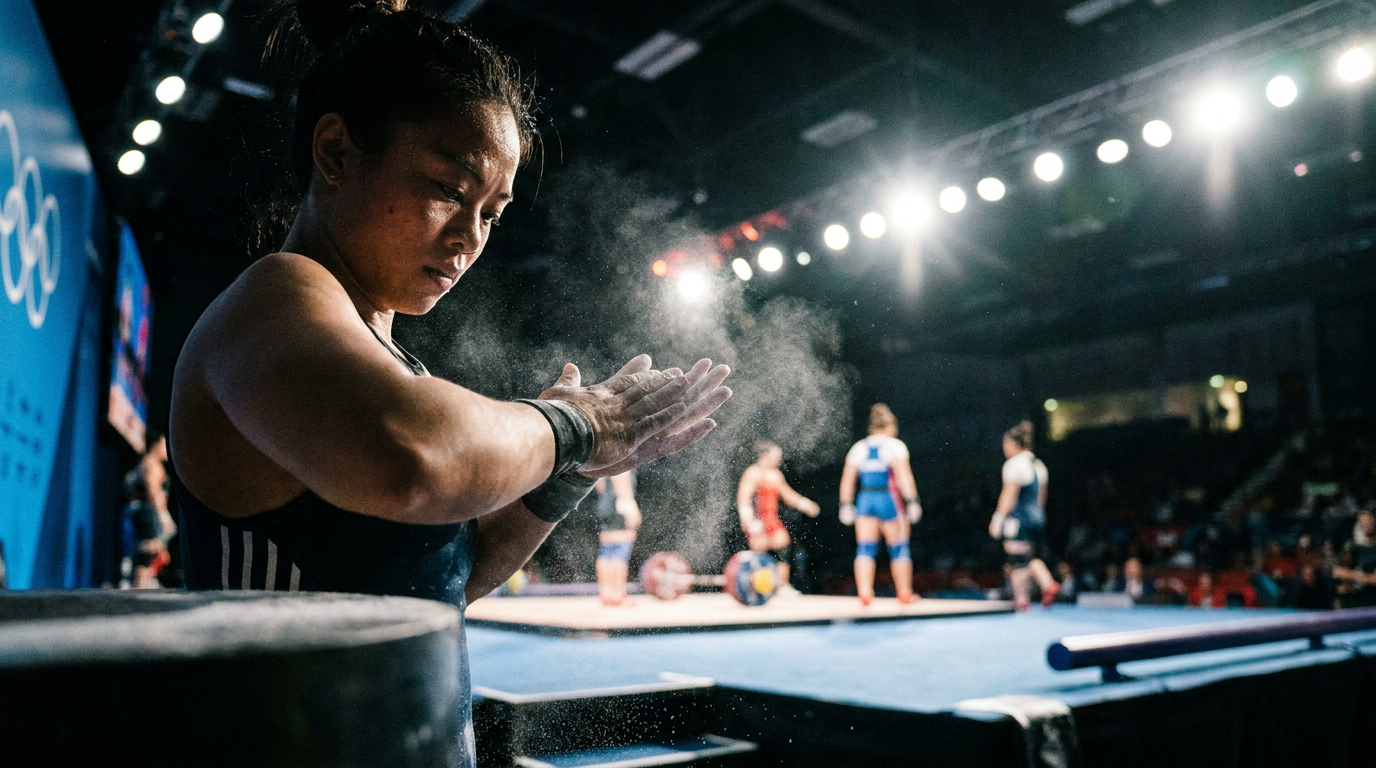
- National Federations & Athletes
- Focused on the logistical and physical challenges of peaking for five mandatory events while adjusting to new bodyweight categories.
- IWF Leadership
- Prioritizes the integrity of the qualification system, emphasizing that the mandatory event schedule ensures rigorous anti-doping oversight.
- Sport Analysts
- Analyzes the competitive impact of the new weight classes, noting that the reshuffle creates highly contested 'hotbed' divisions.
What's not represented
- · Athletes from underfunded federations who may struggle to afford travel to five mandatory global events.
Why this matters
For fans and athletes alike, the opening of the Olympic Qualification Ranking marks the true beginning of the LA 2028 cycle. Every lift over the next two years will directly impact the global standings, determining who earns one of the highly restricted 120 tickets to the Games.
Key points
- The Olympic Qualification Ranking (OQR) period for LA 2028 officially opens on July 27, 2026.
- Athletes must compete in a minimum of five sanctioned events to be eligible for qualification.
- The IWF has finalized five dedicated LA28 Qualifiers in Doha, Tashkent, Lima, Caracas, and Chiang Rai.
- Only 120 total weightlifters will compete in Los Angeles across 12 newly established weight classes.
- The top eight athletes in each weight class's final OQR standings will earn automatic Olympic berths.
- The grueling multi-event schedule is designed to ensure rigorous, year-round anti-doping testing.
The slate is clean. On July 27, 2026, the global weightlifting standings reset to zero as the Olympic Qualification Ranking (OQR) period officially opens for the Los Angeles 2028 Games.[2]
For the next two years, the world's strongest athletes will embark on a grueling, multi-continent points race. The ultimate prize is one of just 120 coveted spots on the Olympic platform, split evenly between men and women.[1]
The mechanics of the OQR are ruthlessly simple: one kilogram lifted equals one ranking point. Athletes must register their top total—combining their heaviest successful snatch and clean & jerk—to climb the global leaderboard.[2]
To punch a ticket to Los Angeles, a lifter must finish in the top eight of their respective bodyweight category by the time the qualification window closes in May 2028.[2]

But raw strength alone isn't enough; durability and consistency are mandatory. The International Weightlifting Federation (IWF) and the International Olympic Committee have mandated that every Olympic hopeful must compete in a minimum of five sanctioned events across two distinct qualifying periods.[1][2]
The first major points-gathering opportunity arrives at the 2026 IWF World Championships in Ningbo, China, this October. From there, the tour shifts to the first of five dedicated 'IWF Qualifiers' designed specifically for the LA28 cycle.[1][6]
The IWF recently finalized the host cities for these crucial battlegrounds. The inaugural LA28 Qualifier will take place in Doha, Qatar, in December 2026, setting the early pace for the global standings.[6]
The IWF recently finalized the host cities for these crucial battlegrounds.
The circuit then moves to Tashkent, Uzbekistan in March 2027, Lima, Peru in June 2027, Caracas, Venezuela in November 2027, and finally Chiang Rai, Thailand in January 2028.[6]

Athletes are also navigating a newly finalized landscape of weight classes. Following extensive negotiations to keep weightlifting in the Games, the sport will feature 12 bodyweight categories in Los Angeles—six for men and six for women.[1][3]
The men's divisions are set at 65kg, 75kg, 85kg, 95kg, 110kg, and +110kg. The women will battle at 53kg, 61kg, 69kg, 77kg, 86kg, and +86kg.[3][4]
This structure has forced a massive reshuffling of the global standings before a single barbell has been lifted. Athletes who competed in Paris 2024 under different parameters are currently bulking up or cutting down to fit the new LA28 constraints.[4][5]

For instance, Tokyo silver medalist Mirabai Chanu of India, who built her legacy in the 49kg division, is actively transitioning to the new 53kg Olympic minimum, requiring a strategic increase in body mass without sacrificing speed.[3]
The mandatory five-event minimum serves a dual purpose. Beyond creating a thrilling, high-stakes narrative for fans, it ensures athletes are subjected to rigorous, year-round anti-doping protocols.[1][5]
The IWF's commitment to clean sport was instrumental in securing weightlifting's place on the LA 2028 program, and the OQR structure is designed to guarantee that the athletes who top the standings have been tested extensively and consistently.[1]

As the July 27 start date approaches, national federations are finalizing their travel budgets and strategic peaking cycles. The race to Los Angeles is officially a marathon, and every single kilogram will count.[2]
How we got here
July 27, 2026
The Olympic Qualification Ranking (OQR) period officially begins.
Oct 27, 2026
The IWF World Championships in Ningbo, China, serve as the first major points event.
Dec 2026
The 1st dedicated IWF Qualifier for LA 2028 is held in Doha, Qatar.
May 7, 2028
The Olympic Qualification Ranking period officially closes.
Viewpoints in depth
National Federations & Athletes
Navigating the physical and financial toll of the qualification circuit.
For national governing bodies and their athletes, the LA 2028 qualification system presents a complex logistical puzzle. The requirement to compete in at least five events across two periods means athletes must maintain peak physical condition year-round, increasing the risk of injury. Furthermore, federations must secure significant funding to send their top lifters to far-flung qualifiers in Qatar, Uzbekistan, Peru, Venezuela, and Thailand. Athletes are simultaneously working with nutritionists to safely bulk or cut into the newly established 12 Olympic weight classes, making this cycle one of the most physically demanding in the sport's history.
IWF Leadership
Securing the sport's Olympic future through stringent oversight.
From the perspective of the International Weightlifting Federation, the rigorous OQR system is a necessary triumph. After facing the threat of being dropped from the Olympic program entirely, the IWF successfully lobbied the IOC by implementing this transparent, points-based ranking system. By forcing athletes to appear at five mandatory events, the IWF ensures that every Olympic hopeful is subjected to a continuous, unpredictable anti-doping testing pool. For leadership, the grueling schedule is the exact mechanism that guarantees a clean, fair competition in Los Angeles.
Sport Analysts
Tracking the tactical reshuffle of the global leaderboards.
Weightlifting analysts view the upcoming OQR period as a fascinating strategic battle. Because one kilogram equals one ranking point, there is zero margin for error; a single missed lift at a qualifier could be the difference between making the top eight and staying home. Analysts are particularly focused on the 'hotbed' divisions created by the new weight classes. With the men's 89kg class from Paris eliminated, lifters are scrambling into the new 85kg and 95kg divisions, setting up unprecedented clashes between athletes who have never previously competed against one another.
What we don't know
- Which athletes will successfully adapt their bodies to the new weight classes without losing relative strength.
- How many athletes will suffer injuries due to the grueling five-event mandatory competition schedule.
Key terms
- Olympic Qualification Ranking (OQR)
- The official global leaderboard that tracks athletes' top lifting totals to determine who qualifies for the Olympic Games.
- Total
- The combined weight of an athlete's heaviest successful snatch and heaviest successful clean & jerk at a single competition.
- IWF
- The International Weightlifting Federation, the global governing body for the sport of Olympic weightlifting.
Frequently asked
How do athletes qualify for weightlifting at LA 2028?
They must finish in the top eight of the Olympic Qualification Ranking (OQR) for their specific weight class by competing in at least five mandatory events.
What are the new Olympic weight classes?
Men will compete at 65kg, 75kg, 85kg, 95kg, 110kg, and +110kg. Women will compete at 53kg, 61kg, 69kg, 77kg, 86kg, and +86kg.
Why do athletes have to compete in so many events?
The five-event minimum ensures athletes are consistently active and subject to regular, rigorous anti-doping testing throughout the two-year cycle.
Sources
Source coverage
6 outlets
3 viewpoints surfaced




[1]International Weightlifting FederationIWF Leadership
Qualification System for the Olympic Games LA 2028 has been approved
Read on International Weightlifting Federation →[2]USA WeightliftingNational Federations & Athletes
Qualifying for LA2028
Read on USA Weightlifting →[3]Olympics.comNational Federations & Athletes
Mirabai Chanu set to switch divisions after Olympic weightlifting class rejig for LA 2028
Read on Olympics.com →[4]Inside the GamesSport Analysts
Weightlifting categories unstable for LA28
Read on Inside the Games →[5]Weightlifting HouseSport Analysts
Breaking: IWF Backs Down on Planned Weight Classes Following IOC Decision
Read on Weightlifting House →IWF opens tender for LA28 Qualifiers TV Production
Read on International Weightlifting Federation (Tender) →
More in sports
See all 31 stories →Standings
Championship Picture: Manchester Thunder Claim NSL Crown as SSN and ANZ Premiership Reach Do-or-Die Stages
6 sources
Injury
AFL Injury Update: Brisbane's Cavalry Nears Return as Hawthorn Manages Mid-Season Setbacks
7 sources
Standings
Gold Coast and North Melbourne Cling to Inaugural Wildcard Spots as AFL Finals Race Intensifies
6 sources
Injury
Pro Lacrosse Injury Report: Charlotte North's Achilles Tear Shakes Up WLL and Team USA
6 sources
Every angle. Every day.
Get sports stories with full source coverage and perspective breakdowns delivered to your inbox.